Introduction
The relationship between globalization and national identity has become one of the defining political questions of the 21st century. While international cooperation has contributed to economic development, technological progress and diplomatic engagement, it has also raised concerns about the future of smaller nations whose cultural continuity depends on preserving distinct languages, traditions and historical memory.
For Armenia, these concerns are especially significant. As one of the world’s oldest civilizations, Armenia has survived centuries of foreign domination, genocide, forced displacement and ideological transformation. Throughout these historical challenges, Armenian identity has endured through the preservation of its language, religion, literature, family traditions and the resilience of its globally dispersed diaspora and diasporan institutions.
Today, debates surrounding globalization, national sovereignty and domestic political reform have renewed questions about how Armenian identity can be preserved in an increasingly interconnected world. This article examines the relationship between liberal globalism, communist internationalism and national identity, before considering how these competing political philosophies may influence the preservation of Armenian national values, historical memory and statehood.
Liberal globalism and communist internationalism: Structural similarities and fundamental differences
Liberal globalism and communist internationalism originate from distinct intellectual traditions. Liberal globalism emphasizes liberal democracy, market economies, human rights and international institutions. Communist internationalism, by contrast, emerged from Marxist theory and envisioned a worldwide socialist transformation that would ultimately transcend national borders.
Despite these fundamental differences, both frameworks share several common characteristics.
First, both adopt a universalist outlook. Rather than viewing the nation-state as the primary political community, each advances principles intended to apply universally. Liberal globalism promotes universal human rights, liberal democratic norms and economic openness, while communist internationalism historically viewed the international working class as sharing common interests irrespective of nationality.
Second, both reduce the centrality of the nation-state. Liberal globalism generally favors greater international cooperation through multilateral institutions, whereas communist internationalism sought to coordinate international revolutionary movements that transcended national governments.
Third, both regard nationalism with varying degrees of skepticism. Liberal globalists often argue that excessive nationalism can undermine international cooperation and contribute to conflict. Communist internationalists traditionally viewed nationalism as a mechanism through which ruling elites divided the working class and prevented international class solidarity.
Fourth, both envision increasing forms of political and economic integration extending beyond individual states. Although the institutional arrangements they advocate differ significantly, each perspective imagines humanity becoming progressively more interconnected.
Finally, both frequently present their respective visions as historically progressive. Liberal globalism associates globalization with the expansion of democracy, economic integration and international governance, whereas communist internationalism interpreted history as moving inevitably toward socialism through global class struggle.
These structural similarities should not obscure their profound differences. Liberal globalism supports constitutional democracy, political pluralism, private property and market-based economies. Communist internationalism, by contrast, historically sought the abolition of capitalism and the establishment of centralized control over economic life. Recognizing both the similarities and the differences allows for a more nuanced comparison without suggesting that the two traditions are ideologically equivalent.
Globalism and national interests
Critics of universalist political ideologies argue that prioritizing transnational objectives can create tensions with national sovereignty, national security and long-term national interests.
One concern relates to political authority. As states increasingly participate in international institutions and legal frameworks, aspects of domestic decision-making may become constrained by international commitments. While supporters argue that such arrangements facilitate cooperation, stability and collective problem-solving, critics contend that governments may lose the flexibility required to respond effectively to national priorities.
A second concern involves cultural continuity. Nations are sustained not only by political institutions but also by a shared language, historical memory, religious traditions and a collective identity. Universalist frameworks that emphasize broader human or transnational identities may, according to critics, diminish the importance of these distinctive cultural foundations. Over time, this may weaken social cohesion, erode national consciousness and reduce the resilience of national communities.
Economic policy presents another area of debate. Governments often face difficult choices between fulfilling international obligations and protecting domestic priorities. Critics argue that global economic integration can expose smaller economies to external pressures and constrain national policy autonomy, while supporters contend that international cooperation promotes economic growth, investment, innovation and technological development.
Finally, geopolitical competition remains an enduring reality. Critics maintain that states pursuing clearly defined national interests may enjoy strategic advantages over governments that prioritize broader international norms. In an international system where power politics continues to play a significant role, they argue that excessive reliance on universal principles may place smaller nations at a strategic disadvantage.
Supporters of liberal internationalism respond that international cooperation has contributed to unprecedented economic development, reduced conflict among many states and enabled collective responses to transnational challenges such as climate change, public health and international trade. The central policy question, therefore, is not whether international cooperation should exist, but how it can be balanced with national sovereignty, democratic accountability and the preservation of national identity.
Armenia: A nation defined by historical continuity
Few nations illustrate the importance of cultural continuity more clearly than Armenia.
For much of its history, Armenia existed without an independent state. Successive Persian, Byzantine, Arab, Seljuk, Mongol, Ottoman and Russian empires governed Armenian lands. Despite repeated foreign domination, Armenian identity endured through the resilience of its people and institutions.
Several institutions proved decisive in preserving Armenian national identity.
The Armenian language remained one of the most powerful markers of national continuity. The creation of the Armenian alphabet by Mesrop Mashtots enabled the preservation of religious texts, literature, historical scholarship and a distinct literary and cultural tradition in the Armenian language.
The Armenian Apostolic Church became far more than a religious institution. During centuries without political independence, it served as an educational, cultural and national institution, preserving Armenian traditions, religious practice and collective historical memory.
Families also played a vital role by transmitting customs, religious practices, cuisine, music and oral history across generations. At the same time, diaspora communities established schools, churches, charitable organizations and cultural associations that reinforced Armenian identity far beyond Armenia’s borders.
Perhaps most importantly, collective historical memory, including the legacy of the medieval Armenian kingdoms, the Armenian Genocide, the struggle for national survival, the national liberation movements and the liberation of Artsakh, became central components of Armenian national consciousness.
Contemporary debates in Armenia
Contemporary Armenian politics reflects broader disagreements about how national identity should evolve in a rapidly changing geopolitical environment.
Nikol Pashinyan has become one of the most polarizing figures in modern Armenian politics. Critics argue that he has departed from many of the principles upon which he came to power in 2018.
Some commentators contend that understanding his political outlook requires considering his formative years in Soviet Armenia. Born and raised during the communist period, Pashinyan began his political career within the opposition movement led by Levon Ter-Petrosyan, Armenia’s first President. He was among the leading supporters of Ter-Petrosyan during the post-election protests of February and March 2008 and was first elected to the National Assembly in 2012 as a member of the Armenian National Congress, Ter-Petrosyan’s opposition coalition. His early political associations reflected a comparatively pro-Russian orientation. However, his political messaging evolved considerably as his ambitions grew. He appears to have become whatever was necessary to come to power. During the 2018 Velvet Revolution, surrounded by globalist thinkers, Pashinyan frequently invoked patriotic themes, portrayed himself as following in the tradition of national hero Monte Melkonian, pledged to defend Artsakh, declared that “Artsakh is Armenia,” and reaffirmed support for the rights of the Armenians of Artsakh in Civil Contract’s 2021 election program.
Critics argue that this position changed significantly following his re-election. His government gradually shifted towards a political philosophy centered on what became known as the “Real Armenia” doctrine, placing greater emphasis on economic development and regional normalization than on historical memory, national security and traditional concepts of Armenian national identity. This shift was accompanied by increasing criticism of institutions that have historically played a central role in preserving Armenian identity. His approach resembled policies pursued during the Sovietization of Armenia after 1920, when the communist authorities sought to weaken traditional national institutions and reshape public consciousness.
One of the most contentious issues has been the government’s relationship with the Armenian Apostolic Church. Critics point to increasingly confrontational and sometimes vulgar rhetoric directed toward the Church and its spiritual leader, Catholicos of All Armenians Karekin II, the prosecution and detention of senior clergy — including Archbishop Mikael Ajapahyan, Archbishop Bagrat Galstanyan, Archbishop Arshak Khachatryan, Bishop Mkrtich Proshyan, and several other priests during the October 2025 raids — as well as legal proceedings and travel restrictions affecting bishops such as Hovnan Hakobyan and Makar Hakobyan.
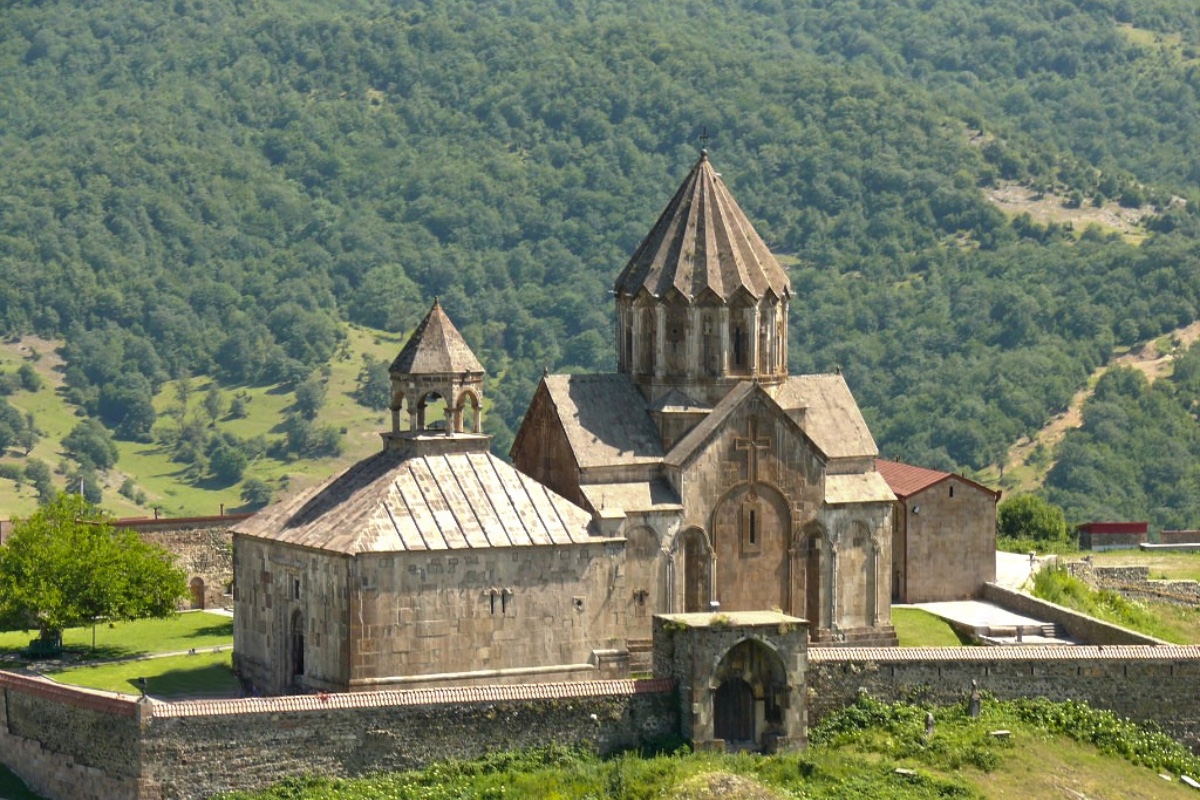
These developments took place following the public statements made by Azerbaijan’s Sheikh-ul-Islam Allahshukur Pashazadeh, after Catholicos Karekin II accused Azerbaijan of ethnic cleansing and the destruction of Armenian cultural heritage in Artsakh (Nagorno-Karabakh) during a conference in Switzerland in May 2025. The timing of the government’s actions heightened public concern and fueled accusations that the Armenian Apostolic Church had become a target of political pressure.
From this perspective, the government’s actions are viewed as inconsistent with democratic principles requiring a clear separation between religious and political authority, constitutional protections for religious freedom and respect for the autonomy of religious institutions.
Historical memory represents another important area of debate. Critics contend that changes in official rhetoric, educational priorities, and interpretations of recent events — including the Artsakh conflict and the Armenian Genocide — have weakened traditional national narratives. Supporters, by contrast, argue that reassessing historical decisions is necessary if Armenia is to pursue long-term peace and regional stability. They portray patriotic views as backward and against peace.
Critics also point to statements by Pashinyan and members of the Civil Contract party questioning aspects of Armenia’s approach to international genocide recognition. They argue that encouraging Armenians to ask “what happened and why” rather than treating genocide recognition as a permanent diplomatic objective represents a significant departure from previous state policy.
Similarly, Pashinyan’s rejection of the concept of “Historical Justice” and the reduced prominence of Mount Ararat in official government symbolism represent a broader shift away from traditional expressions of Armenian national identity.
The removal of the Artsakh flag, together with murals and public artwork commemorating the fallen of the Artsakh wars, generated considerable public controversy among bereaved families, opposition groups, and cultural preservation organizations. This approach is considered to be a part of a broader effort to diminish the public memory of the Artsakh War and to redefine Armenia’s national narrative. This process forms a central element of the “Real Armenia” doctrine.
Civil Contract’s 2021 election program pledged to support the restoration of the rights of the Armenians of Artsakh, including their right to self-determination. Following the 2020 war, the government also stated that negotiations under the auspices of the OSCE Minsk Group Co-Chairs should resume without preconditions. These commitments were subsequently abandoned, pointing to the government’s later rejection of policies advocating the right of return for displaced Armenians from Artsakh.
Similarly, Pashinyan previously described international recognition of the Armenian Genocide as an important component of Armenia’s security policy while emphasizing that such recognition should contribute to regional stability rather than increased tensions. Critics argue that subsequent government policies have represented a retreat from these earlier positions and have weakened Armenia’s longstanding commitment to historical justice.
This change has deepened divisions not only within Armenia but also throughout the diaspora, particularly among descendants of Armenian Genocide survivors who regard the Armenian state as the principal guardian of historical justice and national memory and against the principles of Hay Tad.
The promises made before the 2021 election were gradually replaced by the “Real Armenia” doctrine, which became the centerpiece of Civil Contract’s political program leading into the 2026 election campaign.
Critics argue that the “Real Armenia” doctrine places insufficient emphasis on Armenian national identity, historical memory and traditional values. They contend that, in an increasingly globalized world, this approach aligns more closely with post-national political thinking than with the historical foundations upon which Armenian statehood has been built. From this perspective, they argue that such policies risk benefiting Armenia’s geopolitical adversaries while weakening the country’s long-term national resilience and security. It is important to note that Armenia is in a difficult geographical position, surrounded by hostile states.
Finally, critics point to increased state intervention in the economy, legal proceedings affecting private businesses, and attempts to seize assets belonging to political opponents as further evidence of democratic backsliding. They argue that proposals to nationalize privately owned enterprises bear structural similarities to methods historically associated with Soviet-era governance and have raised concerns regarding property rights, political pluralism and the rule of law.
Preserving Armenian identity in a globalized world
Regardless of changing political leadership, the long-term preservation of Armenian identity depends upon institutions that extend beyond electoral politics.
The protection of cultural heritage remains the cornerstone of national continuity. Ensuring that future generations speak, read and write Armenian is essential both within Armenia and throughout the diaspora.
Historical education plays an equally important role. A nation’s understanding of its past shapes its collective identity, civic values and aspirations for the future. Preserving an accurate and comprehensive understanding of Armenian history is therefore fundamental to maintaining national consciousness.
The effort to establish historical justice has also been a unifying factor among the nation.
Religious and cultural institutions continue to provide social cohesion and historical continuity. Whether through the Armenian Apostolic Church or secular educational and cultural organizations, these institutions have historically served as guardians of Armenian identity during periods of both independence and foreign rule.
Economic opportunity is equally important. Persistent emigration undermines demographic resilience, weakens local communities and accelerates the loss of human capital. Policies that encourage young Armenians to build their futures within Armenia contribute directly to the country’s long-term cultural continuity and national security.
Finally, the Armenian diaspora remains one of the nation’s greatest strategic assets. Rather than viewing globalization solely as a threat, Armenia can harness global networks to strengthen educational, economic, technological and cultural ties between Armenians worldwide. A confident national identity need not be incompatible with international engagement; indeed, a strong diaspora can enhance Armenia’s global influence while reinforcing its cultural heritage.
Conclusion
Following the Sovietization of Armenia in 1920, the Bolshevik authorities sought to reshape Armenian society by weakening traditional institutions, suppressing national symbols, censoring historical narratives and persecuting those regarded as political or ideological opponents. Critics of contemporary Armenian politics argue that certain recent developments bear structural similarities to these earlier methods, despite arising from a very different ideological context.
They contend that a new generation of post-national, globalist and Sorosist political elites have embraced a vision of Armenia that places less emphasis on historical memory, traditional institutions and national identity. According to these critics, policies such as the removal of national symbols, the erasure of historical memorials, restrictions affecting political opponents, legal actions against religious institutions, increased state intervention in private property and the imprisonment of opposition figures reflect a departure from the principles of liberal democracy. They argue that, although these policies are justified in the language of reform and modernization, they share certain characteristics with methods historically associated with Bolshevik governance.
This marriage between Bolshevism and a new wave of Western globalism in Armenia has been a dangerous combination that has harmed national resilience and the national identity. Both have targeted the Church, national ideology and national values, harming the nation’s long-term survival.
The relationship between globalization and national identity is neither entirely antagonistic nor entirely harmonious. International cooperation offers significant economic, technological and diplomatic benefits. However, for smaller nations such as Armenia, openness to the world must be balanced with the preservation of the cultural, historical and institutional foundations upon which national continuity depends.
Armenia’s experience demonstrates that national identity has survived not because of political isolation, but because Armenians maintained resilient institutions capable of transmitting their language, faith, history and collective memory across generations. Throughout centuries of foreign domination, dispersion and persecution, it was these enduring institutions — not governments alone — that ensured the survival of the Armenian nation.
Current political debates concerning governance, historical narratives, economic policy and national identity should therefore be understood within this broader historical context. While reasonable observers may disagree about particular policies or political leaders, the long-term preservation of Armenian identity ultimately depends less on any single government than on the continued vitality of Armenian families, educational institutions, cultural organizations, religious communities and the global Armenian diaspora.
The challenge facing Armenia is not to reject international engagement, nor to abandon national identity in pursuit of globalization. Rather, it is to cultivate a model of statehood in which openness to the world is balanced with the preservation of the language, history, traditions and institutions that have enabled the Armenian nation to survive for more than two millennia. In an era of rapid geopolitical and cultural change, safeguarding those foundations remains not merely a cultural imperative but a matter of national resilience and long-term statehood.