The survivor generation arrived on these shores to escape the ravages of genocide and reestablish their lives in this country. Many of that generation initially believed they would return to the homeland under the right circumstances. Most of the men who joined the Armenian Legionnaires did so to join in the cause of defeating the Ottoman Turks and to participate in the Allied commitment that victory would mean freedom for Armenians in Cilicia. The betrayal by the French Allies in Cilicia and the Sovietization of what remained of Armenia ended their hope of returning.
That dream would be gifted to a new generation born in America and would be defined as the Armenian Cause. While never forgetting the ideal of an independent Armenian state, community infrastructure was needed to establish an ethnic identity and connect with the new generation born from World War I through the 1930s. Armenian homes were established in America, where the language and local culture were preserved, but a sense of community was needed for peer relationships to thrive.
The community I grew up in was typical of many locations across America. The community of Indian Orchard began before the genocide, when many single men arrived primarily from the Sepastia region to avoid conscription in the Ottoman army.
Before this period, it had not been a concern, as Christians were generally banned from military service. As a result of the “enlightenment” period of the Young Turks’ reform and a practical need based on the disastrous Balkan Wars, conscription had begun.
After 1912, the risk for Armenian men was significant, based on the discriminatory practices and long-established mistrust of the Turkish government. My grandfather arrived in 1913 as an 18-year-old man, along with several other young men from that region, to work in the local foundry. Economics and job opportunities generally guided immigration patterns. It was the foundries in Springfield, the wire factories of Worcester or the textile mills of the Merrimack. Each location across the country had a particular manufacturing base that attracted workers, who in turn built the early foundation of what we call today the American diaspora.
During those pre-genocide years, these young men, who were for the most part unmarried, worked and socialized with each other. Small social clubs were formed where Armenians could gather to play cards and enjoy each other’s company. It was enough to satisfy the short term, since the vast majority were planning to return to their families.
The start of World War I and the resulting genocide changed the paradigm forever. Some joined the Legionnaires, while others stayed to wait out the war. Most returned with a new mindset. The scars of war forced an acceleration of their maturity. Many had married and had children. The thoughts of returning to the homeland faded and were replaced with a commitment to build communities.
My grandfather left Indian Orchard in 1916 to join the Armenian Legionnaires. He left Cilicia in 1920 amid the chaos of the French withdrawal, the threat of Turkish massacre and the reality of another loss. He had found his siblings in orphanages and returned to Indian Orchard with his new extended family. This scenario was replicated thousands of times, each with unique nuances that became the foundation of our post-genocide communities.
The social clubs for single men were expanded into churches and schools for the newly established families. The temporary mentality was replaced by a fervent desire to build for future generations. Economics and the tendency of ethnic migration to create dense neighborhoods created sections of communities where most of the Armenians lived.
The Indian Orchard community was built with a significant population within one-and-a-half-square-mile area. Many of the men were employed in the foundry in that neighborhood. My uncle used to deliver the Hairenik Daily to local subscribers, and his route included nearly 50 homes in that area. Within that section of the town they called home, they built a church and social center in 1934. It was established on land within walking distance for the majority of the community. A new church was built on that same parcel in 1968.
Most of the churches built before World War II reflected this community church concept. They were located close to the population and were always open, as they were the heartbeat of spiritual, cultural and social needs. Even larger cities had a sense of community churches. My mother grew up in New Britain, Connecticut. The parish is located on Tremont Street, which during that period was lined with Armenian homes.
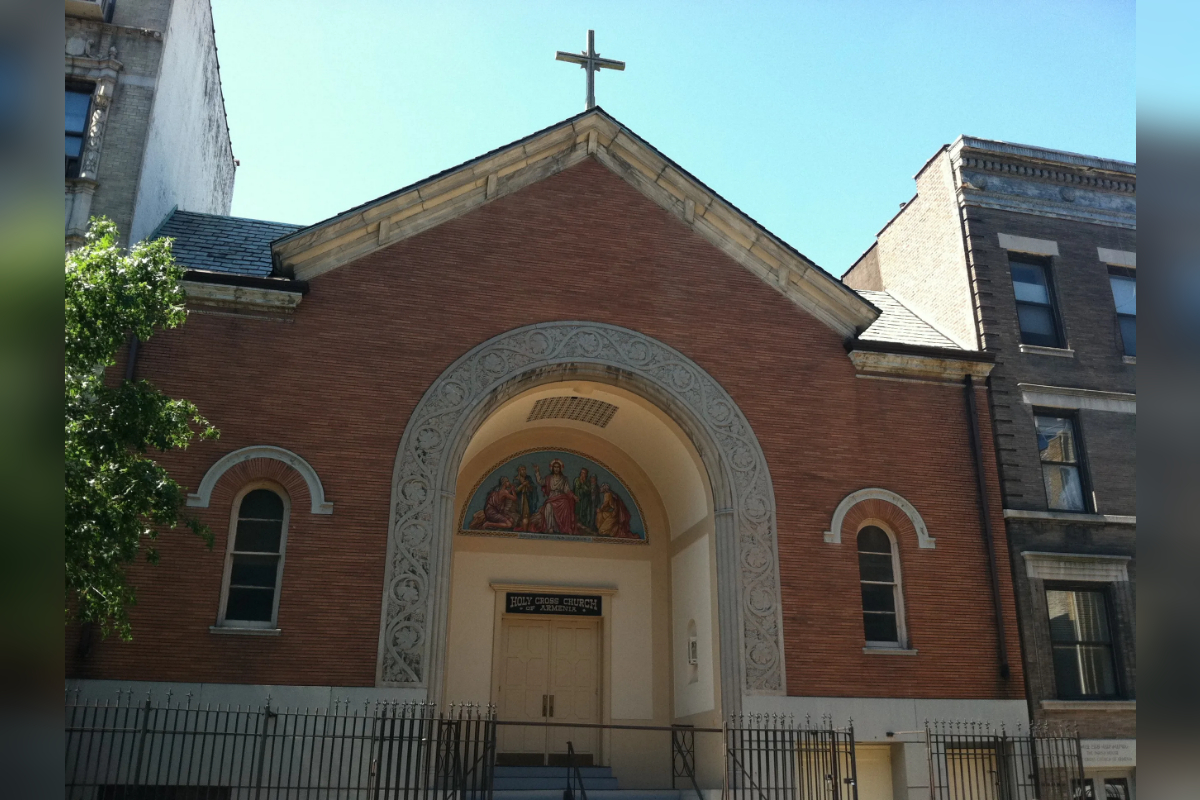
Perhaps the most popular example was in Watertown, where several parishes were established in the historic Armenian sections of East Watertown. Similar models existed in Philadelphia and Detroit. St. Illuminator’s Cathedral in Manhattan is located in what was once a heavily populated Armenian neighborhood of the Lower East Side. Holy Cross Church in Washington Heights, Upper Manhattan, once was in a vibrant Armenian neighborhood.
Social dynamics changed in America after World War II, affecting society, including Armenian communities. It was called suburban sprawl, or simply prosperity. With each succeeding generation, higher education, entrepreneurial success and a strong work ethnic resulted in unprecedented wealth for Armenian Americans. A majority of Armenians after the war joined their fellow Americans and built homes in the suburbs, where they sought security, better public education and comfort. As a result, the days of two-generation households began to fade as two- and three-family homes were upgraded to spacious ranches and custom colonials.
Most of the churches built before World War II reflected this community church concept. They were located close to the population and were always open, as they were the heartbeat of spiritual, cultural and social needs.
The first and succeeding generations born in this country were very successful but also were beginning to experience the challenge of maintaining Armenian identity in the social revolution America was experiencing. Within a few decades, most of our churches were no longer within walking distance. The location of the churches was a result of the demographics of the survivor generation, who established and thrived in Armenian neighborhoods. Prosperity opened new doors of comfort while chasing the American dream of homeownership. Many of our grandparents were homeowners of multifamily dwellings and lived in their buildings. Armenians of succeeding generations continued to own multifamily units but increasingly served as remote landlords while living in suburbs.
Given the appreciation of real estate, the suburban band of affordability continued outward, creating increasingly sizable distances from the church centers. We then began “commuting” to church, given the distance compared to previous generations. In small communities such as Indian Orchard, the once densely populated Armenian homes near the church transitioned to a few, as adherents moved farther away while remaining affiliated with the parish. There were exceptions, such as Watertown, where significant immigration from the Middle East and Armenia supplemented the movement of American-born Armenians.
Initially, Armenians would live in suburbs adjacent to the church location, and slowly the outward migration would continue. Armenians in Detroit originally lived close to sections of the city and built a church many decades ago in Dearborn, considered at that time a location with many advantages. Nowadays, the community is considering moving to a more centralized suburb. As demographics shift, many churches do not have the desire or capability to move locations and are left to struggle with the distances. I grew up in a community where the church was a mile and a half away, and for many years now, we have driven 40 minutes to church. The reasons for suburban migration are very personal, such as education, job location and a sense of community, but I wonder how many of us consider the location of an Armenian parish when considering a change?
The primary impact of this phenomenon has been, in most cases, the transition from a community church to a parish we drive to because of history and relationships.
When Catholics move to a community, they usually attend the local parish in that town. In fact, the Catholic Church has had territorial guidelines in the past. In the Armenian church, there usually is no parish in the town where we reside, and we are free to participate anywhere — or nowhere. It has evolved into becoming aware of how far the church commute is. In today’s Armenian church, we have a plethora of excuses as to why we don’t participate. Some common themes are, “I don’t get anything out of it,” or, “My spouse is not Armenian, and it is difficult as a family.”
The incredible wealth of the Armenian community has enabled many outcomes. Armenians in America have demonstrated incredible generosity to their communities, churches and the homeland. Many are motivated by a remembrance of modest beginnings and a love of philanthropy. Our prosperity also has created a diluting impact on our communal demographics that has a direct impact on the level and frequency of participation. How many times have we heard former active members or new participants say, “I wish we lived closer. Coming every week is difficult.” How effective is Sunday school teaching when some students only come once a month or less? How engaged can one be at that frequency in the life of the church? What happens to parish continuity when there is rotating participation?
The primary impact of this phenomenon has been, in most cases, the transition from a community church to a parish we drive to because of history and relationships.
The answers are complicated but not hopeless. It will require vision and flexibility. Some parishes have begun Bible studies that are remote on Zoom or held in homes where a cluster of parishioners may reside. It encourages participation without having to drive at night to the church. Can we accept ministries that are not necessarily held in the church complex? I have long advocated Sunday school lessons on a YouTube channel that keep students in the loop when they cannot attend on a given Sunday. Programming could include animation and other age-appropriate content in the comfort of their home. It may also contribute to improving home-based spirituality, which has declined over the last decades.
It is clear that our communities will continue to be geographically diluted. It also is reasonable to assume that not many churches will be built to adjust to shifting demographics. That leaves using innovation, technology and flexibility to bring our scattered flock closer to Our Lord. Those parishes that have instituted breakthrough thinking should be applauded and should share their learning as a case study for other parishes to emulate.