



The Region in Brief

Armenia
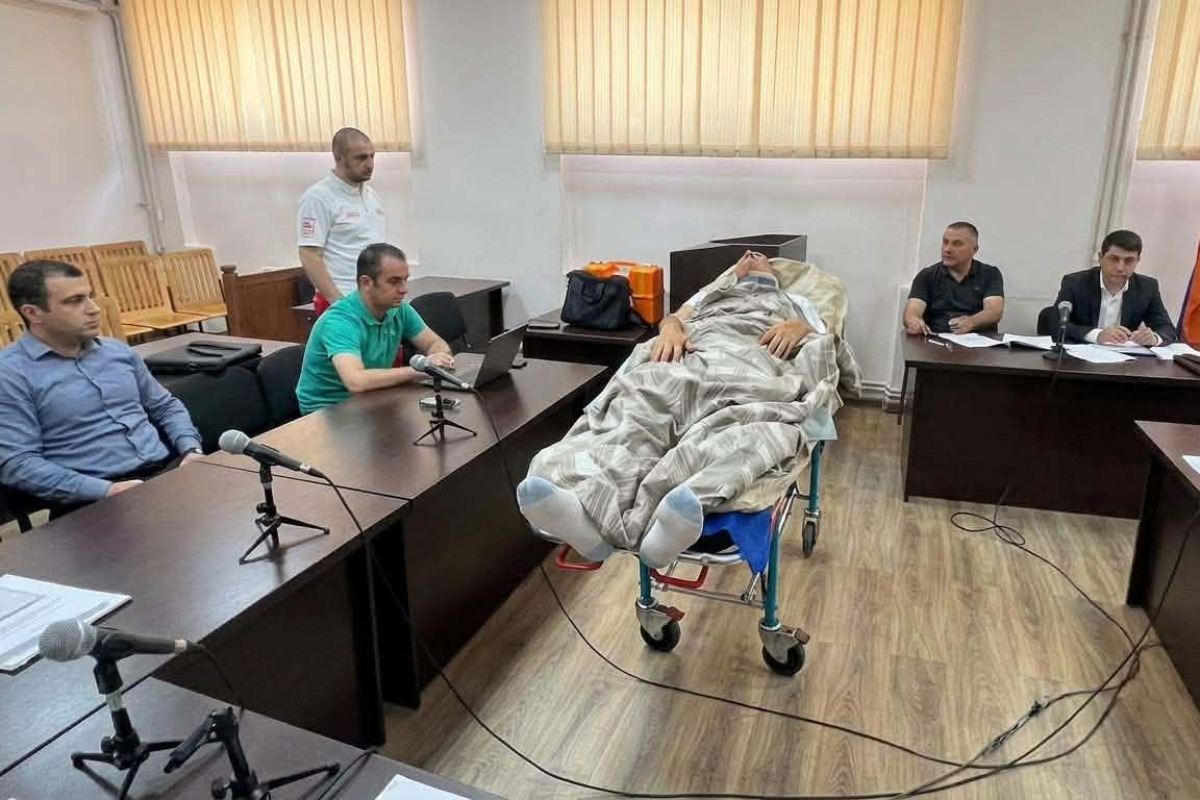
The Armenian Apostolic Church faces renewed pressure from authorities after Archbishop Arshak Khachatryan was detained Dec. 4 by the National Security Service at the Investigative Committee’s premises.
His lawyer, Arsen Babayan, wrote on Facebook that no expert has confirmed the authenticity of a widely circulated video of Khachatryan and urged officials to stop spreading false or misleading claims.
The Investigative Committee said Khachatryan was taken into custody as part of a criminal investigation. “During the preliminary investigation of a criminal case, public prosecution has been initiated against the individual under Article 393, Part 2, Points 1 and 4 of the Criminal Code (illegal trafficking of narcotics by a group of individuals with prior agreement, at a public location),” the committee reported.
At a Dec. 2 press conference, Archbishop Khachatryan addressed questions regarding a potential suspension from his duties, stating that he saw no need to step down. When asked why he was targeted by authorities, he responded: “They do not target intellectuals or public figures who please them. The authorities target all those who speak against them.”

Following a hearing at the Yerevan City Court of First Instance, presided over by Judge Masis Melkonyan, Khachatryan was remanded to two months of detention. His legal team noted they saw no apparent grounds for the arrest and suggested he was prepared to join other detained senior clergymen in facing politically motivated charges.
The Investigative Committee maintains that Khachatryan’s detention is linked to alleged involvement in narcotics distribution, a claim his supporters vehemently deny.
The Mother See of Holy Etchmiadzin issued a statement condemning the arrest and pre-trial detention of Khachatryan, describing the charges as baseless:
“This action is a continuation of the recent wave of repressive measures against the Church and a further step in the political persecution of clergy. The detention of high-ranking clergymen on fabricated charges is a manifestation of the government’s anti-Church policy and hostile rhetoric against ecclesiastical figures. We demand the immediate cessation of these illegal prosecutions and the restoration of the violated rights of Archbishop Arshak Khachatryan and other detained clergymen.”
Artsakh
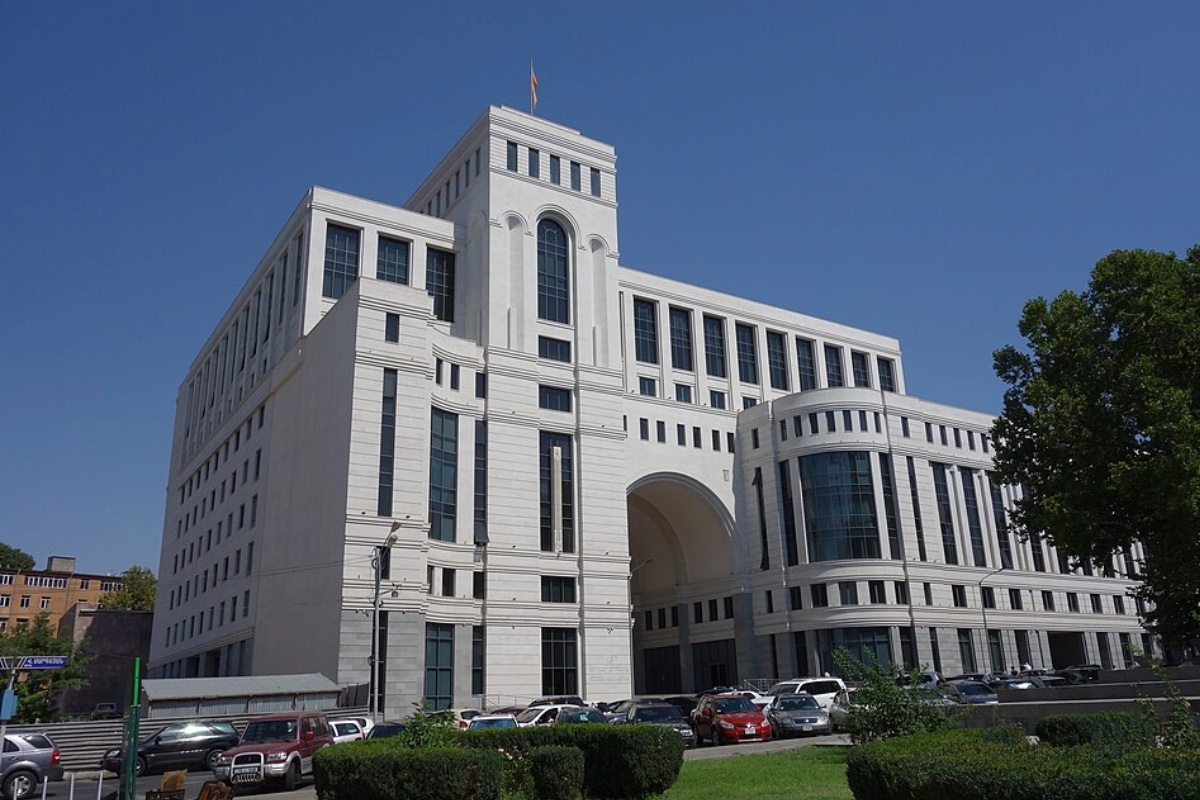
Armenia’s Investigative Committee (IC) confirmed that searches were conducted at the Office of the Representation of Artsakh in Yerevan as part of an ongoing criminal investigation. The IC stated that “necessary investigative actions” are underway but declined to provide details about the nature of the case.
On Dec. 11, IC officers carried out searches inside the representation office, though the specific grounds for the investigation have not been disclosed. The operation came one day after parliamentary hearings for Artsakh Constitution Day, during which the return of displaced Artsakh Armenians was discussed.
The search at the Artsakh Representation in Armenia concluded later in the day, with IC officers leaving the premises after seizing computer equipment.
Lawyer Roman Yeritsyan shared a photo allegedly showing damage, writing: “As a result of today’s search, the fireproof safe was broken open, and the ‘criminal items’ discovered were empty folders and a single copy of the newspaper Azat Artsakh. They damaged the property, didn’t confiscate the newspaper, left it and walked away.”
No further details about the investigation have been provided by authorities.
Meanwhile, the first session of the final phase of the trial involving Armenian military and political prisoners took place in Baku. Azerbaijani media did not publish defendants’ statements, reporting only the remarks made by their lawyers, who reportedly requested acquittals.
According to available information, several detainees were allowed to deliver their final statements. Davit Manukyan, Levon Balayan, Madat Babayan, Garik Martirosyan, Melikset Pashayan, David Alaverdyan, Gurgen Stepanyan, Erik Ghazaryan and Vasili Beglaryan all declared that they had committed no crimes.
The hearing, which was adjourned, is scheduled to resume on Dec. 19.
Georgia
Beginning with the 2026 academic year, students admitted to Georgia’s public universities will no longer pay tuition fees. The government will fully cover the cost of higher education, Prime Minister Irakli Kobakhidze announced during a press briefing, according to Georgian media reports.
“Under our government, preschool education has become free and general education, as you know, is already fully free. Now we are adding the third level of education — higher education — which will also become free,” Kobakhidze stated. “Starting next year and in the years to follow, education will be free for all students admitted to public universities. Supporting young people and improving their financial well-being is one of our key priorities.”
Russia
Armenia’s membership in both the European Union and the Eurasian Economic Union (EAEU) would be incompatible, and at some point Yerevan will have to make a choice, Russian Deputy Prime Minister Alexei Overchuk told reporters, according to RIA Novosti.
“Regarding Armenia’s rapprochement with the European Union, we have spoken about this many times. We believe that membership in two different integration blocs is incompatible. And at a certain point, the people of Armenia will have to make a choice. But that choice belongs to the Armenian people,” Overchuk stated.
Turkey
Turkish Foreign Minister Hakan Fidan addressed the normalization process with Armenia during a presentation on Turkey’s 2025 agenda at the Grand National Assembly of Turkey. He emphasized that the process has been carried out in close coordination with Azerbaijan throughout the year.
Fidan described the potential achievement of peace in the coming year as a “historic opportunity,” noting that Ankara and Baku have worked in parallel on regional initiatives.
“The normalization process with Armenia in 2025 has proceeded along the same lines and in coordination with Azerbaijan. In the period ahead, we will continue to do whatever is necessary to ensure lasting peace in the region, and we will encourage all parties to make full use of this historic opportunity,” he said.
The foreign minister also noted that 2025 has been a year of significant developments in the South Caucasus.

Never in its contemporary history has Armenia been so vulnerable and betrayed from within. What makes the current plight of Armenia so painful, is that the Armenian Apostolic Church, the Artsakh government in exile and Armenian patriots are persecuted not by foreign rulers, but by the archtraitor Pashinyan. His persecution of them, reeks of collusion with Azerbaijan and Turkey, which want to neutralize and eliminate them and which they see as “obstacles” in their quest to emasculate and enslave Armenia, with Pashinyan in the role as a quisling and as their satrap.
Steve – I agree with some of your statements; Armenians have historically collided against each other. But this time it is different.
If there is one lesson from history NEVER trust a Turkish leader starting with the Red Sultan, the Young Turks, Ataturk, and now Erdogan. Add the blood brother criminal Aliyev family and we now have the final vice closing in on our ancestral homeland.
Well, that’s one way of looking at it. Another, less “imaginative” way of interpreting these events is: never in its contemporary history has Armenia been more peaceful, stable, independent, and with respectable economic footing (with an average GDP growth of about 8% and pretty consistently declining unemployment since 2020).
It is making its own, difficult geo-political choices after having badly lost a war that it was ill prepared to fight 1) due to 20 years of neglect and exploitation by oligarchs, 2) after being impaired by useless military alliances with “friendly” regional powers, 3) against an adversary whose military spending consistently outstripped its own by a factor of 5x for nearly a decade and whose single-minded intention to start a war was clear for a decade.
It has opened diplomatic, economic, and military negotiations among a much larger swath of the world’s nations while simultaneously balancing (so far) relations with hostile neighbors and indifferent/untrustworthy allies.
It is dealing with a Church that has for 20 years lost sight of its God-given vocation, has been corrupted by clergy with mostly worldly aspirations, and that has become a tool in the hands of foreign powers.
Sure, if you creatively ignore how we got to where we are today and merely take a snapshot of this moment in time, you may fancifully interpret this moment as bleak. You may even start to tag people with epithets to make yourself feel better in this “plight.” And I can’t blame you for reacting with outrage when the “traitorous quislings” in power are still more popular than the political party some here hold dear. But, reality has a way of rudely awaking people out of their day dreams, eventually.
Spoken like a true die-hard Pashinyan apologist and sycophant. Or perhaps Pashinyan is commenting here incognito to defend his “accomplishments”. Pashinyan, is that you?
Steve, I’m so sorry to disturb your pleasant daydreaming. Let me know when you’re ready to talk about the real world.
@Zaven Kalayjian
It is you who is living in cloud cuckoo land. You can day dream as much as you want, but the harsh existential realities of Armenia, have no place for silly utopian day dreams, which you and your “hero” Pashinyan” live in. Time to return to the real world.
Who cares what Overchuk said? He decides nothing.
@readersays
Yes, only Armenians can decide the future path and destiny of Armenia.
However, Pashinyan needlessly and stupidly antagonized Russia, with his pro-West orientation by trying to decouple from Russia without securing a security guarantee from the West, when there are no firm alternatives. And his foreign policy blunder has been disastrous for Armenia and caused the totally avoidable loss of Artsakh.
Yes, Armenia can leave the Eurasian Economic Union (EAEU) and CSTO, but joining the EU and NATO is extremely difficult to impossible (with the latter) for these reasons:
Joing the EU is extremely difficult, because of that organization’s very demanding and very numerous criterias for EU membership. In addition, each 27 EU member has to agree to Armenia’s candidate status (because of each member’s veto power), who in turn have all to agree on its accession (provided it is not vetoed by one EU member, such as Hungary, which is Turkey’s and Azerbaijan’s best friend in Europe, and which is antagonistic towards Armenia), if Armenia were to fulfill the EU’s herculean task of meeting all 72 criterias for EU membership. Seeking EU membership is like the equivalent of climbing Mount Everest.
Seeking NATO membership is under normal circumstances much less challenging than seeking EU membership, because the criterias for joining NATO require the modernization and integration of the national military. However, with Turkey as a NATO member, Armenia has no chance of joining NATO, because Turkey is dead set against Armenia becoming a member of NATO, just like it is dead set against Cyprus (40% of which it occupies) becoming a member of NATO, and has vetoed Cyprus from even having relations with NATO.
Being landlocked and surrounded by two hostile predatory Turkic neighbors, Armenia is indeed geographically and strategically stuck between a rock and a hard place, and switching sides and decoupling is not straightforward and is a luxury, unlike for many other countries.
if it is impossible to join then what is Over-chuk’s (Over-weight’s) worry?
But you know who else is landlocked? Austria and Hungary. And?
@reader
What that Russian guy with the Ukrainian surname said, doesn’t matter.
That Armenia, Austria and Hungary are landlocked, is the only thing they have in common. There are 44 landlocked countries in the world. There is a huge difference between landlocked Armenia’s situation and landlocked Austria’s and Hungary’s situation though. Whereas these two countries are located in the cushy and safe neighborhood of Central Europe surrounded by peaceful civilized countries, Armenia is located in the volatile neighborhood of West Asia surrounded by two aggressive barbarous Turkic neighbors, in addition to a volatile Iran and Georgia. Armenia’s misfortune is that its two Turkic neighbors won’t become peaceful and civilized anytime soon. Pashinyan may pretend that Armenia is in Central Europe, but geographical realities should have woken him up from his day dreams. I can’t imagine a worse neighborhood for a country.
Yep. Overchuk must go. Pronto. That much is clear to everyone.