



A lifetime of service to others: Rest well in God’s eternity, brother
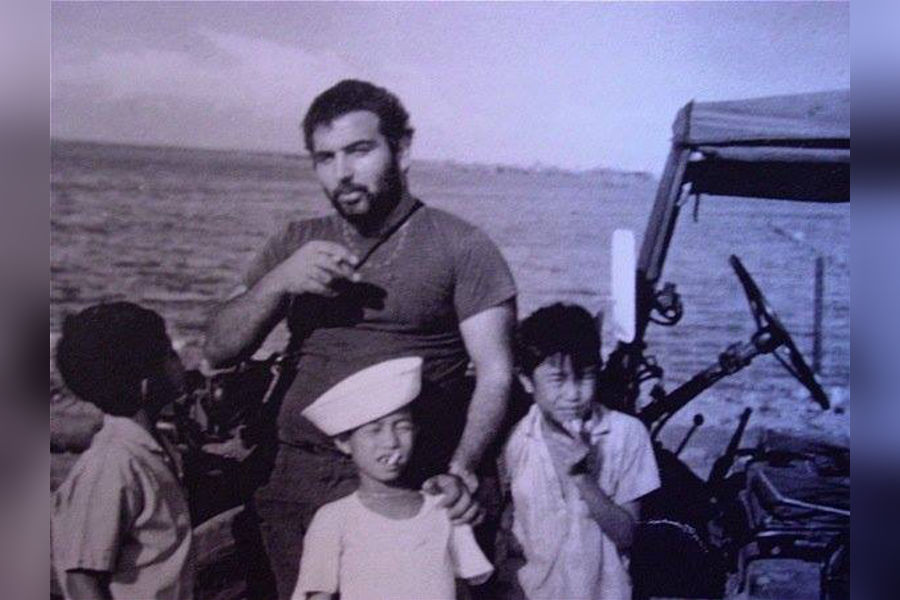
This past week, we lost a giant of our community. Manoog Kaprielian was a man of substance and vision—driven by a foundation of loving humanity. A man of great character, he was blessed with a remarkable capability to reach others, surprising and inspiring many. Manoog’s mission in life was to serve those in need in diverse ways—from investing his time into the Armenian community to international humanitarian activity to supporting his fellow military veterans.
I met Manoog in 1972 after he returned from Vietnam and was discharged from the Navy. At a time when many stayed in college to avoid the draft, Manoog volunteered to serve his country. While most of us were busy navigating a campus, he was maneuvering through the dangerous waters of the Mekong Delta. He always sought his path with confidence and courage.
I was introduced to Manoog by Stepan Kanarian, a mutual friend from Providence. Several of us were involved in the political Hai Tahd committee of the AYF, and Manoog was eager to join. Our meetings were held at the upper camp of Camp Haiastan in the caretakers’ house. At the time, he had started working third shift at the Providence Post Office. He often arrived a bit late, coming directly from work. We assumed it was an anomaly, but over the next 50 years, we learned that he was always fashionably late. His presence, though, was well worth the wait.
Manoog always had something uniquely serious or humorous to share. Our committee was divided into several subcommittees, such as public demonstrations, community education and congressional relations. Manoog took on the latter with the energy and enthusiasm that became his hallmark. Putting this in context, today’s advocacy groups either did not exist or were in their infancy. We were learning together as young volunteers.
Manoog would arrive with his classic leather-strapped briefcase and piles of congressional records under his arms. For those not familiar, the records are a transcript of all congressional proceedings on the floor and were the size of an urban phone book. He would write letters to many members of Congress about the Armenian Genocide and then scour the official records for any reference to our cause on the floor of Congress. He was particularly active with the Rhode Island delegation, which maintains a strong relationship with the local Armenian community today. Manoog had a rare combination of vision and follow-through.

Although most of us were in college, this work became virtually a full-time job. Manoog’s dear parents owned two homes on a single property on the east side of Providence, and he and his brother Varky lived in the back house. Manoog offered his home as our committee’s de facto headquarters, and for the next few years, it was where we met on weekends, slept and shared meals while putting our hearts into AYF and Hai Tahd. We each contributed in unique ways. Manoog was the creative engine. The definition of thinking out of the box should rightfully have a picture of him adjacent to the term. He was sensitive and caring, hospitable and comforting. It was a perfect environment for creative thought and trailblazing ideas.
Many of our Weekly readers who were in the AYF during this time will recall the breakthrough impact of the “Sight-Sound Modules.” This was Manoog’s vision, creation and technical brainchild. I vividly recall its beginning. Manoog always kept a bowl of fresh fruit on the dining room table. A few of us were enjoying the fruit during a brainstorming session focusing on community education when Manoog had an idea.
We all shared a love of American rock and pop music and were dedicated to our Armenian cause. Manoog’s idea was to merge the two into an emotional communication tool for our peers. It involved synchronizing the lyrics of rock tunes to visuals of the Genocide, the First Republic and other critical junctures in our modern history. It was a brilliant idea that everyone immediately connected with. The problem was the lack of integration technology, as this was long before the days of MTV or music videos, with no internet or digital archives to review content.
This is where brother Kaprielian once again distinguished himself. He took his concept into a makeshift lab to manually edit music with still photos. He would convert key photographs into slides and listen to lyrics while recording them for editing. In Manoog’s home, there was a small bedroom at the top of the central staircase—this became the “Sight-Sound” laboratory.
On more than one occasion, I would wake up to the sound of Manoog’s visual and musical research. After a few months of perfecting the syncing of visuals on a carousel projector screen with audio rock lyrics, the project was taken on the road. It traveled to places like Detroit, New York, Springfield, Camp Haiastan and the National Junior Seminar. Although initially intended for youthful audiences, it became an offering to the general community. The responses were best measured by the tears of joy from all ages. It motivated, inspired and encouraged countless people to learn more about their history and become engaged in the work of justice. It completed an emotional connection between the heart and the mind. Perhaps the most enduring legacy of Manoog’s vision in this endeavor was observed in the last week, with hundreds of social media messages of condolences that contained many references to “Sight-Sound Modules” and their motivational impact.
Manoog was ahead of his time in many domains. He did not just double major in women’s studies at Rhode Island College; he lived it with his support of women professionally and in underserved areas of our community. Manoog broke gender stereotypes by being an active member of the Armenian Relief Society (ARS) and Armenian International Women’s Association (AIWA). During our communal discussions, Manoog would frequently speak to us about feminist topics and equal rights at a time when most men were severely undereducated. His influence shaped committee makeup and seminar topics. He helped us grow as human beings.
The Vietnam War was divisive and unpopular in our generation, which tragically translated to our society taking out that frustration on our veterans. There were no parades or airport receptions. Some of us were active in protesting the war. Manoog helped us to appreciate nuance and understand that those who serve are deserving of respect and dignity, regardless of our policy views. This is a major lesson learned tragically in the U.S.

Today, we thank veterans for their service, honor them and understand that those who serve are to be honored. I like to think that Manoog played an important role in that societal transformation. He was at the forefront of counseling veterans traumatized by their experience, while also sensitizing civilians to respect their commitment.
One of the attributes that drew me to Manoog was his affinity for those who came before him. Early in our friendship, he learned about my Uncle Philip Arslanian, who was a WWII veteran, Bataan Death March survivor in the Philippines and POW during the entire war in the Pacific. He wanted to meet with my uncle to learn from him and thank him for his service. Uncle Phil rarely talked about his ordeal but opened up to Manoog. It was such a blessing to watch these two veterans from different eras bond together.
Manoog always spoke about his service in the Navy in the context of his grandfather, who was a “gamavor” in the Armenian Legion, and his father, a veteran of WWII. His relationships with older Armenian heroes such as Dajad Terlemezian from Van and New Jersey, along with Toran Kalagian from Indian Orchard (a volunteer with General Antranig), were a beautiful sight, as he bridged the generations with love and respect. He gave many in that generation moments of peace.
Manoog had a gift of engaging almost any audience on a wide portfolio of topics. Given his passion and verbosity, we would lovingly joke that the punctuation for his dialogue only included commas and no periods. He was one of the few people I know who was internationally known by his first name. I have traveled this country from one coast to the next and met countless individuals whose faces lit up with the name “Manoog.” It also happened in Armenia, a tribute to the footprint he left after five years in the homeland.

Manoog was remembered because his outreach was sincere and focused on others. His remarkable ability to juggle scores of issues and relationships simultaneously enabled this almost universal visibility. The presence of humility and acting in an unassuming manner, whether in the homeland, NAASR or his home parish, earned him respect. He was a natural at giving.
Those of us who knew Manoog often reflected on his unique style. Many of us have followed a more traditional path, and there is something to admire when we witness someone who truly understands service to others and backs it up by adjusting their lifestyle.
Even in our high-energy, youthful days, it was challenging to keep pace with Manoog’s incredible bandwidth for serving others. A single conversation could reveal half a dozen serious parallel investments of his time in serving audiences across geographies. He always found a way to connect them with the value of service.
Manoog was essentially our Renaissance global citizen. The term “global” was used to describe him in his obituary, beautifully written by his cousin and niece. Manoog’s contributions went far beyond his vision, passion and results—that would have been an immense contribution in and of itself. Manoog, with his “Global Renaissance” perspective, opened our eyes beyond the insular behavior that can plague us, at times. He would bring countless non-Armenians into our environment who had experienced similar human injustices, grounding us with new perspectives. My appreciation for this talent has grown as the years have gone by.
Losing someone we experienced life with is a difficult process. It creates an instant recall of all those fine moments that helped shape who we are today. The sense of loss is real and justifiably selfish. We should remember those times and never forget how fortunate we were in our journey to meet someone like Michael Manoog Kaprielian.
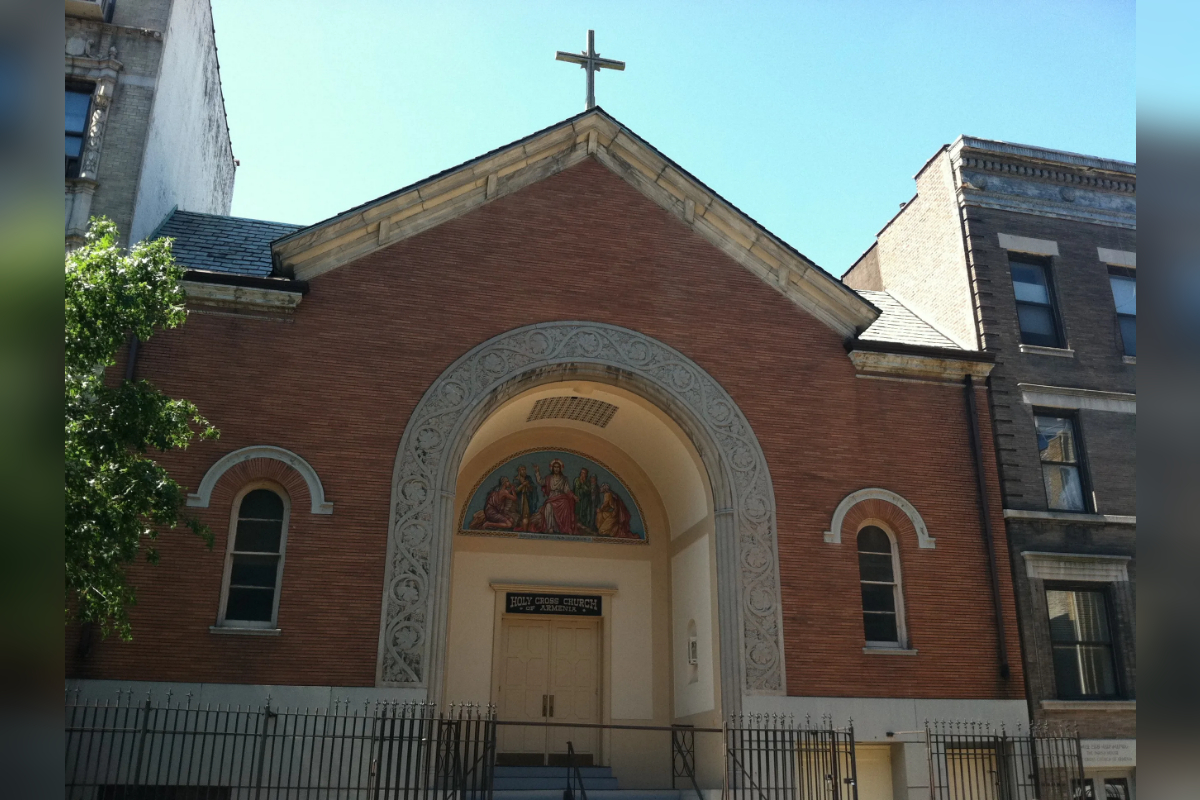
Manoog was a man of deep faith. It gave him the courage to do the things he did in the service of others. Sitting quietly in the pew of the church during his wake, it was a remarkable sight to observe the hundreds of mourners from all walks of life coming to show respect to a man who made a difference in their lives. There is no greater legacy. Rest, brother….a job well done.


Thank you Stepan.
Stepan,
A beautiful and powerful tribute and reflection on the life of our dear Manoog.
Thank you!
Stepan,
You captured Manoog’s essence perfectly!
Well done.
What a beautiful tribute!
A genuine tribute that vividly reflects his caring nature and his desire to make a difference. He was truly one of a kind.
Thank you Stepan.
Stepan — thanks for this deeper perspective on how Manoog lived his life especially in his young adult days. And thanks for reminding us of the name of the “sight sound modules!” Manoog was way ahead of his time.
From the “ Sail on, Silver Girl”
Nancy Nahigian Tavitian
Stepan:
Everyword in your tribute echoes Manoog gentle and powerful spirit.
Everybody echoes the gentle and powerful spirit of Manoog! Thank you.
Stepan – this is a beautiful tribute to Manoog – no one could keep up with all he was involved with but you summarized his life and being so well. Rest in eternal peace dear Manoog!!
Such a wonderful reflection on this special soul who touched so many and accomplished more than anyone could imagine…we’ll all carry special memories of his warmth, creativity and unique perspectives on life for an eternity.
Thank you, dear Stepan, for presenting the biography of Manoog Kaprielian in detail. I have known Manoog since 1998. He was a man who loved Armenia and was devoted to the nation. Over the years, he provided significant assistance to the members of the “Armenian Association for Persons with Disabilities “PYUNIC” Charitable NGO ( http://www.pyunic.org ). May God enlighten his soul.
Thank you for this beautiful tribute to Manoog’s legacy. He, in many ways, reflected the Providence Armenian community; he did a bit of everything: the church, the protests, the fairs, the choir, student support, refugee support, networking, etc. Rest in peace, my friend.
A wonder tribute to uncle Manoog!