In search of memory: “Country of Dust,” Musa Dagh
In 2002, the whole family gathered together. On the screen were images of their birthplace, which they had left 60 years earlier. They had not left voluntarily; this was a forced displacement. She looked at her grandmother, who excitedly recalled: “We used to walk here, and my friend lived right there.” Her grandfather said nothing. He simply watched.
Then, for a few fleeting seconds, a slender woman with a broad smile appeared on the screen, dancing in a circle with the others. The expression on her grandfather’s face suddenly changed. He began to cry. “It’s my sister,” he said․
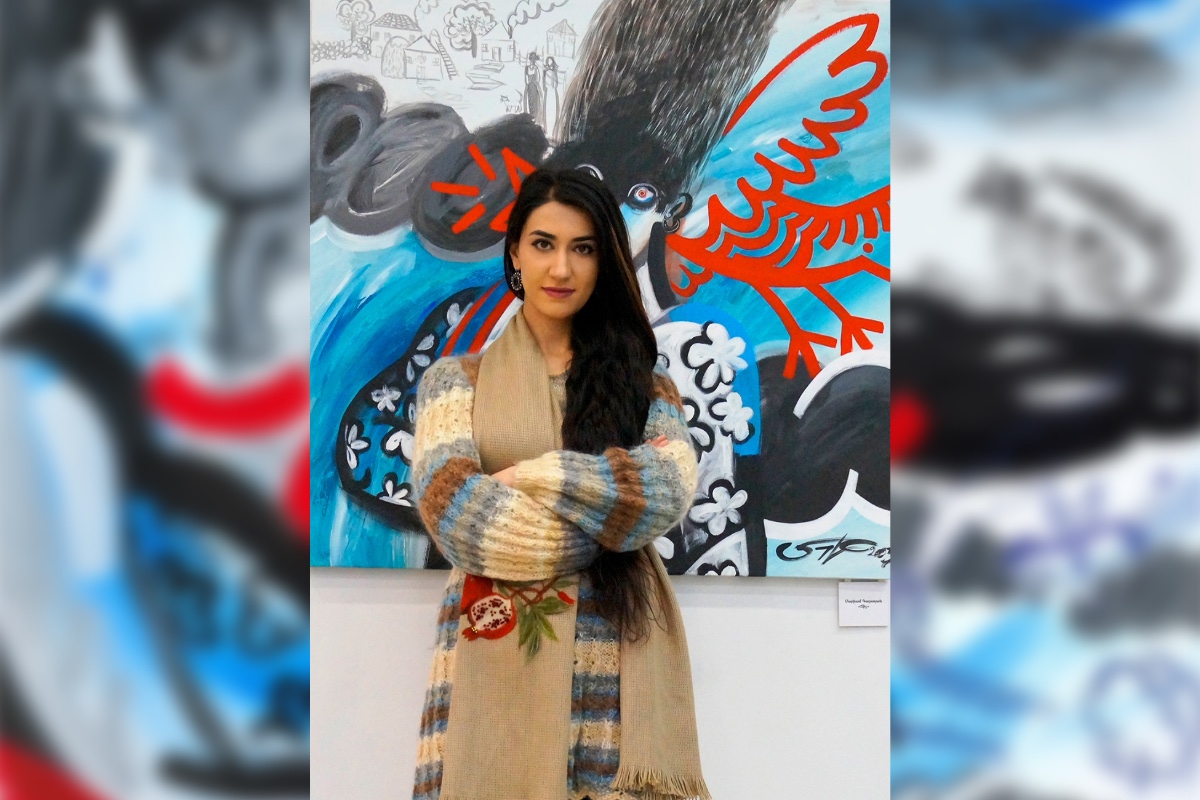
It was a turning point for the Abrahamian family from Musaler: For the first time, they began considering a journey to Western Armenia. Until then, going to Turkey had been taboo. But the possibility of finding relatives there sparked something in Jean Abrahamian, who was born in Lebanon yet spoke the Musaler dialect. This story was told by his daughter, writer, education specialist and producer Nyree Abrahamian. Born and raised in Toronto, she now lives in Armenia.
“My father is deeply connected to his Musaler roots and has always been very family-oriented. He immediately said, ‘Alright, we need to find them.’ It took time, but we eventually did. Two years later, in 2004, my parents made their first trip to their lost homeland. By then, my grandfather had already passed away.”
Musaler comprised six villages that united and mounted a stiff resistance during the Armenian Genocide. Until 1939, the region was under French control. However, when it was transferred to Turkish authorities, most Armenians of Musa Dagh relocated to Anjar, Lebanon.
“My grandparents had left, but my grandfather’s sister, Zarouhi, stayed there with her husband. First, she visited them in Anjar. Later, my grandfather learned that their family had moved to Soviet Armenia.” Nyree Abrahamian told the Weekly.
Jean Abrahamian not only found his relatives but also decided to locate his father’s house in his native village of Yoghunoluk. Before leaving, his father had entrusted the keys to a Turkish man who had worked in his olive grove. Today, the man’s descendants still live in the house and are familiar with its history. Jean was welcomed by the head of the household, Hamala. Following Turkish custom, she repeatedly said “welcome,” the same word often used when bidding guests farewell. Suddenly, Jean Abrahamian raised his voice and burst out: “I curse your welcome. This is my father’s house. You are the guests here.” Speaking in the Musaler dialect, his outburst was most likely not understood by the Turkish woman. On his way out, still in tears, he said: “May it be halal for them,” That’s to say “Fine, let them have it (in good conscience).”
“Hamala kept saying ‘welcome.’ She meant: ‘This is also your home,’ and that’s a very important idea. Many men of my father’s generation never even had that kind of conversation. I really respect my father for entering into it. It was uncomfortable and painful. And he didn’t just have that conversation; he also formed a bond with that house, a place he kept going back to,” said Abrahamian.
In 2015, Nyree herself went to Musa Dagh. “Do you remember the man who came with the camera and was crying?” her cousin asked the Turkish woman accompanying them. “That’s his daughter.” From then on, Nyree became known as “the daughter of the crying man.” When she arrived at the house, she first noticed the view her grandfather used to see every day — the same view her father, and she herself, had been deprived of.
“For me, it wasn’t just a sentimental feeling that ‘this body belongs to this place.’ I had already moved from Toronto to Armenia in search of something I could call home. I love Armenia and have worked hard to make it my home, but it has always taken effort. The language, culture and food — everything — are very different from what I grew up with. And yet, I feel a sense of closeness and consider myself lucky to be accepted here. But in Musa Dagh, it was different. It felt like no effort was needed; everything simply felt familiar. The sea, the mountains, the smells — it all felt like a place that was mine.
This journey into the past came to a symbolic end after the earthquake, when the house was destroyed. Nyree returned to the familiar places once more, including Musa Dagh, where she scattered her father’s ashes into the wind.
“That was very hard, because I used to have that place — somewhere I could go, even if I didn’t live there, just to touch it, just to be there. And now it’s gone. That’s tough. But at the same time, what matters more than the house is the connection I have with my family there. That made me realize this is what needs to be preserved.”
We learn the details of this story from the “Daughter of the Crying Man” episode of the podcast “Country of Dust.” The podcast was created following the end of the Second Nagorno-Karabakh (Artsakh) war. During the war, Nyree worked with international journalists, and immediately after the ceasefire she went to Stepanakert with The HALO Trust. Although the ceasefire had been declared and the journalists had left, the situation remained uncertain. She says: “No one was following anymore, but things were still in process.”
Reflecting on the situation in Artsakh at the time, Nyree said: “I remember the first time I saw children’s clothes hanging on a clothesline. When I was there a few years ago, I never saw women or children in the city. It was a deeply moving sight. Another moment was seeing a woman in a beauty salon getting her eyebrows done. The city center was still scattered with broken glass, still very much a war zone. But that small act of care — that return to beauty — felt profoundly human. It felt like life was slowly coming back.”
“During a conversation, a close friend of mine from Artsakh shared a thought that stayed with me: Would his grandchildren one day go searching for his home? Until then, I had considered the repetition of history on an intellectual level, but in that moment, I understood how deeply real and personal it is for those who live through it. I had simply been trying to tell my family’s story, yet it resonated far beyond that. This experience is not unique to Armenians — many people around the world continue to face the enduring consequences of displacement and genocide.”
Nyree began writing down her impressions in fragmented, non-linear pieces. At the time, she wondered whether what she was creating could be considered poetry. During this process, she encountered Caroline Forché’s anthology “Against Forgetting.” The collection brings together what Forché calls “poetry of witness” from the 20th century — poems shaped by war and violence. Its opening section is devoted to works written in the aftermath of the Armenian Genocide. Among them, Nyree Abrahamian was particularly struck by Vahan Tekeyan’s poem “The Country of Dust.” That title would later become the name of the podcast.
The “Daughter of the Crying Man” episode was screened in Yerevan and Los Angeles. Some members of the Armenian diaspora said they would rather not undergo such a painful journey. While Nyree understands this hesitation, she believes it is essential to confront that discomfort, because there is a profound sense of strength and autonomy in standing on one’s own homeland.
The podcast team is made up of three people: producer and sound designer Jeremy Dalmas, producer Gohar Khachatryan and Nyree. They are currently working on the third season.
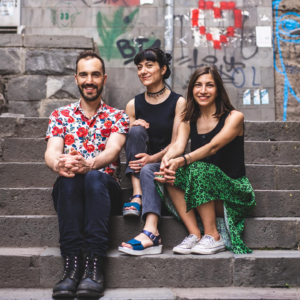
The podcast has received wide international recognition: It has been featured in The Guardian’s “Best Podcasts of the Week,” won the Press Gazette Future of Media Award, and was shortlisted for both the International Women’s Podcast Award and the One World Media Award. Through their work, they tell stories of a changing Armenia and the lives of its people today.
Nyree is also one of the founders of another initiative, which she describes as a “love-born” project: the Hovhannes Tumanyan International Storytelling Festival. Together with two friends, she recognized how essential it is for people — whether dancers, poets or other creators — to feel part of a community.
The first edition of the festival explored the theme of “beginnings,” centering on new starts, while the second focused on “stories of place,” examining connections between space, memory and the past.
So far, they have organized two festivals in Tumanyan, along with smaller events in Yerevan, New York City and Los Angeles. They hope to continue developing the project, though its future depends largely on available resources, as each edition is made possible through fundraising.
For Nyree, storytelling is a way of resisting oblivion. When stories are spoken aloud, they no longer remain confined to a single person — they begin to move, circulate and take on a life beyond their origin. In this sense, storytelling becomes an act of resistance against forgetting. The Hovhannes Tumanyan International Storytelling Festival embodies this idea: it creates a space where stories are released, shared and carried forward, continuing to live on in others.