



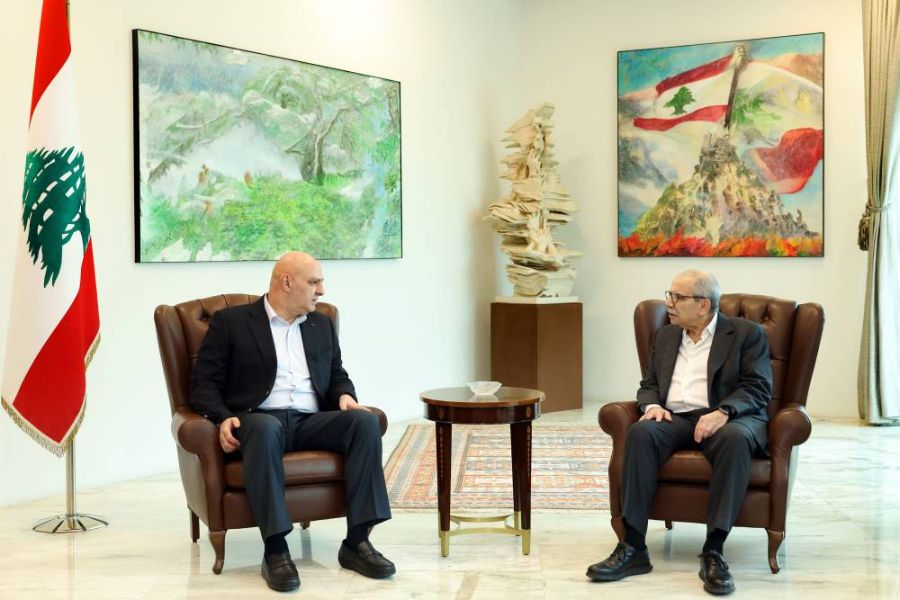
Following the cessation of hostilities between the United States, Israel and Iran, the region has, in some instances, regained a degree of stability, particularly in the Caucasus. However, in the Levant, Lebanon continues to face domestic, political and security uncertainties.
Diplomacy, ongoing evacuations
On April 14, Minister of Labor and Social Affairs Arsen Torosyan met with Ambassador of the Islamic Republic of Iran Khalil Shirgholami and discussed prospects for expanding cooperation between the two governments in labor and social protection, as well as migration and skills development. On April 18, Deputy Foreign Minister of Armenia Vahan Kostanyan met with Iranian Deputy Foreign Minister Saeed Khatibzadeh on the sidelines of the Antalya Diplomacy Forum and discussed bilateral agendas and regional developments.
On April 15, the Russian Foreign Ministry expressed gratitude to Armenia and Azerbaijan for their assistance in evacuating Russian citizens from Iran. The ministry reported that another 94 Russian citizens were evacuated through Armenia, bringing the total to 500. Meanwhile, the number of Indian evacuees from Iran through Armenia has risen to 2,358.
Government, opposition diverge on TRIPP
On April 16, former President of Armenia and opposition prime ministerial candidate Robert Kocharyan addressed the cessation of hostilities involving Iran and the conflict’s implications for Armenia, saying: “Iran increased the scale of the war by attacking U.S. allies in the region, where Washington had 13 military bases, and by closing the Strait of Hormuz. In my opinion, they will reach an agreement. The only question is whether Iran is ready to make concessions.”
Kocharyan added: “Of course, it will take time for Iran to normalize relations with Arab countries. But I have no doubt this will be restored very soon, creating a significant opportunity for Armenia in terms of economic cooperation with Iran. I consider this scenario very likely.”

Addressing the TRIPP project, Kocharyan said: “I do not see any practical implementation of TRIPP under the current circumstances,” suggesting that the only alternative for Armenia is to expand the project to include partners such as Russia, China and Iran, making implementation more feasible.
On April 18, Prime Minister of Armenia Nikol Pashinyan, speaking about the continued viability and implementation of TRIPP, said: “The implementation of the TRIPP project is of great importance, as we will gain a railway connection with Iran, which will significantly simplify imports to Armenia and exports from the country,” not ruling out an accelerated timeline. The prime minister added that Armenia intends to enhance its logistical and transport routes with Iran, strengthening strategic cooperation in the foreseeable future.
Fragile ceasefire in Lebanon
On April 16, a 10-day ceasefire between Israel and Lebanon, including Hezbollah, was announced by U.S. President Donald Trump. Iran welcomed the ceasefire, describing it as one of its preconditions for a ceasefire with the United States. Key provisions include Lebanon reasserting sovereignty as the sole guarantor of national defense; taking meaningful steps, with international support, to prevent Hezbollah or other nonstate actors from carrying out attacks against Israel; recognizing Israel’s right to self-defense; and organizing direct negotiations between Beirut and Tel Aviv facilitated by Washington.
President of Lebanon Joseph Aoun said in a televised address that “no armed force other than the army and security forces will be present in southern Lebanon” following the withdrawal of Israeli forces. However, Israel has not fully withdrawn and remains positioned along the border in what it calls a “yellow line,” which includes 55 Lebanese villages.
Hezbollah lawmaker Hassan Fadlallah thanked Tehran for enabling the ceasefire and said their fighters’ hands “will remain on the trigger.” Hezbollah Secretary-General Naim Qassem said “the Lebanese people will remain united and in solidarity with the army, the people, the resistance, and the political power that aspires to independence and the liberation of Lebanon.”
In total, between March 2 and April 16, 2,294 Lebanese were killed in the war between Hezbollah and Israel, with 7,544 injured.


He who has the power plays the tricks, bamboozling a weak foe is easy.
And that country Pashinyan desperately seeks (a one-sided) “peace” with, destroyed the Holy Mother of God Cathedral in Stepanakert this week. The same country Pashinyan cowers to, destroyed the Surb Hakob Church in Stepanakert last week.
https://mirrorspectator.com/2026/04/21/second-church-razed-in-stepanakert/
They were the last Armenian churches in Stepanakert.
I bet the Tatik Papik monument in Stepanakert is next on Azerbaijan’s destruction list.