



As Armenian Americans, we are experiencing unprecedented turbulence in our daily lives. In addition to the challenges of raising a family, maintaining our health and finding happiness, we are affected by events tied to our dual identity that are largely beyond our control. As Americans, we are witnessing deep political division as the legislative process grinds into gridlock.
This is not a healthy reality. We have drifted into another unpopular war, with unclear objectives and an uncertain exit. In a culture where the term “affordability” has become more prominent and younger generations are increasingly shut out of the American dream of homeownership, our quality of life is threatened. Even the concept of war has been redefined, resembling an extension of video game technology, with military operations controlled from command centers.
Thanks to advances in air superiority, drones and precision-guided missiles, casualty rates among U.S. forces have significantly declined. However, this has also desensitized the public to the horrors of war. As long as destruction occurs in distant locations such as Afghanistan or Iran, and few Americans are killed, many can turn away and return to daily life. In reality, atrocities have increased at an alarming rate, with millions killed in Syria and Iraq, and widespread violence documented in Palestine when journalists were permitted access.
Ultimately, regardless of how we segment ourselves into nation-states, this reflects the condition of humanity and this assessment is troubling. The United Nations Convention on the Prevention and Punishment of the Crime of Genocide is formally titled to emphasize accountability. Yet recent decades suggest a failure in both prevention and punishment, as political vetoes often obstruct meaningful action.
Ask the Palestinians, the Kurds, African ethnic groups or the Armenians. How many times must Armenians be counted among victims before the attempted destruction of a people, in whole or part, is no longer politicized? How many atrocities must be committed against Kurds in Turkey, Syria and Iraq, or Palestinians in Gaza and the West Bank, before it is recognized that killing civilians is not only inhumane but will never bring peace? Fighting terror through the repeated killing of innocent people resolves nothing. Peace cannot be achieved through unconditional surrender or the loss of dignity.
Armenians in the American diaspora have long navigated the complexities of dual identity, fostering both resilience and adaptability.
This dual identity has provided opportunities to pursue a higher quality of life. Armenian Americans have also strengthened their connection to their heritage through philanthropic work in the homeland and an expanded sense of diasporic responsibility.
Currently, the stress level among concerned Armenians is very high. For a small, landlocked nation in an historically volatile region, concerns over national security and sovereignty remain constant. Turkey, to the west, continues to pressure Armenia while denying past crimes. Azerbaijan, to the east, remains a constant threat, marked by the expulsion of hundreds of thousands of Armenians from Artsakh and Azerbaijan proper and ongoing territorial and human rights violations.
The current Israeli-U.S. conflict with Iran has placed Armenia in a difficult position and poses significant risks to one of its few friendly trade borders.
These issues deeply concern the diaspora because they are viewed, collectively and individually, as threats to Armenia’s sovereign interests. Domestic conflicts often take on a more personal impact for the diaspora due to the close interpersonal ties between diaspora communities and Armenia.
In addition, many of the organizations and institutions with which the diaspora engages are affected by internal conflicts. Perhaps the most significant example is the Armenian Apostolic Church, which, although engaged in a domestic dispute with the government of Armenia, is an international institution. It is the glue that has long sustained the diaspora.
Regardless of jurisdictional distinctions between the Great House of Cilicia and the Mother See of Holy Etchmiadzin, the church remains an integral part of diaspora life.
Perhaps most discouraging for many in the diaspora is that, despite the rhetoric of pan-Armenian advocacy, national unity remains elusive. At a time when the full utilization of resources would best serve Armenia’s interest, fragmentation persists and the gap between the diaspora and Armenia continues to widen.
As long as we rely on worldly pursuits for inner peace, distractions can become overwhelming. Great Lent in our faith is a time for self-reflection and spiritual grounding. It prepares us to deepen our relationship with our Lord Jesus Christ as we embrace His glorious Resurrection.
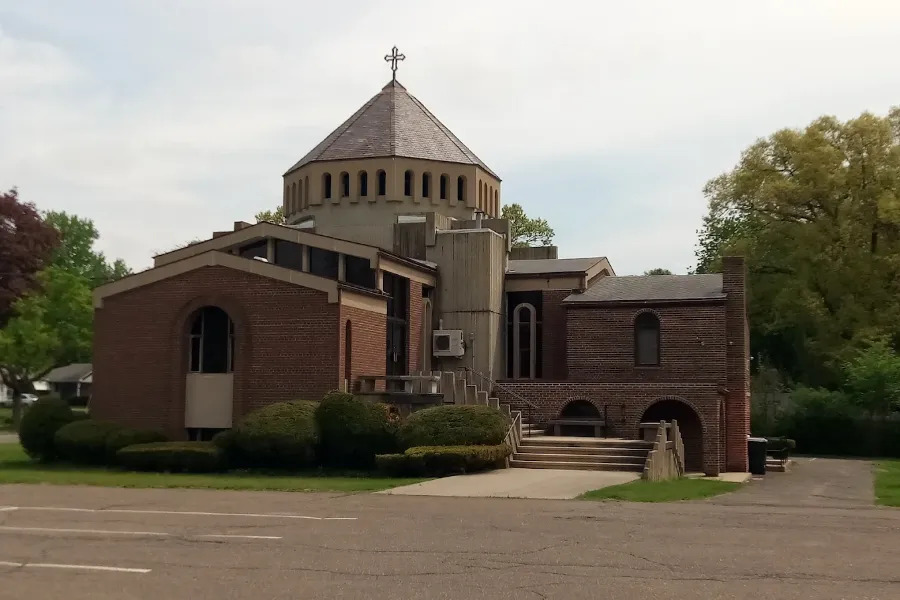
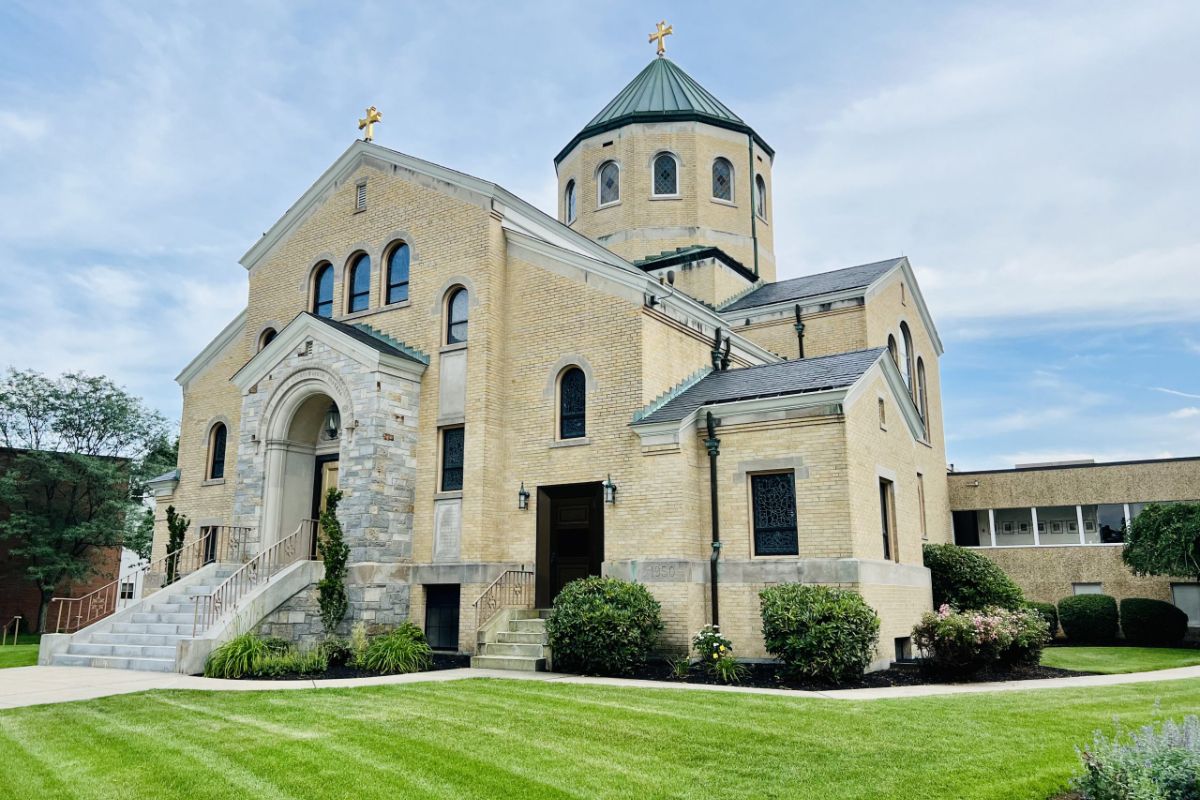
Last week, as Lent concluded and Holy Week began, I sought solace from the distractions of daily life. We were entering the most important period of Jesus’ ministry, reflected in the Soorp Badarak. I needed spiritual comfort to begin that week. On Wednesday, I returned to the parish where I grew up in Indian Orchard, St. Gregory’s, where a special prayer service was held and presided over by Archbishop Anoushavan Tanielian, prelate of the Eastern Prelacy.
I have often found spiritual depth in his celebration of the Badarak and in his sermons. I returned home that evening, but the meaning extended beyond the parish itself. Participating in that prayer service brought me closer to what I consider our true home — the gentle embrace of love from our Lord and Savior. I felt the essence of worship in the words of Jesus, who taught that He is present whenever two or three gather in His name.
The power of communal worship is not a replacement for private prayer but an added dimension of our spiritual identity. On the drive home, I reflected that despite the plethora of political and sociological challenges we face, there is only one way to calm the storm: by entering into a meaningful and loving relationship with Jesus Christ through His teachings and the Armenian Church.
Unlike previous years, when Holy Week began for me on Thursday, I felt prepared to immerse myself as we retrace this period with remembrance, betrayal, Crucifixion and Holy Resurrection. Christmas often receives greater attention due to commercialization, but Holy Week and Easter represent the essence of our identity as Christians.
There are times when we feel worn down by the burdens of earthly life. The Resurrection established eternal hope for believers. Life on earth is only a beginning for those who believe that He is the Way, the Truth and the Life. Jesus Christ is the path to God’s eternal promise. His teachings are not only the core of our faith and define how we should live, but they also offer the most essential element in life — hope. I returned to my parish spiritually prepared for the Washing of the Feet and Betrayal services. During the service, I was overcome with emotion as I witnessed my three young grandchildren having their feet washed. For all grandparents, there is no greater joy than seeing one’s family live in the light of the Lord according to the Armenian Church.
The feast of the Holy Resurrection (Easter) is always a joyful time for Armenian Christians. Although Easter falls on different dates each year, it always arrives in the spring. In many regions, it marks a long-anticipated period of renewal, with the emergence of green grass, early perennials and the opportunity to enjoy the outdoors.
The convergence of this environmental renewal, which inspires personal revitalization, with our spiritual grounding is a remarkable gift. It reminds us that only our Lord can calm the storms of men. When we seek truth rather than shallow substitutes, we find peace. Jesus calmed the storms that frightened His disciples.
Through the Holy Spirit, He grants us this peace each day. It is up to us to open our hearts and embrace His love. Through His sacrifice and Crucifixion for our sins, our risen Lord defeated death, creating a pathway for those who truly believe in Him.
During the Easter service each year, I await with great anticipation the singing of the inspiring hymn, “Kovya Jerusalem uz Der,” which evokes the spiritual imagery of heavenly Jerusalem and our Lord’s journey. This hymn is sung only during the Eastertide season, which begins on Easter Sunday and continues through Pentecost, 50 days later, commemorating the descent of the Holy Spirit.
This marks the formal beginning of the Christian Church, as Jesus commanded His disciples to go into the world and spread His Word. The Armenian Apostolic Church is a direct continuation of that foundation.
The period of Lent, a time of reflection and preparation, leading into Holy Week and Eastertide, offers a remarkable opportunity for spiritual growth through our Lord’s ministry. As Armenian Americans, we remain vulnerable to the storms created by human conflict that attempt to separate us from true peace. Let us fully embrace this Easter season in honor of the One who calms all storms. Christos Haryav ee Merelots! Orhnyal ee Haroutiun Christosi!


This was a beautiful read thank you.