



“The Watertown Six”: The Gaidzag family spirit
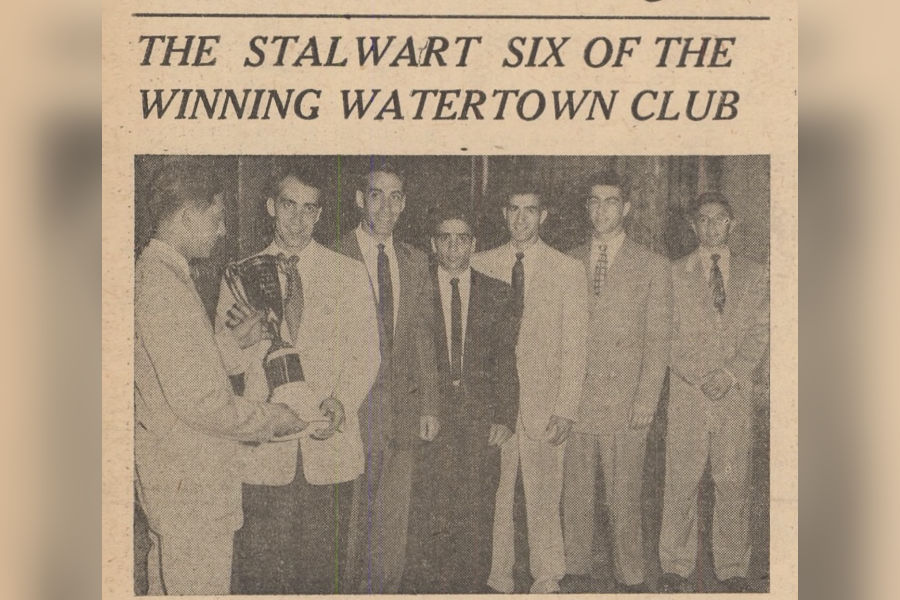
The headline in the September 3, 1953 issue of the Hairenik Weekly read: “Providence remains heavy favorite to repeat track and field victory Sunday”—a reference to the 19th AYF Olympics, held three days later in Worcester.
But the following week told a different story. The September 10 headline proclaimed: “Amazing performance of six-man squad ends Providence series of track triumphs.”
That six-man squad was the Watertown “Gaidzag” Chapter, known affectionately as the “Watertown Six”: Paul Abrahamian, Andy Dadagian, Aram “Sonny Gavoor, Richard “ Buddy” Gavoor, John Karnikyan and Frank Nahigian.
Winning an Olympics with just six participants?
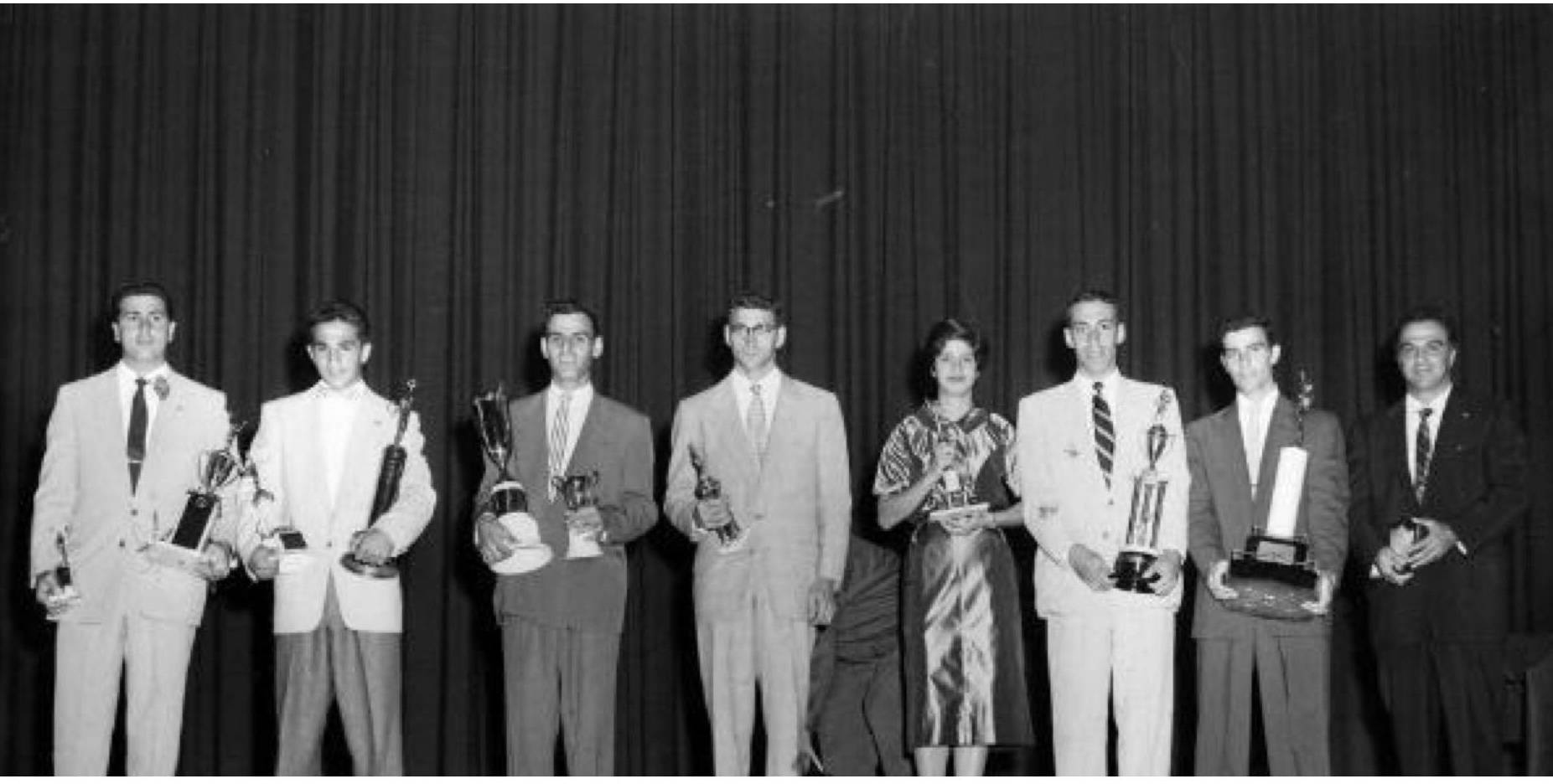
The September 10 reference to the “Providence series of track triumphs” was Providence winning the previous three Olympics and 10 of the first 19 since the inaugural games in 1934. Words like “dominance” and “tradition” were used. There was some logic to the previous week’s headline.
Watertown tallied 49.5 points to Providence’s 41.5, lifting the Olympic Cup with just six athletes. 14 chapters participated, with Boston, Hartford and New York rounding out the top five finishers.
There have been many upsets over the years, but the 20th Olympics—held 72 years ago—saw one of the most startling conclusions in 90 years of AYF competition. Time should not diminish or obscure the achievement.
Add to that: the following year, in Washington, Watertown again defeated Providence with a small squad.
Much can be said about the “Watertown Six.” No matter how many years have passed, the Gaidzags remain a profile in spirit.
As we return to Boston for this year’s games, the legacy and memory of these neighboring Watertown AYFers and their achievement deserve a spotlight.
In those days, Gaidzag was second to none—with a fiery AYF spirit of year-round activity. The chapter hosted four Olympics and enjoyed continued success that still places Watertown in the top 10 of all-time Olympic point scorers.
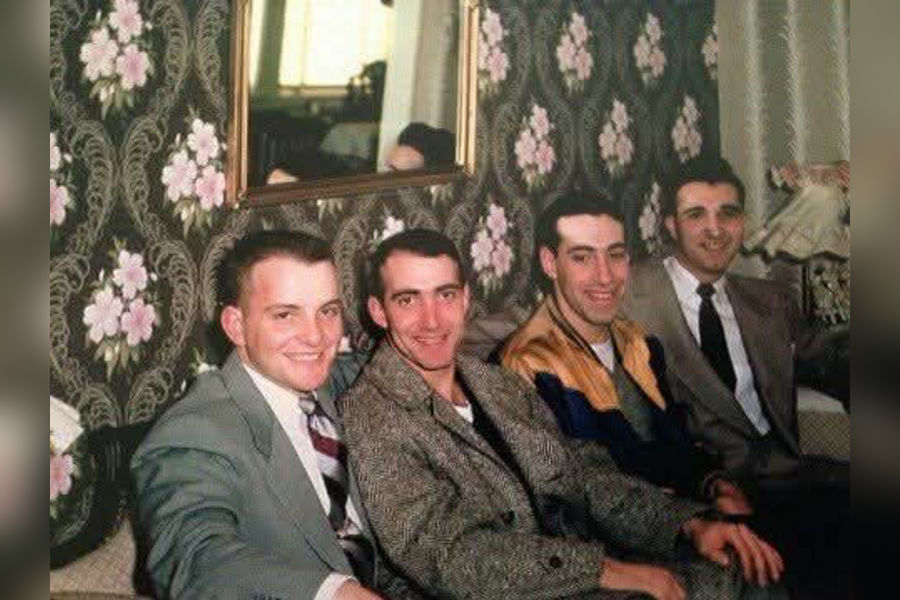
Olympics 1953: “The Watertown Six”—49.5 points and a win
The Olympics were held in Worcester for the first time.
In addition to the September 3 article about Providence as a heavy favorite, Providence’s Haig Varadian wrote a piece predicting a win based on “tradition, experience and will to win.”
On the other hand, Franklin’s Charles and Paul Piligian predicted a close score and a Gaidzag win, noting expected dominance in the dashes and the talents of Buddy Gavoor, Andy Dadagian, Paul Abrahamian and the relay team that included John Kernikyan.
The Piligians were right.
In the men’s 100-yard dash, Tufts University standout Buddy Gavoor edged out all-time leading scorer Haig Bohigian to take gold with a time of 10.3 seconds. Second place was awarded to Bohigian, Buddy’s brother Sonny took third and John Karnikyan placed fourth.
Buddy also placed second in the 440-yard dash.
Not just an AYF athlete, Buddy went on to compete for Tufts University’s varsity track team, clocking in best times: a 9.9-second run in the 100-yard dash, a 49.9 in the 440 and 21.9 in the 220.
His son David, who was also an AYF Olympic participant in his day, explained, “Dad was a high school varsity basketball standout with a great shot, a great eye—but when he went to Tufts, his AYF track experience motivated him to participate in track, where he had a great coach and a notable collegiate career.”

Buddy was chosen Olympic King at the 1968 Washington Olympics.
In the boys’ 440, Cornell University trackster Andy Dadagian broke his own record from the previous year with a 51.4-second effort, establishing a new record; Buddy finished second.
An exceptional athlete, Andy set records at Watertown High School in the 300 and 600 events. At Cornell, he became one of the country’s top 400-meter hurdlers and 600-yard dash competitors. He represented the U.S. in European track meets as part of a national collegiate relay team that won Ivy League and Penn Relay championships.

At the time, the Watertown Press wrote: “Andy is one of the greatest runners to have worn a Watertown uniform.” Known as “Automatic Andy,” he gave up a chance to be part of the U.S. Olympic team to pursue a medical career, ultimately becoming chief of otolaryngology at St Luke’s Hospital in New Bedford, Massachusetts.

In the men’s 880-yard dash, Frank Nahigian—ultimate co-captain of the Harvard University cross-country team and top hitter on the freshman baseball team—took first, with Andy placing third.
In the men’s mile, Frank set an Olympic record of four minutes, 45.6 seconds to take gold.
In the 880-yard relay, Frank was part of a foursome with Andy—a strong anchor—John and Buddy, taking first place with a time of one minute, 35 seconds. The win over second-place New York set an Olympic record at the time.
Frank was an outstanding athlete at Harvard and an Ivy League standout. As a second baseman, he led the freshman baseball team in batting average. The Harvard Crimson wrote that he was “making a significant impact on team performance.”
Frank was also an impact player as a sophomore on the next level: junior varsity baseball.
“I played on the JV team and totally lost interest in baseball,” he recalled. “It became very, very boring, and I began getting more and more interested in track. The only reason I can attribute to this is that my social group revolved around the track guys rather than the baseball guys.”

As an alumnus, Frank would attend the Olympics and win master’s events competing against Haig Bohigian, Richard Tashjian and George Topalian.
In later years, he would participate with distinction in New England seniors’ track events.
Watertown’s only entry in the men’s pole vault—the versatile John Karnikyan—took second over typically tough Providence competition. Known as the “spirit” of the “Watertown Six,” John was chosen Olympic King when Watertown hosted the 1984 AYF Olympics.
“Our relay was super. Andy was a great runner, and when Frank had his lead in the relay, he could have run backwards and won. Frank’s nickname was “Ouzo” and mine was “Buckey.” In those days, there was no track to practice on; we used Watertown High corridors after school was out,” John recollected.
Years later, John and his wife Alice had an even greater Olympics experience watching their daughter Linda gain medals for Watertown. In 1981, with Boston winning its first Olympics, Linda tied for top girl scorer with 13 points.
“Buckey” also coached the Boston “Nejdeh” Chapter after the Watertown-Boston merger.
In addition to the 100-yard dash, Sonny penetrated the typical Providence hold in the men’s broad jump with a strong second-place finish and took third in the event, as well.
Sonny was a standout Watertown High trackster on the team that won the state high school track championship. He was also chosen to the High School All-State football team as a standout running back. He attended American International College in nearby Springfield on a football scholarship.
Over the years, Sonny would go on to be instrumental in the AYF Olympics as a member of the governing body and coach of the Detroit AYF and also Homenetmen track teams. He was chosen Olympic King in 1975 and received the Olympic Spirit award in 2008. At home in Livonia, Michigan, he coached Schoolcraft College’s track team.
The men’s high jump was a highlight of the day once again, as Watertown’s future Cornell track standout Andy took gold with a jump of five feet, three inches—edging out teammate Paul Abrahamian by an inch.
Paul was a well-rounded athlete. “Paul was outstanding in the AYF Olympics but even more so in collegiate track and field (Harvard, Tufts) and football (Tufts),” Andy recalled.
In the men’s shot put, Paul pushed perennial winner Alex Papelian with a strong second-place finish.
Paul was a standout in the weights in high school competitions, finishing second in the Massachusetts high school shot put competition and ultimately fourth in the nation. He was also a member of the Harvard freshman track team, then competed for three years on Tufts’ varsity squad, where his best 16-pound shot put mark was 46 feet, 11.5 inches.
Paul was a member of Tufts varsity football and in his senior year, his multiple skills as halfback, receiver and point-after-touchdown kicker placed him third among all collegiate point scorers nationally.
These 1953 Olympics belonged to the “Watertown Six,” but it was also the breakout moment for high schooler Sue Merian (later Arzoian) of then Detroit “Mourad Zavarian” Chapter, who captured three first-place finishes—earning all her chapter points with three golds and 15 points in her very first AYF Olympics. She won the 100-yard dash, 50-yard dash and the broad jump.
There was more to come from Sue: she would conclude her Olympic days with 90 points, would become part of the Gavoor family when her sister Vi married Sonny and was named Olympic Queen in 1967.

Olympics 1954: Watertown’s Two in a Row
It was a sweltering day in Washington, D.C.—temperatures soared above 100 degrees—and Gaidzag standout Frank Nahigian was on the sidelines with a fractured foot.
Providence was again the favorite.
Yet, the determined Gaidzags prevailed, scoring 52.5 points to top Providence’s 37.
Heat prostration forced a noticeable number of athletes to retire from competition.
No one from Watertown sat it out.

The Gavoor brothers finished 1-2 in both the 100-yard and 220-yard dashes. Buddy set the 220-yard record that would last for more than 20 years before being broken by Rich Chebookjian.
Spectators were looking forward to a Gavoor-Bohigian rematch in the 100, but Haig, then a Columbia University varsity halfback, was not permitted to participate in non-Columbia sporting events.
Andy took gold in the 440-yard dash, tied for first in high jump and placed second in the broad jump.
Paul set a discus record with a throw of 124.5 feet to win the event and later placed third in the shot put. Oscar Asadourian finished fourth in the 880-yard run and John tied for second in pole vault.
Isabelle “Issie” Hajian (later Azablar) participated in her first Olympics and scored in each of her three events: third in the 100-yard dash, fourth in the broad jump and second with a strong effort in the girls’ 50-yard dash.
Now 86, Issie reflected: “Watertown Gaidzag days were special. We were family.”
As the lone girls’ entry in the Olympics, she was also a cheerleader for the team.
Frank remembered: “Issie was our sister; she was our spark.”
That same year, with girls competing against boys in some events, Detroit’s Evelyn Kourtjian defeated seven men to win the tennis title in a single-set competition.
Bowling and basketball were also on the program, with the Gaidzags taking first place in both.

Looking back on the late 1940s and 50s, it is clear that the Gaidzags had a guiding hand and a role model: Al Parseghian.
Al joined AYF at the age of 14 and, over time, became instrumental in establishing chapter roots and launching the sports participation.
He ran the 100-yard dash, principally in the 1940s, and tallied 16 points from various golds and silver medals.
He served for many years as sports editor of the Hairenik Weekly, writing a “Weekly Sports Roundup” column (AYF sports, Armenians in sports, national sports), and photographed many Olympics. He was also the prime inspiration for the Gavoors to join the AYF.
In his September 3, 1953 column, Al predicted that Sue would earn 10-15 points in her first Olympics, that Providence would edge out Watertown for the cup and that “the Olympics may well be entered into the record books as the most memorable of them all.”
He was the Tommy Vartabedian of those days.
When Watertown hosted the 1996 Olympics, he was justly chosen Olympic King.
Today, the AYF Olympics is more than just a sports event. It is the largest family reunion in the United States.
As we reflect on the Watertown family from that era, we are reminded that what exists today is the result of previous generations establishing and adding to our identity.
Each AYF generation brings substance to our identity and spirit, and the Watertown “Gaidzags” clearly helped build the foundation for the AYF profile.
Whether in the Olympics or another AYF activity, the Gaidzags participated with pride, passion and success.

The “Watertown Six” has the last word as they reflected:
Frank (now 92): “Those were super days, super experiences, super friendships—hard to describe.”
John (now 90): “It was special; the good old days.”
Dr. Andy (now 94): “We were brothers, we were a clan, proud of Watertown Gaidzag.”
Paul (now 90): “We were good friends. John brought me into the AYF. I was disappointed we could not win in ’55.”
Mark Gavoor: “My dad and uncle Buddy (now 94) were proud of Watertown “Gaidzag” in those days. They often referred to “The Six” as brothers—in school, in AYF and for life”.
The “Watertown Six” is a chapter of pride and spirit in the 90-year chronicle of the AYF Olympics.