


Five years without Vartan Gregorian: The road to home and the bridge to the future
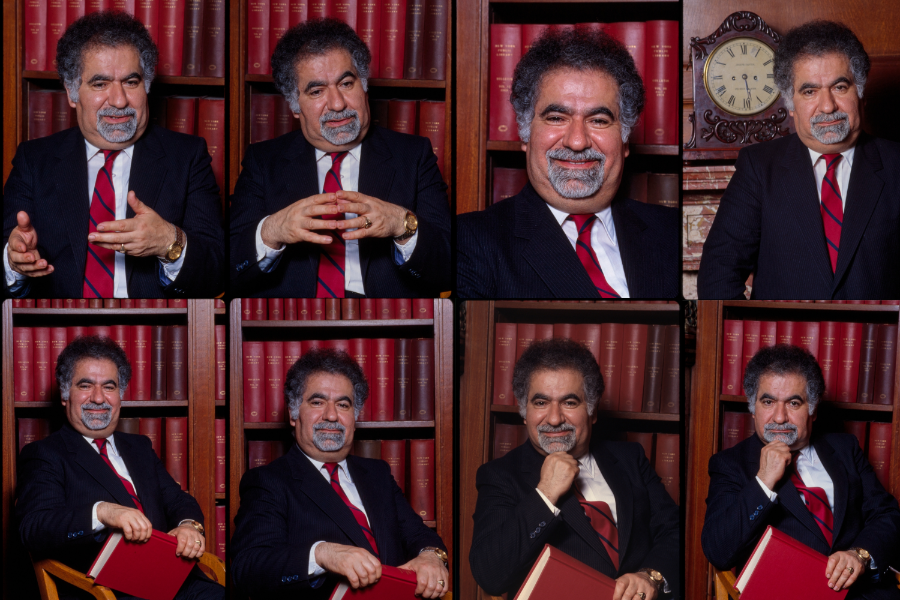
I remember receiving the news of Vartan Gregorian’s passing on a spring afternoon in 2021. Immediately, the world felt a little less brilliant.
It has been five years since we lost that ‘one-man academy,’ and while the institutions he helmed—from the New York Public Library to Brown University and the Carnegie Corporation—continue to flourish, I find myself reflecting most on the more subtle personal infrastructure he built: the bridge he extended to the next generation.
Vartan was a man of staggering statistics and grand titles. He was the ‘Savior of the New York Public Library,’ who raised over $327 million to rescue it from a $50 million deficit; he was the first foreign-born president of Brown University, where he nearly doubled the endowment to $1 billion; he was even a recipient of the highly coveted Presidential Medal of Freedom. But for those of us in the Armenian community, he was something more visceral. He was living proof that his ‘road to home’ was paved with intellect, service and an unwavering commitment to mentorship.
My first and only in-person encounter with Dr. Gregorian was in the summer of 2012. I was an intern at the Permanent Mission of Armenia to the UN—a wide-eyed, newly graduated kid trying to find my footing in the diaspora’s complex landscape. Our group was invited to his office at the Carnegie Corporation in Manhattan. I remember the air in that room; it felt heavy with the weight of mahogany, history and ideas, yet Dr. Gregorian himself was remarkably light. He didn’t lecture us from a pedestal. Instead, he sat around the same table and spoke with a frankness that bordered on the disarming. He talked about his failures (like being passed over for the presidency of the University of Pennsylvania) with as much vigor as his successes. But what stayed with me was the way he spoke about his mentor, Simon Vratsian.
Vratsian, the last Prime Minister of the First Republic of Armenia, had been Vartan’s principal, adviser and confidant at the Armenian Lyceum (Djemaran) in Beirut, an institution he had helped to found. To see this titan of American intellectual life, a man who advised U.S. Presidents and the world’s wealthiest philanthropists, speak with such tender, affectionate gratitude for his own teacher was a masterclass in humility. At the end of that meeting, he gifted each of us a copy of his own memoir, which he had published about a decade earlier.

Years later, when I stepped into the role of editor at the Armenian Weekly, the weight of the Hairenik legacy felt immense. I was the new guy, navigating the ghosts of editors past.
Out of the blue, Dr. Gregorian reached out.
Here was a man overseeing $3+ billion in assets at Carnegie, yet he took the time to track down a young editor in Watertown. During our few telephone conversations, he was sharp, encouraging and deeply invested. “Ruben jan,” he would say, his voice carrying that familiar, Parskahai inflection, then steer the conversation toward the broader horizon, impressing upon me the idea that the work at the Weekly wasn’t just about meeting a deadline or filling pages, but was a vital act of service to the nation.
He pushed me to ensure the Weekly remained a lung that breathed truth and intellectual rigor. He backed that encouragement with moral and anonymous financial support, but it was the time, that most precious of non-renewable resources, that meant the most to me. Today, I believe he was paying forward the debt he owed to Vratsian. He was serving as a father figure to a stranger, just as others had been for him when he arrived in America in 1956 with a stamped, empty ticket envelope and a heart full of ambition.
Vartan has said in public remarks that his grandmother used to tell him that while one’s mind and appearance were unreliable, honesty was the only currency that never devalued. “Once you are deprived of honesty,” he would quote her, “you will go bankrupt.” Looking at the state of the world today, five years after his departure, those words feel prophetic. We live in an era where information is often confused with knowledge, and where monologues have replaced dialogues. Vartan warned us about this; he believed that an educated citizenry was the only defense against an ‘Orwellian society.’
Whether it was co-founding the Aurora Humanitarian Initiative alongside other visionaries like Ruben Vardanyan or his deep commitment to UWC Dilijan, he was constantly sowing seeds in for a harvest he was content to leave for others to reap. I often think about what Vartan would say about the current challenges facing Armenia and the Diaspora, and how he would navigate the deepening friction between the two. It is impossible to ignore that Vardanyan—his partner in so many of these vision-led endeavors—is currently held in a Baku jail on trumped-up charges. It is a bitter, heavy irony that the man who joined Vartan in trying to build a bridge to the future is now a captive of the very forces of cynicism and injustice they sought to overcome.
It is hard to imagine Vartan satisfied with the current state of affairs in Armenia, yet I suspect he wouldn’t dwell on the darkness of the moment. Instead, he would likely challenge us to look past the immediate noise. Much like the way he pushed me to see my work through a wider lens, he would expect us to think bigger, even as we confront these profound setbacks.
Fourteen years later, I still have that copy of The Road to Home. It sits on my shelf next to an Eastern Armenian translation that I haven’t even cracked open yet. It stares at me, a silent reminder that my reading list is often where good intentions go to die. But it’s also a reminder of a Manhattan office in the sky, a series of phone calls and a man who refused to let his success sever his roots. Whenever I look at that book, I realize that Vartan’s greatest achievement wasn’t just the millions he raised or institutions he helped establish—it was the way he kept the flame of Simon Vratsian alive by passing it to people like me. He proved that an immigrant from Tabriz could not only save a library but could help inspire generations.
We may no longer have his physical presence to guide us, but we have the example of his life. May we all be so lucky to have such teachers, and may we all be so disciplined as to become the mentors the next generation so desperately needs.



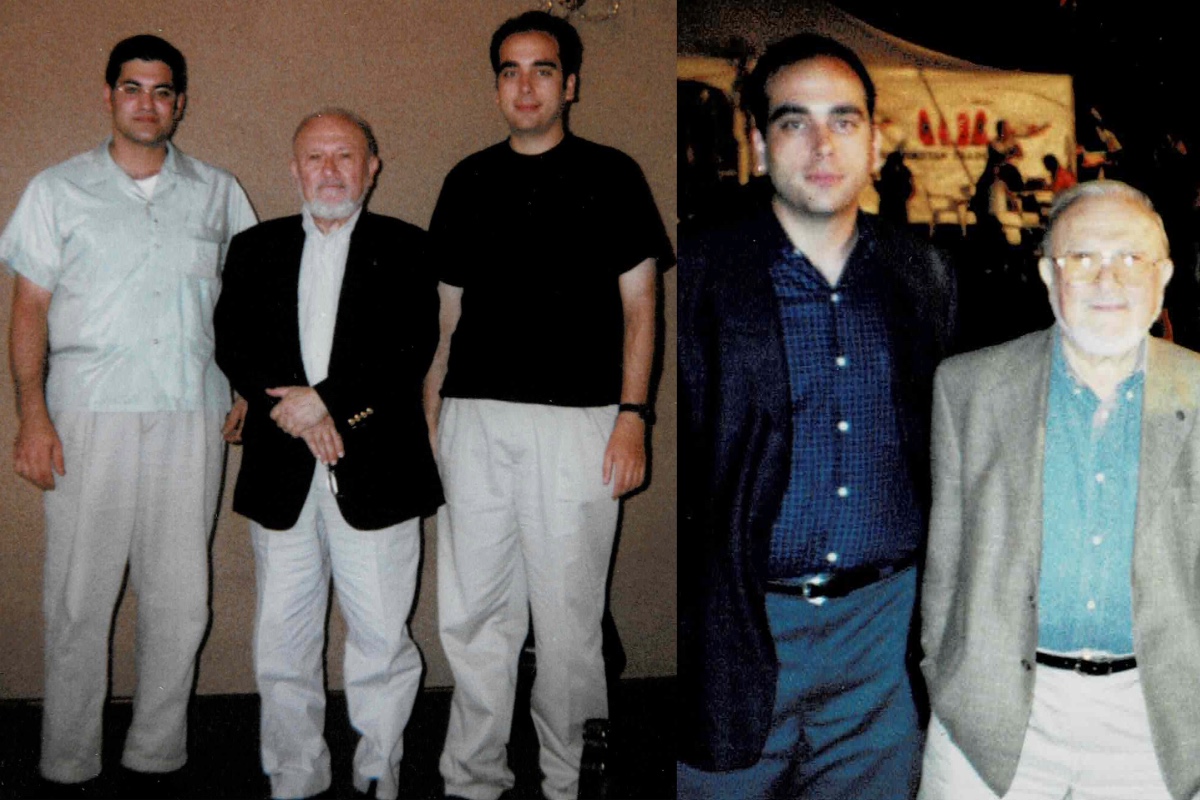
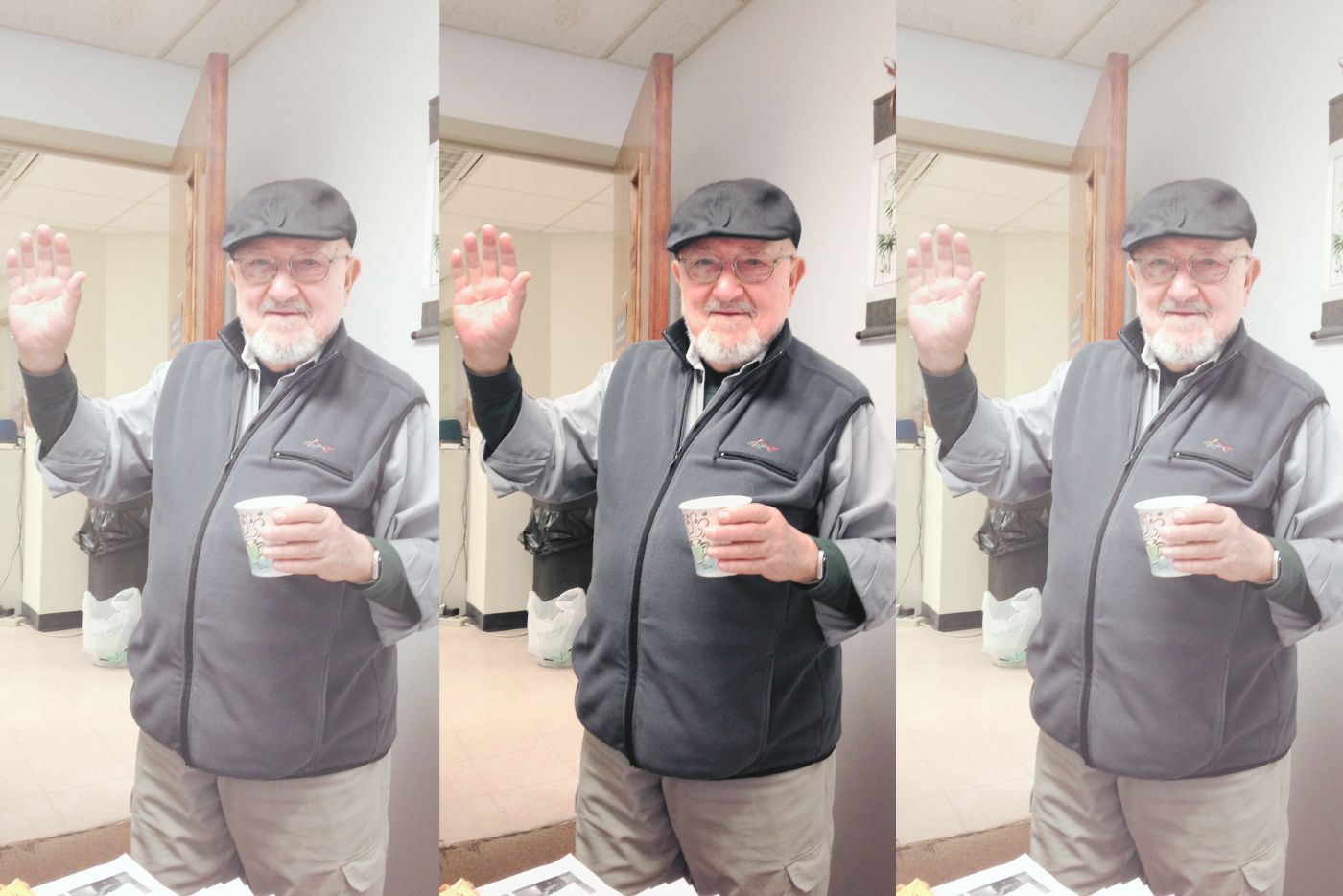
A well conceptualization of Vartan Gregorian on his road to home, coming from you when you were younger and more impressionable. Simon Vratsian, “had become a surrogate father to me, as well as a teacher, mentor, and friend.”, wrote Vartan Gregorian. On the index of the book, Vartan lists Simon Vratsian on seventeen (17) pages and a section of four pages, 76-79, out of the 338 pages long text. No other name in the index has that many pages listed.
I read the book and remained amazed by his phenomenal memory. At the gala for the opening of the NAASR’s new wing named after him, he stopped at each table, and when I introduced myself referencing to my long deceased father he knew from his days when he came to study in Djemara, he remembered him too.