




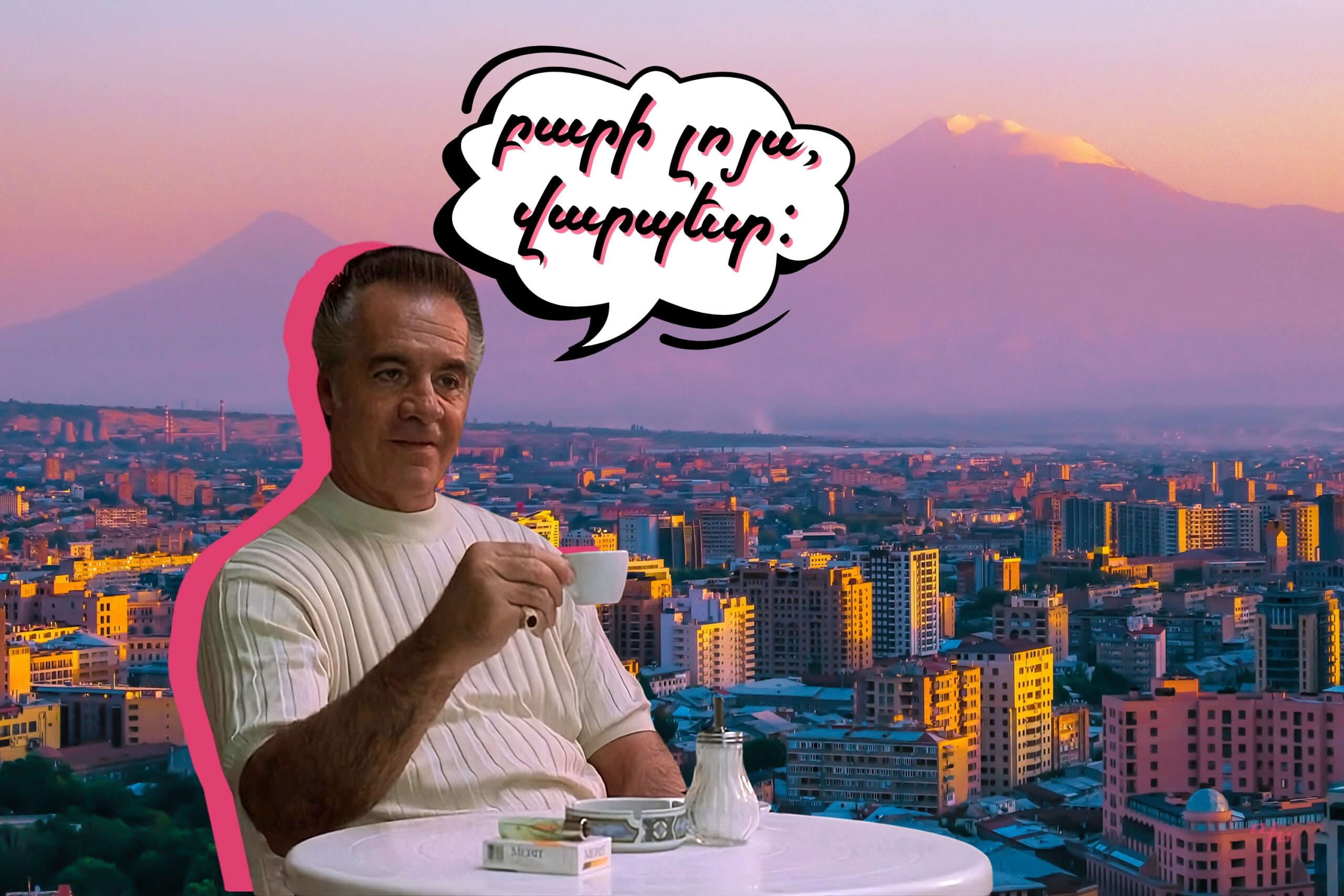
*MAY CONTAIN SPOILERS FOR ‘THE SOPRANOS’ for those who somehow still haven’t watched it. I was one of you until recently.
There are certain things I like to keep in reserve. I have been this way for as long as I can remember. As a child, I used to save my favorite bite of food for last, convinced that finishing it too early would ruin the whole meal. My favorite treats were gummy ‘fruit’ snacks (remember those?), and I would always leave the orange ones for last, nudging them into the corner of the bag so I knew exactly how I wanted to finish.
I still do this, just in different ways. I put off endings. I avoid watching the finales of television series I love, not out of forgetfulness or boredom, but because I like knowing they’re still there. As long as I haven’t seen the ending, the world it belongs to hasn’t fully closed. It stays open, available, unfinished.
Out of curiosity more than concern, I Googled it, then asked an AI to see if there was a name for this instinct, clinical or otherwise. The answers came back with phrases like ‘anticipatory savoring,’ ‘deferred closure’ and even something called the ‘Zeigarnik effect.’ None of them felt quite right. Leaving it unnamed feels appropriate; naming it would already be a kind of ending (which I’m trying to avoid, remember?).
In any case, over time, that habit shifted from saving finales to saving entire series. My wife and I carried ‘The Sopranos’ in our back pockets like that for a whole decade. We knew it was there, and we knew, from friends whose taste we trust and who are not prone to exaggeration, that it was among the greatest television series ever made. But we waited until a few weeks ago.

A close friend would often return to a particular episode whenever we spoke about Armenia. What intrigued him was not the plot itself, but its familiarity. He was struck by how a group of Italian American men went to Italy for the first time and by how little that encounter resembled what they imagined it would be. He spoke about how the characters felt the distance between heritage and reality. Almost instinctively, he connected this to his own experiences of Armenia: not the towns or villages our parents and grandparents came from, but Armenia as a state, with its own rhythms, pressures and priorities.
And then, one evening, it arrived. Season two, episode four: ‘Commendatori.’
At first glance, ‘Commendatori’ resembles a familiar television device: the travel episode, in which a change of scenery promises novelty while reassuring viewers that nothing essential will change (‘The Simpsons,’ season six, episode 14, ‘Bart vs. Australia’ is a personal favorite). Many shows use such episodes as spectacle or fantasy, offering a brief escape from the logic of their own worlds. ‘The Sopranos’ does the opposite. In it, Italy is not the reward but a test.
Each of the three men who make the trip responds to that test differently. One arrives and retreats almost immediately into drugs, reducing Italy to little more than a backdrop for his vices. Another, intoxicated by the promise of history, beauty and transcendence, barely looks at Italy at all; to him, it registers as a market and a business negotiation. But the third character, Paulie, arrives carrying something heavier and more fragile than either of them: inherited expectation.
Paulie does not come to Italy in search of himself; there is no uncertainty in the way he understands who he is or where he belongs. His Italianness, affirmed and deeply internalized, was shaped over decades in New Jersey. Small fragments of the language (often bastardized), culinary traditions (often assumed), Catholic rituals (often displayed rather than practiced) and half-remembered stories (often embellished) are performed with confidence and authority. Italy, in his imagination — and in the imagination of his peers — is not a question mark or a destination of discovery, but a place that exists to confirm what he already knows to be true.
‘Commendatori’ quietly dismantles that expectation without ever staging a dramatic confrontation. Paulie’s Italian does not land, and his attempts at familiarity are met with indifference, confusion and mockery that he cannot understand. At a formal dinner, surrounded by traditional dishes and hospitality, he recoils at the food and asks, without irony, for spaghetti with tomato sauce. His hosts exchange glances and mutter insults in Italian. Paulie smiles, unaware. He wanders through Naples expecting recognition, only to encounter blankness instead.
Italy does not reject Paulie dramatically; it simply does not notice him.
The most minor, ordinary inconveniences undercut his expectations. At a café, when Paulie raises his demitasse and greets a stranger with an enthusiastic “Commendatori!” (“Commander!”, a greeting of respect), he is met with silence. There is no response, no recognition. In another scene, a broken, poorly kept bathroom, something that should barely register, becomes a source of irritation and offense for Paulie, and inherited mythologies quickly collapse.
One scene shows this especially well. Paulie learns that the sex worker he is with comes from the same town as his family. For him, this feels momentous, like a symbolic homecoming within the homecoming. He lights up, expecting recognition, even reverence, but she shrugs. To her, it is simply a town — just another place. The gap between them is not emotional or moral, but structural. What carries deep meaning for the diasporan often feels ordinary to those who ‘never left.’
Watching this episode from Yerevan, I felt a familiar unease settle in. Not because my own experience mirrors Paulie’s in any literal sense, but because this disappointment is deeply recognizable. Diaspora life, especially when it is dense and institutionally strong, trains us in a particular way of relating to identity. We grow up in spaces designed for belonging: community centers, churches, schools, youth groups and family gatherings are environments where greeting everyone feels natural, where we find our shared heritage, and where we understand ‘being Armenian.’ Identity in these spaces is intimate, communal and reciprocal.
The problem arises when that logic is unconsciously transferred onto a state, which operates differently from a community and is often very different from the places we come from, culturally, linguistically and in its traditions.
I have seen this repeatedly in Armenia, and I have recognized it in myself. Diasporans arrive and instinctively behave as if the country operates like an expanded community space. We greet strangers with familiarity, expect warmth and recognition and assume access. We speak confidently and critically about what should be fixed, often without fully absorbing the asymmetries of power, risk and consequence that shape daily life for those who live here. Armenia becomes a projection screen for diasporan expectations rather than a lived reality, which is often strained and uneven.
In our ‘pursuit of homeland,’ we often forget how thoroughly shaped we are by the places we come from. We arrive in Armenia carrying habits, assumptions and reflexes formed in Toronto or Boston, Los Angeles or Beirut, convinced they are neutral or universal. Only once we are here do they become visible. The ways we speak, the pace we expect or the kind of relationships we assume are inheritances of our own environments.
We sometimes call those places ‘adoptive,’ ‘temporary,’ even ‘foreign lands,’ as if the language itself could bend the truth or cloak it in something more comforting, something that sounds better to our ears. But often, they are the only homes we have ever actually known. What unsettles us is not the discovery that Armenia is different, but the realization of how Canadian, American, Lebanese, French (insert your own here) we are.
At one point in the episode, Paulie stops being merely funny and becomes instructive. His mistake is not arrogance so much as category confusion. He treats Italy as though it exists to affirm his inherited identity, rather than to carry on its own complicated, indifferent life. Many diasporans do something similar, often with sincerity and conviction, and often without noticing how jarring that posture can be to those who live inside Armenia rather than orbit it.
A country is not a family gathering; it does not exist to validate anyone’s sense of self. It has its own cadence, its own failures, its own internal arguments and its own distribution of vulnerability. Familiarity can be mistaken for belonging, but they are not the same.
One of the more interesting truths ‘Commendatori’ exposes is that Paulie’s relationship to Italy is not actually rooted in return, but in symbolism. In practice, New Jersey is his homeland: It is where his life unfolded, where his language makes sense, where his habits are legible and where his sense of belonging is never in question.
Italy, by contrast, plays a different role. It is an imagined origin, a cultural anchor, a place that gives weight and legitimacy to an identity formed elsewhere. Paulie likely has the financial means and freedom to visit Italy when he wants, to experience it briefly, selectively, and on his own terms and then to leave. What unsettles him is not rejection, but the realization that Italy does not recognize him as its own in the way he has long imagined.
Something similar happens in the Armenian context. For many of us, places like Toronto or Boston are not temporary homes, but homelands in every practical sense: places where lives and families are built, communities are sustained and futures imagined. Armenia, meanwhile, occupies a dual position. It is undeniably a homeland, sometimes described as the first or ultimate one.
Yet it is also a state with its own internal logic, pressures and inequalities that do not always align neatly with diasporan expectations. Paulie’s confusion in Italy stems from the clash between an imagined homeland and a lived one. Many diasporans encounter a similar reckoning, not because their attachment to Armenia is insincere, but because attachment alone does not determine how a country receives you or what it asks of you in return.
There is a temptation, when inherited expectations collide with reality, to retreat into resentment or denial: to decide that the homeland has failed you, or to harden your identity into something defensive and self-sufficient. Paulie does neither, exactly. Instead, he narrates his experience triumphantly upon return, insisting that everyone should make the pilgrimage, even as the evidence suggests the trip gave him very little of what he expected. There is denial here, certainly, but there is also something more: an attempt to integrate disappointment without surrendering belonging.
The final car ride of the episode is quiet, but very telling. One character gazes out at the familiar industrial landscape of New Jersey, unsettled, perhaps realizing that he missed something he did not know how to access. Another seems empty, having squandered the trip entirely. Paulie, however, smiles. It is not a triumphant smile; it is much smaller than that. Home reasserts itself, not through longing, but through familiarity.
Living in Armenia has taught me a few things. Language, for one, stops being mostly symbolic and becomes functional. Belonging, too, shifts from something inherited to something negotiated daily. Parts of you can be compromised in that process. In my case, the Western Armenian language and Canadian cultural values are at risk (even as I do my best to hold on to them). Armenia, in turn, reveals itself not as a metaphor or a museum, but as a country under pressure, where life quickly and repeatedly tests the limits of nostalgia.
What ‘Commendatori’ ultimately understands is that disillusionment is not failure, but a lesson. Paulie goes to Italy expecting enchantment and encounters regularness, inconvenience and indifference.
In doing so, he experiences something many diasporans eventually confront: the homeland is not waiting to complete you; it is busy being itself.
It’s unromantic, unresolved and incomplete, and perhaps that is what return actually looks like.



Thank you for the thoughtful and truthful analysis. How am I supposed to square responses such as “what else could he do” or “he did what needed to be done” by our homeland compatriots to the abject abandonment and surrender of our ancestral lands in Artsakh by the present Prime Minister with the 100 plus years of diasporan indoctrination of return of our ancestral lands and justice for the murder and dispossession of millions of our people? My feeling is it cannot be squared. Thus, bitter resentment among diasporans is an inevitable result
This is a brilliantly written piece. I hope that many, many diasporan Armenians read it.
Dear Rupen:
Thank you for a great article.
Please see this for Arak Speed Racer Mrtsogh….a Western Armenian cartoon.
This is a very insightful essay. But do note that it’s not spaghetti and tomato sauce that Paulie requests in his search for comfort, but rather ‘macaroni and gravy’. It’s not a trivial point, as it illustrates the naive narrowness of his north Jersey experience and the unbridgeable distance between his reality and the real Italy that he is painfully alienated from.
This is a beautiful expression of several things in my own life. As an Italian American, grandchild of immigrants, I have felt very much of what you discern Paulie sees and feels when he visits the old country, meets today’s residents, and sees the reality of today’s homeland. Similar things happened to me on my first visit to see my Italian family. As the spouse of genocide survivors’ son for over 50 years and an active member of an Armenian American community who has visited Armenia with him, I have seen the dilemma you describe from his prospective. This article is a thoughtful way of explaining a feeling that many in the Armenian community do not verbalize, if indeed, they even realize the disparities exist. Thank you for verbalizing so much of what I feel to be true as we think of family and homeland past and present.
A simply and superbly written and emotionally articulate piece! I recently wen to Armenia wiht a group of Hye friends from NY and New Jersey, all first-time visitors.
Here is my take on what was a wonderful and yes, emotional trip:
https://substack.com/home/post/p-176512709
Dear Rupen,
Thank you for writing this wonderful article. You capture the many layers of awareness and expectation that shape the diasporan Armenian, and how they clash with the reality of Armenia today. Despite the seemingly unbridgeable chasm that some in the Diaspora persist in seeing between the two, people like you continue to demonstrate that this small piece of land remains our only hope for survival, and that our fate is inseparably tied to its successes and failures.. Repats like you and your wife are not only visionaries, but active builders of that future. It is encouraging to see more and more diasporans choosing to move there, even though the inflow could (and should ) be much greater. Your voice, and the life you have chosen to live there, help narrow that distance and remind us where our future ultimately lies.
In my family’s case, my dad was the first member of the family to go to the Polish town from which his grandparents emigrated.
Armenians live in the real world.
American Armenians live in mythology.
One thing all American Armenians need to remember is that Armenians speak Eastern Armenian whilst American Armenians speak Western Armenian – and that poorly with American English accents.
I’ve never, ever heard an American Armenian speak Armenian fluently, in the sense that they can pass themselves off as Armenians. Their accents, dress, mannerisms, attitude even posture always give themselves away.
The practical effect is that as soon as an American Armenian speaks, Armenians realise straightaway that they’re Americans and foreigners and so raise their prices double or even treble on the basis that American Armenians can afford to pay more – a lot more.
Should you want to go shopping, therefore, always go with a native Armenian and let them speak whilst you stay dumb then you’ll get a fair price.
Also never, ever dress American, you’ll stick out like a sore thumb and will be fleeced accordingly.
It must be galling and dismaying to know that you’re a foreigner in a country you’ve always mythologised as your homeland but that’s how real life is.
Armenian Americans and other Diaspora Armenians in the Western world are heavily assimilated, the vast majority don’t speak or understand Armenian (Western or Eastern), and Armenian culture, traditions, and the way of life in Armenia are largely alien to them. Besides the language barrier, the cultural barrier and less creature comforts are other significant factors contributing to the difficulty for Diaspora Armenians from wealthy Western countries in adapting to a new life in Armenia.
Diaspora Armenians from the former Soviet Union and the Middle East experience less difficulty adapting to a new life in Armenia because the vast majority speak Armenian, have preserved their culture and traditions, and generally come from countries as poor or poorer than Armenia, such as Syria, Iraq, Lebanon or Iran, which makes Armenia look like a land of plenty.
Armenian Americans face the greatest difficulty adapting to Armenia. Americans, regardless of ethnicity, generally experience the greatest difficulty adapting to a new life in other countries, because they often expect things to be done the same way as they are in the United States. They indeed stand out as Americans, whether they are expats or tourists, in the way they dress, the way they act (such as jogging, tipping, etc.) and their use of imperial units to an audience (95% of the world population) which don’t use or understand them.
Your comment tells me you live in fictional world fueled by hate and division, and poor understanding of diasporic communities and our lived realities. Please do not tell us what we are and aren’t. Speak only for yourself. Also, no one has to fulfill your idea of what fluency or Armenianness is. Good luck on your own search. I would add that many of us don’t even consider Armenia our homeland, but your equation doesn’t even take that into account.
@Hrag
Why are you “offended” about these undeniable truths about assimilation and adaption? These are very much true, even if you don’t acknowledge these, dismiss these and hurl ad hominem insults at me.
Next Thursday happens to be the feast of St. Vartan and I was looking for public events in Yerevan when I read the mention of this piece.
While a student of the Saturday Armenian school in Boston, Vartanants Day was a major day to learn about and remember the the struggle for our faith, which became a struggle for our nation and identity. Yet in Yerevan, I don’t see any mention.
Reading this essay, it’s a sad reminder to check my expectations.
Rupen, this was a very interesting piece, and it was well written and heartfelt. Food for thought for many, and it’s a topic I have also thought much about.
While I am not a repatriate and have only visited Armenia three times (for about 2 weeks each time), I would like to simply point out a few things:
1. Most of the old-line diaspora came from places now in Turkey whose Armenian population has been annihilated. We can’t go back to the Armenian villages of Kharpert or Sepastia or Marash because they don’t exist anymore or are populated by Turks and/or Kurds.
2. Many people in Armenia also came from places in Turkey originally, and they also romanticize and mythologize those places (especially with “heroic” locations such as Van, Moush, and Sassoun being mythologized beyond recognition of anything resembling reality.)
3. So, not only is the culture of current day Armenia and the Diaspora different, but they mythologize and romanticize the “lost Yergir” of Western Armenia often in very different ways. This is made more confusing by the fact that in some ways they were from different places; i.e. the current population of Armenia tends to have more ancestry from Van, Moush, Sassoun etc; the Diaspora of Syria and Lebanon tends to have more ancestry from Aintab, Marash, Adana, etc.; and the old-line Diaspora of the US (as well as Bolis) has its ancestry centered in Kharpert, Dikranagerd, Sepastia, etc. However, even when people come from the same now-lost place (let’s imagine a Yerevantsi, a Beirutsi, and an East Coast American-Armenian all 3 with roots in Van), they tend to remember that place in different ways! And, spoiler alert, the Yerevantsi is not always the most correct; in fact they often erroneously assume they must know more because they are from Armenia.
4. I think a little humility would be good for all of us, but we Armenians are not good at that!!!
Amazing article Rupen. I really think this hits home for all diaspora communities in the western world.
The additional nuance for Armenians in North America I believe is also where their parents are from. As one of the previous comments mentioned, Armenians from middle eastern diasporas have an easier time assimilating to Armenia compared to North American Armenians. I believe one of the reasons for that is that Armenians in Lebanon, Syria, Istanbul, Baghdad, and Iran have created states within states. They have created a mini Armenia within their countries, where they live very similar lifestyles that Armenians always lived.
Being that they have created states within states, an additional identity marker for a North American Armenian is also where their parents are from, and what mini- state within a state they belonged to. That then becomes another mask or identity that they live with, with more expectations and fairy tale fantasies of the “back home” their parents speak of.
As an example, my parents are from Istanbul Turkey, part of the Bolsahay community. As a child I visited Istanbul on many occasions, but after the age of 10 I didn’t visit up until I was 19. During this period of time , as a Toronto Armenian active in the community and a graduate of Armenian school, I had created an identity for myself as a Bolsahay. Though I am born in Toronto Canada, and was raised in the Toronto Armenian community, within the community my mask and identity became Bolsahay. I had expectations of what it would be like, visiting Istanbul, going to the churches and communities, and participating in day to day life with other Bolsahays. When I did visit at the age of 19 I was slightly disappointed, just like Paulie, to see that the fairy tale identity and culture of being Bolsahay didn’t exist. I remembered all the Bolsahay picnics, New Year’s parties, and soccer tournaments where people celebrated particular things that are specific to Bolsahays. But when in Bolis I realized that these were mere facts of life. No one cared about these nuances as they were just as real as the colour of your eyes and skin. They were important but not significant, as they play just a part of day to day life. I also realized how Canadian I am. A lot of their day to day life and culture came foreign to me. I was there for two months, and around the third week I started realizing that I feel displaced. Displaced in a place that I had figuratively added to my identity as a so called Bolsahay. In short I felt home sick, and wanted to be in my real “back home”, which is Toronto.
Another thing I will add that I noticed was that the Bolsahay community in Bolis has evolved, while the Bolsahays in the diaspora have stayed the same. While Bolsahays in the diaspora still cling to old traditions and language slang, Bolsahays currently in Istanbul have either moved on from those traditions or have changed them, including the language.
I would be interested to hear from a Armenian born in North America who’s parents are Beirutsi, Halebtsi, Baghdadsi or Barsgahay to hear what their first experience was liked visiting their parents city and country of origin.
I have to say as an Armenian person who was born in and raised in the Diaspora – New York City – to parents who’ve immigrated here back in the 1990s, I actually feel WAY more Armenian every year passing by, and not American. The last time I was in Armenia was 2019, and will never forget it. It’s all because I’ve taught myself Armenian – watching videos on the Shant TV Armenia YouTube channel, and reading as much as I can. As much as the Armenian language (Հայերեն) will always be # 1 in my heart and soul, I’ve been teaching myself Russian, because in Armenia, you never know when it’ll come into usage. If I ever were ever to go back and live in Armenia – and by the way I pray to god I do – I am not going to be like Paulie Walnuts and have wild expectations, because otherwise I will be disillusioned like he was. The only I expectation I have is that I am treated like one of them, and not as a foreigner. As a diasporan, I suggest that we be in the present moment, and go along with what reality gives you with every second passing by. As opposed to Paulie Walnuts who quickly got a reality check in Italy, that didn’t mirror his expectations. So the lesson here is, be in the real moment and behave/adjust accordingly, this kind of logic we should apply to countries where we don’t have roots.