


FeaturedReflectionsTravel
I love Bolis, and I’m tired of explaining why
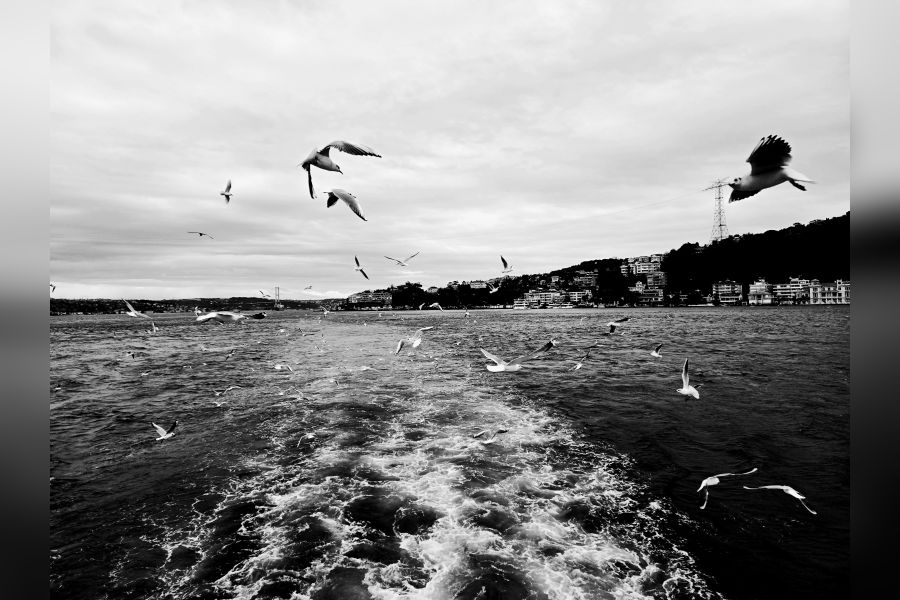
“Motherlands are castles made of glass. In order to leave them, you have to break something — a wall, a social convention, a cultural norm, a psychological barrier, a heart. What you have broken will haunt you. To be an emigré, therefore, means to forever bear shards of glass in your pockets. It is easy to forget they are there, light and minuscule as they are, and go on with your life, your little ambitions and important plans, but at the slightest contact, the shards will remind you of their presence. They will cut you deep.” — Elif Shafak, How to Stay Sane in an Age of Division


I genuinely appreciate how this honest and reflective piece captures the complex emotions of belonging, identity, and cultural connection tied to the beloved city of Bolis, reminding us that love for a place isn’t something easily explained but is woven from personal history, family memory, and the ways we carry our past into the present; by speaking candidly about the exhaustion of having to justify what the heart already knows, the article celebrates the beauty of embracing one’s roots with humility, pride, and deep affection, even amid life’s many questions.
Loved every inch of this writing, devouring every emotion and albeit explanation of your “justifiable” connection to Bolis. You are Armenian to the core and why not Bolis is ours in so many ways.
The irony is that 99% of the 35,000 Armenians in Turkey don’t live in their native homeland of Western Armenia, which was ethnically cleansed and destroyed during the Armenian Genocide by the Turks, but in Istanbul and in the last Armenian village of Vakifli in Hatay Province (which was badly damaged in the 6 February 2023 earthquake, with half of its very small population leaving it); therefore, they are also a diaspora.
That is why, it is wrong to portray Istanbul, Vakifli and Turkey as a “homeland. They never were, even though Armenians have lived there for hundreds of years.
Just imagine how much enriched Armenia would be if the Armenians in the Ottoman Empire and the Republic of Turkey contributed to Armenia instead of the undeserving Turks, who don’t acknowledge let alone thank Armenians for their contributions, but instead behave as if they don’t exist, and when they mention Armenians, they are overwhelmingly portrayed negatively and as traitors.
The Armenians in the Ottoman Empire and the Republic of Turkey have wasted their talents on the ungrateful Turks, who subjugated, oppressed, persecuted and massacred them for nine centuries, and “repaid” them with the Armenian Genocide and the destruction of 99.9% of all Armenian heritage within the borders of Turkey.
The Armenians remaining in Turkey, whose numbers are dwindling because of discrimination, economic problems, low birth rates, higher death rates and emigration, have no bright future or any future at all in that country; this is not only because of the countless past atrocities committed by the Turks against Armenians, but also because they always face the risk of becoming victims again, as in the 6-7 September 1955 pogrom, and because the very densely populated and haphazardly built 16-million megacity of Istanbul (where 99% of the Armenians in Turkey live) is expected to be destroyed in the near future by a mega-earthquake, worse than the one that completely devastated Hatay Province. The remaining Armenians should leave that doomed Istanbul and Turkey and save their lives.
Thank you, Steve M, for your practical assessments. When what is left of Armenia is on the brink of absorption by Turkey and Azerbaijan, your words hold multitudes. Articles and initiatives such as this one serve to continue the long trajectory of the imposed Turkish-Armenian Reconciliation Industrial Complex and doubles it down in the ongoing efforts to “manage” those Armenians who resist Turkification and capitulation in all its forms. Why do our readers think the massive condominium complex communities are being built all over Armenia? Certainly not for the Artsakh refugees and Diasporans. The time has come to volley back the phrase so often leveled at patriotic Western Armenians: “Let us be realistic.”
Rupen:
What a wonderful, beautifully crafted, and engaging piece. I have only been there once but loved the city and felt very much at ‘home.’ Half the people there looked like they were related to Armenians I have known across the US.
I also felt the very familiar dichotomies that you felt about how a city that was so hard on Armenians felt so comfortable and familiar.
Mark
A truly beautifully written, thoughtful, nuanced and honest piece. Thank you Roupen and the Armenian Weekly. Pure joy to read.
Armenia needs to set up a Task Force to examine ways to entice Armenians in the Diaspora to come home.
The Armenians in Istanbul might not earn as much in Armenia but, at least, they’ll be able to hold their heads up high and live as free men and women with no fear of being attacked simply for being Armenian.
Nothing good ever comes from the Turks.
I had tears : my grandmother , my mother, my aunts came to Paris from Istanbul (and Konya before)
Bravo Rupen Jambazian
Thank You Armenian Weekly.
Raffi Bakian “Aznavour Pour l’Arménie “(Aznavour for Armenia non-profit) ex-trade-mark manager Barclay to Universal Music
CAR (Center for Armenian Remembrance
Reconciliation between the Germans and the Jews only became possible when the Germans admitted their crimes, accepted their guilt, begged for forgiveness and paid compensation.
No reconciliation is possible until the Turks do the same.
Until then Armenians must show the courage never to submit or yield.
💯
First of all, genocide is formally defined as acts committed with intent to destroy, in whole or in part, a national, ethnic, racial, or religious group. As I understand it, central to the legal definition of genocide is the intent to destroy, in part or in whole, rather than the number destroyed even though the number can be important too. In other words, if there is intent to destroy, there is no minimum destroyed requirement for it to be considered and recognized as genocide. In terms of percentages, the number destroyed relative to the total population, I believe, more Armenians were murdered than Jews. This does not mean one case is or should be more important than the other. But unfortunately, international politics and geopolitical interests as well as cultural & political proximity of the victims to Western Powers play a major role in giving more importance to one over another.
Second of all, while the Armenian and Jewish atrocities share significant historical parallels, with both cases representing the systemic, premeditated, state-sponsored annihilation of distinct ethno-religious groups, there is one major difference between the two: While the Jewish atrocities took place outside of the historical Jewish homeland, across Europe primarily, in places where there were concentrations of Jewish population, the Armenian atrocities took place on Armenian homeland itself, more specifically in Turkish-occupied Western Armenia. This fact is very important because, unlike the Jewish case, the Armenian genocide was also a means to an end and that was the removal of Armenians from their lands to seize their homeland. In other words, the genocide of the Armenians was “the means” used to “an end” and that was the permanent confiscation of their homeland. If there were no Armenians left on their homeland there would be no Armenian case. This means the Armenian genocide and the loss of their homeland as a result are inseparable and fervor tied together.
Both genocides were committed by their respective former governments. The Germans distanced themselves from them, made and continue to make financial reparations to the Jews to mend relations. The Turks, unlike the Germans, not only never distanced themselves from their former criminal governments, but they also in fact glorified them as true patriots and became accomplices in this crime. While Germans apologized to the Jews and made financial reparations, which continues to this day, for the Turks to do the same would also require the return of Turkish-occupied Armenian homeland, Western Armenia, followed by the repatriation of worldwide Diaspora Armenians back to their homeland. It is for this very important reason that the Turks will lie, fabricate stories, portray their victims as aggressors and traitors to “earn” the right to deny the Armenian Genocide in order to avoid all consequences of their actions. Their backs are against the wall in light of all undeniable evidences and their method of getting out of this situation, to prolong the denial, is to remain geopolitically important in the region to the Powers who can hold their feet to fire. They bought an insurance policy, short term or long term only time will tell, from the very same Powers in 1952 that covers and protects them from accountability and that insurance policy is called NATO membership! This may be a wishful thinking on my part, but I believe the first major and critical step in bringing the Turks to their senses to come clean with their crime is to make Turkey irrelevant to the NATO alliance. Easier said than done but one solution would be to create a small Kurdistan in Turkish Southeast and move NATO bases there. This will not only make Turkey irrelevant to the alliance but it will also give us a common border with a friendly neighbor that has already admitted and apologized for the crime of their grandparents acting as collaborators to the Turkish crime.
This article was very interesting to read. I had never really thought about going there, and I don’t know if it will have the same impact on me, since we are all different, but I know I should go there one day. And your article, written with such intimate detail, makes me want to not postpone this project for too long.
I went to Istanbul and Turkey once in April of 2005. Don’t raise your hopes up and be prepared for major disappointments and heartache if you visit that city and country, especially if you visit Western Armenia. Outside of Istanbul, visiting Turkey is like visiting a giant Armenian graveyard, except that virtually no Armenian graves are to be found and extremely few Armenian tangible heritage remains either intact or even as ruins in Western Armenia. If you want to visit that city and country, be sure that you purge your email and social media accounts of “dangerous content” (i.e. Armenian Genocide and criticism of the Turkish dictator Erdogan), because Turkey spies on social media accounts of every would be visitor to the country for “anti-Turkish” content or even for mere “likes”, once a visa application is submitted and an airline ticket is bought. Many foreign travelers have been denied entry, expelled after such “objectionable” content was discovered, or even arrested before being expelled. I didn’t have any social media accounts, because social media hardly existed then, when I visited that country two decades ago. If I wished to visit that country now, I couldn’t have, because of these risks. It was a depressing visit, like for so many Armenians, and I will never visit that dreadful city and dreadful country again.
There is something about Bolis that feels inseparable from Armenian cultural identity. The Armenian presence there is so deeply rooted that it is impossible to separate the city from our intellectual and literary history. The Western Armenian language itself carries the echo of that place.
Sometimes I feel that by going there, by walking those streets, you might better understand what those writers felt and described. You might sense the emotional and historical layers that shaped their words. The Armenian imprint on Bolis is so profound that it becomes more than geography, it becomes inheritance.
Thank you Rupen for sharing this beautifully honest piece.
Thank you Rupen for sharing this beautiful, honest piece.
Incredibly written. I relate to your words deeply. The “justification” to visit where our family is from is so real.
Thank you for sharing such an intimate and sensitive perspective on being a bolsahye. Congratulations on the piece, Rupen!!
Beautifully written piece. I relate to your sentiments in so many ways as someone came from Bolis and settled in USA, leaving behind a large family.
I have been to Bolis decades ago, with friends, on a car tour from Beirut, that would take us also to Bulgaria and Romania, always looking for Armenians of course. I have to say that there was a sense of familiarity in Bolis, we did not experience in Varna, Sofia and Bucharest being with Armenians. Having family members, I can imagine why Rupen Janbazian loves visiting Bolis.
Thank you, dear Rupen, for this deeply meaningful and honest article. It resonates with me profoundly, because I experience the same reaction every time I say I am going to Bolis.
“Istanbul?” — wide eyes immediately turn toward me. The unspoken question of why is already there, whether expressed in words or simply in people’s expressions. And often, it feels as though no explanation would truly be understood anyway.
What I can add to your reflection is this: I feel the need to go there because it is part of me. Something I have there — or perhaps something I have left there — continues to call me. This connection is inseparable from both love and pain. When I am in Bolis, I experience joy and sorrow at the same time. I want to walk the streets where the story of my people once unfolded and, in many ways, still does.
The presence of Armenians and Armenian heritage there moves me deeply. It is sensitive, fragile, and powerful all at once — and I feel a responsibility to remain connected to it. Bolis continues to call me, reminding me to keep that connection alive.
Thank you again, Rupen.
Rupen, everyone in our family would have said that you mean Constantinople!