


The Region in Brief
Armenia
Armenia’s Anti-Corruption Committee has detained Arthur Avanesyan, known as “Kandaz,” a former intelligence officer, participant in the Artsakh wars, and head of the security team of the Strong Armenia party led by Samvel Karapetyan. He has been remanded in custody for two months.
Avanesyan’s detention is reportedly connected to a case involving alleged violations during the electoral process.
While some reports have referred to alleged bribery-related charges, critics and political allies of Avanesyan dispute that characterization. They argue the case is not supported by evidence of bribery and instead point to a recording in which Avanesyan is heard saying that “If we win, everything will be good,” which they say is being interpreted as the basis for the accusations.
Avanesyan also announced a hunger strike early Wednesday morning in protest of his arrest.
Narek Karapetyan, a board member of the Strong Armenia party, condemned the detention, describing Avanesyan as a war veteran and criticizing the move by authorities.

Avanesyan, who leads the party’s security unit, has previously been outspoken in political debates, including rejecting claims about mass desertions during the 2020 Nagorno-Karabakh war and defending the conduct of Armenian forces.
The case unfolds amid a politically charged environment, with opposition figures accusing pro-government media outlets of circulating unfounded allegations against Avanesyan over time.
Artsakh
International lawyers representing the families of seven Armenian detainees held in Azerbaijan have submitted a petition to the U.N. Working Group on Arbitrary Detention (WGAD), calling for their immediate and unconditional release and challenging what they describe as arbitrary convictions.
The petition, dated April 24 — the annual day of remembrance for the victims of the 1915 Armenian Genocide — asks the U.N. body to declare the detentions unlawful, overturn the sentences and find that they were issued in violation of international law.
The detainees named are David Babayan, Madat Babayan, Levon Balayan, Vasily Beglaryan, Eric Ghazaryan, David Ishkhanyan and Levon Mnatsakanyan. They were detained between Sept. 19 and Oct. 3, 2023, following Azerbaijan’s military operation in Nagorno-Karabakh (Artsakh). The group includes former officials, military commanders and one civilian.
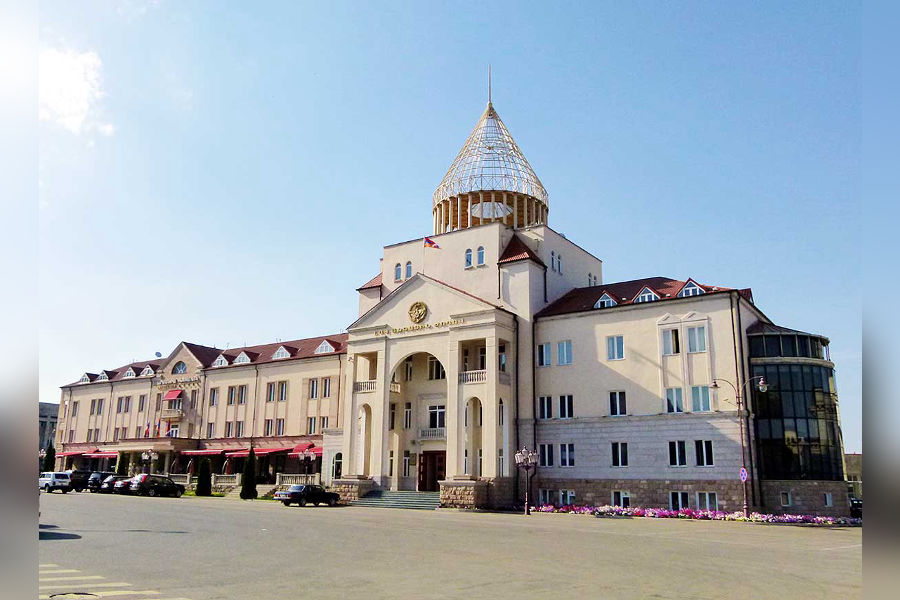
On Feb. 5, 2026, the Baku Military Court sentenced three of them — David Ishkhanyan, former speaker of the Artsakh National Assembly; David Babayan, former foreign minister; and Levon Mnatsakanyan, former defense minister and commander of the Defense Army — to life imprisonment. The remaining four received prison terms ranging from 15 to 19 years.
Separately, Siranush Sahakyan, head of the Center for International and Comparative Law and representative of Armenian detainees before the European Court of Human Rights, reported that she has information from Ruben Vardanyan’s family that he has been transferred to the Umbaki prison complex in the Garadagh district of Baku, under the jurisdiction of Azerbaijan’s Ministry of Justice.
Sahakyan said the situation remains “concerning,” adding that families were not informed in advance about transfers, locations or changes in contact conditions and said there is no verified information on health status, access to medical care, or basic living conditions.
According to Sahakyan, while phone calls with family members continue, there is no independent monitoring mechanism providing verified updates, creating what she described as an “information vacuum.”
She also said the European Court of Human Rights has ordered Azerbaijan to provide the detainees’ verdicts by Aug. 31, adding that failure to do so does not block access to international legal mechanisms. On the contrary, she said, it may indicate that domestic remedies are not effective, with ECHR deadlines beginning when court decisions are actually received. Sahakyan stressed the continued importance of the European Court’s involvement in the case.
Georgia
The Armenian community in Georgia says authorities did not allow them to hold a peaceful demonstration outside the Turkish Embassy on April 24, marking the Armenian Genocide.
Community council member Jeaneta Baghdasaryan said written applications were submitted on time to City Hall and the Ministry of Internal Affairs but were rejected.
Authorities cited the need to balance freedom of assembly with public safety, transport and the rights of people living or working nearby, noting they could request changes to a protest’s time or location. They asked the community to consider an alternative site.
Baghdasaryan said the community did not consider relocating the protest, emphasizing the importance of holding it outside the Turkish Embassy as they have for the past 20 years.
The community said the decision “does not meet the standards of a rule-of-law state and undermines trust in state institutions.”
Russia
Russia has condemned the destruction of Armenian churches in Stepanakert and said it has not changed its position, stating that “a war against monuments is unacceptable regardless of where it occurs.” Russian Foreign Ministry spokesperson Maria Zakharova made the remarks during a briefing.
Zakharova said Russia understands “better than anyone” the consequences of destroying monuments tied to shared culture and history. “We do not have double standards. This must not be done anywhere,” she said.
She also drew attention to what she described as the absence of an official response from Yerevan, suggesting such questions should first be addressed to Armenia’s leadership.
Zakharova further referred to the 2020–2022 trilateral agreements between Russia, Azerbaijan and Armenia, which provide a path toward humanitarian reconciliation, including the return of detainees and refugees. She added Russia is ready to assist in resolving such issues if requested.
Turkey
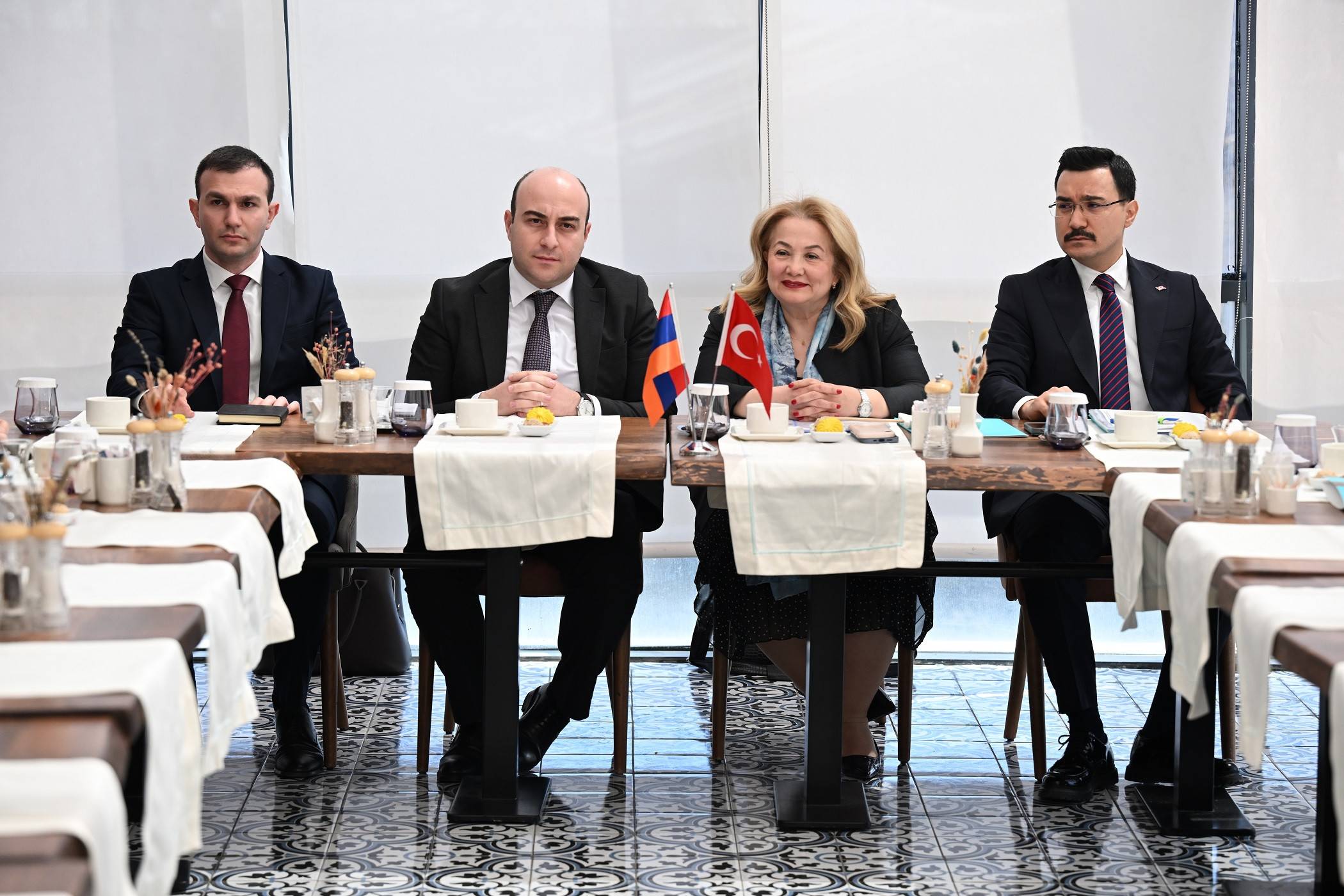
A joint Armenia-Turkey working group met in Kars on April 28 to discuss the restoration and operation of the Gyumri-Kars railway.
According to Armenia’s Foreign Ministry, both sides emphasized the importance of reopening the railway swiftly as part of broader efforts to expand regional transport links.
The U.S. Embassy in Armenia welcomed the move, describing it as a concrete step toward reopening long-closed economic and social ties between Armenia and Turkey. The embassy called it “historic progress” toward a peaceful and prosperous South Caucasus, adding that restoring this key link would contribute to regional connectivity and stability. It also said groundwork for these developments had been laid during the Aug. 8 summit in Washington.
Armenian and Turkish representatives previously held a second round of technical discussions on the railway’s restoration and operation in November.
Prime Minister Nikol Pashinyan has said the positive dialogue with Turkey raises hopes for reopening the Armenia-Turkey border in the near future.
Turkish Foreign Minister Hakan Fidan has said Ankara would be ready to normalize relations with Armenia once Yerevan and Baku sign a final peace agreement. Meanwhile, National Assembly Speaker Alen Simonyan recently said in Turkey that Ankara remains influenced by Azerbaijan in the process of normalizing relations with Armenia.