On the hot summer afternoon of July 6, 1944, Hartford, Connecticut, was filled with joy, excitement and celebration. Barbour Street and the surrounding fairgrounds drew crowds from across the city. Families arrived in groups, children tugging at their parents’ hands, their eyes wide with anticipation. The great white canvas of the Ringling Bros. and Barnum & Bailey Circus rose above the grounds like a city of its own, its towering tent catching the sunlight, its flags shifting gently in the warm wind.
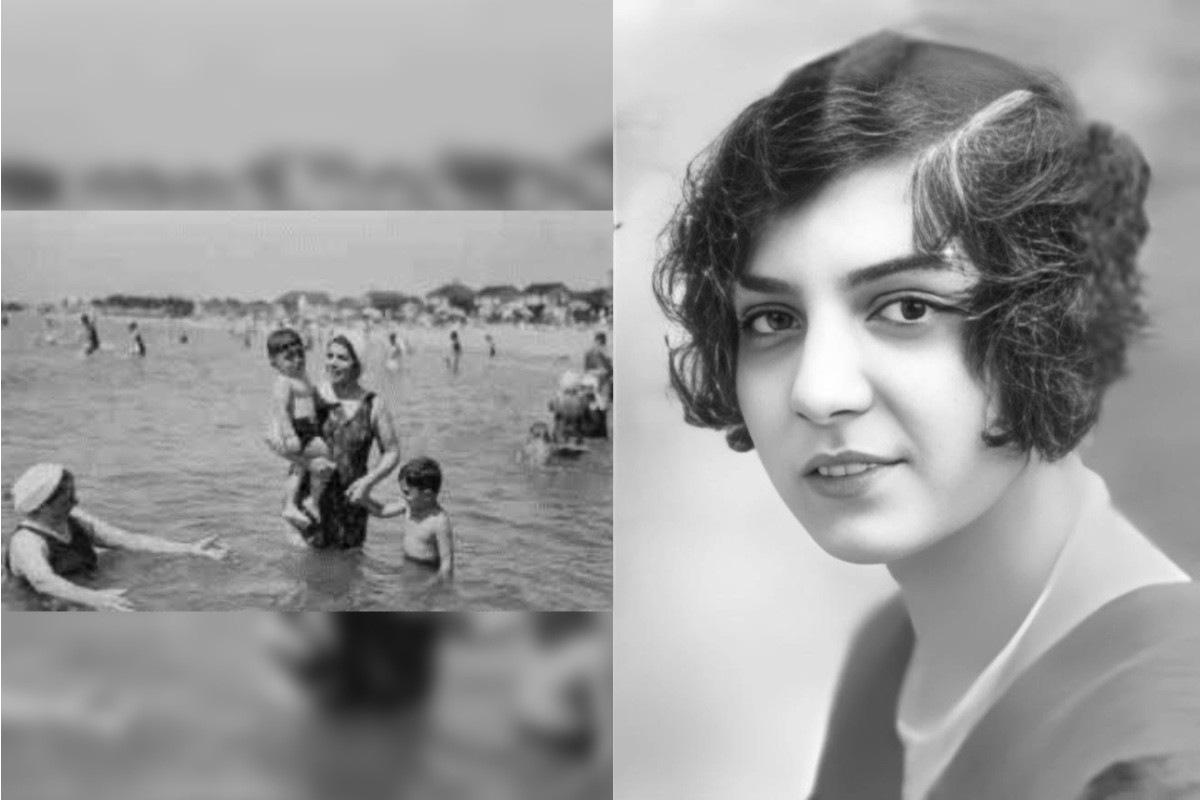
Inside, the air carried the sounds of a complete circus world: the distant rumble of animals, the tuning of instruments and the shuffle of performers preparing behind curtains of canvas and rope. Vendors moved through the crowds, selling snacks and souvenirs, while laughter rose from the bleachers as children pointed toward the ring. For a brief moment, everything felt suspended in wonder. In that sea of smiling faces sat a young Armenian mother with her two small sons. Her name was Alice Anna Boyajian.
Alice Boyajian was born on May 14, 1914, in Hartford, Connecticut, the daughter of Armenian-born parents Anna Hintlian and Charles Kirkorian. She graduated from Bulkeley High School in 1932. She later fell in love and married Frederick Boyajian Sr., and together they built a home at 379 Hillside Ave. in Hartford, a modest address filled with hope, love and the promise of what was still to come.
Their first son, Frederick Boyajian Jr., known as Fred, was born on Oct. 30, 1938, in Hartford. Their second son, Stephen, followed Aug. 15, 1940, also in Hartford. For Alice, being a mother was everything — her entire life revolved around her sons. Fred and Stephen were not just her children, but the center of her world. Their voices, laughter and presence filled her life completely, in a way nothing else ever could.
That afternoon, like thousands of others, Alice brought her sons to the circus. Across the grounds, families settled into their seats, unaware that this bright moment would become one of the darkest in American history. The Hartford circus fire began during the performance, when a small flame appeared near the edge of the massive tent. At first, it seemed insignificant — something that might be contained quickly. Performers tried to maintain order, and the band continued to play.
But suddenly, the fire became deadly. The canvas, treated with a mixture that made it waterproof but dangerously flammable, caught fire and began to spread with terrifying speed. Within moments, flames raced across the structure. Smoke thickened under the roof, dropping lower and lower until it swallowed the light. The cheerful world inside the tent collapsed into confusion, screams and total panic. The crowd rushed toward the exits, only to find them choked and blocked. Parents called out for their children; children cried for their parents. Some ran blindly into the smoke; others froze where they sat, unable to understand what was happening. The structure that had moments earlier held laughter and music became a burning trap.
Witnesses later described scenes that defied comprehension. Eleven-year-old survivor Maureen Krekian recalled, “I remember somebody yelling and seeing a big ball of fire near the top of the tent. And this ball of fire just got bigger and bigger and bigger. By that time, everybody was panicking. The exit was blocked with the cages that the animals were brought in and out with. And there was a man taking kids and flinging them up and over that cage to get them out. I was sitting up in the bleachers and jumped down — I was three-quarters of the way up. You jump down and it was all straw underneath. There was a young man, a kid and he had a pocketknife. And he slit the tent, took my arm and pulled me out.”
By the time the fire had consumed the tent, the human cost was devastating. At least 167 people died, and more than 700 were injured, making it one of the deadliest disasters in U.S. history. Entire families were lost together. Others were separated forever in the confusion of those final minutes.
Among the critically injured were Alice Boyajian and her two sons, Fred and Stephen. They were taken to Municipal Hospital in Hartford, but none survived their injuries. Alice was 30. Fred was 5. Stephen was 3. In a matter of hours, this family built on love, hope and tenderness was gone. Alice and her sons were laid to rest at Fairview Cemetery in West Hartford, buried side by side, as they had been in life — never separated, even in death. Their graves became a solemn place of remembrance for an Armenian community shaken by the tragic loss.
Frederick Boyajian Sr. later remarried and had other children, but those who knew him understood that something in him never fully recovered. The weight of that single afternoon remained with him throughout his life. He died July 10, 2004, and was laid to rest at Fairview Cemetery as well.
Today, the story of Alice Boyajian and her sons remains one among many from that day, yet it carries a quiet, enduring force. It speaks not only of tragedy, but of a mother’s love interrupted in an instant, of children whose lives were only just beginning and of a family forever bound to the final moment they shared. It also echoes the loss of all the souls who perished in the deadliest disaster Connecticut has ever known. Every life lost that day had a name, a home and a story — and it is in their memory that we must never forget what it will always be known as: the day the clowns cried.