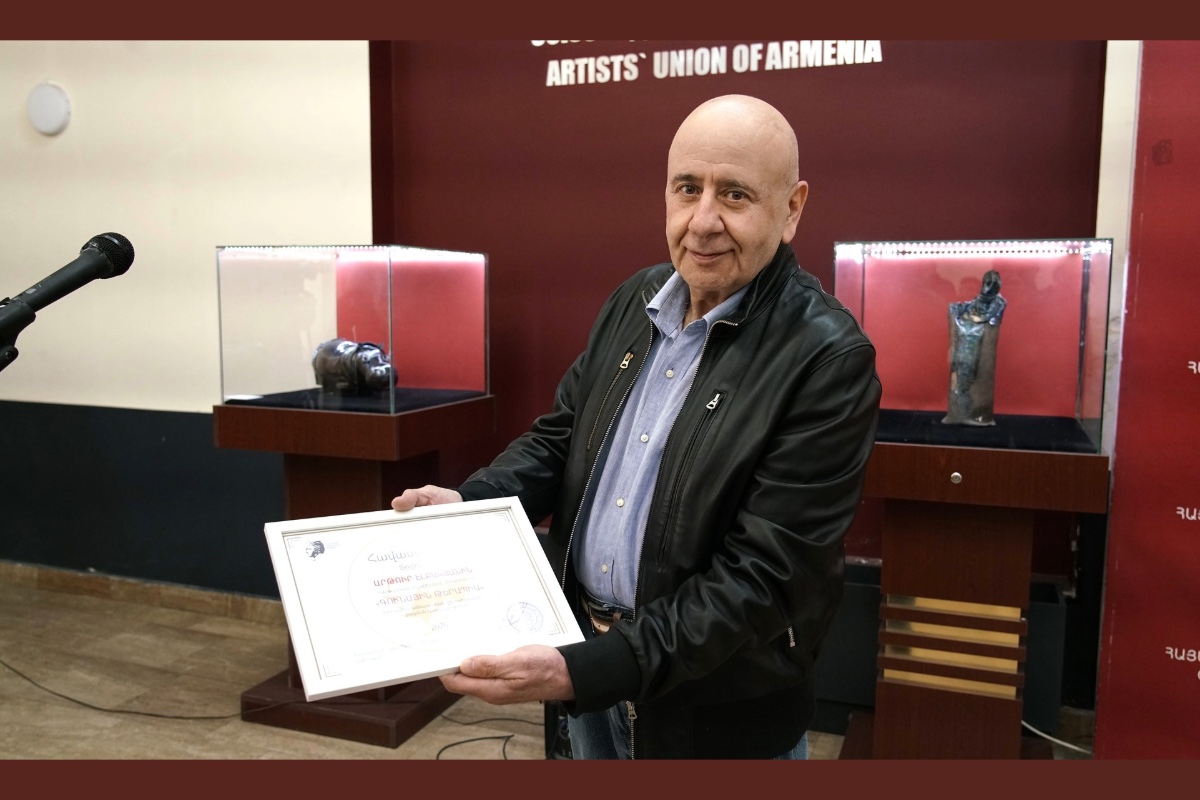
Every journalist, when preparing for an interview, must study the person they are about to present to readers: looking through previous interviews, exploring biographical details and understanding the subject deeply enough to tell something new rather than simply repeat what has already been said.
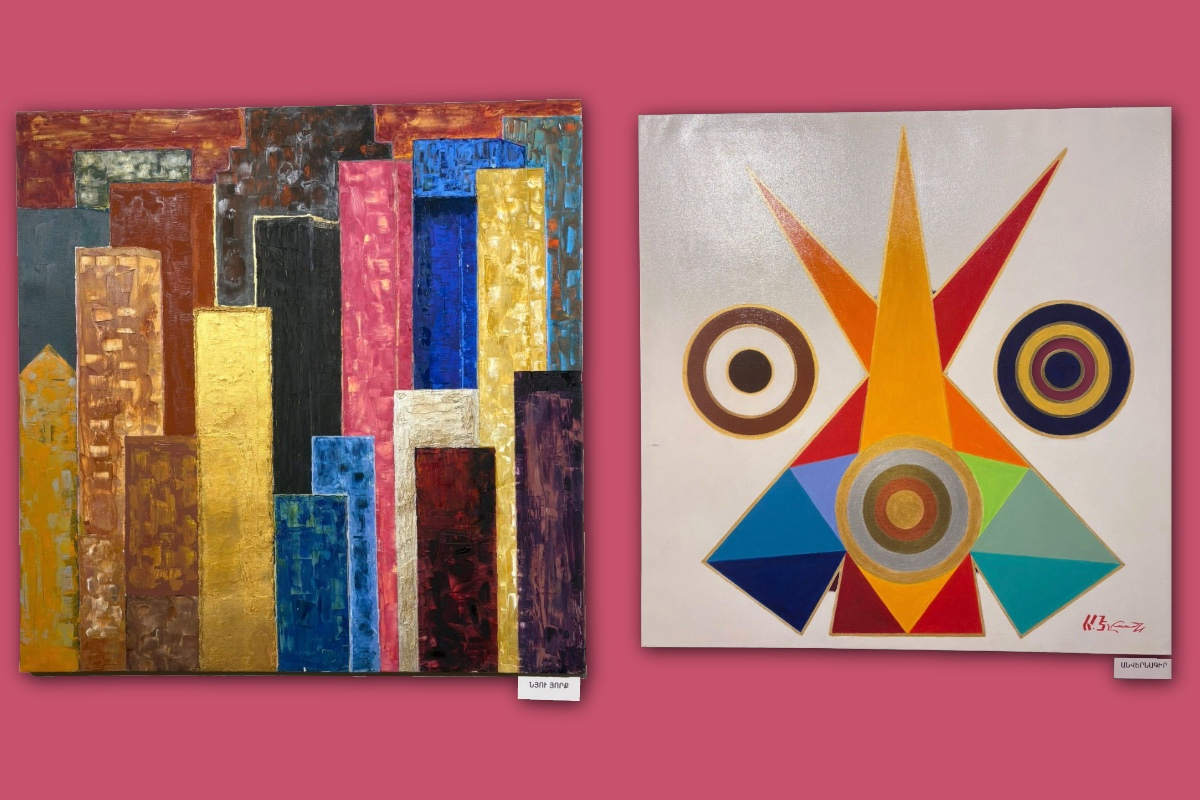
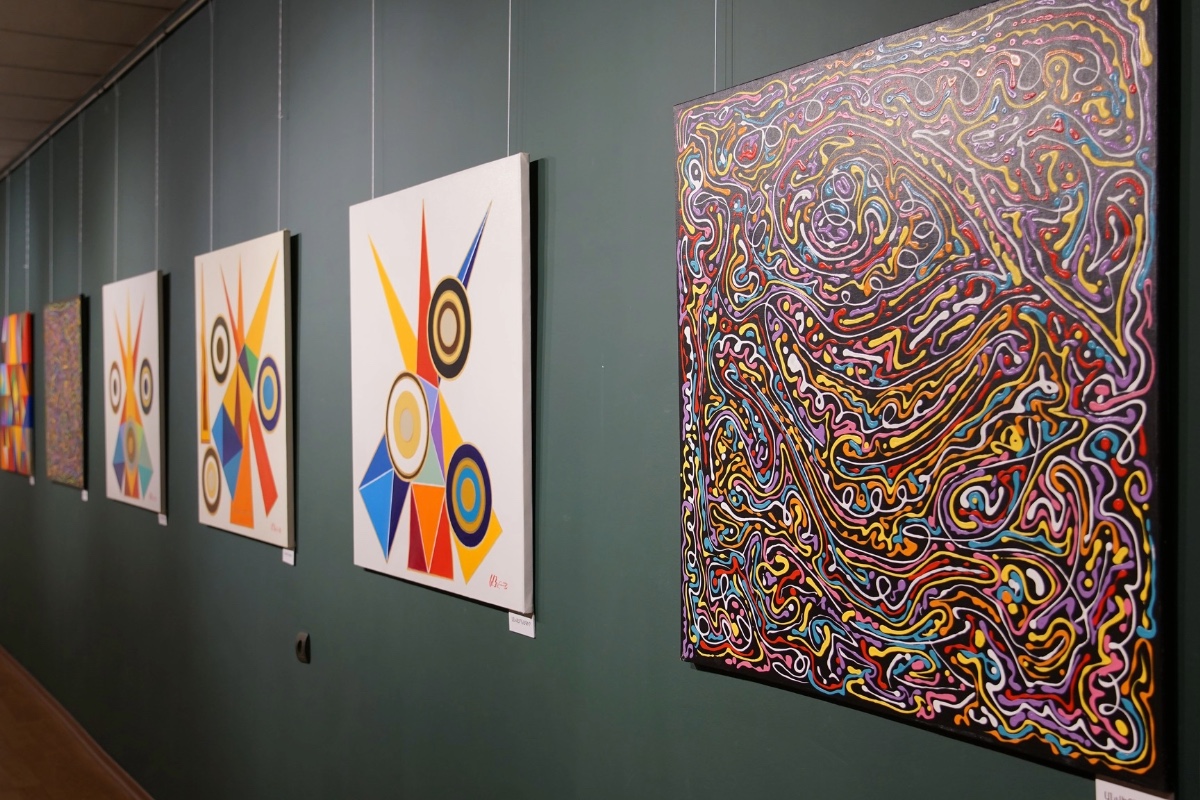
Arthur Elbakyan recently opened his exhibition, “Color Therapy,” at the Armenian Artists’ Union. While studying his recent conversations and interviews, I noticed one important detail: The artist spoke about a painting that had been created in the course of a single night. I decided to begin our conversation from that point. “Show me that painting,” I said. “When you work in silence, when nothing disturbs you, when everyone is asleep, and it is just you, the silence, the cognac and the canvas — that is when the result is born,” he said, pointing to the work.
For Elbakyan, painting was not a professional choice but an inner necessity born in the silence of the theater. It all began with a play, “My Crazy Shakespeare,” which the author wrote for participation in the world’s largest Mono Festival in New York.
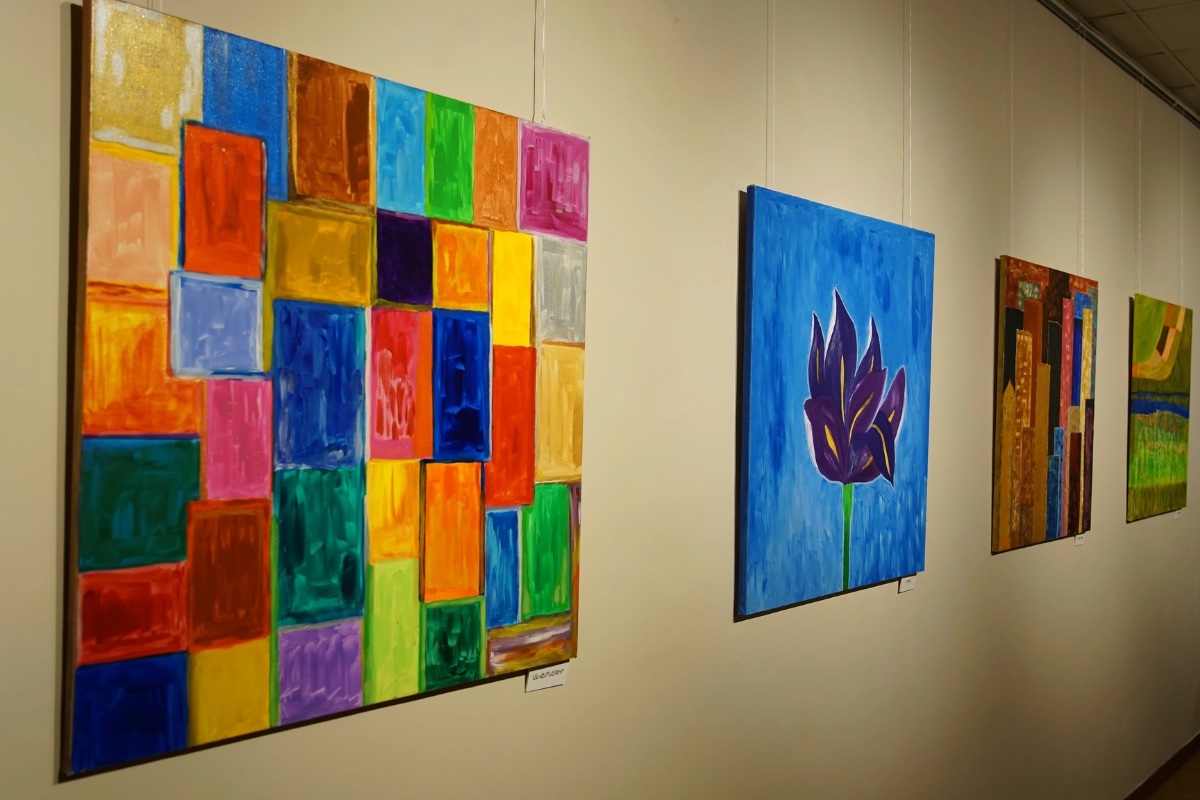
The protagonist of the play, confined to a psychiatric hospital, begins to paint. And this is where the miracle happens: The actor-author starts painting on behalf of his character. It was not merely stage design or visual decoration; it was an immersion into the character’s psychology.
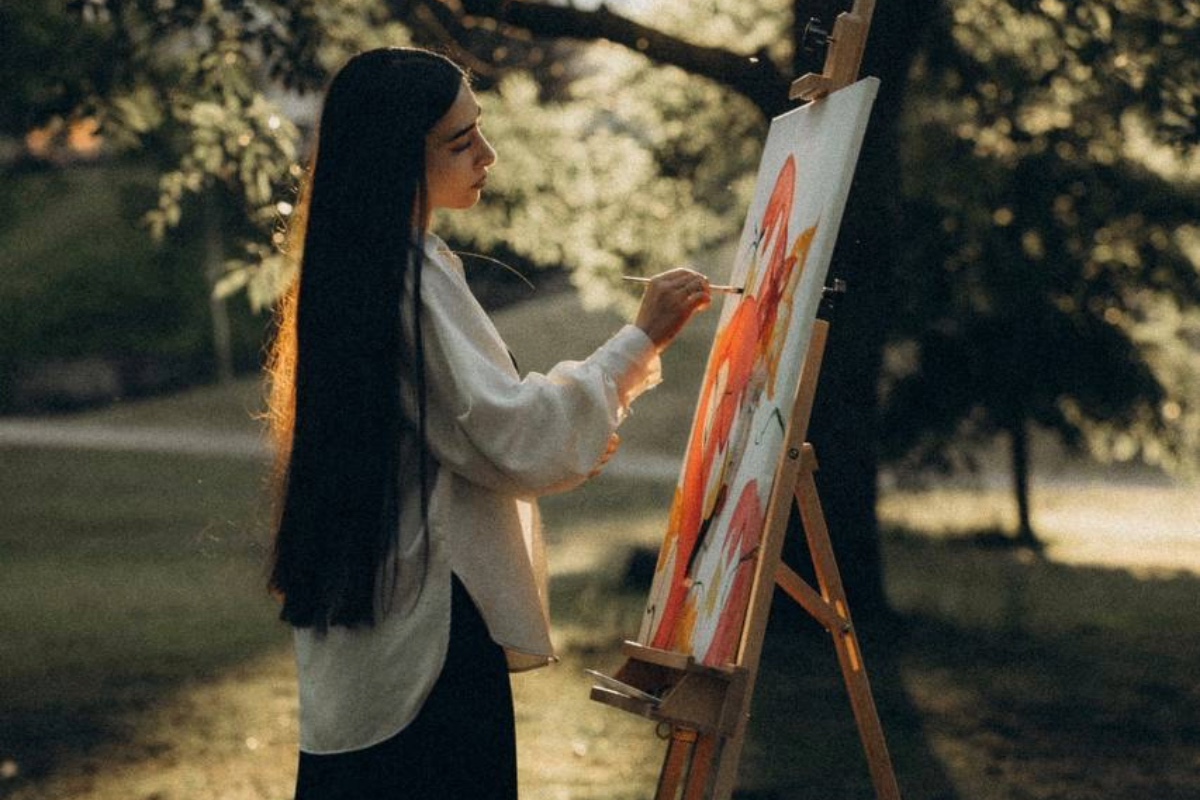
Elbakyan’s creative ritual is devoid of planned schemes. He does not paint for sale, nor does he work according to fixed hours. For him, painting is an “energy coming from above,” something that arrives unexpectedly. When that energy appears, he can leave everything behind and surrender entirely to the canvas.

The same happens when he writes: “The text comes while walking down the street, and if you fail to capture it in the next second, it no longer belongs to you.”
The cornerstone of Elbakyan’s worldview is Kond, the old and mysterious district of Yerevan that he still sees in his dreams. But for him, Kond is not merely a neighborhood; it is its people.
The central figure of his childhood was his grandmother, whose name, Hayastan, is the Armenian word for Armenia.
His grandmother, who had survived the exile route from Kars and lost her husband during the Stalinist repressions of 1937, became Elbakyan’s first cultural guide. She taught her grandson what a museum is, what culture means and what a real city looks like.
“The text comes while walking down the street, and if you fail to capture it in the next second, it no longer belongs to you.”
Their home became a unique cultural crossroads, welcoming figures such as Jean Eloyan, Mher Mkrtchyan and Hrachya Ghaplanyan. A child raised in such an environment could hardly avoid becoming an artist, although his first love was football.
From eighth grade, he trained professionally, but fate closed the path of sports with injuries to both knees, opening instead the door to theater.
Elbakyan considers himself fortunate when it comes to teachers. The head of his acting course was Khoren Abrahamyan. Yet Abrahamyan did not teach dry theory or the Stanislavski system. He taught them how to live. “He would come to class and simply talk for two hours. He filled our ears with his beautiful Armenian language. He would say: Learn how to speak. On the street, you may speak one way, but if you step onto the stage, you must master the language.”
Today, Elbakyan speaks with sorrow about the way television distorts language and taste. Long ago, he removed himself from the mass culture in which people are told who the “star” is supposed to be. He chose freedom.
When he left the Young Spectator’s Theater, he did not know where he was going, but he knew exactly what he did not want. He did not want to become part of a heavy state system in which hundreds of actors wait years for a single role.
That is how Theater 13 was born on Pushkin Street: a space of freedom, without rigid staff structures, working only with invited artists. The theater achieved international success, but the hardships of Armenia’s cold and dark years eventually forced it to close.
In much the same way, Elbakyan stood at the origins of AR Television, yet today he no longer watches television at all. “It gives me nothing.”
Elbakyan spent seven years working on a book about Yerevan that is soon to be published. It is not a collection of memories but a psychological portrait of the city. He does not live through illusions; instead, he creates his own through his paintings.
The same honesty exists in his personal life. For him, the secret of a 45-year marriage lies in the absence of the word “force.” He met his wife, Anahit, by chance and immediately felt what he describes as a sign from above: “This is your wife.”
Today, he is the “Papa” of four grandchildren. He dislikes the Armenian word “papik,” saying it diminishes the meaning. Although his grandchildren live in the United States, there is one rule for them above all else: pure Armenian.
For Elbakyan, language is the final fortress of self-preservation.
He is an artist unafraid of being alone with himself. He believes most fears are products of the human mind, while true strength lies in faith. “God is always present in my life. I read the Bible not in moments of despair, but in moments of success — to give thanks.”
Just as a sculptor removes unnecessary fragments of stone to reveal the figure within, Elbakyan has removed unnecessary noise, false fame and imposed taste from his life.
His exhibition, “Color Therapy,” was an invitation to see the world through the prism of one’s own soul. Love, faith and silence — this is the formula of Arthur Elbakyan, a formula that today feels more necessary than ever.
“God is always present in my life. I read the Bible not in moments of despair, but in moments of success — to give thanks.”