


The Region in Brief
Armenia
Armenia’s Central Election Commission has assigned ballot numbers to political parties and alliances competing in the upcoming parliamentary elections scheduled for June 7. The positions were determined during a session held earlier today through a lottery.
Among the key political forces participating in the election are the ruling Civil Contract Party, the opposition Armenia Alliance, the Prosperous Armenia Party and Strong Armenia. Other parties, including the Bright Armenia Party and the Republic Party, are also among the registered participants.
The allocation of ballot numbers marks a key procedural step as political forces intensify their campaigns ahead of the vote.
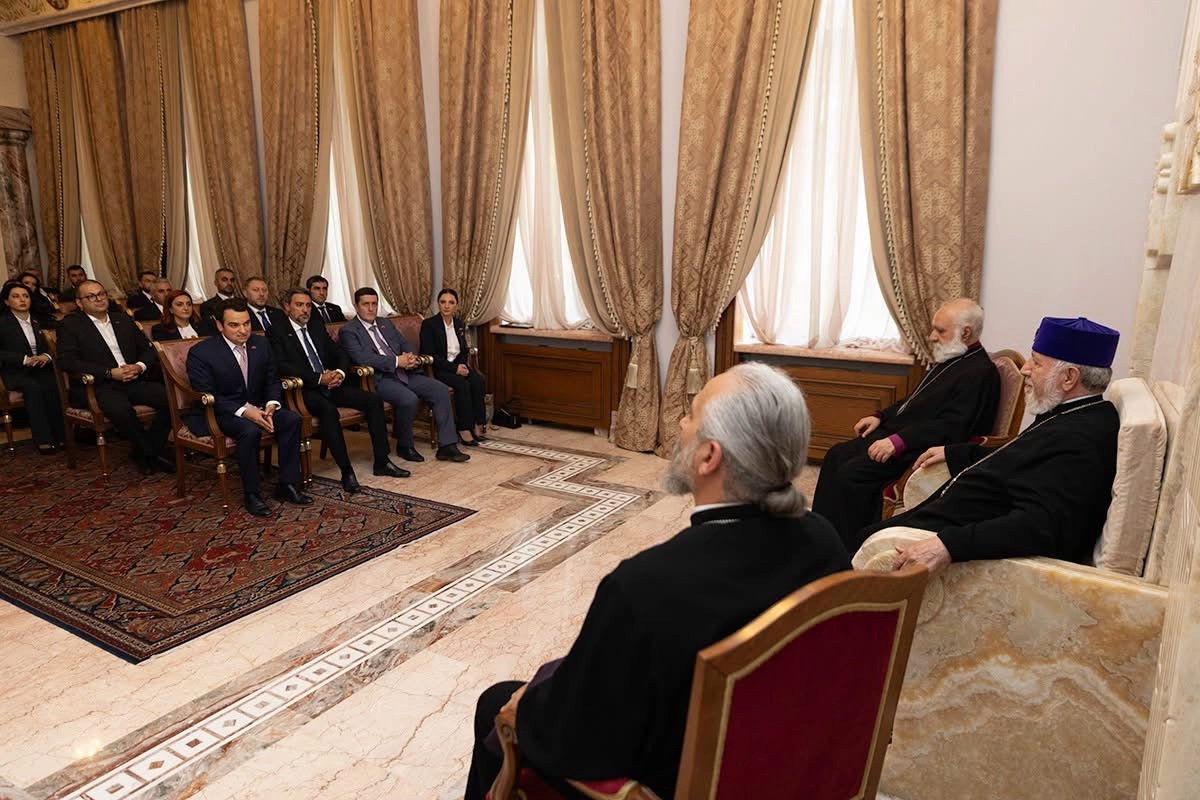
Meanwhile the Armenia Alliance, No. 17 on the ballot, has announced that it will officially launch its preelection campaign with a rally in Vagharshapat, also known as Etchmiadzin, on May 8 at 6 p.m. The choice of location is seen as symbolic, with the alliance stating it aims to express solidarity with the Armenian Apostolic Church.
The rally is expected to mark the beginning of a broader campaign period, as parties and alliances seek to mobilize voters and outline their platforms in the lead-up to election day.

Artsakh
Armenian Revolutionary Federation (ARF) Bureau member and former speaker of the National Assembly of Artsakh Davit Ishkhanyan, who is being held in detention in Baku, has appealed to Armenia’s Human Rights Defender, requesting assistance in obtaining official legal documents related to his case.
In a message conveyed verbally, Ishkhanyan asked Armenia’s Human Rights Defender to mediate with Azerbaijani authorities to secure the full texts of the indictments and final court verdict in both Armenian and Azerbaijani. He requested that the documents be delivered to his family.
Ishkhanyan also said Sabina Aliyeva, Azerbaijan’s human rights commissioner, recently visited the detainees. According to him, he handed her a written statement outlining his request. “I clearly asked that she facilitate the transfer of the complete versions of our verdicts, in both Azerbaijani and Armenian, to my family,” he said, adding that Aliyeva indicated the Azerbaijani version could be provided.
Addressing the broader context of the case, Ishkhanyan argued that the proceedings extend beyond individual defendants. “This trial is not against 15 individuals; it is directed against the Armenian people and Armenian statehood, with clear objectives and a long-term strategy,” he said. He added that suspicions formed during the investigation were reinforced during the trial , expressing confidence that “time will demonstrate the validity” of his assertions.
Ishkhanyan also addressed the Armenian public, urging resilience and strength. “Stay strong,” he said, expressing his wishes for perseverance and fortitude to the Armenian people.
In other news, Hovik Avanesov, cultural heritage ombudsman of Artsakh and deputy chairman of the “National” Historical and Cultural NGO, has issued a warning regarding what he describes as further evidence of a systematic campaign targeting Armenian cultural heritage.
According to documentation by Caucasus Heritage Watch, the complete destruction of a monument dedicated to the 100th anniversary of the Armenian Genocide, located within the Stepanakert memorial complex, represents a significant and troubling development. Experts argue that the incident cannot be viewed in isolation but instead reflects a broader pattern of deliberate erasure of cultural heritage and historical memory.
The monument, a white marble bell tower, held particular symbolic importance. It included a reliquary containing human remains transported from Deir ez-Zor, a site deeply embedded in Armenian collective memory as a place synonymous with the atrocities of the Armenian Genocide.
Satellite imagery provided by Airbus and Planet Labs confirms that the monument and surrounding memorial complex were demolished between July 14, 2025, and April 25, 2026. The timeline indicated by the data suggests a deliberate, phased operation rather than incidental damage, with the apparent aim of completely clearing the site of any trace of Armenian presence.
Observers emphasize that the intentional destruction of cultural property violates several international conventions, including those established under UNESCO. Cases like this highlight ongoing challenges in enforcement, as such acts often occur without accountability, increasing the risk of recurrence.
Iran
Iranian authorities have said they are prepared to reach a “fair agreement” with the United States to help resolve ongoing tensions.
According to the ISNA news agency, Iranian Foreign Minister Abbas Araghchi made the remarks during a meeting in Beijing with Chinese Foreign Minister Wang Yi. Araghchi said Tehran would accept only an “honest and comprehensive agreement” in any negotiations with Washington.
The Iranian foreign minister described recent U.S. actions as a clear violation of international law, adding that Tehran would use all available diplomatic tools to protect its rights and national interests in talks with the American side.
Araghchi also praised China’s position in international forums, particularly its criticism of U.S. and Israeli policies, saying Tehran valued Beijing’s approach. He added that cooperation between Iran and China was expected to expand further under current geopolitical conditions.
The remarks come as the status quo in the region continues, with diplomatic efforts stalled and the maritime blockade on Iran still in place despite the April 22 extension of the ceasefire.
Turkey
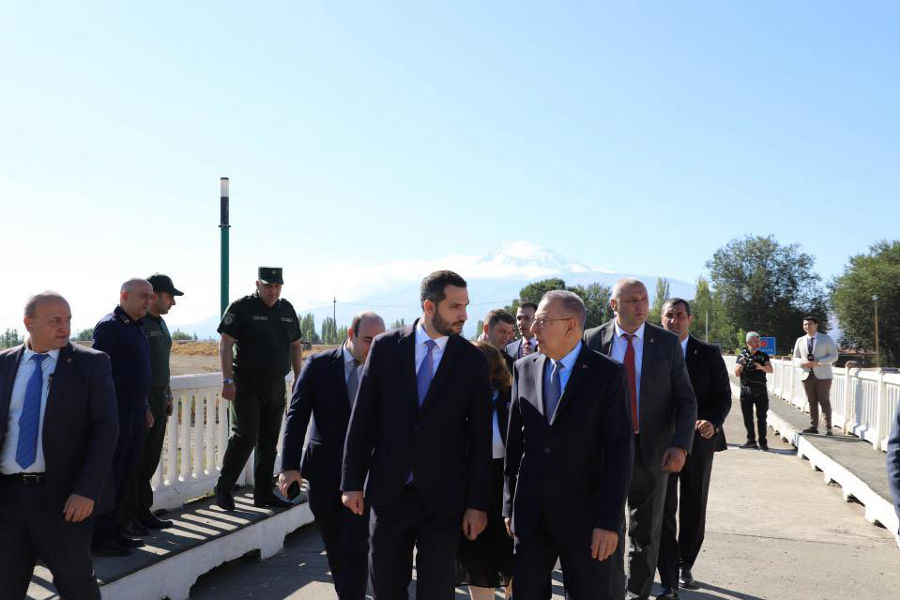
Speaking at the Yerevan Dialogue Forum on May 5, Turkey’s special representative in the Armenia-Turkey talks, Serdar Kılıç, said the term “normalization process” is misleading when describing relations between the two countries, emphasizing instead that the ongoing efforts are aimed at building trust.
Kılıç said he has made “30 to 40 proposals” to his Armenian counterpart, Ruben Rubinyan, stressing that none of them were designed to serve Turkey’s direct interests.
The Turkish official also spoke in personal terms about his connection to the region, saying he feels “at home” in Yerevan. He argued that any lasting regional solution must originate within the region itself.
Referring to historical precedents, Kılıç cautioned against allowing third parties to undermine long-term strategic interests for short-term tactical gains. While acknowledging constructive international involvement, he highlighted the role of the United States in the TRIPP project and its contribution to the Aug. 8 agreement between Armenia and Azerbaijan, describing it as positive engagement. External partners, he said, should play a supportive role when needed, particularly in areas where regional countries may lack economic capacity.
Addressing public engagement, Kılıç emphasized that societal support depends on whether people perceive tangible benefits. If improved connectivity contributes to citizens’ welfare and income, he said, public backing is likely. However, he cautioned that such initiatives must be carefully balanced to avoid placing excessive burdens on populations, even as they promise long-term economic gains for the region.
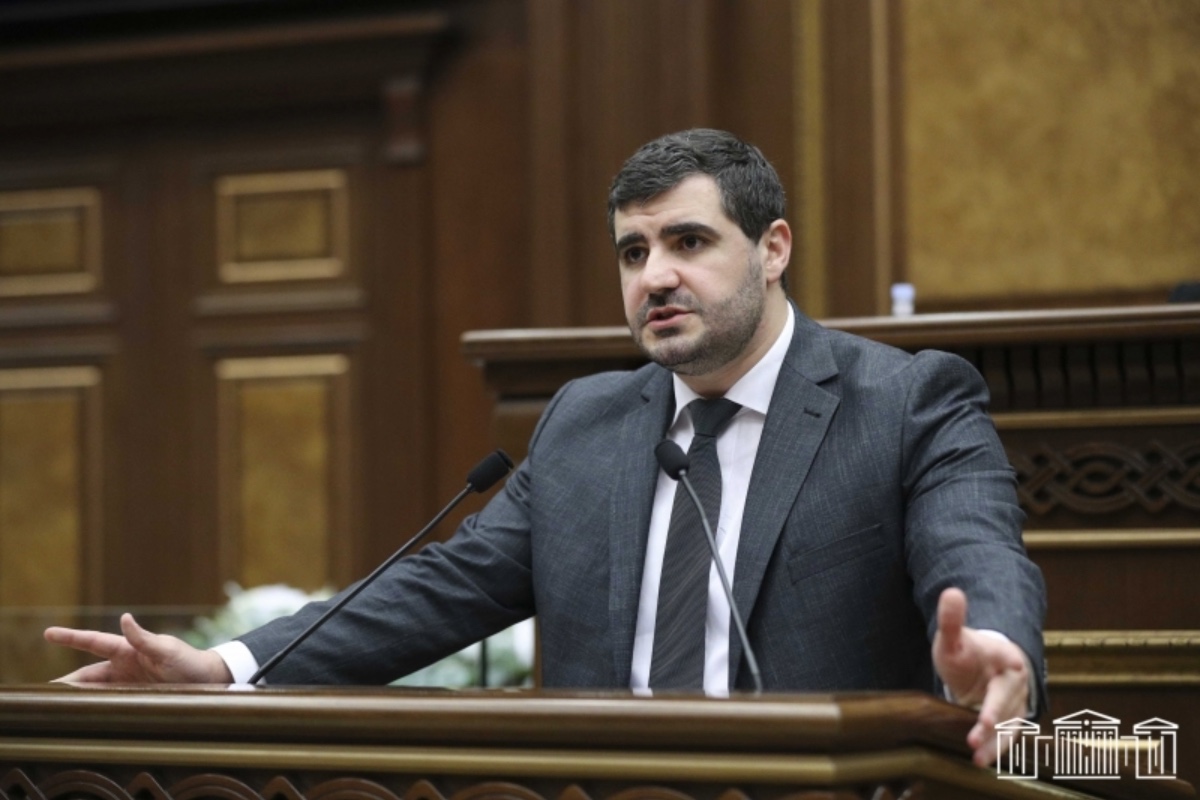
“I Have Honor” MP Tigran Abrahamyan responded critically to the remarks, questioning the apparent contradiction between the tone of goodwill and the political realities on the ground.
Abrahamyan said it was striking that a Turkish official who claims to feel “at home” in Yerevan would simultaneously stress that progress in Armenia-Turkey relations depends on broader regional developments, particularly ties between Armenia and Azerbaijan. According to the MP, this linkage underscores Ankara’s continued positioning of its bilateral agenda within the framework of regional dynamics rather than direct engagement.
He further pointed to what he described as a key inconsistency: Despite such rhetoric, Turkey continues to keep its border with Armenia closed. The border has remained shut since 1993, when Ankara cited the capture of Kelbajar during the First Nagorno-Karabakh War as the primary justification.
Abrahamyan also argued that even after recent geopolitical shifts, referring to Armenia’s concessions regarding Nagorno-Karabakh, Turkey has maintained new preconditions in its approach. This, he said, illustrates a broader pattern in which unilateral concessions in foreign policy lead to continued losses rather than reciprocal progress.
Concluding his remarks, the opposition lawmaker asserted that the outcome of the 2020 war enabled Ankara to achieve a long-standing objective of becoming a decisive actor in Armenia’s regional affairs.