



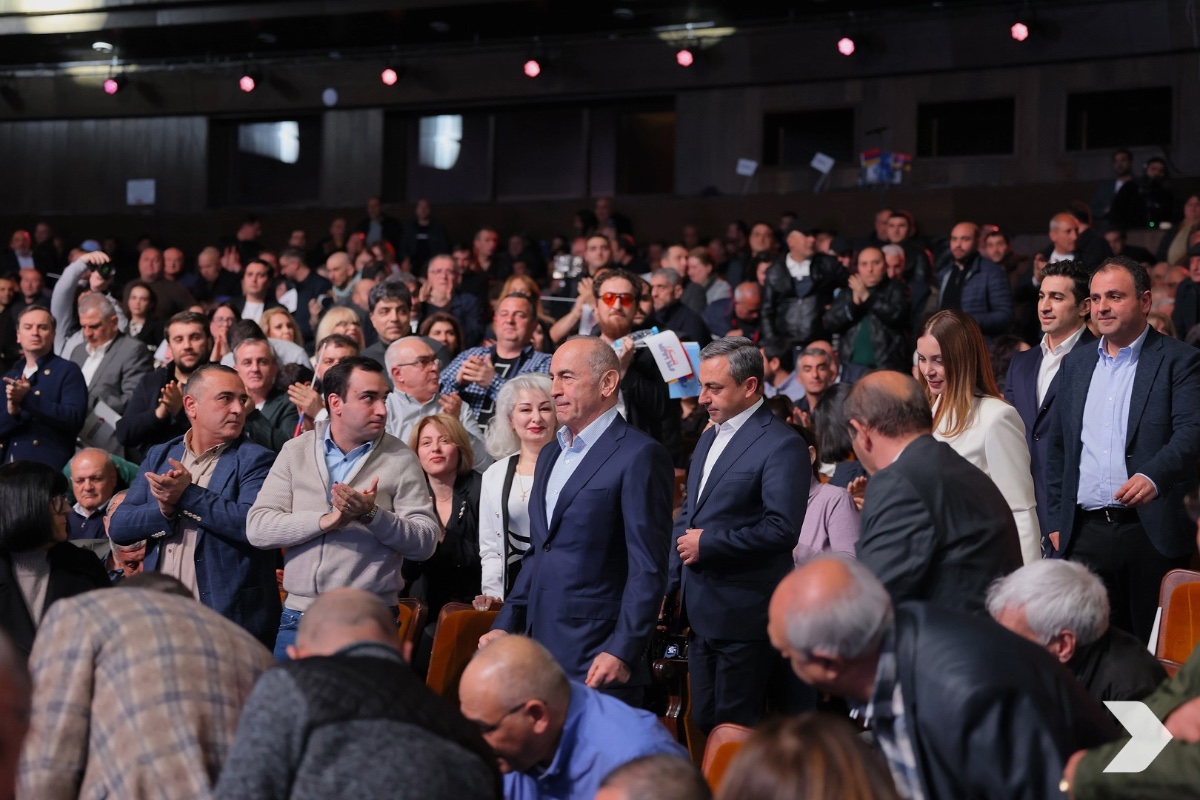
YEREVAN, Armenia — Prime Minister Nikol Pashinyan has intensified political tensions ahead of upcoming elections, warning the country could face a “disastrous war” in September unless his ruling Civil Contract party secures a constitutional majority in parliament.
During a walking campaign tour in Yerevan on Sunday, Pashinyan said the stakes of the election extend beyond domestic politics, framing the vote as a decisive factor in ensuring national stability. “If the Civil Contract party does not secure a constitutional majority… there will be war in September,” he said, describing the potential conflict as catastrophic. He said the warning is based on his experience and responsibility as a long-serving leader.
The prime minister’s remarks sparked immediate political backlash and raised questions about whether they amount to political pressure on voters.
Foreign Minister Ararat Mirzoyan sought to clarify and defend the prime minister’s position, suggesting that the reference to September should be interpreted more broadly as a postelection timeframe rather than a fixed prediction. “Such a scenario is certainly possible,” he said, rejecting claims the statement constituted blackmail or coercion.
Mirzoyan said certain opposition forces espouse ideologies that could heighten regional tensions, suggesting their policies might lead to immediate confrontation with neighboring countries.

Public rhetoric intensified further as National Assembly Speaker Alen Simonyan weighed in, describing the ruling Civil Contract party as a “party of peace” in contrast to opposition forces he characterized as aligned with war-oriented policies. Speaking to the press in parliament, Simonyan said the political choice facing voters is between peace and the risk of conflict.
“Has there ever been a time when the leaders of Armenia and Azerbaijan spoke only about peace? We must not allow ourselves to lose the opportunity for peace,” he stated, underscoring the government’s message of stability.
Simonyan also addressed past criticism, acknowledging previous actions such as posing against the backdrop of Aghdam, which he said reflected a mindset he has since moved beyond. He said that under the current administration, Armenia is not engaged in processes that would, according to him, endanger the lives of its citizens. “Is it bad that today the Republic of Armenia is not in a process where our children would be sacrificed? I believe that is a good thing,” he said, a statement that contrasts with the more than 5,000 Armenian soldiers killed during the 2020 war.
He said the political divide in the 2026 elections will center on a choice between peace and potential conflict, framing the opposition as proponents of instability.
Simonyan also rejected accusations against Pashinyan, including claims he is aligned with external actors, calling such statements misguided and counterproductive.
The debate has also focused on the ruling party’s push for a constitutional majority, which requires a two-thirds parliamentary threshold. Such a majority is necessary to initiate constitutional amendments or adopt a new constitution, adding significance to the election.
Opposition leaders strongly condemned Pashinyan’s comments. Former president and Armenia Alliance prime ministerial candidate Robert Kocharyan sharply criticized Pashinyan, accusing him of misrepresenting the status of a potential peace agreement and relying on what Kocharyan described as political manipulation.
Speaking on the third episode of podcast “Big Politics,” Kocharyan said Pashinyan was referencing a so-called “peace agreement” that, in his view, does not exist in a legally binding sense. He argued the document is “merely a paper” without legal force and that repeated public discussion has given it misleading significance. Kocharyan further claimed that the prime minister lacks the analytical capacity to assess foreign policy decisions and questioned past statements, including a past declaration that “Artsakh is Armenia and that’s it.”
Kocharyan said his political camp is committed to what he described as “guaranteed peace,” asserting that a structured security framework could be implemented within a relatively short timeframe. He said that under such conditions, the risk of renewed conflict would be eliminated.
He asserted that if he had returned to power in 2021, the situation in Nagorno-Karabakh would have unfolded differently, arguing that key agreements such as the Prague statement were decisive factors in the loss of the region. He attributed responsibility for the outcome to a single leadership decision to recognize Nagorno-Karabakh as part of Azerbaijan.
Kocharyan also commented on a recent incident in the Yerevan metro involving the prime minister, which he described as inappropriate conduct toward a woman in a public setting. He said the episode reflects a lack of what he described as fundamental cultural or social norms, arguing it is unacceptable for a national leader to speak in such a tone, particularly in the presence of a child. Calling the incident “shocking,” Kocharyan questioned whether such behavior is compatible with the expectations for a head of government, adding it raises broader concerns about the prime minister’s connection to Armenian cultural values.
In an interview with the Weekly, Armenia Alliance lawmaker Garnik Danielyan raised questions about recent statements by Pashinyan, particularly warnings of a possible escalation in September.
Danielyan questioned the basis for the prime minister’s assertions, asking how such a specific timeline could be known in advance. He said the remarks raise serious concerns and speculated about possible undisclosed understandings with Azerbaijani President Ilham Aliyev, while acknowledging that such claims remain unproven. He said his comments reflect a broader skepticism within opposition circles about the government’s public messaging on security risks.
Danielyan contrasted the current situation with previous periods of leadership, arguing Armenia experienced relative stability during Kocharyan’s presidency. He asserted comparisons of wartime losses and casualties across different administrations should be examined more closely, urging the public to assess the human cost of conflict over time. According to Danielyan, both territorial losses and casualties in recent years represent serious failures of the current leadership.

The man who, during the 44-Day War, day after day promoted to the Armenian nation the lie that he is winning the war, is busy today peddling a new set of lies pointing out that pursuing the recognition of the Armenian Genocide of 1915, and advocating the return of 120,000 refugees to their ancestral land named Artsakh, will destroy the foundations of a “Peace” he established and pave the way for new wars.
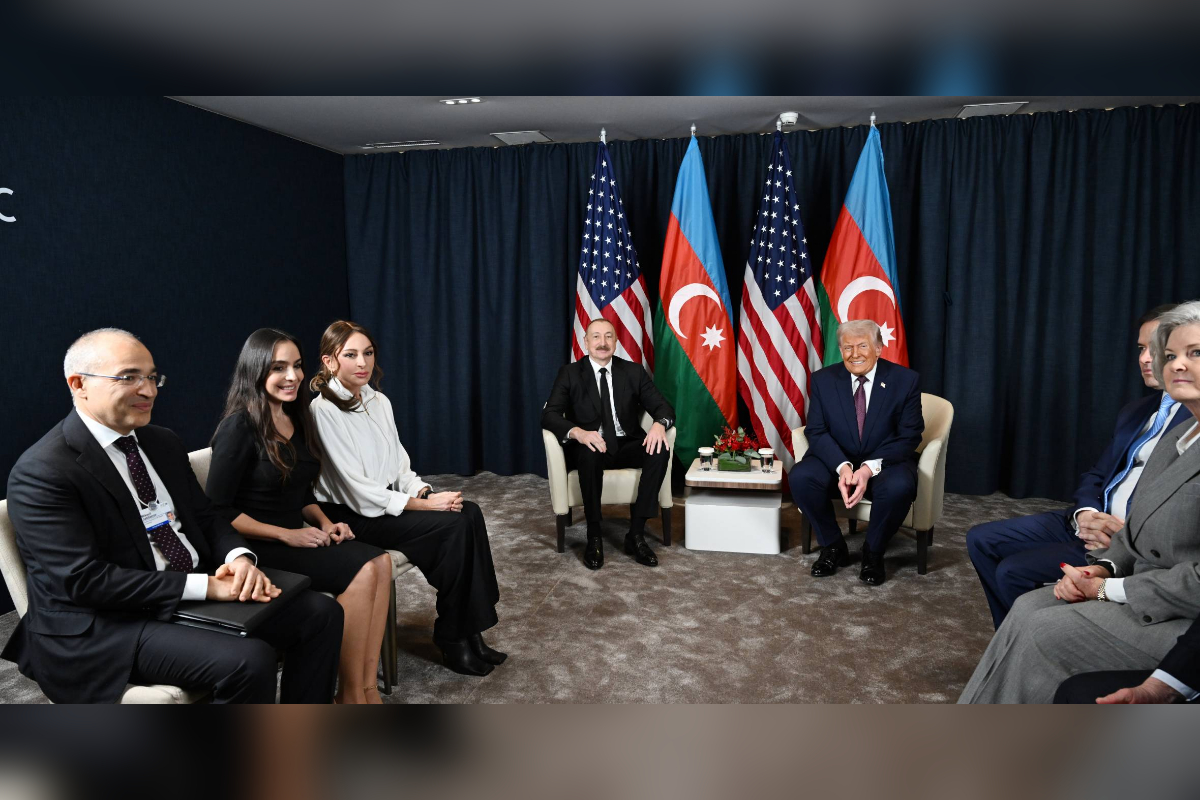
The sociopath and professional demagogue Prime Minister of Armenia conveniently forgets that he does NOT have a “Peace Treaty” with Azerbaijan. He has a TRIPP project, a “Memorandum of Understanding” with NO international guarantees. After all, President Trump appended his signature to the TRIPP project as a witness NOT as a GUARANTOR.
How can we believe Pashinyan’s claim that he has “Peace” when Petro-Dictator Aliyev has been actively pursuing the promotion of the expansionist policy called “Western Azerbaijan” since signing the TRIPP accord on 08 August 2025.
We should not be shocked or surprised when we see active measures adopted by Petro-Dictator Aliyev, to promote aggressively the concept of “Western Azerbaijan”, an expansionist political agenda that aims to conquer by force a significant portion of Syunik. After all, Aliyev declared in early January 2026, that he is NOT a man of “Peace” but the ultimate authority who will determine where Armenia’s borders start and end. For more details read the following article:
The Rules-Based International Order Collapsed. Can Pashinyan Adapt To The Laws Of The Jungle or The Donroe Doctrine?
https://artsakhtheinadequateresponse.blogspot.com/2026/01/the-rules-based-international-order.html
What should send shivers down our spine, is the decisions made by the “Collaborationist” leader named Pashinyan, who has adopted a set of measures to accommodate the presence of 300,000 Azeri refugees that will form the backbone of “Western Azerbaijan.”
For more details use the following link:
https://www.facebook.com/noubar.serabian/posts/pfbid0PVbSgWorvGE7wN1zp5zZAjc5fxzKcEebEj6UPJfe2shRAK7oQAD2MEDzU9ZLcgU3l
Pashinyan’s most GENUINE and immediate concern is to win the elections of 07 June 2026. He will perform any political stunt, including but not limited to lies associating Genocide, Ethnic Cleansing, Return To Artsakh as preludes to new wars.
For us the most pressing question should be: Do we want a national disgrace named Pashinyan to remain in The Office of The Prime Minister of Armenia beyond the elections of 07 June 2026?
Remember, Pashinyan is “Just the diseased distillation of everything this country swears it isn’t but has always been [since 2018]—arrogance dressed up as exceptionalism, stupidity passed off as common sense, cruelty sold as toughness, greed exalted as ambition, and corruption worshiped like gospel. It is [Armenia’s] shadow made flesh, a rotting [tree] proving that when a nation kneels before money, power, and spite, it doesn’t just lose its soul—it shits out this bloated obscenity [Nikol Pashinyan] and calls it a leader.»
Do we want this obscene personality, this rotten tree, this abomination called Pashinyan to remain in power beyond the elections of June 2026? You might be able to find the answer in the following article:
Can A Bad Tree Like Pashinyan Give Armenia Good Fruits?
https://artsakhtheinadequateresponse.blogspot.com/2025/07/can-bad-tree-like-pashinyan-give.html
How is “return to Artsakh” a thing? Return to what? Since the war, Azeris have demolished and started massive construction projects. The entire region has a large number of new housing being built to eventually settle Azeris. There are videos. There is no more Artsakh. Living as Azeri citizens is likely not an option, and who would want to when the entire population is brainwashed to hate Armenians? Why don’t most Armenians step back and ponder what it is we are demanding?
Just like my youth when delusional Armenians were saying a return to Western Armenia, and I had the same question… return to what?! Our grandparents towns and villages, churches, schools, etc. were eradicated. Globally Armenians no longer have the population, military strength, international support, nothing, to settle in what rightfully belongs to us with the millions of Turks and Kurds occupying it to build a new Armenia.
The West initially had plans for a large Armenian state and repopulate Armenians (some Armenians also fail to understand genocide started long before 1915!), but in the end made a deal to hand everything over to Mustafa for their own interests. History might be different if they found oil sooner in the southeastern region. Not only did they abandon us, they helped Turkey deny what happened. That same West is now pretending Armenia is a natural part of Europe/EU for their own interests. I fail to see any security guarantees in the interim. But but but, Russia! Yeah, why would Russia help a nation that became anti-Russia? The story of Armenians is sad and Armenia is in very dangerous times, especially with Iran changing into whatever the world has planned.
For both Artsakh and Western Armenia, the wise move would be to do whatever possible to preserve what little remains before it’s erased completely. To the Turks credit, they haven’t demolished everything and it’s possible to visit most places with significance. It’s sad to see the Turkish flag on almost everything, but it is what it is. There is no point to make a situation worse. Being on friendly terms with the Turks, Kurds, Azeris is in everyone’s interest. In the future, a different generation might be willing to accept what happened to Armenians and stop the hatred realizing they’ve been fooled by their governments… and the new Armenian generation can study the history, visit to see some places, and make new friends. All of us will be long gone.
For Armenia, the wise move would be to eventually replace Pashinyan with a proper leader who is qualified to be an Armenian leader, make peace with neighbors yet not capitulate on everything, eradicate corruption and discrimination to encourage repatriation, and build a nation to be proud of. No doubt Pashinyan, Civil Contract, and those following whatever this weird anti-Armenian ideology is today are responsible for what happened to Artsakh. That will be in the history books too.
Hopefully the Armenian citizens will rise and save The home land and it’s culture as well as their churches, may god be with Armenian Citizens
Perhaps those lobbying for Arktash refugees to return should have realised it’s tied to Azerbaijan requesting Azeris and their descendants who left from 1988 to be allowed to return and surprising that this publication hasn’t mentioned it just like it didn’t mention Azerbaijan was poised to attack what was left of Arktash in 2023 .
Typical warmomger scare stories.
One day Armenia will face down the Turks again.
But before that can happen, Armenia needs serious internal reforms.
Corruption must be eliminated, public institutions strengthened, road and rail transportation improved, trust in public office restored and the birth rate increased.
That is what the opposition must focus on whilst exposing Pashinyan for the corrupt puppet of the Turks that he is.