



The 2026 Armenian parliamentary elections were held June 7, with turnout at 58.97%, or about 1.497 million voters. That was higher turnout than in 2018, at 48.62%, and 2021, at 49.37%, but slightly lower than 2017, when turnout reached 60.86%, still the highest on record. The highest turnout was recorded in Syunik, at 66.67%, while the lowest was reported in Gegharkunik province, at 54.6%. The number of invalid ballots in Armenia’s parliamentary elections was 17,097, a record high compared with the previous few elections. In the 2021 parliamentary elections, the number of invalid ballots was 4,593, while in 2018, the figure was 4,706.
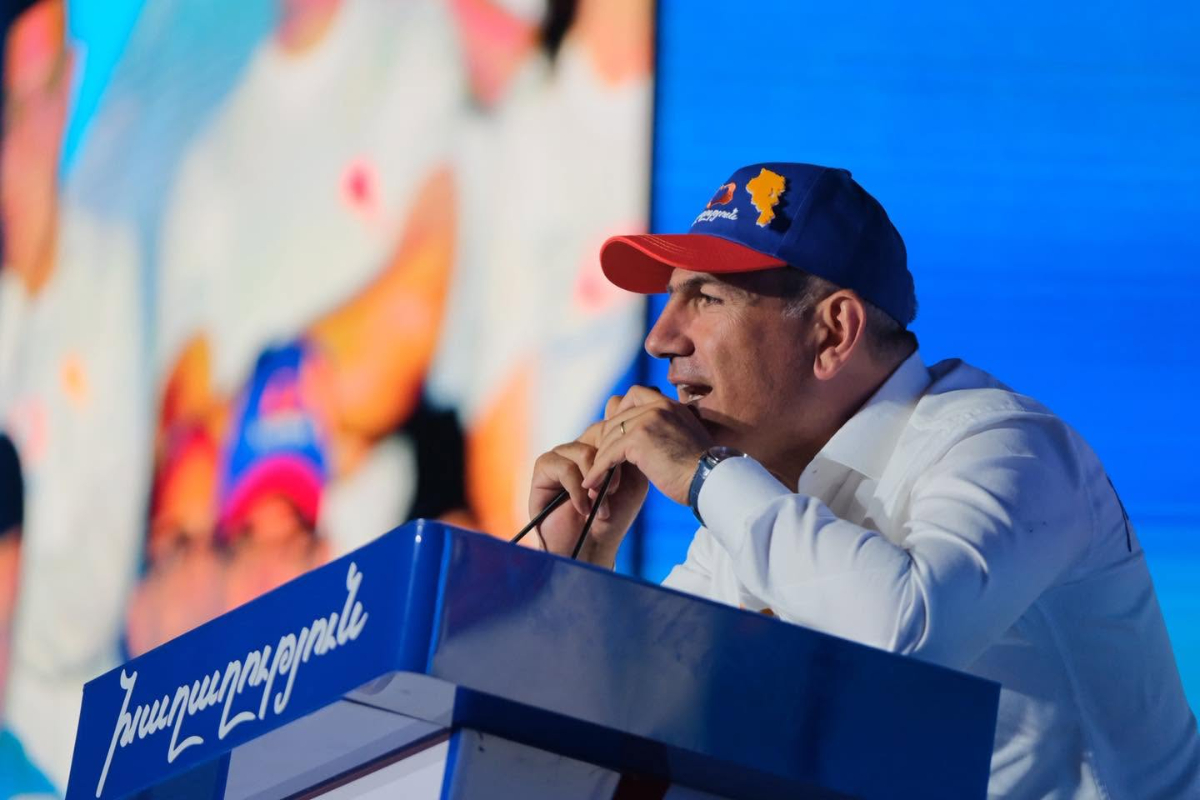
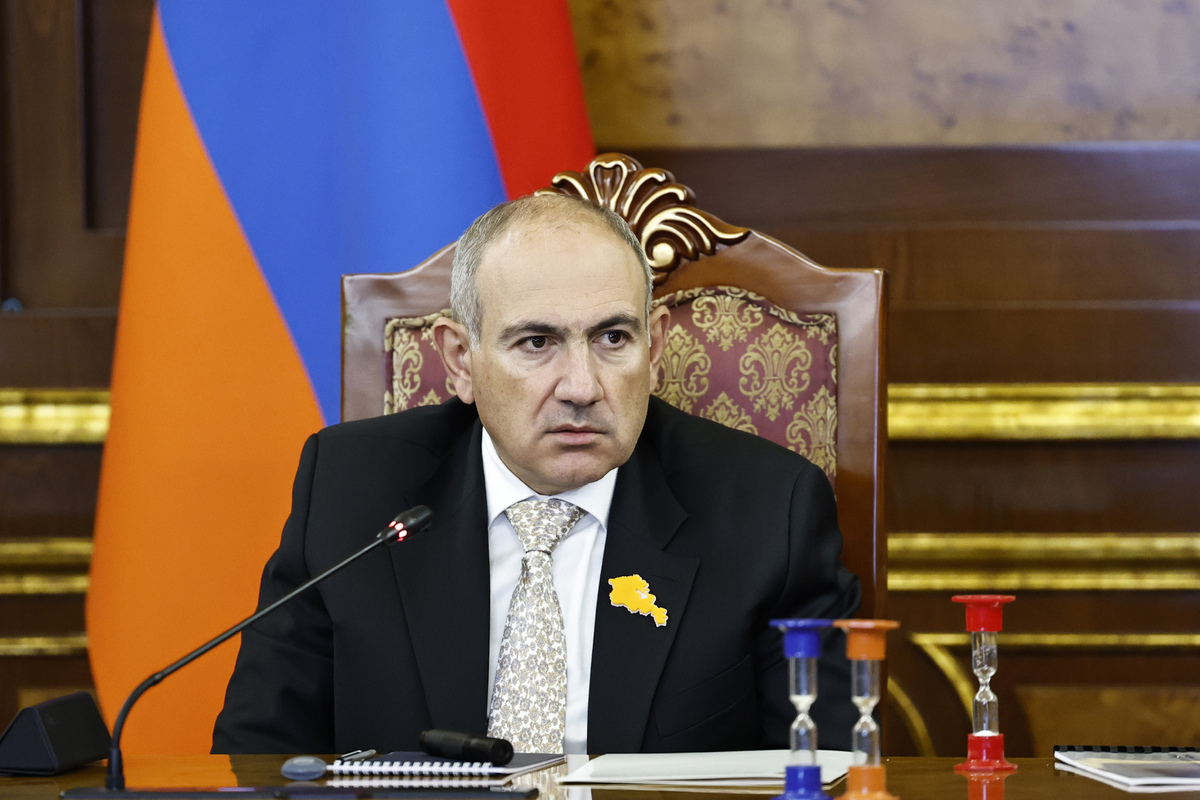
As the vote-counting process began, Prime Minister Nikol Pashinyan declared victory from Civil Contract headquarters at 2:10 a.m., when only 15% of votes had been counted. Asked about his premature declaration of victory, Pashinyan said, “I want to emphasize that the Civil Contract party has received more votes than it did in 2021,” reporting that party representatives at all polling stations had provided figures showing Civil Contract’s victory. In the same address, Pashinyan continued his campaign attacks against Samvel Karapetyan, Robert Kocharyan and Gagik Tsarukyan, accused them of vote-buying and called for their imprisonment.
Strong Armenia Alliance leader Samvel Karapetyan and Wings of Unity party leader Arman Tatoyan accused Pashinyan of declaring victory to influence the outcome of the elections before the completion of the vote-counting process.
Karapetyan described Pashinyan’s announcement as “disgraceful” and said, “You all saw over the past month what kind of persecution and violence we have been subjected to.” Karapetyan also emphasized that numerous violations occurred at polling stations, citing the alleged entry of soldiers brought in to vote after midnight at a polling station in Meghri.
Tatoyan, meanwhile, said: “The head of government has no authority to declare his sole victory when only slightly more than 10% of the voting results have been counted. We consider Nikol Pashinyan’s statement to be an open illegal influence on the Central Electoral Commission aimed at affecting the election results, which is criminally punishable.”

In another instance, citizen Gayane Gabrielyan alerted the “Ishkhanutyun” news outlet and reported that, in addition to herself, seven other people were registered at her home address, though she does not know them. “We bought our house 30 years ago and know the previous owners, but we have no idea who these seven people registered at our address are,” she said.
Meanwhile, some heads of state have begun congratulating Pashinyan on his victory.
Russian presidential spokesperson Dmitry Peskov said, “The Kremlin is awaiting the publication of the final election results in Armenia and is taking note of all reports, including those of numerous violations.” Russian Foreign Ministry spokesperson Maria Zakharova said the parliamentary elections in Armenia were held under unprecedented pressure on the opposition and Western interference.
Central Election Commission Chairman Vahagn Hovakimyan said at a news conference that it remains unclear whether three or four political forces will be represented in the upcoming parliament because of uncertainty over the results of the Prosperous Armenia Party, led by Gagik Tsarukyan. Prosperous Armenia spokesperson Ivet Donoyan said the party had begun the vote recount process in a number of polling stations. Donoyan detailed the party’s position by giving the following examples: “At polling station 27/7, the party received 77 votes, whereas the CEC website shows 1 vote. In polling station 12/20, 26 voters cast their ballots for the party, while the CEC website shows 1 vote. At polling station 27/26, the party received 19 votes, while the CEC website shows 3 votes. At polling station 37/53, the party received 7 votes, while the CEC website shows 4 votes.”
As it stands, the ruling Civil Contract party will hold on to a parliamentary majority but will no longer benefit from a constitutional majority of two-thirds.
Assuming the Prosperous Armenia Party, which has recorded 3.996% of the vote, does not meet the 4% threshold required to enter parliament, the upcoming parliament will be composed as follows:
- Civil Contract: 64 seats
- Strong Armenia Alliance: 29 seats
- Armenia Alliance: 12 seats
That would mean the ruling party would control three-fifths, or 60%, of seats, while the opposition would control two-fifths, or 40%.
In this scenario, according to the Constitution, at least three-fifths of the total number of deputies’ votes is required to pass laws, including the Rules of Procedure of the National Assembly, and to adopt or amend the Election Code, the Judicial Code, the law on the Constitutional Court, the law on referendums, the law on political parties and the law on the ombudsman. A three-fifths majority is needed to elect or dismiss judges of the Constitutional Court and the Supreme Court, or members of the High Judicial Council. Without a three-fifths majority, the ruling party cannot elect or dismiss the prosecutor general or the ombudsman. It cannot elect or dismiss members of the Central Election Commission, the Television and Radio Commission, the Audit Chamber or the governor of the Central Bank.
While retaining these prerogatives, the ruling party can no longer amend the Constitution or put the Constitution’s fundamental articles to a referendum. This could mean that the goal voiced by Armenian authorities over the past year or two — to amend the Constitution through a referendum or adopt a new one — could be called into question. Amending the Constitution, especially its preamble, which refers to the Declaration of Independence, has been one of the ruling party’s commitments.
ARF Armenia Supreme Body Chairman Ishkhan Saghatelyan, a lawmaker from the opposition Armenia Alliance, said: “Dear compatriots, thank you for every vote you gave us and for the trust you have placed in our team. We will continue our unwavering fight for our homeland until victory. We will speak more comprehensively about our future steps in the near future.”

Pashinyan’s “victory” is a leap into the dark for Armenia.
Wrong. A vote for Karapetyan, or god forbid Kocharyan, was a vote for the ways of the past when Armenia was deemed irrelevant and a Russian backwater. Where was the outrage from the ARF during the rigged elections of the past? Or the events of March 1 2008 where 10 of our compatriots were killed in the streets? Or the killing of Vazgen and others, which we all know where that was directed from? Seems like the outrage is selective when you’re on the winning side.
Nikol speaks like a moron with countless examples, but at this point until there is a viable non-Russian/oligarchic/mafia aligned opposition this is the only way forward. What Armenia needs is a viable alternative, that’s when we will see proper debate and discourse. Until then the economy is actually growing, the country is seeing proper investment and building proper state institutions, people can operate businesses without mafia interference, the army is being properly equipped for once from a diverse range of suppliers, and we are diversifying as much as can realistically be done. Running a country solely on emotions is not a strategy for any successful country.
Exactly how is a vote for Karapetyan a vote “for the ways of the past”? Has he ever been involved in Armenian politics before? Or does “the past” refer solely to the fact that he is a Russian-Armenian businessman? If he were an American-Armenian businessman, would a vote for him then be considered a vote “for the ways of the future”? And why exactly does the phrase “God forbid” apply to Kocharyan? During the Kocharyan years, the economy was also growing, although I agree that the period was marred by corruption and political repression. But then how should one describe the bonuses paid to government employees and the jailing of opposition figures and church leaders under Pashinyan? Double standards? Kocharyan did not hand over Armenian lands to the Azeris, as the current screeching one is (rightly) perceived to have done. Nor did he downplay the genocide, effectively push the depopulation of Artsakh into the background, pursue a policy of “peace” with genocidal Turkey and Azerbaijan, or remove images of Mount Ararat from state symbols. Lastly, the fact that a country may be in a position to receive proper investment does not in any way mean that such investment will actually materialize on a large scale. That strikes me as a rather weak argument.
I’m going to assume you were in diapers when Kocharyan was in power, otherwise you wouldn’t ask the question. There’s a reason Armenia up until 2018 had crumbling infrastructure, no proper road network, a north-south highway project that barely ever started due to funds being stolen, migration out of the country, and was run like a Russian province. Privet Rob, does that mean anything to you? He is almost universally detested within the country and this is one of the reasons Pashinyan gets more votes than he likely deserves. Regarding selling lands, perhaps if Koch and Serzh weren’t so corrupt and focused on building the country properly then we wouldn’t have had an underequipped and underprepared army in 2020. Those brave 18 year old boys on the front deserved far better.
We need to have a relationship with our neighbors whether we like it or not. This is how the world works. We don’t need to give up on core principles, so there is plenty to argue against Nikol on this, but keeping the border with Turkey closed forever is not a solution. Germany was at odds with the entirety of Europe in WW2 and look at their relationship with France, England, Poland, etc. now. Or Japan, Korea, and China. Genocide recognition has never been part of official foreign policy, not under Levon or Kocharyan or Sargsyan, so that is not a reason to stop a basic relationship from forming. Politics and a functioning state is not built on emotion.
Armenia needs trade routes and economic diversification. Right now it relies on one roadway through the Upper Lars pass in Georgia to connect to Russia, which is backlogged and gets closed by Russia whenever they want to squeeze Armenia. This is the horse you want to rely on, and people talk about “keeping Armenia’s dignity”? Nobody with a serious mindset is saying ditch one for the other, it’s about diversifying. Europe was not selling us weapons because we were viewed internationally as a Russian pawn. So instead we got Russian weapons which half the time barely worked, and they would sell equal amounts to Azerbaijan. This is our best friend right? Instead we are now able to access equipment from France, India, China, and the US while also still purchasing from Russia.
The “ways of the past” is relying on a declining Russia, which is increasingly insular and being propped up by a war economy. If Armenia diversifies and positions itself as a useful partner to the rest of the world, it is positioning itself to be better off long-term. Having zero relationship with Turkey gives Turkey zero reason to consider any of Armenia’s positions, but when the two sides talk directly with each other then they’ve already seen there is enough to agree on to build a basic relationship. If you think that every Turkish person is dead-set on eating Armenian babies, then I can’t help you there.
I think I’ll treat the “diapers” remark with forbearance. At my age, I’ve found that such flourishes usually signal the weakness of an argument rather than its strength. I’d much rather address the substance of the issue.
When was the last time you were in Armenia and, if you were, did you venture beyond the capital into the country’s cities and the rural areas? Have you really seen a flourishing infrastructure there after 2018? The reference to a “proper road network” especially amused me, as I remember driving on deteriorated roads in Gyumri, Armenia’s second-largest city, and in the rural areas beyond.
As for migration, you must have been walking under the table when mass emigration from Armenia began during the Ter-Petrossian years. To attribute the phenomenon solely to later governments is, at the very least, a myopic oversimplification.
I, of course, know what “Privet Rob” means. Does “Sona Mnatsakanyan” mean anything to you?
Next, Kocharyan is widely disliked, but not “almost universally.” Whether we like it or not, a substantial segment of the population continues to vote for his party; that’s simply a fact.
Regarding selling lands, perhaps if Kokol knew—as I’m almost convinced he did—that he’d ultimately surrender the lands, he wouldn’t have sent 5,000 of those brave 18-year-old boys to their deaths. The Armenian army was, of course, weaker than the Azeri army in terms of resources and equipment, but its strength, defensive positions, and combat experience had been sufficient to hold off the enemy for almost thirty years.
Is anyone here arguing against having a relationship with neighbours? But the point is that with neighbours such as Turkey and Azerbaijan, one doesn’t build relations from a position of weakness. Besides, who was it that kept the border closed for decades?
The comparison with Germany’s post-war relations with the rest of Europe is weak. Leaving aside the Holocaust, Germany didn’t seek the physical annihilation of the French, British, or Poles in the way the Turks did to the Armenians, nor were those nations subjected to destruction on such a scale and with such barbarity. The historical circumstances are fundamentally different. As for genocide recognition, yes, it has never formally been part of Armenia’s foreign policy, but neither Ter-Petrosyan, Kocharyan, nor Sargsyan ever so openly downgraded its importance in the way Kokol has.
The rest of your reply is a rather unfocused digression that does not engage with the point I actually raised.
Well said, Nareg. I am totally with you. We stand not by Pashinyan personally (yes, he is not the brightest) but the policies his government is currently conducting, leading the country to democracy and growth, out of the vicious claws of Russia.
Past? Maybe I am wrong but didn’t Karapetian appear in politics only recently?
The fact that Armenia s hegemony was in effect on borrowed time for many years prior to 2020 could be implied otherwise until military failure revealed just how weak in the relative sense it had become, the defeat of 2020 served as a propoganda piece for Russia and it’s supporters but in private led to a tacit understanding that Armenia had been outclassed and was too reliant on a past advantage which was no longer valid. The clashes of 2016 which Armenia lost land were able to be ignored although did lead to some questions about Russia and Armenia own strength but since Russia lent on Azerbaijan to hold off, given its at the time good relationship with Armenia leadership, and it only lasted 4 days could as stated be essentially ignored. By 2020 Azerbaijan had advanced further still and with the betrayal by Russia the defeat occurred. Interestingly Russia who had been trying to woo Azerbaijan whilst taking it’s friendship with Armenia for granted has miscalculated on both counts, Azerbaijan was thanks don’t need you anymore, just like Turkey pulled a fast one on the Soviet Union when it signed away western Armenia in a vain attempt to gain favour. The defeat led to the asking of previously impossible questions about Russia and it’s failure to safeguard what was left of Arktash and it’s own failure to subdue Ukraine and it’s own hypocrisy vis a vis it’s involving of internationally recognised boundaries has gone unnoticed in Armenia despite the insularity and animosity towards Turkey and Azerbaijan.
The flurry of accusations surrounding Armenia’s 2026 parliamentary elections has produced more noise than substance. The article in question attempts to paint the vote as illegitimate, chaotic and manipulated, yet its own evidence collapses under scrutiny. More importantly, it exposes a deeper truth that many in the diaspora hesitate to acknowledge: the Armenian Revolutionary Federation (ARF), once a historic force, has again failed to demonstrate meaningful relevance inside Armenia.
This is not a judgment of its past. It is a recognition of its present.
1. The Article Inflates Irregularities Into a Crisis That Did Not Occur
The piece leans heavily on anecdotes a disputed registration here, a recount dispute there and elevates them into systemic accusations. But none of the examples provided demonstrate widespread fraud, nor do they show that the outcome was meaningfully affected.
• The claim that Pashinyan “declared victory too early” is framed as scandalous, yet early declarations are common worldwide when internal party data shows clear trends.
• The recount complaints from Prosperous Armenia are presented as proof of manipulation, but recount disputes occur in every competitive election. They are evidence of process, not evidence of collapse.
• The article cites Russian officials lamenting “Western interference,” but this is a predictable geopolitical talking point, not an objective assessment.
In short, the narrative is built on selective outrage, not structural evidence.
2. The Opposition’s Complaints Reflect Political Strategy, Not Democratic Breakdown
Samvel Karapetyan and Arman Tatoyan’s statements are presented as though they are neutral observations. They are not. They are political actors making political claims, and their rhetoric mirrors what losing parties say in nearly every competitive democracy.
The article fails to mention:
• International observers did not declare the election illegitimate.
• Turnout was high by Armenian standards.
• The opposition gained seats, something impossible in a rigged system.
The opposition’s frustration is understandable, but frustration is not proof.
3. The ARF’s Predictable Response Shows Its Diminished Role
The article ends with a quote from ARF Armenia Supreme Body Chairman Ishkhan Saghatelyan, promising to “continue the unwavering fight.” But this is the same refrain the ARF has issued after every electoral disappointment since 2018.
The reality is unavoidable:
The ARF has once again failed to resonate with the Armenian electorate.
Despite its historic legacy, the ARF:
• Did not expand its voter base
• Did not present a compelling alternative vision
• Did not break out of its narrow ideological silo
• Did not demonstrate relevance to the daily concerns of citizens inside Armenia
The ARF’s influence today is primarily diasporan, not domestic. Its rhetoric still appeals to communities abroad, but inside Armenia, voters consistently choose parties that speak to immediate governance, security and economic concerns, not ideological nostalgia.
The article tries to frame the ARF as part of a rising opposition wave. The numbers say otherwise.
4. The Loss of a Two‑Thirds Majority Is Not a Crisis — It Is Normal Democracy
The article frames Civil Contract’s loss of its constitutional supermajority as a dramatic weakening. In reality, supermajorities are rare in parliamentary democracies. Losing one is not a sign of instability, it is a sign of normalization.
Civil Contract still holds:
• A clear majority
• A mandate to govern
• A stable parliamentary configuration
The opposition, including the ARF‑aligned Armenia Alliance, has more seats, but not because of a surge in ARF popularity. Rather, it reflects the natural ebb and flow of multiparty politics.
The ARF’s presence in parliament is largely symbolic, not strategic.
5. The Article’s Underlying Narrative Misreads Armenia’s Political Evolution
The piece tries to revive a familiar storyline: that Armenia is on the brink of authoritarianism, that the opposition is persecuted, that the ruling party is illegitimate. But this narrative is increasingly disconnected from reality.
Armenia’s political system is evolving toward:
• More competitive elections
• More pluralism
• More institutional checks
The ARF, however, has not evolved with it. Its messaging remains rooted in a political culture that no longer exists inside Armenia.
Armenia Has Moved On — The ARF Has Not
The article attempts to portray the 2026 elections as a democratic failure. In truth, they reveal something else: a political landscape in which the ARF is no longer a central actor.
Armenia’s voters have repeatedly delivered the same message:
They want governance, not slogans.
They want stability, not romanticism.
They want the future, not the past.
The ARF can continue issuing statements about “unwavering struggle,” but the electorate has already rendered its verdict. The party’s relevance today is largely external, a diaspora echo chamber disconnected from the political realities of the Republic of Armenia – the modern Armenian homeland.
Armenia is changing.
Its political culture is changing.
And the ARF, unless it reinvents itself, will remain a spectator rather than a participant.
Bravo, Hagop. Excellent treatise. But we need to give some credit to ARF for publishing criticism. There is hope…
No matter who is elected as Prime Minister for as long as Armenia does not possess weapons of mass destruction in a military conflict with Azerbaijan the ‘Sword of Damocles’ will hover over our ancestral homeland. The Turks and their Azeri blood brothers will forever strive to complete the genocide that they started in 1894.
This is what the EU and US wanted, their puppet Pashoglu to retain power, they dont care about the people living there. They just wanted to use Pashoglu to stick it to russia and iran and reap whatever material rewards then can from the remnant of historic Armenia
Exactly Vartan. Some commenters here seem perfectly willing to trade Armenia’s sovereign territory, national identity, historical memory of the genocide, the handover of Artsakh, and the sanctity of the Church for vague promises of “democracy,” “growth,” and “diversification.” In doing so, they appear willing to accept territorial concessions to Azerbaijan, the downplaying of the genocide, and the relegation of the Artsakh right of return issue to the background. In effect, they seem content to see Armenia gradually reduced to the status of a Turkish vilayet, while remaining blind to the broader dangers posed by Kokol’s regime. And let’s not forget what the recent elections actually demonstrated. More than 50% of those who voted did not support the ruling party, while roughly 40% of all eligible voters did not vote at all. Whatever one’s political preferences, those figures hardly constitute a ringing endorsement of the current regime. Which is why claims that Kocharyan is “almost universally” detested, while no doubt reflecting the views of a sizeable segment of the population, strike me as little more than political sloganeering. The electoral reality suggests something rather different. Kokol himself remains a deeply polarizing figure who commands the support of only a portion of Armenian society (the current figure of 49 percent will almost certainly decline as the final count is completed), while large segments of the population either actively oppose him or remain unconvinced by his defeatist agenda.
Hear, hear!
After posting the very first comment, I refrained from commenting until now to read other comments posted after mine regarding the outcome of this election, but after numerous pro-Pashinyan comments, I couldn’t resist any longer.
I was expecting the pro-Pashinyan crowd to post in the comment section, but they sure exceeded my expectations of spinning and defending his so-called “victory” and “vision” for Armenia.
The support by these commentators in the comment section, and their attempts to “rationalize” Pashinyan’s so-called “victory”, as a “victory” for Armenia, is sickening.
The comments of the pro-Pashinyan crowd, are also telling, that Armenia is not only dealing with external enemies, but also with actual and potential fifth columnists – with Pashinyan as the fifth-columnist-in-chief.
Allowing criticism of the ARF is democracy and shows openess to question and accountability. Unfortunately an echo chamber of self congratulation had prevailed 1994 -2020 .
Pashinyan is the biggest fraud who ever set foot on Armenian national political stage. He is a vengeful narcissist and an opportunist hyena who lied his way to the top. He neither has the skills nor the backbone and the guts to run a country, let alone one in a constant state of war and surrounded by hostile and filthy enemies hell bent on destroying the Armenian statehood. These enemies have found in Pashinyan a delusional and an unpatriotic sheep to push through their anti Armenian political agenda. These are facts and not just an empty rhetoric. For someone who has been trying to shove down people’s throats his so-called “era of peace” nonsense for years, he not only does not have anything to show for but that he has had three wars on his watch that have brought total chaos and devastation to the nation.
You would think any responsible and honorable leader in his position would realize the job he secured through deception is way above his pay grade and that the right thing to do is to step aside and let those who know how to run a country and are experts in dealing with our enemies to do so. He won’t because this is no longer about all of that anymore. This is all about self-preservation at the expense of the nation. That brings us to this fraudulent election. Pashinyan stole this election, pure and simple. This of course did not happen overnight on the election day. This was part of a long clandestine process that started several years ago and soon after his humiliating capitulation. He must have taken a page from Er-dog-an’s playbook when he ran for president. A process that included:
1. Turning his “populist” country into a dictatorship to silence dissent
2. Denying opposition full freedom of expression and assembly by violent means
3. Conducting surveillance on opposition leaders and fabricating accusations
4. Dragging them through the criminal court system to neutralize their activities
5. Incarcerating influential opposition leaders deemed a threat to his traitorous agenda
6. Threatening ordinary citizens opposed to him with violent rhetoric
7. Directly engaging in firing and dismissal of people from their jobs who opposed him
8. Threatening to bring to their knees, put behind bars and even kill opposition leaders
And too many more to list here…
This is how he stole the election. For someone who claimed to be “the people’s prime minister” instead of waiting for the final count of all the votes casted, to jump the gun and claim victory after only 15% of the total votes counted showed how worried and panic-stricken he was. More so, given the fact that Karapetyan, a newcomer into the political scene whom he considers an outsider and under house arrest, receiving nearly 30% of the votes, out of those 15% counted, which accounted for three times or more of the votes than any other individual participant political party had received was quite alarming. Pashinyan and his Civil Contract party are so deep into their fraudulent activities that they are trying anything and everything to steal this election by any and every means at their disposal. After all, according to him, establishing his fraudulent peace, thus avoiding a mysterious “war in the fall!”, is contingent upon his reelection. What other self-incriminating piece evidence does anyone need to realize he stole the election? Last but not least, his and his party member’s demeanor at his early “victory” announcement said it all. One would expect a pure sense of euphoria and a rousing display of jubilation from them but all I saw was a total sense of deafening quiet and subdued relief and a fraudulent one at that!