



YEREVAN — In the tense weeks leading up to Armenia’s June elections — and just ahead of U.S. Secretary of State Marco Rubio’s closely watched visit to Yerevan — a brief exchange in Gyumri revealed far more than perhaps intended about the government’s stance toward one of the nation’s deepest unresolved wounds: the Armenian prisoners still held in Baku.
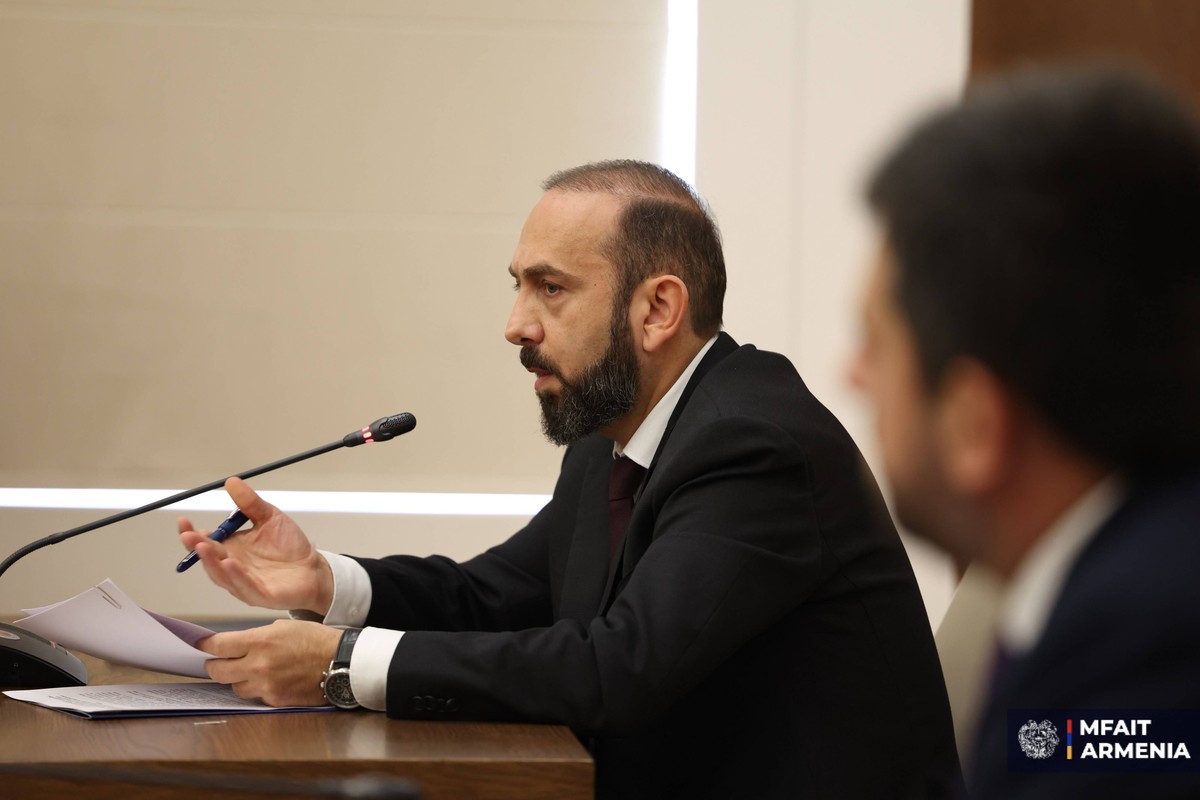
The incident unfolded in Vardanants Square during a campaign appearance by Armenian Foreign Minister Ararat Mirzoyan. As reporters pressed him on whether the issue of Armenian prisoners of war would be raised during high-level diplomatic meetings with Washington, the minister responded not with reassurance, urgency or even caution — but with irritation.
“Ա՜ դե, ծընգլ արիք,” Mirzoyan snapped at journalists, using a slang expression that roughly translates to, “All right already, enough,” or, more bluntly, “You’re getting on my nerves.”
For many Armenians, the remark landed with particular force not because of its wording alone, but because of what it appeared to symbolize: a growing emotional and political distance between the country’s leadership and the families still waiting for answers about loved ones imprisoned in Azerbaijan.
The exchange immediately ignited backlash across Armenian media and social media platforms, where commentators described the outburst as deeply unbecoming of a foreign minister. To many observers, the moment appeared emblematic of a broader transformation underway within Armenia’s political establishment — one in which discussions surrounding Artsakh, displaced Artsakh Armenians, prisoners of war and Armenian history are increasingly treated less as matters of national responsibility and more as political inconveniences.

That perception has only intensified amid mounting accusations that the current administration has adopted an increasingly antagonistic stance toward Artsakh Armenians. Critics point to efforts to dismantle the remaining legal, political and symbolic structures connected to Artsakh’s Armenian identity and former state institutions.
Those fears deepened dramatically following a controversial ruling by Armenia’s Administrative Court, which granted a lawsuit filed by the Prosecutor General’s Office and invalidated the Republic of Artsakh’s state registration over ownership rights to the Artsakh Representation building in Yerevan — one of the last remaining official symbols of Artsakh’s institutional presence in Armenia.
Attorney Roman Yeritsyan condemned the ruling as a “historic disgrace,” stating bluntly: “The Republic of Artsakh was dispossessed.”
Yeritsyan said the court refused to recognize the Republic of Artsakh as a third party in proceedings directly concerning its own property rights, forcing him to represent Artsakh’s interests through another registered legal entity instead. He described the verdict as one of the most “unfounded and absurd” judicial acts he had ever encountered and announced plans to appeal the decision before Armenia’s Administrative Court of Appeals.
Condemnation also came from opposition parliamentarian Tigran Abrahamyan, who accused the authorities of pursuing policies designed to appease Azerbaijan while maintaining an atmosphere of hostility toward Artsakh Armenians inside Armenia itself. According to Abrahamyan, the government is attempting to “uproot everything connected to Artsakh statehood.”
Critics further point to a series of incidents they say reinforce that perception. In one widely discussed case, authorities reportedly confiscated the mobile phone of the president of Artsakh as part of an investigation into the Sept. 24, 2023, fuel depot explosion — despite the fact that the device itself was reportedly manufactured in 2025, raising questions about the stated justification for the seizure.
In another case, eviction proceedings were initiated against Felix Gabrielyan — a decorated veteran, former Artsakh military commissar, former minister, adviser to the Artsakh president, first-convocation parliamentarian and recipient of the first-degree Combat Cross medal, who lost both his father and brother during the first Artsakh war. Authorities reportedly ordered Gabrielyan to vacate a 60-square-meter service apartment allocated to him in 2008, arguing that the housing had been granted “unlawfully,” despite its being the sole residence for him and his family.
A similar process reportedly had been launched against former Artsakh Defense Minister Mikael Arzumanyan, though Armenia’s Administrative Court later suspended the proceedings and ultimately ruled the attempted eviction unlawful. According to critics and legal observers, however, hundreds of similar cases may still be underway. Some of the notices sent to displaced Artsakh Armenians have drawn scrutiny for vague legal justifications, factual inconsistencies and even basic spelling and procedural errors — further fueling accusations that the processes are being carried out with political urgency rather than legal precision.
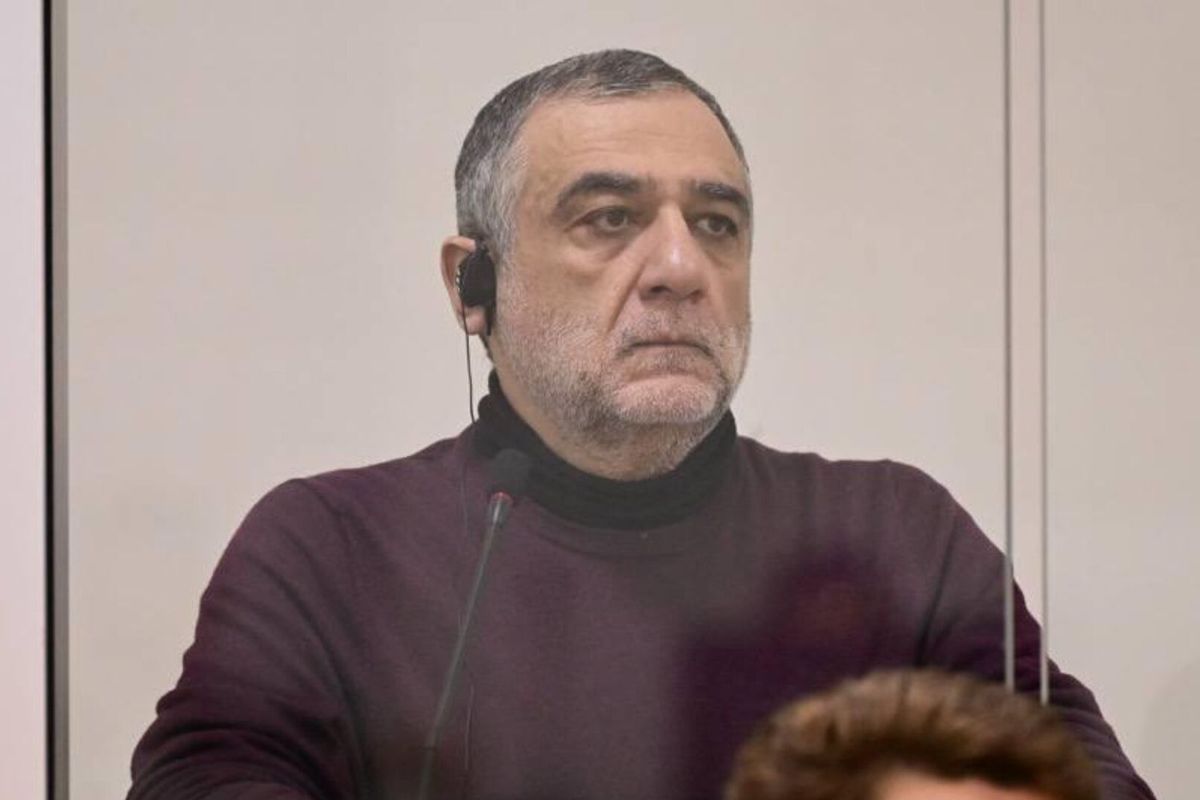
Held in Azerbaijani custody for nearly three years, former Artsakh State Minister and philanthropist Ruben Vardanyan used a recent voice message from Baku prison — released on his birthday — to deliver one of his sharpest criticisms yet of Armenia’s current leadership and the growing indifference toward Armenian prisoners still jailed in Azerbaijan.
Speaking from captivity, Vardanyan warned that the war against Armenia had not ended, but had merely changed form. “The war continues not militarily, but in other ways,” he said, cautioning that Armenia risks gradually becoming politically, economically and technologically dependent on Turkey and Azerbaijan if the current regime stays in power.
He also spoke about the growing sense of abandonment felt by Armenian detainees in Baku, saying many prisoners have spent years without access to photographs from family members, letters, clothing or even basic forms of contact with loved ones. “The commander in chief who suffered defeat is doing nothing so that these people at least feel that a state stands behind them,” Vardanyan said.
A similarly alarming message emerged from Davit Ishkhanyan, former speaker of Artsakh’s National Assembly, who remains imprisoned in Baku following Azerbaijan’s 2023 military assault on Artsakh and the forced displacement of its Armenian population. In a statement released through his family, Ishkhanyan described the proceedings against him as “a fully controlled, censored trial of retribution,” rejecting Azerbaijani claims that the hearings are fair, transparent or independent.
“Even the defense side has not received the indictment,” Ishkhanyan said, adding that requests for open hearings and online broadcasts also had been denied by the court. According to Ishkhanyan, the trial is directed not only against the Armenian prisoners themselves, but “against the Armenian people and Armenian statehood as a whole.”
The statements from both leaders have intensified criticism from families of detainees and human rights advocates, particularly amid worsening concerns over conditions in Azerbaijani custody following the suspension of the International Committee of the Red Cross’ operations inside Azerbaijan. Relatives warn that communication, independent monitoring and the transfer of medicine and basic necessities have become increasingly restricted — deepening fears over the well-being of Armenian prisoners still held in Baku.
Yet it was one final remark from Vardanyan’s prison message that sparked particularly fierce debate inside Armenia ahead of May 28 celebrations. Referring to reports of a planned military parade for Armenian Independence Day while Armenian service members and political prisoners remain imprisoned in Baku, Vardanyan called the idea “immoral.” “Our officers and soldiers are here, and yet there are parades taking place there,” he said. “The army is built not through parades, money, weapons or ranks, but through spirit, morality and patriotism.”
The contrast between the spectacle planned in Yerevan and the voices emerging from Baku’s prison cells is becoming increasingly difficult for many Armenians to ignore. The controversy surrounding the planned May 28 military parade has only intensified following reports that the event will unveil a newly redesigned Armenian army emblem and updated military uniforms — changes critics say are being introduced without transparency, public consultation or institutional consensus.
According to Armenian media reports, the revised military insignia appeared publicly for the first time on official Republic Day banners displayed ahead of the parade. The redesigned symbol reportedly replaces elements of the traditional army emblem, including the central equal-armed cross, with a new symbol that has already generated widespread speculation and criticism online.
Observers also have noted that the map featured within the new emblem closely resembles the same outline used in the ruling Civil Contract party’s branding, further fueling accusations that national and military symbols are being politically repackaged under the current administration.
Armenian media reported that the Defense Ministry declined to clarify when the emblem was officially changed, under what legal authority the decision was made or what historical and professional consultations took place before the alteration, saying only that explanations would come after the May 28 celebrations.
Questions also have emerged over the government’s emphasis on optics ahead of the parade. Reports indicate that approximately 5,000 new military uniforms were procured — allegedly from American suppliers — specifically for soldiers participating in the event, despite long-standing delays in distributing updated uniforms across the broader armed forces.
The issue has become particularly politically charged given Prime Minister Nikol Pashinyan’s earlier promises to publicly showcase newly acquired weaponry and domestically produced military equipment during the Republic Day celebrations.
Edmon Marukyan, leader of the Bright Armenia party, criticized the upcoming parade, arguing that Armenia needs military preparedness and operational readiness far more urgently than ceremonial displays. According to Marukyan, the government is using the event as a form of pre-election political branding aimed at presenting military imagery as a domestic political achievement.
Pointing to Azerbaijan’s extensive history of conducting repeated military exercises before recent conflicts, Marukyan questioned how frequently Armenia itself has undertaken comparable large-scale training operations in recent years.


My fear is that the former Artsakh leaders and the other Armenian hostages rotting in Azerbaijani prisons since 2023, may begin to die one by one, some due to serious health problems and inadequate medical care, while others may commit suicide. If they actually start dying, the terrorist Azerbaijani state will have murdered them through deliberate neglect. Pashinyan also bears responsibility for betraying and abandoning them to this terrible fate. It is an undeniable fact that the Armenian government under Pashinyan does not bother to address this hostage crisis and bring it to the international arena. Whereas Armenian diaspora organizations are campaigning non-stop to raise awareness around the world about the situation of the Armenian hostages and to secure their release, the Armenian government’s “efforts” are lacklustre, inadequate, muted, embarrassing and shameful.
To be blunt – Pashinyan is a traitor to all those who fought and died for the identity of our ancestral homeland. He is no different than the traitors who identified Armenians to the monsters who worked for Talaat Pasha. And we know how Operation Nemesis took care of these traitors…
Can anyone comment on what happened with the declaration of Artzakh belongs to Armenia ”period” by Pashinian, the root of all ills that Armenia is facing today, and no one says that the same person is leading Armenia the negotations?
Ms. Minoyan’s article is much appreciated by American Armenians who want to help. Thank you for sharing her excellent reporting and honest portrayals of the current Armenian administration.
To us in the diaspora who want to see a strong Armenia for Armenians are sadly disappointed with the Pashinian governance. Any country that abandons its prisoners in enemy territory and does not aggressively seek their release is not worth having. Better to have no government at all than a dishonorable one.