





Many might not see the kitchen as a place for men or boys, but I always felt the opposite. For me, it was a place of curiosity, memory and connection. In Armenian families, food isn’t just something you eat—it’s a story, a history and a reminder of who we are. My grandmother and mother turned the kitchen into a classroom where the lessons weren’t written in textbooks but in spices, flavors and patience.
I learned that keşkek was more than a dish. It was a ritual of community, a dish stirred with a wooden stick and pounded for hours during weddings or baptisms. Today, many find it too laborious, out of style in a world where sushi has become comfort food. Thus, the tradition fades. But watching its preparation and eating it made me realize that some of the most important things in life take time—and if we let go of them, we also let go of a part of ourselves.
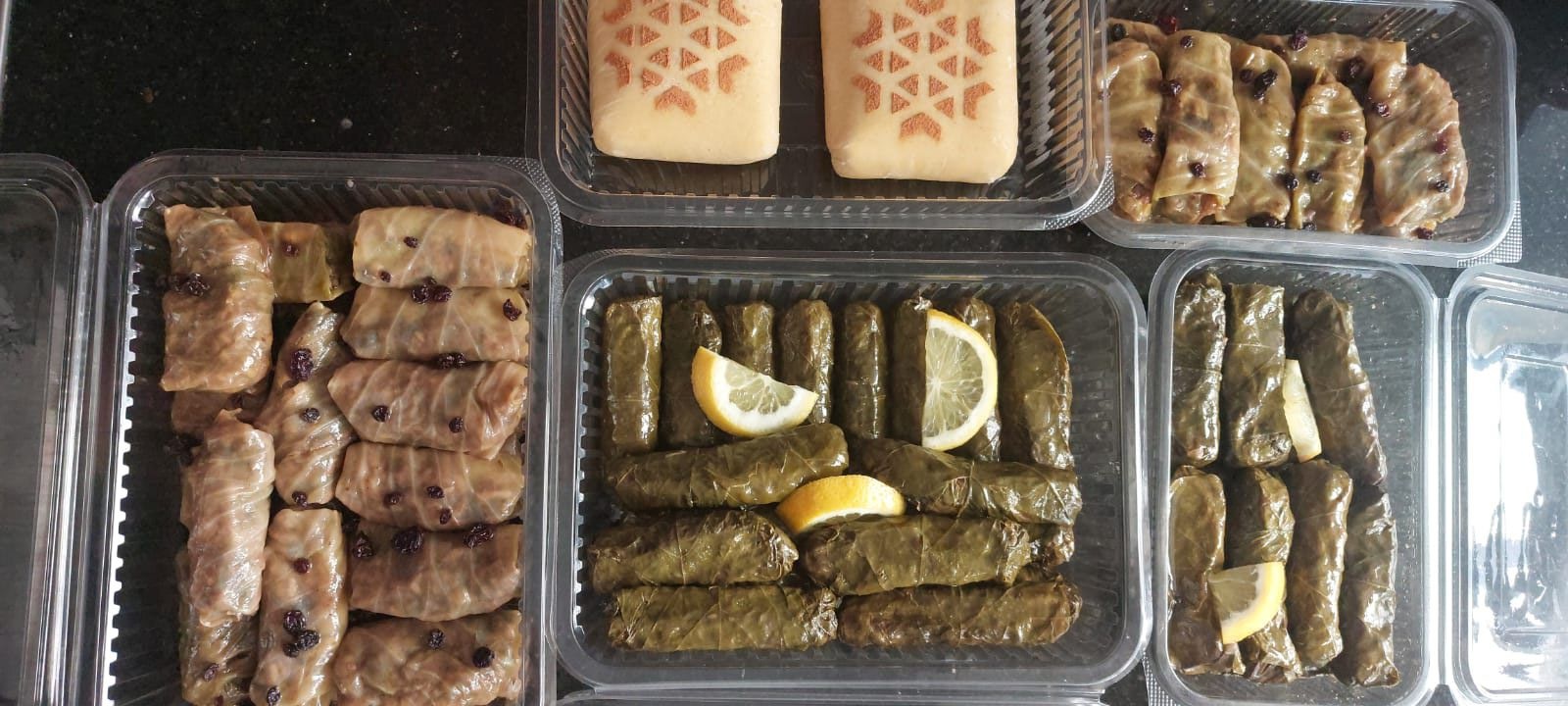
With dolma, I discovered the beauty of repetition and how I learned to count. Rolling grape leaves seemed endless, but it was in those hours that family stories were told and laughter spilled across the table. Now, dolma can be bought at supermarket delis, neatly stacked in plastic containers. But where is the memory in that? Convenience fills stomachs, but tradition fills hearts and keeps our stomachs coming back for more.
Topik taught me resilience. Created by Armenians in Istanbul during Lent, it turned chickpeas, onions and tahini into something sacred. It is rare now, mostly made in a few homes or restaurants. To me, it’s proof that creativity and strange ingredients can shape culture, and that even the simplest foods can hold deep meaning during times of eating restriction or even scarcity.


Çörek, the golden Easter bread, carried the smell of mahlep and renewal. It wasn’t just bread; it was faith braided into dough, as the scent wafted throughout the house, guiding my nose to the kitchen. Today, people buy bread without thought from bakeries, but baking çörek taught me that food can be prayer, and prayer can be tasted at the table.

Zerde, glowing with saffron, was pure joy in a bowl, a dessert saved for weddings and celebrations. And anoush abour (Noah’s pudding) carried us back to Mount Ararat, reminding us of survival after struggle. Each spoonful full of flavor was the reward like reaching the top of Mount Ararat and though these dishes appear less often now, they take us back to a place bigger than ourselves.
As a teenager, I sometimes wonder what will happen if we stop cooking these foods. Will we only lose recipes, or will we lose pieces of our identity? I know life is busy, and it is easier to go through a drive-thru and order a burger. But every time we choose the shortcut, we risk letting centuries of tradition fade away. A digitalized delivery system will never fill our bellies the way food is cooked and served to us from those we love.
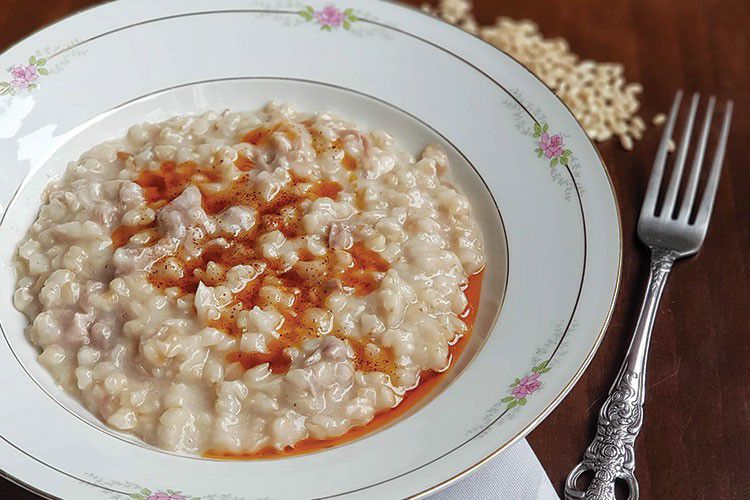
That is why I believe we must keep cooking. Not only to taste, but to remember. Not only to eat, but to belong as a greater collective. When I step into the kitchen with my grandmother or mother, I feel part of something ancient yet alive. Through keşkek, dolma, topik, çörek, zerde and anoush abour, I see that cuisine is the bridge between past and future. If we don’t cross it, if we don’t preserve it, we risk forgetting who we are and our sense of taste. So, the next time you eat Armenian food, remember that your taste buds are preserving the past for future generations.
And that is where I see my role. Whether it’s teaching a friend how to roll dolma, writing down recipes and saving them on the cloud so they aren’t lost or one day sharing these traditions with my own children, I know I can keep our heritage food alive.
Food is culture, and culture is memory; it is up to us, the next generation, to keep both alive.

Dear Deni— Your series is excellent and resonates with Armenians in the diaspora! Your parents must be so proud of you, as you proudly showcase Armenian heritage and culture.
Thank you!