Kavat Café hosts Armenian coffee cup reading ritual
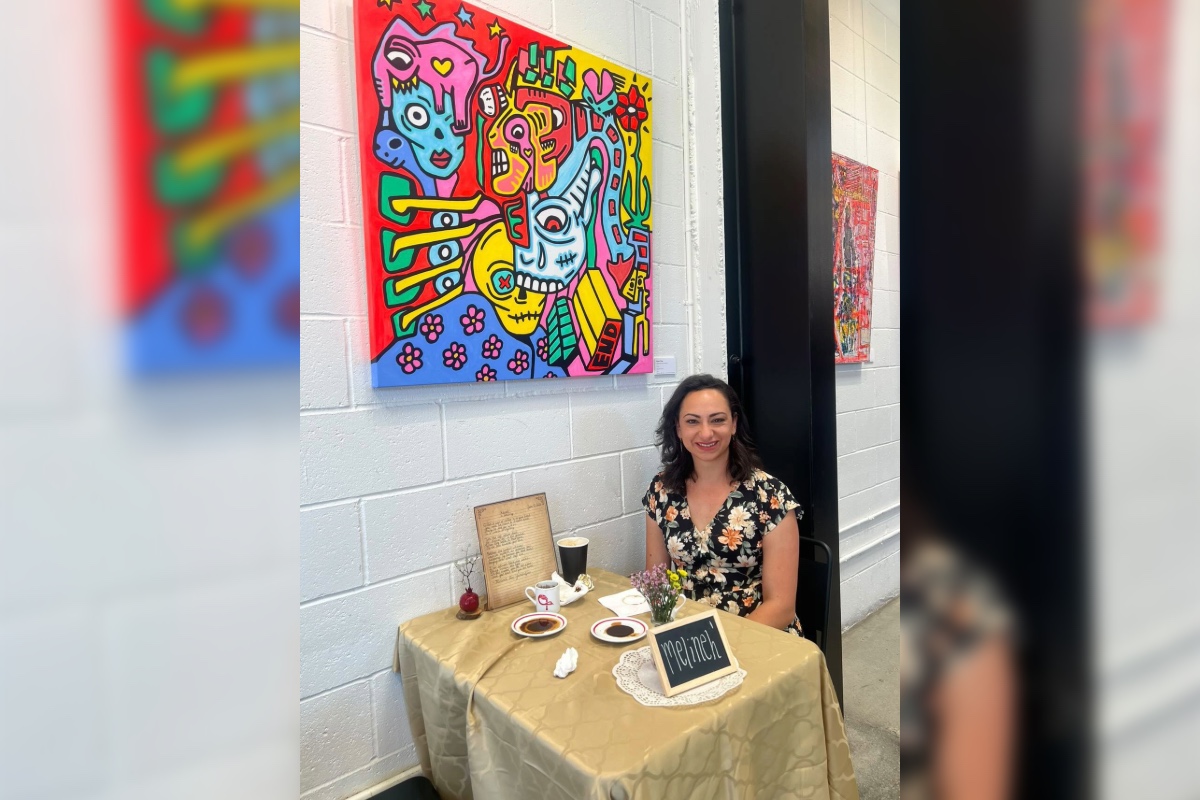
On Saturday, June 13, I had the pleasure of being one of five kooshags, or Armenian coffee cup readers, for Kavat Café’s first-ever ritual experience. Guests, who had RSVP’d online, were served Kavat’s premium organic coffee in delicate cups with a red letter keem (Գ) embossed in trchnagir, an Armenian calligraphic tradition in which letters are depicted as birds. They also enjoyed a piece of succulent baklava inside the café or on the shaded outdoor patio before their appointed time. The readings were conducted inside the café amidst the happy bustle of patrons, some of whom sported T-shirts featuring Kavat owner Serj Tankian’s band, System of a Down.
I set my table with a golden cloth, a pomegranate and a tin rose. Before I opened each cup, I read a poem I wrote for those sitting across from me as a blessing to evoke intention. Everyone approached the reading in their own way — some were giddy with excitement about their first cup reading, while others listened quietly, their elbows resting on the cloth. Each came from diverse ethnicities, beliefs and lifestyles, and all showed an openness and reverence for the experience that eased communication.
The visits passed quickly as we became immersed in conversation over what the cups revealed. The lines and shapes inside the porcelain reflected what each person carried — the tension in their shoulders, the steadiness of their breath and the questions they had not asked aloud. The din of the café faded as my attention narrowed; instinct and craft took over, and I spoke from what I saw in the grounds. In this space, those I read heard their truths in a setting as intimate as a living room.
I first learned to read at age 18 after my grandmother taught me to make soorj. She said all Armenian girls should know how to make a proper cup of coffee. I hadn’t participated in the ritual until then, as I didn’t drink coffee with the elders. I wanted to be a part of the circle of adults sipping the comforting, earthy drink while sharing stories. I had observed cup readings before and knew what to do. Once I tasted the thick grounds at the bottom, I flipped my cup over and watched as the dark liquid seeped under the brim onto the saucer. After a while, I picked it up and dabbed it on a napkin to avoid drips from disturbing the mural that forms once the coffee makes its way down the walls. I peered into my cup and could not read it — nothing was interpretable. Then my aunt handed her cup to me. A force of energy, like a river’s current, washed over me. A wellspring of words rose in my mind and unfolded into a story. I repeated the words to her aloud, and all I said resonated. I felt special and powerful.
Since then, I have refined my relationship to this craft. I have learned to stay in the moment and be mindful of why cup reading has been carried down for so many generations and across countless borders. This bond between myself and the cup is as natural as the coffee beans growing from the earth. Nature knows how to tend to its own and this is my way of tending to my fellow humans. Their darkness becomes clear against the white of the porcelain, and I tell them in the kindest way possible because this practice is meant to uplift. I celebrate their triumphs, marked with bold strokes and light spaces, with warmth and enthusiasm I genuinely feel. I love sharing this ability because I understand and respect the responsibility of care.

Every person who sat before me had a story that I had never known before. Yet, in one meeting, I could tell them what they had not yet pieced together themselves or had not yet brought to the surface. They understood that my practice is not a cure-all — it would not immediately validate their decisions or predict favorable outcomes. Nor would I speak of dire consequences. I simply read what their consciousness had already manifested. They acknowledged the ritual as a communal presence and kept what served them. At the end of each reading, we shared a gesture of appreciation — a gentle hug or an earnest nod.
As the room emptied, a steady sense of fullness and peace came over me. Engaging in this ancient Armenian tradition with people from many walks of life made something clear: we all want to be witnessed. Kavat Café — and its gracious, attentive staff — created the conditions for each moment of recognition that unfolded, bringing together those who appreciate a good cup of coffee.