Armenian church registers and the reconstruction of immigrant lives in America
Editor’s note: This article appeared in the Armenian Weekly’s March 2026 special magazine issue, “America at 250: An Armenian American Retrospective,” guest edited by former Weekly editor Dr. Khatchig Mouradian and dedicated to the 250th anniversary of Declaration of Independence and the history of Armenian American life.
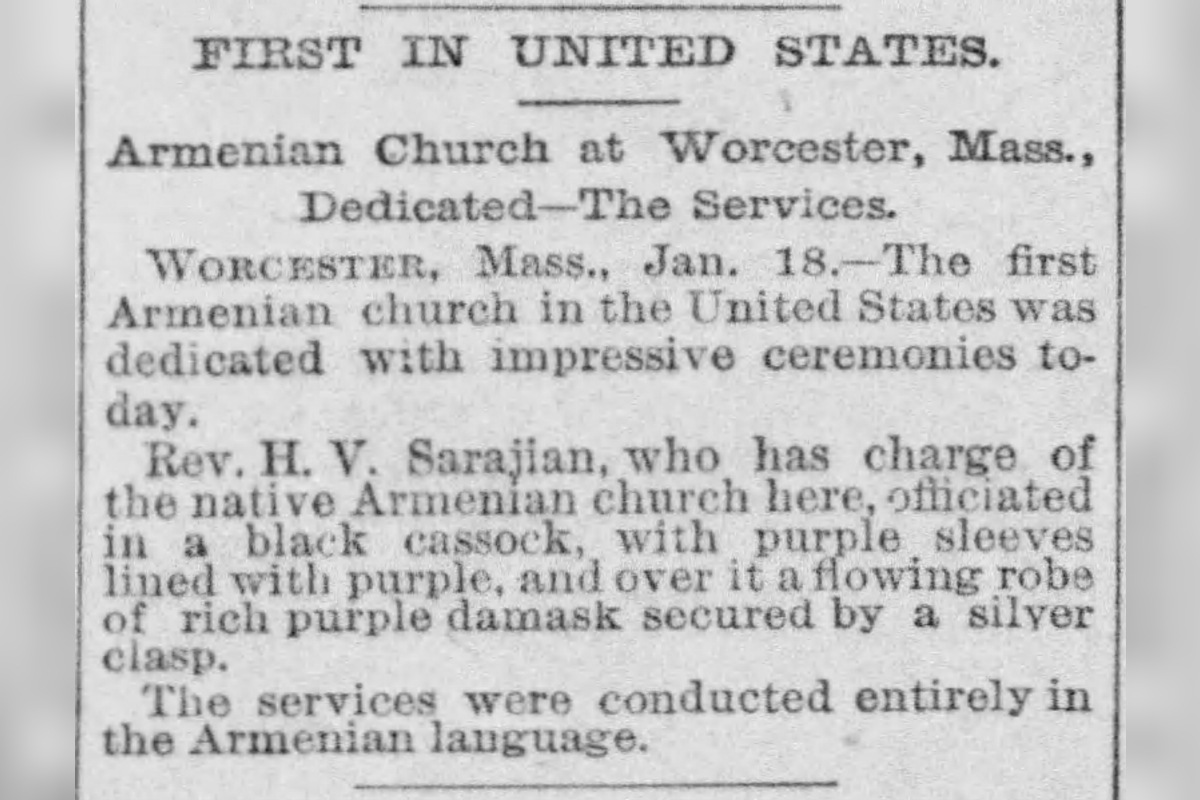
On Jan. 18, 1891, the Armenian Church of Our Saviour in Worcester, Massachusetts, was consecrated, marking the establishment of the first Armenian church in the Americas. The effort to found a parish had begun several years earlier, in 1888, with the formation of an Armenian Club that met at Temperance Hall. The following year, Rev. Fr. Hovsep Sarajian arrived in Worcester under the auspices of the Armenian Patriarchate of Constantinople. Soon thereafter, a Protestant Armenian congregation was organized in Worcester, later known as the Armenian Church of the Martyrs. In the more than a century since, the Armenian population in the United States — and the number of its places of worship — has grown significantly.
Over the years, my interest in genealogy and my desire to assist those seeking to learn more about their Armenian heritage have led me to explore the sacramental records maintained by Armenian churches. These records possess features that make them especially valuable complements to civil documentation, particularly for the first generation of Armenians who settled in the United States.
Armenian Apostolic churches generally record the sacraments of baptism, marriage and funeral rites. Although a baptismal record is not identical to a birth certificate, nor is a funeral entry identical to a death certificate, they document closely related life events and can therefore be used to supplement vital records.
Several characteristics distinguish Armenian church records, particularly those from the earliest years. Because Armenian was the native language of the individuals providing the information, these records often preserve names in their original Armenian forms, resulting in more accurate spellings than those found in civil documents. In addition, while civil records frequently list a birthplace simply as “Armenia” or “Turkey,” church records are far more likely to identify the specific town or village of origin.

Because Armenian immigrants in the United States often settled in communities alongside others from the same region of origin, individual churches can serve as windows into particular areas of the historic homeland. The following list is illustrative rather than exhaustive:
| Region (Historic Armenia) |
Primary U.S. Community |
| Dikranagerd | Union City |
| Arapgir | Philadelphia |
| Malatia | Philadelphia |
| Kharpert | Worcester and Fresno |
| Palou | Detroit and Providence |
| Tomarza | Racine |
| Gesaria | Racine |
| Keghi | Detroit |
| Pazmashen | Whitinsville |
| Chmshgadzak | Lawrence |
Through my travels across the United States, I have been fortunate to review the sacramental registers of many Armenian churches. It is important to understand both what survives and what has been lost. Unfortunately, many early records have disappeared due to neglect, carelessness or water damage.
The earliest surviving records are those of the Armenian Church of Our Saviour in Worcester. For a time, the priest in Worcester was the only Armenian Apostolic clergyman in the United States, traveling to other communities to perform sacraments. As a result, the Worcester registers contain early records for multiple communities.
The first baptism recorded in Worcester is that of Sahag Sahagian on June 25, 1897. The entry notes that his father, Avedis (age 30), was born in the village of Morenig in the Kharpert region, while his mother, Ovsanna (age 20), was from Gesaria. The godfather, Baghdasar Torosian, was also from Morenig. Sahag’s birth date is given as May 24. A corresponding civil birth record for Isaac Sahagian — the Americanized form of his name — confirms this date and lists his parents as Avedis and Rosa, both born in Turkey.
These records often preserve names in their original Armenian forms, resulting in more accurate spellings than those found in civil documents.
The first recorded funeral occurred in Lawrence, Massachusetts, on July 2, 1897. Civil records show that a 22-year-old man named Hovegian Kebarian died from an accidental shooting; his parents were listed as George and Ohabea. The Armenian church record, however, identifies him as Hovagim Kibarian and names his father as Kevork. Although his mother’s name is not recorded, the entry indicates that he was from the village of Husenig in the Kharpert region. A contemporaneous report in the Boston Globe described the incident: Khachadour Vartanian accidentally discharged a rifle at a shooting range, striking Hovagim while he was painting a target.
The first marriage recorded was that of Bedros Malkhasian, age 28, born in Pazmashen (Kharpert region) and residing in Whitinsville, and Srpouhi Ashjian, age 21, born in Mezereh (also in the Kharpert region). The bride’s father was Sarkis Ashjian. In the civil record, the couple appears as Peter Malkasian and Srpouhi Sarkisian. Bedros’s parents are listed in the civil record as Tateos Malkasian and Varter Pilibosian, while the Armenian record presents a more complex set of names — including Simon, Atam, Marsoub and Varter — illustrating the interpretive challenges these sources can present.
This leads to another important and relatively rare source: Armenian church censuses. These documents are particularly valuable because they often provide the names of parents for individuals who did not marry in the United States — the principal alternative source for such information. Funeral and death records are generally less reliable for identifying parents, as the informant is usually not the deceased.
The earliest known Armenian church census in the United States dates to 1903 in Providence, Rhode Island, and is preserved in the archives of Sts. Sahag and Mesrob Church. Although incomplete and lacking parents’ names, it provides the birthplaces of many early immigrants — some of whom later returned to the Ottoman Empire and perished during the Armenian Genocide.
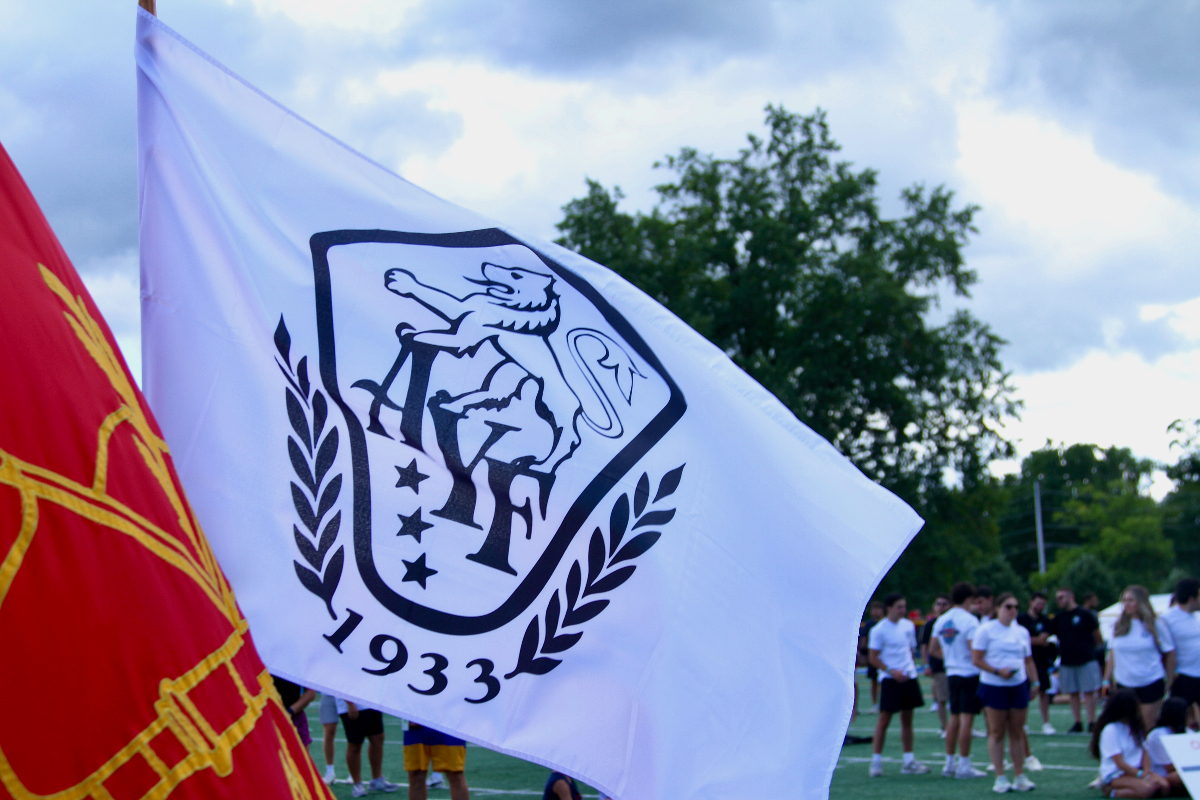
Two additional censuses deserve special note: one from 1929 for Worcester, Massachusetts, and another from 1932 for Racine, Wisconsin. Both are especially useful because they predate the 1933 crisis in the Armenian Apostolic Church that led to a political division, and both were taken close in time to the 1930 U.S. Census, allowing for easy comparison.
The Worcester census includes surrounding communities as well and records each individual’s name, age, birthplace, occupation, parents’ names and address. For married women, maiden names are also provided — often the only source for that information for immigrants who married in the homeland. The census is organized by the first initial of the head of household’s first name, which can make locating a family somewhat challenging. In total, more than 600 households were recorded in Worcester and eight surrounding towns (Westborough, Auburn, Millbury, West Boylston, Sterling, Southborough, Paxton and Charlton).
The Racine census is similarly organized but includes a helpful index. In 1990, a booklet titled Early Armenian Settlers of Racine: From 1890 to the Late 1920s was published to mark the centennial of Armenian settlement in Racine; portions of the census were reproduced in that volume.
The Racine census is structured in a unique way not commonly found elsewhere. The head of household is identified along with the name of his father and birthplace, and the same information is recorded for the spouse. The number of children, along with their names and birth dates, is then listed. For married couples, the record includes when and where they were married. It also notes deaths within the family and places of burial. Approximately 400 households were documented.
Taken together, Armenian church sacramental registers and community censuses form a remarkably rich and often underutilized body of sources for reconstructing the lives of early Armenian immigrants in the United States. They preserve original names, identify precise hometowns, document family relationships and capture community networks that are frequently absent from civil records. At the same time, the gaps caused by lost or damaged records serve as a reminder of the urgency of preservation and documentation. For genealogists, historians and descendants alike, these records are more than administrative entries they are enduring links to ancestral homes, disrupted communities and the resilience of a people who rebuilt their lives in a new land while maintaining a connection to their past.
They preserve original names, identify precise hometowns, document family relationships, and capture community networks that are frequently absent from civil records.