




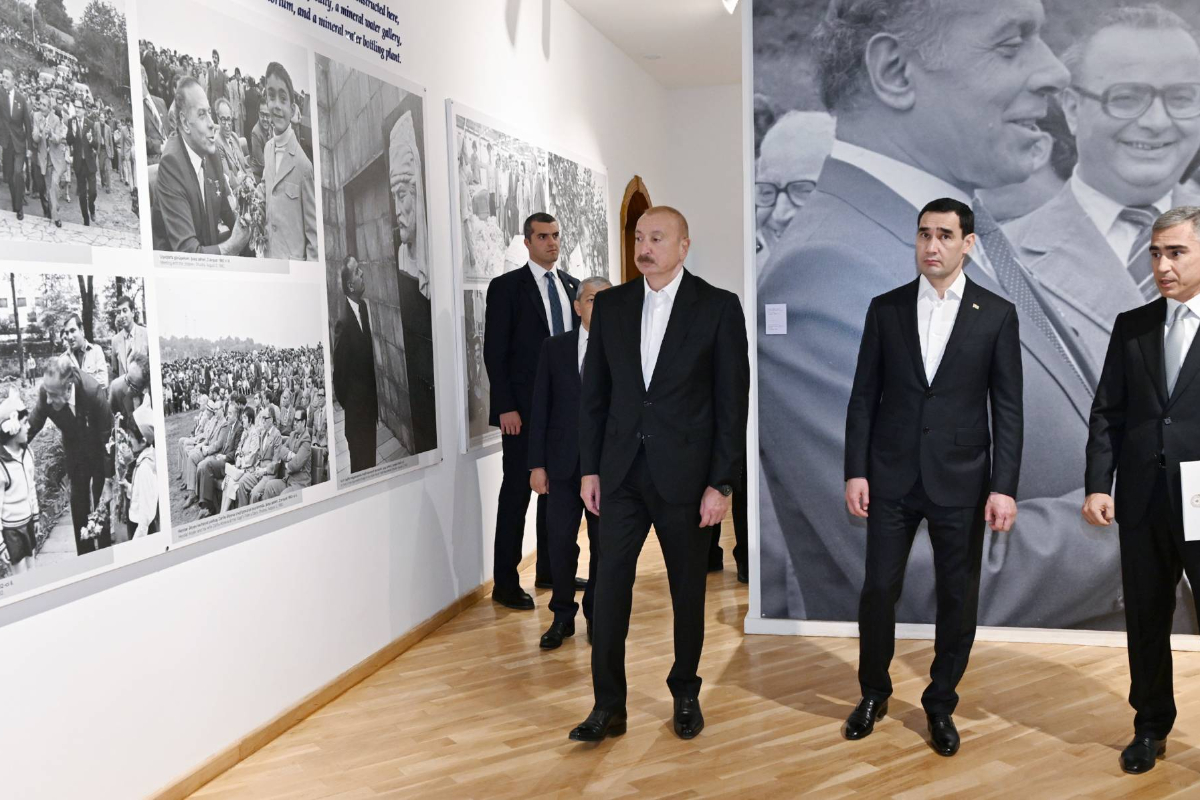
YEREVAN — As members of Armenia’s ruling party continue to question and downplay warnings that Azerbaijan is preparing demands for the “return” of more than 300,000 Azerbaijanis to Armenia, Baku has advanced the same agenda through another state-backed event: the third “Return to Western Azerbaijan” festival-conference, held June 18-19 in Ordubad, Nakhichevan.
The event was organized with the involvement of Azerbaijan’s Ministry of Science and Education, the presidential plenipotentiary office in Nakhichevan, Nakhichevan State University and the Western Azerbaijan Community. It focused on the so-called return of Azerbaijanis to “Western Azerbaijan,” a term Azerbaijani officials and affiliated organizations use to refer to the sovereign territory of the Republic of Armenia.
The timing underscored a widening disconnect between public debate in Yerevan and the policy language now being institutionalized in Baku. While Armenian opposition figures have warned that Azerbaijan is attempting to insert new demands into the peace process, representatives of Prime Minister Nikol Pashinyan’s Civil Contract party have dismissed or questioned those warnings as politically motivated. In Azerbaijan, however, senior officials are increasingly treating the issue not as rhetoric, but as a formal element of state policy.
The “Western Azerbaijan” agenda has developed rapidly since Azerbaijan’s victory in the 2020 war. In 2022, the Azerbaijani Refugee Society was renamed the Western Azerbaijan Community, giving the campaign a dedicated institutional platform. In 2023, the group adopted a “Concept of Return,” which calls for the “peaceful, safe and dignified return” of Azerbaijanis it says were expelled from the territory of present-day Armenia.
The document presents the issue as a matter of human rights and displacement. But its political implications are broader. It calls for international guarantees, monitoring mechanisms, security arrangements and negotiations with both Azerbaijan and Armenia, effectively seeking to place the issue of Azerbaijani resettlement inside any future Armenian-Azerbaijani settlement.


Aziz Alakbarli, a member of Azerbaijan’s parliament and chairman of the Western Azerbaijan Community, told journalists during the conference that Armenia must create conditions for the “safe, dignified and peaceful return” of Western Azerbaijanis. He said the issue was consistent with fundamental human rights and international law and argued that the “new realities” in the region made such a return unavoidable.
Azerbaijan’s science and education minister, Emin Amrullayev, also described the issue as a strategic direction for Baku. Amrullayev said the Western Azerbaijan theme had become part of Azerbaijan’s public diplomacy and that systematic organizational, educational and research work was being carried out under Aliyev’s policy.
The minister’s remarks pointed to the extent to which the campaign has moved beyond advocacy by a single organization. It is now being advanced through state institutions, academic programs, cultural events and diplomatic messaging. The Ordubad conference included reports on the “historical heritage” of Western Azerbaijan, discussions about the prospects for return and public presentations designed to reinforce the campaign’s legitimacy.
For Armenia, the issue presents a direct challenge at a delicate stage in the peace process. Baku is raising the matter publicly and suggesting that it should be included in negotiations with Yerevan. This demand could function as a new precondition, expanding the scope of talks from border delimitation and a peace treaty to questions involving Armenia’s internal territory, demographics and sovereignty.
The campaign has drawn sharp criticism from former Armenian officials, opposition lawmakers and regional analysts, who argue that the issue should be treated as a national security challenge.
Former Foreign Minister Vartan Oskanian said the question of Azerbaijani resettlement in Armenia should be placed at the center of Armenia’s foreign policy agenda, rather than dismissed as an opposition talking point.
“My message is to the authorities: do not turn the issue of the return of Azerbaijanis into a government-opposition dispute,” Oskanian said.
He warned that dismissing the issue as a political exaggeration would repeat what he described as past mistakes in Armenia’s handling of Artsakh.
According to Oskanian, the risk is not immediate mass resettlement, but a long-term process that could alter Armenia’s demographic and security environment if left unanswered.
Oskanian also rejected efforts to draw a parallel between the return of Armenians displaced from Artsakh and the return of Azerbaijanis to Armenia. He said the right of Artsakh Armenians to return has a clear international legal basis and broad international support, including court decisions and statements by foreign parliaments and officials.
Azerbaijan specialist Tatevik Hayrapetyan said Azerbaijan is advancing a territorial-political agenda and conducting a psychological campaign against Armenia. She noted that the Ordubad event was held in Nakhichevan, where Armenian cultural heritage was destroyed in the early 2000s, and said the symbolism of staging a “Western Azerbaijan” event there was deliberate.
Tigran Abrahamyan, an opposition lawmaker, made a similar argument, saying Baku “does not even conceal” that the “Western Azerbaijan” theme is a strategic objective. He said the discourse is being encouraged across Azerbaijani institutions and warned that maps used in Azerbaijani military and public messaging have depicted all of Syunik and Vayots Dzor, and parts of Gegharkunik and Tavush, as Azerbaijani territory.
Political analyst Suren Surenyants was more direct in his criticism of the Armenian government, accusing Pashinyan’s administration of underestimating or enabling Azerbaijan’s agenda. He argued that the Ordubad conference, Alakbarli’s statements and Amrullayev’s description of the issue as a strategic direction all show that Baku is seeking to turn the “Western Azerbaijan” narrative into a negotiating demand.
The criticism reflects a broader concern that Azerbaijan is moving the “Western Azerbaijan” campaign into institutional policy, while Yerevan has yet to formulate a clear state-level response.


So let me get this straight—
Azerbaijan ethnically cleansed the Armenians from Artsakh, and now they want to send 300K Azeris to Armenia?
Total insanity imho.
This article raises legitimate concerns about Azerbaijan’s ‘Western Azerbaijan’ campaign, but the messenger matters. Both the ARF and Vartan Oskanian are closely associated with former president Robert Kocharyan, whose governments oversaw the very policies that led to Armenia’s strategic vulnerabilities in the first place. Oskanian served as Foreign Minister for a decade under Kocharyan. Treating their warnings as objective national security analysis without acknowledging that context is incomplete at best.
On the substance: Azerbaijan entered the 2020 war and occupied not only Karabakh but sovereign Armenian territory. Without the ceasefire, the losses could have been far greater. Pashinyan’s critics conveniently ignore that inconvenient reality when demanding a more aggressive posture. What exactly was the alternative? Continue a war Armenia was losing badly, with Russia watching from the sidelines?
The deeper problem with this opposition chorus is the same one we see everywhere: all alarm, no agenda. Where is the coherent counter-proposal? Where is the opposition’s detailed strategy for dealing with Azerbaijan’s territorial ambitions beyond denouncing Pashinyan? Raising fears about demographic change and Azerbaijani resettlement without offering a concrete policy alternative is not national security analysis. It is political positioning dressed up as patriotism.
Armenia deserves a serious debate about Azerbaijan’s long-term intentions. It will not get one from figures whose primary mission remains ousting the current government rather than building a credible alternative.
A little deja vu: my great-grandfather was the first and only mayor of a major city in the Armenian highlands. He was shouted down when he remarked, remembering 1896, to some youth “The lion is sleeping, don’t wake him up.” His warning was not heeded, He and all of his sons were subsequently brutally hacked to death by forces of the CUP. His wife and the majority of the women and children in his family were marched into the desert, never to be heard from again. The only family survivors were those living in Constantinople (now Istanbul), pursuing university education in France or on a trip in the mountains of Lebanon (my grandmother, father and aunt). “When there is no vision, the people perish.” Russia is no longer protecting Armenia. We are no match against our enemies and can never be. Only peace will save us.
For Azerbaijan encouraging such a notion means they will find it hard to dispel and a case or having to go through with their rhetoric for their own reputations sake. Needless to say it good this issue is being acknowledged as too long there had been about Arktash refugees and right to return with no reference to Azerbaijan making such conditional to its own desire to settle Azeris into Armenia of which it would have to protect obviously…
When Azerbaijan has made it clear that it won’t allow Armenians to return and live in Artsakh, after it ethnically cleansed all Armenians and systematically destroyed Armenian heritage, homes and villages, why doesn’t the Armenian government issue any statements condemning Azerbaijan’s provocative irredentist “West Azerbaijan” rhetoric and categorically refuse the return of Azeris to Armenia?
When Armenians won’t be allowed to live in Artsakh or Azerbaijan, why should Azeris be allowed to live in Armenia?
Since neither will happen, and after all the wars and massacres, it is best that both people never live together again.
As @Charles suggested a few times in the comment sections the past few years, a formal agreement for a segregation between Armenians and Azeris is the only sensible and viable option, just like the population exchange between Greece and Turkey in 1923, and between Greek Cypriots and Turkish Cypriots in 1975, which permanently put an end to the centuries of ethnic mixing and massacres. Even though I almost never agree with him on other issues, I agree on this issue.
Armenians, Azeris and Turks cannot and must never live together again.
In order to safeguard Armenia, Armenia must also pass laws that prohibit Azeris and Turks from settling, buying and renting property, companies and shares in Armenia, as well as prohibit inheriting them. Numerous countries have such laws against citizens from hostile countries. Armenia needs to follow that example for its national security and future.
This will open up a “Pandora’s box for Azerbaijan and Turkiye. “Right to return” will open up international discussion of the right to return for Armenians to their recent or ancestral properties. Turkiye should pursue the rights of her citizens who were brutally removed from Balkan nations.
Due to Armenia’s small population, a “right to return” of Azeris, would be a Pandora’s box” for Armenia and very detrimental. The 300,000 Azeris which Aliyev wants to plant in Armenia, would be a fifth column for his irredentist invasion plans. A law must urgently be passed to ban Azeris and Turks from settling, buying and renting property, companies and shares in Armenia, as well as prohibit inheriting them.
Armenians, Azeris and Turks cannot and must never live together again.
Over 30 years ago my beloved aunt, the last of our family from Kharpert who survived the Genocide, stated ‘what they did in Nakhichevan. is what will they will do in Karabakh’. Now I will tell my grandchildren ‘what they did in Artsakh in they will do in Armenia’.
If Pashinyan and his government do not develop weapons of mass destruction that is what the Turks and their blood brothers in Azerbaijan will do with what remains of our ancestral homeland.
Archtraitor Pashinyan is busy rolling out the red carpet to his Turkic colonial masters. Hence the dilemma.
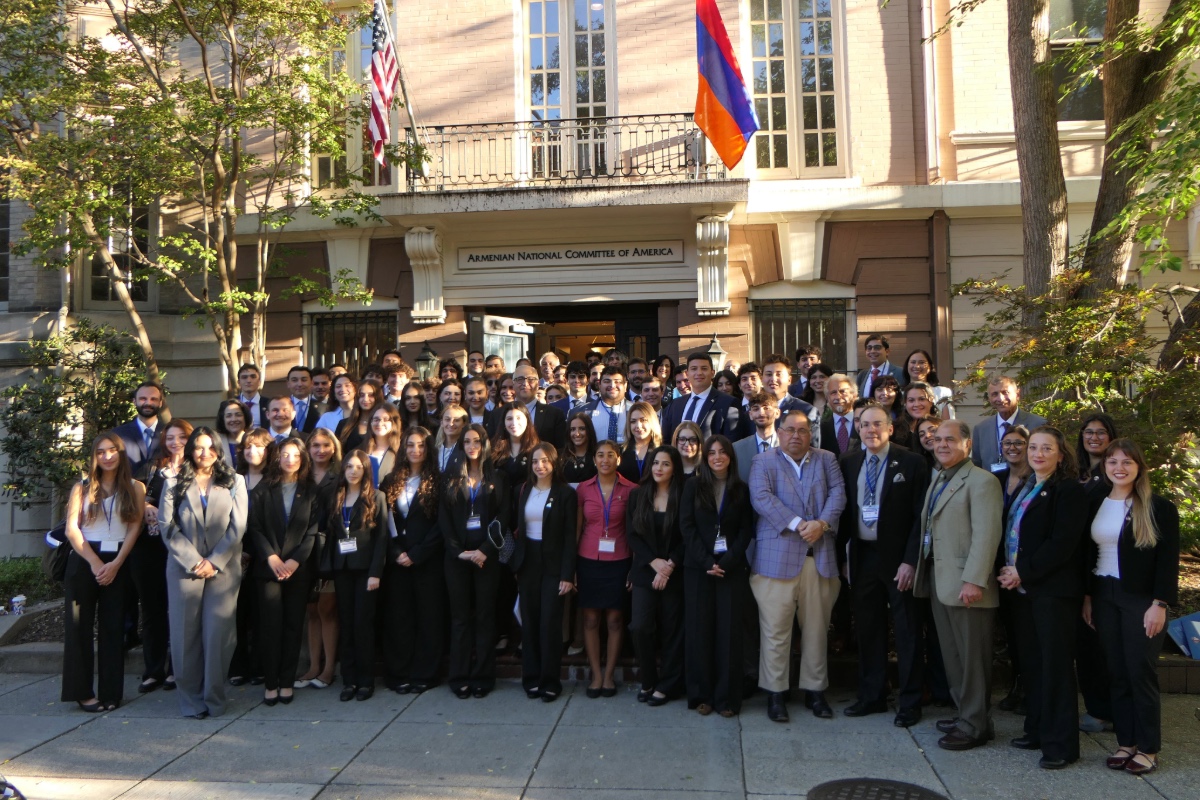
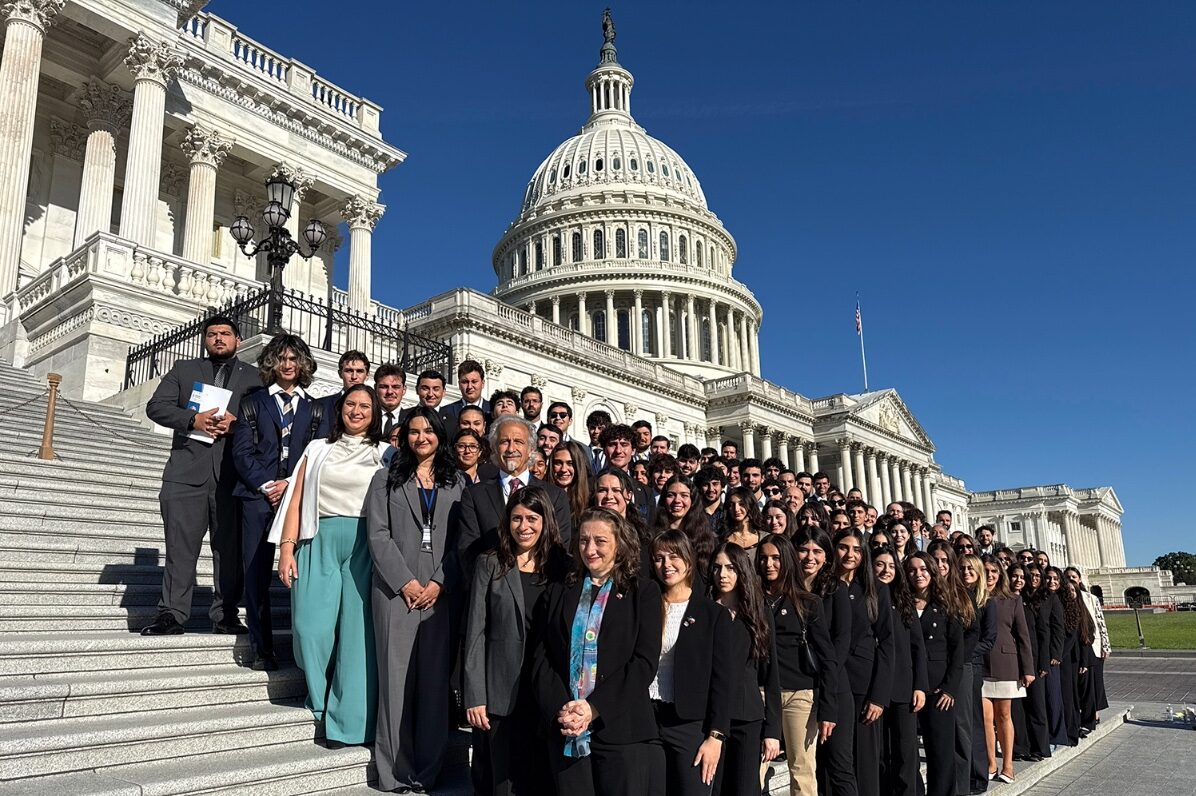
These events are the mirror image of Pro-Artsakh sentiments in Armenia as well as the efforts of the Armenian Assembly of America, Armenian National Committee of America, and ARF directed to encourage the Congress to pass anti-Azerbaijan resolutions. Members of Congress have just submitted amendments to be considered by the House Rules Committee for the following bills: H.R. 4016, the National Defense Authorization Act (NDAA) for Fiscal Year 2027, and H.R. 8595, the National Security, Department of State, and Related Programs Appropriations Act, 2027.
FY2027 Appropriations and National Defense Authorization Acs Amendments: Members of Congress introduced a series of amendments aim to secure the release of Armenian detainees, enforce Section 907 restrictions on U.S. aid to Azerbaijan, and support the forcibly displaced Armenians of Artsakh.
Humanitarian and Right-of-Return Support: Lawmakers introduced bipartisan letters and appropriations provisions demanding that at least $100,000,000 in humanitarian funding be made available to victims from Artsakh residing in Armenia, while also upholding their right to return.
The Azerbaijani logic is simple: If the displaced Armenians want to exercise their right to return, so do the displaced Azeris. I don’t think they really believe it will happen, I mean the mutual reversal of the displacement as it would be equally disturbing for both parties. Azeri men will serve in Armenia’s army and vice versa, and some may opt a military career. Imagine a lieutenant colonel Mamedov in Armenian armed forces or a lieutenant colonel Martirosyan in the Azerbaijani armed forces. This is totally unimaginable, at least in today’s reality. Everyone understands that. The Azeri rhetoric that uses “Western Azerbaijan” is a counterweight to Armenian rhetoric of “Artsakh.” Its purpose is to suppress the Armenian rhetoric about the right of return of Artsakh Armenians. It is very likely that Russia has a finger in the pie as it is most interested in resuming the conflict. Peace between Armenian and Azerbaijan is a disaster for Russia as it loses the leverage to keep both under its control. As for the attempts to put the blame on the ruling party, it’s totally false. It’s the opposition who stick Artsakh flags on their desks in the National Assembly and push the narrative of Artsakh thereby achieving one singe result, prompting Azerbaijan to pursue an agenda of the right of return of displaced Azeris. The policy of the ruling party is to accept the status quo and move forward based on mutual respect and recognition of sovereignty within the internationally recognized borders and refrain from attempts to resume animosity. Some see it as peace from a position of weakness. It is not. The other option is confrontation, war, suffering, lost lives and potentially loss of Armenia as a nation.
The article tries to frame Azerbaijan’s “Western Azerbaijan” campaign as a concrete, actionable threat to Armenia’s sovereignty, but that interpretation stretches the situation far beyond what the facts support.
First, the idea that Armenia is expected to accept the “return” of 300,000 Azerbaijanis is not grounded in any real diplomatic mechanism. No international actor, not the EU, not the US, not Russia, not Iran has endorsed such a concept, and Azerbaijan itself has never presented it as a formal demand in negotiations. What Baku is doing is political messaging: building a narrative for its domestic audience and inflating its bargaining position. Turning conferences and cultural events into evidence of an imminent demographic project is simply not credible.
Second, the article treats Azerbaijan’s rhetoric as if it automatically translates into enforceable policy. It doesn’t. The region is full of symbolic historical narratives, “Western Armenia,” “Greater Armenia,” “Nakhichevan without Armenians,” “Persian Azerbaijan,” and now “Western Azerbaijan.” These narratives are used for identity-building and political theatre. They are not blueprints for population transfers. Pretending that Azerbaijan’s version is uniquely literal or uniquely dangerous misreads how political communication works in the South Caucasus.
Third, the criticism of the Armenian government for “downplaying” the issue misunderstands the strategic logic. Responding emotionally to symbolic rhetoric is exactly how you elevate it. By refusing to treat the “Western Azerbaijan” narrative as a negotiation item, Yerevan is doing the only sensible thing: denying it legitimacy. If Armenia were to panic publicly, it would hand Baku a bargaining chip it doesn’t currently have.
Fourth, the comparison with Artsakh is misplaced. The right of Artsakh Armenians to return is grounded in international law, UN mechanisms, and documented displacement. The “Western Azerbaijan” narrative is not. It is a political construction built on selective history and domestic messaging. Equating the two creates a false symmetry that Azerbaijan is eager to exploit.
Finally, the article overstates the strategic implications. Azerbaijan can hold conferences, publish “concepts,”, produce maps, write articles, print books, but none of that changes the basic geopolitical reality: Armenia’s internal territory, demographics, and sovereignty are not on the negotiating table. Not for the EU, not for the US, not for Russia, and not for Iran. The notion that a festival in Ordubad signals a new phase of territorial ambition is simply not serious.
In short, the “Western Azerbaijan” campaign is a narrative tool, not a policy instrument. It is designed to pressure Armenia psychologically, not to engineer demographic change. Treating it as a national security emergency gives it far more weight than it deserves.
Hello Hagop,
On a related topic if I may:
Are you knowledgeable about the many weird and disparaging statements that Pashinyan has made over the years about:
– The Genocide
– Artsakh (losing it was a “success”)
– The Diaspora
– Armenian history and symbols
You see (and I don’t know whom you support), I have never – not even once – heard or known a supporter of Pashinyan criticize him for his bizarre statements about those matters and other matters too numerous to go into.
Well said, Hagop. “The dogs bark, but the caravan moves on.” Armenia should completely ignore the craftily engineered idea of the return to “Western Azerbaijan” and keep steadily moving toward its goals.
There is no “western Azerbaijan” in Armenia.
Indeed, there is barely an Azerbaijan.
It was invented by the Soviets in 1918.
Azerbaijan, BTW, is a Persian, not Turkic, word.
And its Muslims did not even refer to themselves as Azeris until long after 1918.
If Pashinyan were not mentally ill, he might say these things and put Aliyev in his place.
I do not believe that any rational discussion of Armenia’s foreign policy can take place without a recognition of Pashinyan’s mental illness.
I don’t think I need to go into the disparaging things that this lunatic has said over the years about the Genocide, Diaspora & Armenian symbols and history over the years.
The problem for Azerbaijan currently in the ascendancy is that floating such notions encourages the people and not going through with it would lead to anger for giving false hopes thus it risks being mob forced by the cause it instigated even if it’s not practical. Whilst it may not have international support for such an endeavour there’s no force to stop it. Azerbaijan plan seems to be one of turning Armenia into some kind of West Bank/ reservation territory.
Separately but relevant in context Russia who conceitedly betrayed Armenia in it’s failed ingratiations with Azerbaijan and failed what was left of Arktash is currently struggling in Crimea and to protect assets in the Moscow area from Ukrainian attacks something far more important to Russia than Armenia could ever be even with the most pro Russian leadership or even unification as touted by @concerned and @ gurgen neither have been active here for some time now. Whilst Ukraine is a far stronger force than Azerbaijan once again this should discreetly allow for more candour and realistic sentiments about Russia. Simply if Russia can’t protect itself it could never have protected Armenia either.
Did anybody really think that the Turks could ever be trusted?
The Turks are relentless.
We must be equally ruthless.
How about the Armenians of the diaspora demanding from Türkiye the return of Armenians to
Western Armenia. And pay back all they owe to Armenians
Ideally, yes, if Turkey and Azerbaijan were subjected to heavy sanctions and ostracized globally as pariahs, which they are. Both Turkey and Azerbaijan have many billions of dollars in banks and many other assets in the West – which is their vulnerable spot. Even this would be a small fraction to compensate all the descendants of the Armenian Genocide victims, but it would be a start.
However, unfortunately, since they have gotten away with their crimes against Armenians and are bolder than ever in their aggression against Armenia, Turkey and Azerbaijan would use this as a “casus belli” (case for war) to attack Armenia. Undoubtedly, they are looking for fabricated pretexts to attack and grab more Armenian territory through a “false flag” attack.
What is crucial, is that Armenia stops making endless concessions to Azerbaijan and Turkey, whose aim is of course to turn it into their own puppet state – and they are already halfway there with their goal. This will not happen as long as the utterly incompetent and appeasing traitor Pashinyan remains in power.
First of all, the total Azerbaijani population in Armenia before the conflict began was far less than half that fabricated number that is being floated around. Second of all, those who left Armenia, did so voluntarily and securely. No violence was committed against them and they were also compensated for the loss of any property they may have had in Armenia. Therefore, they are not displaced people by any stretch of imagination. They should have no right of return. In contrast, nearly half a million Armenians uprooted and expelled from Azerbaijan were not as lucky. They not only lost everything they had but that a government-organized horrific violence was committed against them throughout Azerbaijan, in cities such as Baku, Sumgait and Kirovabad (former Armenian Gandzak renamed to “Genje”) under watchful eyes of Azerbaijani police who stood by and let it happen instead of protecting them like they were supposed to do. Hundreds of their Armenian citizens, having nothing to do with the conflict and only for being ethnically Armenian, were murdered in cold blood and in utmost violent and brutal fashion. Being quite familiar with this filthy enemy’s opportunist, deceptive and anti-Armenian racist nature and character, I’m convinced those Azerbaijanis who returned to Azerbaijan were nether integrated into the Azerbaijani society nor could they because I believe they were viewed with suspicion by the local population for their lack of equal hatred and vitriol towards the Armenians because they were treated fairly well by the Armenians back in Armenia. They most likely left Azerbaijan and settled in Russia and other places over the last nearly four decades.
The question then is who are these non-existent 300K Azerbaijanis whom Baku’s mafia clan chief, that pseudo-Turkish “Red” (Soviet) Kurdish mutt Aliyev, wants to send back and resettle in Armenia under the banner of manufactured “Western Azerbaijanis”? Well, Aliyev has his eyes on southern parts of Armenia near the Iranian border where Turkey’s fascist party chief Devlet Bahçeli openly calls the “Turan Corridor” through which one enemy-occupied Armenian territory (artificial Azerbaijan) is to be linked and connected to another enemy-occupied Armenian territory (Nakhichevan). Azerbaijani terrorist forces are currently in illegal occupation of approximately 240 square kilometers of sovereign Armenian territory, primarily located along the eastern and southeastern borders. These strategic locations are situated in provinces of Syunik in the south, Gegharkunik in the east, and Vayots Dzor in central-east. With his regular dog-and-pony shows, Aliyev is trying to keep alive the idea of this “Western Azerbaijani” farce and present it as fact to continue to keep traitor Pashinyan under his thumb. I think he wants to flood southern Armenia with Azerbaijani criminals who will be protected from vengeful Armenian population by his armed forces already present in the region to force the Armenians to relocate to create a demographic change in attempts to seize that strategic part of southern Armenia and that is the reason why he has not and refuses to remove his terrorist forces stationed there.
Let’s face it, there are no Azerbaijanis from nearly four decades ago who would want to return to Armenia. Most of them have already passed on of old age and the rest don’t even live in Azerbaijan anymore and many of them have not even known an Armenian in their young lives. But that does not mean the idea and the intent to flood the Armenian territory with hundreds of thousands of Azerbaijanis is not true. Pashinyan as usual is lying. As he has done it numerous times in the past, his mode of operation is to deny such acts at the beginning to put people’s minds at ease and to discredit the opposition and then shock people by doing a 180 at the last minute so that people will have no time and opportunity to react. The opposition is absolutely correct because Pashinyan has never publically reacted and countered Aliyev on this issue. All he has to do is to call out Aliyev on this and put this issue to rest once and for all but he has not and will not. Like the old saying goes, if it looks like a duck, swims like a duck, and quacks like a duck, it probably is a duck!
This is the real nature of the turk. The hayastancis will learn in full soon enough but by then it will be too late. And Pashoglu will escape to his estate in Canada or Europe with billions of dollars of his blood money. That will be the end of Armenia.
I will cite a comment by “Garo” under another article:
“As Armenians we are talented in many fields such as business, literature, science, music, architecture, but we are totally inept at politics and diplomacy”.
Yes, we are totally inept at politics and diplomacy.
this is true at the highest levels of our government, as well as within the general population as it strikes through most of the comments under any and all sort of articles and/or videos concerning Armenians in the political domain and discussions.
Setting aside any potential trolls, whose profession is delusion and disturbance, I wonder how naive can we be politically (no matter on whose side we would be – Pashinyan or opposition), to still believe that Any one, just Any country, (USA, Russia, Europe – you choose) would do anything for Armenia, if we do not have any leverage to move their interests into taking such actions.
Some criticize Russia for letting down Artsakh, forgetting that our own country let down Artsakh first and foremost.
Some Believe that Russia could come to our help if we had better relations with them.
Some believe that bills passed through US government and congress could force either Azerbaijan or Turkey to take restitutive actions, liberate prisoners, make compensations…
Some believe that the USA or Europeans would be our saviors in case we face any dangers (not to say wars).
What kind of illusions are we living in !!!
Nothing, nothing will save us if we do not use our brains to understand the cynicism and the reality of political games, which have ruled the world for centuries. And to play these games, one needs strong cards in his hands and needs to know with whom he can form strategic alliances.
Currently, we have No cards in our hands, No strategy, No vision, and No political education.
It’s time we work on these as a nation, work on our national cohesion and a common understanding of armenianness, ans establish a vision for our nation of which we would be proud, of which our future generations would be proud, and of which our ancestors (and those who died for our survival) would have been proud.