When a French writer asked about Artsakh
Hermine Avagyan discusses her correspondence with Ulysse Manhes, which began during the blockade of Artsakh and became “Letters from Paradise, Where No One Is.”
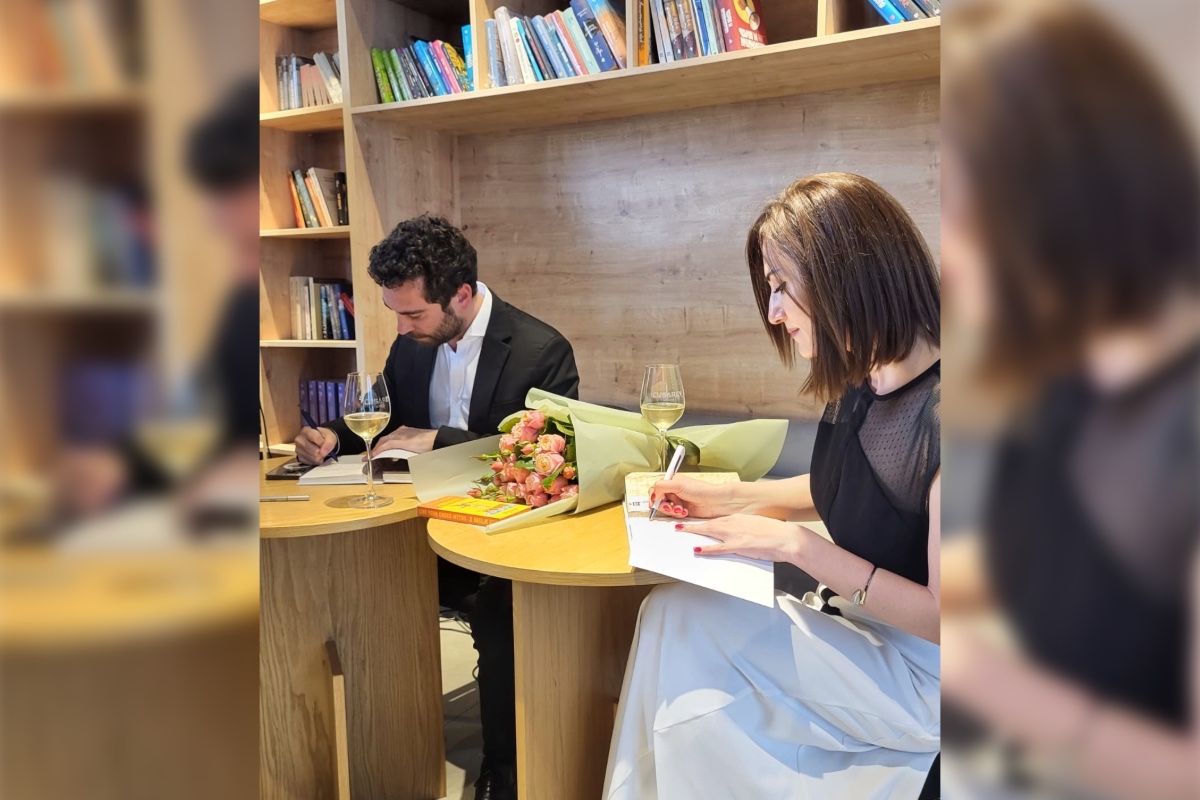
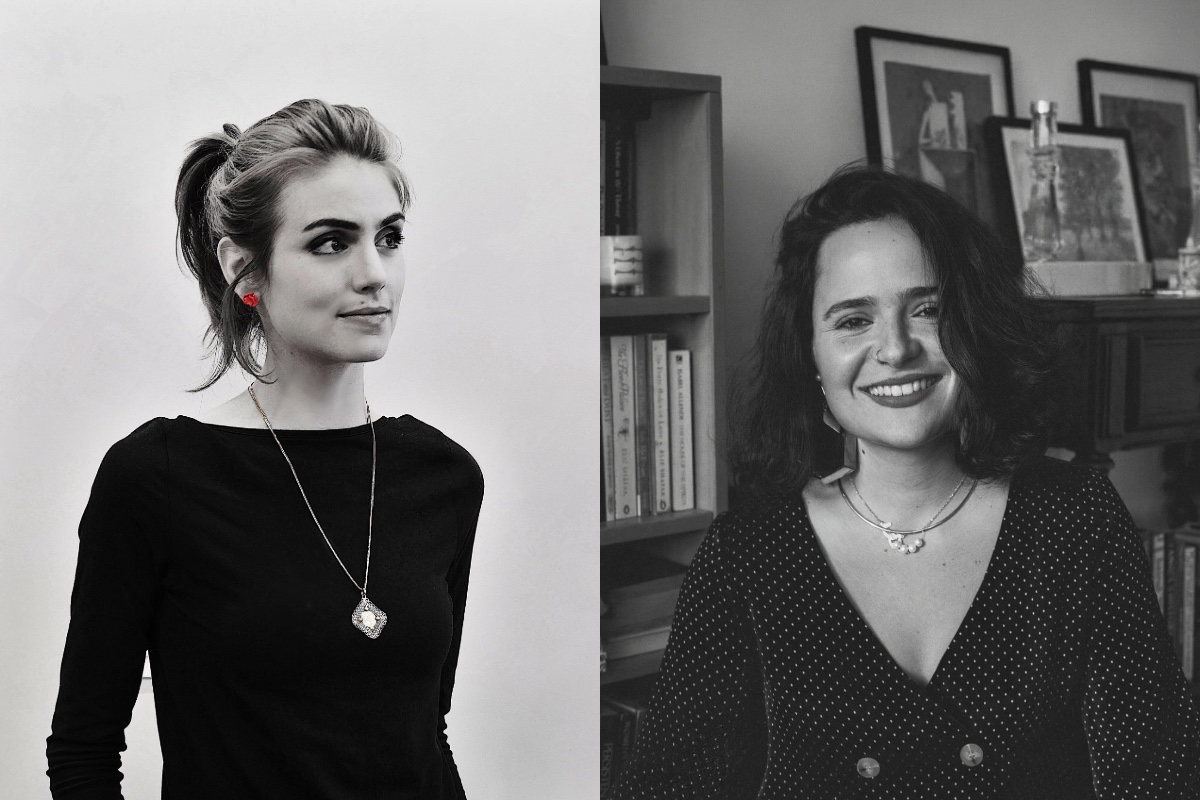
Hermine Avagyan is a poet and prose writer from Artsakh. A journalist by profession, “Letters from Paradise, Where No One Is” is her sixth book, published by Newmag as a bilingual Armenian–French memoir.
The book grew out of a correspondence that began during the blockade of Artsakh, when Avagyan received a letter from the French writer, philosopher, musician and journalist Ulysse Manhes. He asked how people live after war, continue their daily lives and write and create in a reality shaped by loss.
What started as a private exchange gradually became a sustained dialogue and eventually a book. The letters move between two perspectives: one shaped by lived experience, memory and disappearance; the other by distance, inquiry and interpretation. Through this exchange, questions of language, belonging, and understanding emerge across two very different cultural and personal landscapes.
After previously covering her literary work, The Armenian Weekly spoke with Hermine Avagyan about how this correspondence began, what it revealed about writing and understanding, and how it evolved over time.
Siranush Sargsyan: Hermine, your book “Letters from Paradise, Where No One Is” has recently been published. Can you tell us how this correspondence with Ulysse Manhes first began, and how it gradually turned into a book?
Hermine Avagyan: Everything began during the blockade of Artsakh, when for months it was cut off from Armenia. Azerbaijan had blocked the lifeline road connecting it to Armenia. During those days, unfortunately, I was in Yerevan and could not reach Artsakh, where my mother was, my relatives were, the grave of my heroic father…where my childhood was, my youth, my dreams and everything that was me.
In those days I received a call from Narine Aghabalyan, former minister of education, science, culture and sports of Artsakh, and then also from Hovhannes Gevorgyan, the representative of Artsakh in France, suggesting that I start this correspondence project and tell a French intellectual, unknown to me, about my birthplace, Artsakh. It was meant to be a literary correspondence, far from political analysis or historical debate.
I immediately agreed, without even asking who I would be writing to. At that time, it felt like therapy for me. I was feeling not only longing, but also guilt that I was not where I should be. I wanted to talk to someone, and since I am a reserved person, it was easier for me that I did not know that person, and that he did not know me or my country.
So, without knowing each other, and without even searching for each other on social media, we began our correspondence. In his first letter, he asked if I could tell him about Artsakh through my childhood. I told him that I too had been a child like him, with ordinary dreams. I also wanted toys, sweets, ice cream, colored pencils, illustrated books. I wanted to go to kindergarten and go on strolls with my parents. But I did not have those things, because I did not have the most important thing in the world: peace. There was war in my country.

When we were writing to each other, we did not know where it would lead, whether it would become a complete book or remain just letters emailed to each other.
Honestly, I never thought about whether he understood the depth of my letters or simply saw them as another literary project. I only wanted one thing: to talk. To speak out from a place that, after its occupation, I called “a paradise where no one is.” During the correspondence, I felt that Ulysse was slowly becoming my friend. A friend whose name I only knew, but whom I already considered close. Our correspondence lasted almost nine months.
The publication of this correspondence was proposed by Newmag publishing house, which had published my work before. This project happened because what we were expressing in Armenian and French was universal. The book was born naturally, as proof that even amid the greatest emptiness, connection is possible.
Sargsyan: The dialogue between you and Ulysse Manhes unfolds in Armenian and French. In practice, how did you communicate across two languages? Did this create distance at any point, or did it open a different form of understanding?
Avagyan: Language was never a barrier between us. Rather, it became a bridge between cultures, experiences and ways of seeing the world. I wrote in Armenian, the language of my roots, memories and personal history. Ulysse responded in French, bringing his own intellectual, emotional and philosophical perspective.
In practice, our exchange developed through a mutual effort to understand not only the words themselves but also the meaning behind them. Over time, I came to realize that he was trying to grasp the emotions, nuances and silences embedded in my letters, including the thoughts and feelings that remained unspoken. The richness of Armenian met the precision and elegance of French, creating a dialogue that went beyond linguistic differences. What emerged was a shared language of sincerity, trust and understanding. Throughout this correspondence, both of us learned to communicate on that deeper level.
Sargsyan: While reading the book, one senses a need to speak with someone beyond one’s immediate surroundings, someone almost unknown or geographically distant. Was this correspondence simply a coincidence, or did it also become an opportunity to share the stories and experiences of Artsakh?
The richness of Armenian met the precision and elegance of French, creating a dialogue that went beyond linguistic differences.
Avagyan: Sometimes the people closest to you cannot hear your inner collapse because they too are living under the same debris. In such moments, you need someone who stands outside the disaster, someone with a clear perspective who is willing to make room for your experience within their own understanding. Ulysse became that distant shore.
I did not want to speak through political statements or journalistic facts. The world has grown weary of statistics and headlines. This correspondence became an opportunity to elevate the tragedy of Artsakh to a human and existential level, to present it as a story of loss, displacement and the search for meaning. Through my personal experiences, I sought to convey realities that no news report could fully capture. In that sense, these letters carried something deeper than information. They carried the voice of a people and the emotional truth of a homeland. My hope is that through this book, those experiences will reach readers who may previously have encountered Artsakh only as a passing news story.
Sargsyan: The book also reflects the encounter of two distinct worldviews, not only linguistically but culturally and philosophically. As an Armenian writer, do you feel a responsibility to make your experience understandable to foreign readers, or is literature, for you, a freer space that is not bound by such obligations, especially in comparison with Ulysse Manhes’s more universal approach?
Avagyan: This is perhaps one of the most difficult tensions I navigate as a writer. As an Armenian author, I cannot separate myself from the fate of my people. My memory is collective, and my pain is shaped by history. I feel a responsibility to give voice to experiences that are often difficult for outsiders to fully grasp. At the same time, literature is, for me, a space of absolute freedom. If I wrote solely with the mission of explaining or representing, the result might be closer to advocacy than to art. Ulysse’s humanistic perspective never constrained me. On the contrary, it encouraged me to speak with greater honesty. It reminded me that personal and national suffering are also part of a broader human suffering.
In this book, these two approaches do not oppose one another. They complete each other. My deeply rooted and place-specific suffering is transformed through Ulysse’s perspective into a larger reflection on the human condition.
My memory is collective, and my pain is shaped by history.
Sargsyan: Looking back at your previous books, where does this work fit within your literary journey? What continues and what changes? And given that two of your previous books have already been adapted for the stage, can you imagine this correspondence becoming a theatrical production as well?
Avagyan: My literary work has always explored the inner world of the individual, loneliness and anxiety, the lasting traces of war, and the search for meaning, healing, and reconciliation with oneself. “Letters from Paradise, Where No One Is” is a natural continuation of the themes that have shaped both my poetry and prose, but it also represents a new stage in my creative development. Two of my previous books have been adapted for the stage in Artsakh and Armenia, although I never imagined such a possibility when I wrote them. They were not plays but works of prose. It was the director who saw their theatrical potential and insisted on bringing them to the stage. Together, we succeeded in creating productions that continue to find audiences today.
As for this correspondence, for the first time I can personally envision it as a stage production. I also believe it could become a compelling film if someone chose to undertake that project. Recently, the director who adapted my earlier works told me that she is currently reading the book and feels it would translate beautifully to the stage. However, at this point, no concrete plans or agreements have been made.
Sargsyan: As Director of the Hamazkayin Artsakh Office, you are involved in programs supporting forcibly displaced artists and children from Artsakh. What are the main challenges facing forcibly displaced writers, artists and especially children today, and what forms of support are most urgently needed?
Avagyan: The greatest challenge facing many displaced artists today is the profound sense of uprootedness. When a person loses their homeland, an immense emptiness emerges within them. Many writers and artists find themselves on the threshold of silence. They struggle to create because loss has affected not only their circumstances but also their inner voice.

What they need most is support in reclaiming that voice and opportunities to feel that their work continues to have meaning and relevance. In this regard, the Armenian National Committee of America Eastern Region provided invaluable assistance. Last year, I was able to bring more than 50 paintings by 14 Artsakh artists to the United States and organize charitable exhibitions and sales in New York, Washington and Rhode Island. Some of the works had been rescued from Artsakh itself.
The exhibitions were highly successful. All the paintings found their new owners, and this was not only significant financial support for the artists, but also a great spiritual encouragement, helping them create again, feel valued, and speak about Artsakh through their art. Their paintings were not only their own voice, but also the voice of Artsakh’s survival, which reached foreign shores and found resonance. I believe such initiatives should continue.
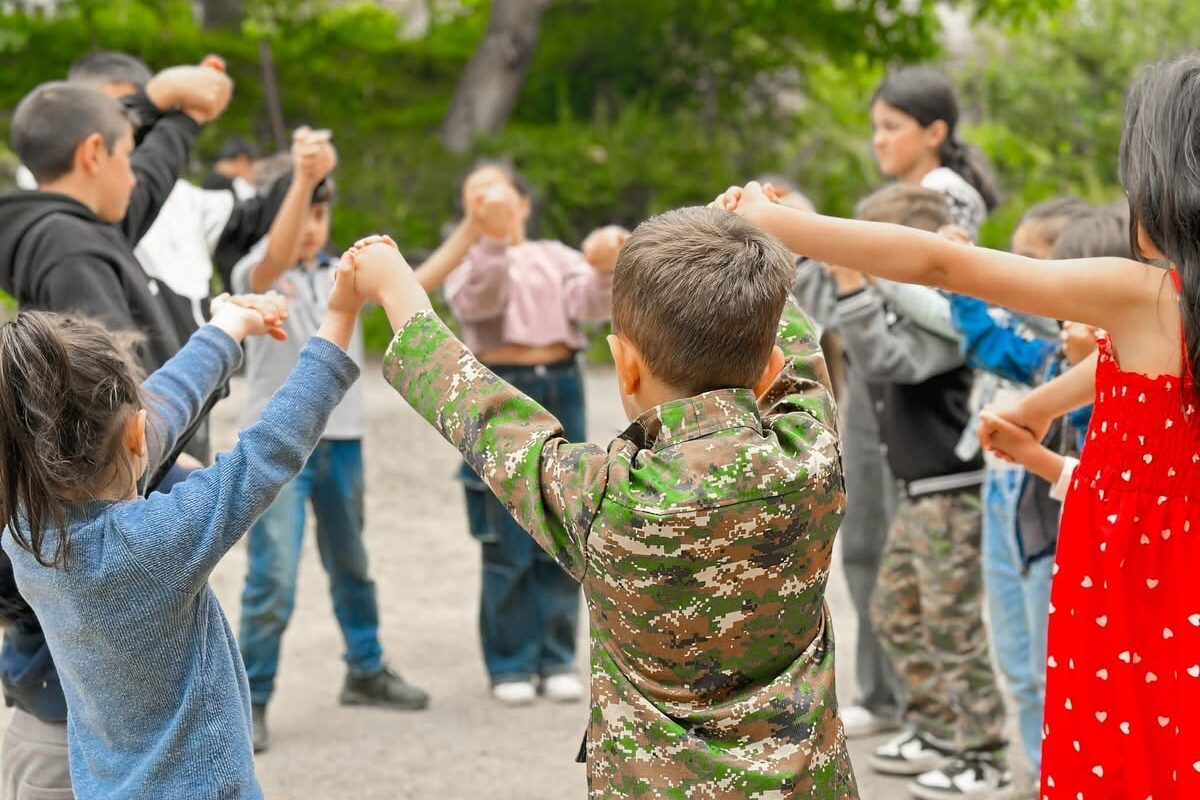
And regarding the children, I would say that I continue to carry out various educational and art programs with displaced children, including puppet making, handicrafts and more. Children are the most vulnerable, because in their memory, home has remained as an unfinished fairy tale. There is fear in their eyes, deeper than any words. Their main problem is the loss of psychological calm and the sense of security. These programs help them not only overcome their inner anxieties, but also contribute to the preservation of the Artsakh dialect. For example, in our Gyumri group, children translate well-known fairy tales into the Artsakh dialect, then make puppets of the characters and stage performances.
We need long-term platforms, educational, artistic and therapeutic programs that will allow children to express their anxieties through drawing, music and words. We must help them rebuild their inner world. Culture is the only medicine that can heal this spiritual wound of displacement, and within the framework of Hamazkayin we are trying to be precisely that bridge.
Sargsyan: Finally, what would you like readers to carry with them after finishing this book?
Avagyan: I would like the reader, after closing this book, to be left not with pity or despair, but with an inner, deep silence. Because “Letters from Paradise, Where No One Is” is a reminder that even when the world is falling apart, when you lose your earthly paradise, there remains within you a space that no one can take away. It is the ability to love, to feel and to share in the suffering of another person.
I want the reader to remain with the awareness that we are not alone in our suffering. Wherever we are, whether in Yerevan, Stepanakert, or Paris, the human soul suffers in the same way and seeks salvation in the same way. I would like people, after reading this book, to be more careful with words, more attentive to the silence of others, and to believe that even in the most empty paradise, if there is someone you can write a letter to, then life is still winning, nothing is permanently over, and farewells are the beginnings of new encounters.
Culture is the only medicine that can heal this spiritual wound of displacement, and within the framework of Hamazkayin we are trying to be precisely that bridge.
And finally, I want to thank Ulysse for being an echo of my voice at a time when I felt the world had no capacity to listen. He showed me that language and distance mean nothing if two people are searching for the same lost light. I am grateful that he believed in my letters and opened a door within himself, allowing our meeting beyond all earthly borders. And I realized that even a lost paradise, where no one remains, can be inhabited again if there is at least one person willing to share your solitude.