



The Armenian American community during World War II: Patriotism amid anxieties

Editor’s note: This article appeared in the Armenian Weekly’s March 2026 special magazine issue, “America at 250: An Armenian American Retrospective,” guest edited by former Weekly editor Dr. Khatchig Mouradian and dedicated to the 250th anniversary of Declaration of Independence and the history of Armenian American life.
World War II profoundly impacted American society as millions of young people from all backgrounds either enlisted in the U.S. armed forces or were drafted to fight America’s enemies. A great patriotic wave swept through the country, and this sentiment similarly impacted the small Armenian American community at the time (numbering about 200,000), of which about 18,000 were to serve in the military. Young men (and some young women) from this community were eager to demonstrate their patriotism toward the United States by serving in the armed forces and perhaps to erase the “foreigner” stigma that was sometimes directed at them as well as other young ethnics, like Italian Americans, even though most of them were born in the United States.
The famous Armenian American writer, William Saroyan, wrote about such prejudice growing up in Fresno, California, and one of his most difficult but moving short stories was indeed titled “The Foreigner,” written in 1948, though he toyed with the idea of naming it “The Veterans of Foreign Wars,” as he depicted the shared experiences of his classmates of different ethnic backgrounds, nearly all of whom were World War II veterans.
While, on the one hand, the Armenian American soldier in World War II was no different than other ethnic American soldiers, he differed from them because of his family’s background, as his parents were mostly survivors of the Armenian Genocide during World War I who had generally come to the United States from 1918 to 1924, at which time discriminatory immigration laws were passed by Congress to severely limit newcomers from Southern and Eastern Europe and the Middle East.
The survivors, who barely escaped with their lives and witnessed unspeakable horrors, tried to shield their American-born children as much as they could. Nonetheless, their children would sometimes see their parents in deeply depressive states or would witness them waking up from terrible nightmares. It was not surprising that the survivor generation viewed America’s entry into World War II with great trepidation. Varujan Karentz from Providence, Rhode Island, wrote: “It was traumatic for many [parents] to fathom this new crisis after having lived through their own war experiences which had devastated their lives.” A story that was passed down to me from an older relative was that there was an Armenian on the draft board of Watertown, Massachusetts, and this official caught “holy hell” from Armenian mothers whose sons had just received their induction notices.

Other relatives told me that the act of leaving home for these young soldiers was a traumatic event. Haig Tashjian of Springfield, Massachusetts, who became a highly decorated navigator on bombers flying numerous and dangerous missions over Germany, broke down in tears remembering his mother (a genocide survivor) chasing after his troop train as it was leaving the station. And this author’s aunt, Helen Baronian, a teenager at the time, wrote in an April 1943 letter that her social life consisted of going to movies and attending “farewell parties” for Armenian American boys going into the military. She added: “I don’t think I could stand another one [of these farewell parties]. They are so sad when everyone [in our age group] should be enjoying himself.”
Nevertheless, Armenian parents understood that America had given them safe haven and opportunities, and most did their best to keep their emotions in check. One veteran, Haig Boghosian of Fresno, stated: “My parents were heartbroken about my receiving my induction notice, but they were patriotic and knew I had to go, so they held up well.”
Although their numbers were small compared to the total number of Americans serving in war (some 16 million overall), Armenian American soldiers, marines and sailors seemed to be present in nearly every major battle in North Africa, Europe and the Pacific where they distinguished themselves in the fighting. One of the most highly decorated Marines in the war was Victor Maghakian of Fresno who fought in many island battles in the Pacific theater, while Ernest Dervishian of Richmond, Virginia won the Congressional Medal of Honor for his combat exploits in the Italian campaign. Interestingly, as a sign of how the war was a great equalizer, The New York Times Sunday Magazine of June 1945 displayed a photo on its front page of a short and stocky fellow named Harry Kizirian of Providence in his battle fatigues as the typical tough Marine fighting in the battle of Okinawa. Kizirian would earn the Navy Cross for his heroism in that long and deadly battle.
Interestingly, Armenian American GIs were always on the lookout for other Armenians while in the service. And when they found one another, it was a great event. In one encounter, there were 10 Armenians (nine from the U.S. Army and one from the Canadian Army) at a camp in Italy. In describing this encounter, Pvt. Berj Hoogasian wrote the following to the Hairenik Weekly which not only reflected the camaraderie among Armenian-American soldiers but their sense of patriotism:
“One by one the boys were shipped out to new assignments. In fact, even before we had a chance to include them in the picture we had taken…We are resolved that although our numbers may be few, our patriotism and courage will be high and that our families and our country will be proud of our achievements.”
Although there were strict military rules about officers not fraternizing with enlisted personnel, such rules were often flouted when one encountered a fellow Armenian soldier of a different rank. Mary Harootian Ashjian of Worcester, Massachusetts, who was an Army secretary assigned to the Intelligence Division of Gen. Omar Bradley’s staff, recalled the following: “No one can appreciate the closeness/kinship which any Armenian American GI felt when another Armenian-American GI appeared.” While in England, many Armenian American service men and women would meet each other at the Armenian Church in London where the parishioners would often invite them to their homes for dinner.
Amusingly, what these Armenian American GIs seemed to miss most of all was Armenian food, especially after the “rotten chow,” as they put it, they had to eat while in the service. Letters from these soldiers to the Hairenik Weekly and the Armenian Mirror-Spectator were often about food. U.S. Army nurse Ruth Paboojian noted that when she came across wounded Armenian-American soldiers, the first words out of their mouths were: “Inch Besses” (how are you?) and the second set of words were about Armenian food. Those Armenian-American GIs who were lucky enough to pass through San Francisco enjoyed a free Armenian meal at George Mardikian’s famous restaurant, Omar Khayyam, where their palates were satisfied.
“We are resolved that although our numbers may be few, our patriotism and courage will be high and that our families and our country will be proud of our achievements.”
In addition to encounters among themselves, Armenian American soldiers, because of the worldwide nature of the war, were flung to different parts of the globe where they encountered parts of the Armenian diaspora. The lucky ones were those sent to India where they were wined and dined by wealthy Armenian merchants. Other soldiers encountered Armenians in destitute conditions, however. During the liberation of France, many Armenian-American soldiers encountered French Armenians who barely had enough food to eat. Although these French Armenians would invite the soldiers into their homes for a meal, more often than not, it would be the Armenian American GI who would give them his food rations. While in France, many Armenian American soldiers also took the opportunity to visit relatives in Marseille and in other French cities, recementing family links that had been broken by the genocide.
Moving with their units into Germany and Austria toward the end of the war, many American soldiers participated in the liberation of the concentration camps which made them aware of the full scope of the Holocaust. But for the Armenian American soldier, seeing this death and destruction and the emaciated bodies of the survivors, also made them much more conscious of what their own parents must have gone through a generation earlier. Pvt. Walter Basmajian of Messina, New York wrote the following letter, dated April 19, 1945:
“I wouldn’t believe this [the stories of utmost cruelty] had I not seen all of this and more. I wouldn’t believe that such people could live upon the earth if I hadn’t seen the bodies along the roadsides and the ones found in the concentration camps. I couldn’t tell you about this before but now it will be revealed to the world and it will shock everyone. These [Nazi SS men] aren’t people. They are monsters and I guess I can’t write about this and tell it decently, because it isn’t a decent thing to tell. You have never seen such hellholes of torture, bodies tortured and destroyed beyond recognition. I keep remembering that this was what the Turks did to the Armenians, only the Armenians never had a chance to let the world know; actually nobody cared or probably wouldn’t believe them. Now I know, because I have seen this. [emphasis added]”
At the end of the war, some Armenian American soldiers also came across Armenian slave laborers from the Soviet Union who had been brought to Germany and Austria to work in the factories. One of these soldiers was Ralph Talanian from Dorchester (Boston), Massachusetts who was assigned to a joint American-Soviet unit to process through these liberated laborers. A Russian colonel, noticing Talanian’s last name, asked him for help with a group of several hundred Armenians “whom he couldn’t talk to.” Only 20 years old at the time, Talanian surprised this group by speaking to them in Armenian and asking what they needed. After telling him they didn’t have enough food, Talanian befriended a sympathetic Russian sergeant who told him that the Soviets were hoarding Red Cross supplies in a nearby warehouse. The two got a hold of a truck, loaded it with food from the warehouse, and then Talanian distributed it to these destitute people.
“I keep remembering that this was what the Turks did to the Armenians, only the Armenians never had a chance to let the world know…. Now I know, because I have seen this.”
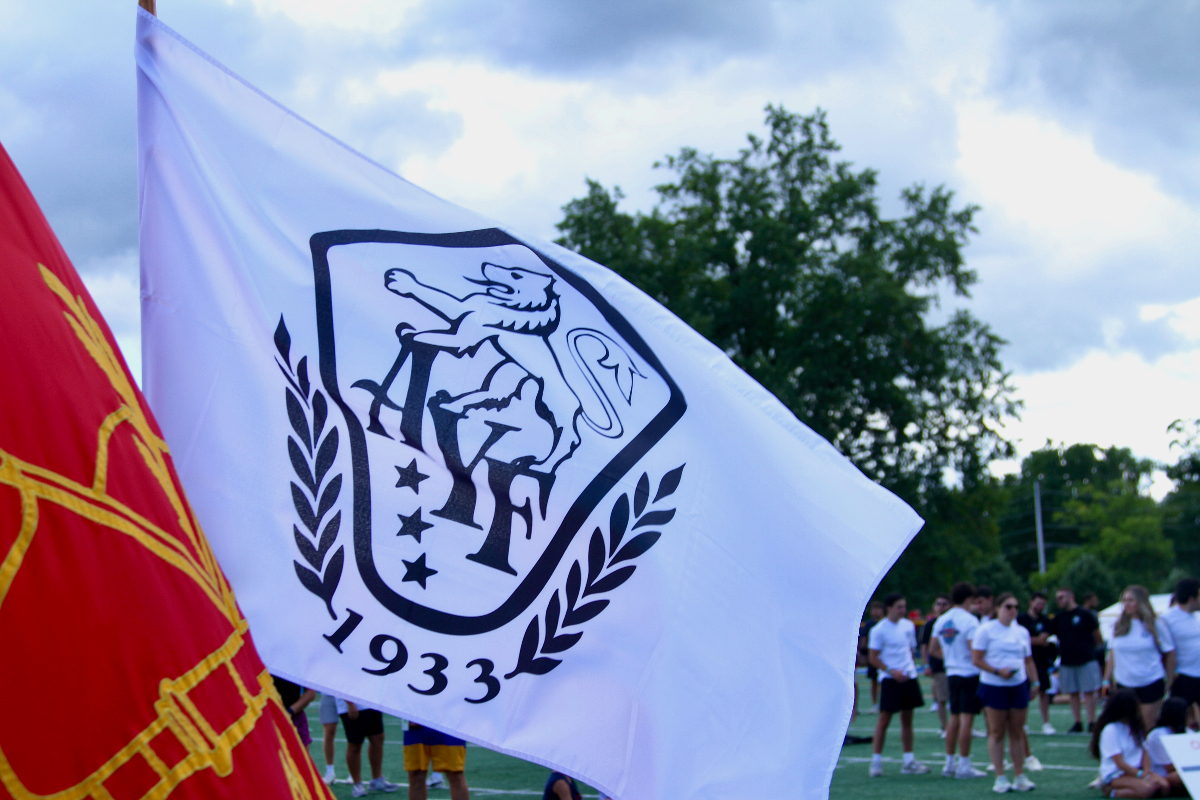
On the home front, Armenian American young women played an important role in comforting their parents through the anxieties of the war years and became the interpreters of letters from their brothers and parents because the latter were often not fluent enough in English to compose a letter on their own, and the former, while conversant in Armenian, usually could not read and write in the ancestral language. These young women also wound up running the chapters of the Armenian youth organizations like the Armenian Youth Federation (AYF) because so many young men were in the service. When the young men returned home, they found, much to their surprise (and reflecting the patriarchal attitudes of the time) that their chapters were much better run than before the war! In addition, young Armenian American women were also at the forefront of buying war bonds within the community, and the AYF proudly raised enough money to fund the building of a Mitchell bomber.
As Karentz noted, when Armenian American soldiers returned home, they “came back confident, feeling more American because of their experiences…A swelling of new nationalistic American pride encompassed the community.” The wartime experiences made these veterans more American and more Armenian at the same time. Concerning the latter, they came to appreciate Armenian hospitality they encountered during the war years and the responsibilities of caring for Armenians in need. Although many were happy to escape their insular neighborhoods, while in the service they found they missed the kinship they had with fellow Armenians and thus relished such encounters. And on a socio-economic level, many of these young veterans took advantage of the GI Bill (allowing veterans to go to college virtually tuition free) that helped them move into the middle class from their humble upbringings. Not surprisingly, therefore, that this World War II generation, being more comfortable in their own skin after the war, went on to hold leadership positions in the Armenian American community in the 1970s when Armenian-American lobbying efforts to seek justice for their people were rekindled.
Note: Much of this article was borrowed from the author’s earlier work, “World War II as an Enhancer of Armenian American Second Generation Identity,” Journal of the Society for Armenian Studies, December 2009, pp. 33-54.


Very nice articel Greg. You have always been interested in this topic of Armenian-Americans in WW2. Jimmy Tashjian first reported and wrote on this subject. You have taken the torch and and taken it to new levels. Bravo.
Thanks, Mark, for your kind words.