



The griddle, the counter and the everlasting spirit of Aram Postaljian
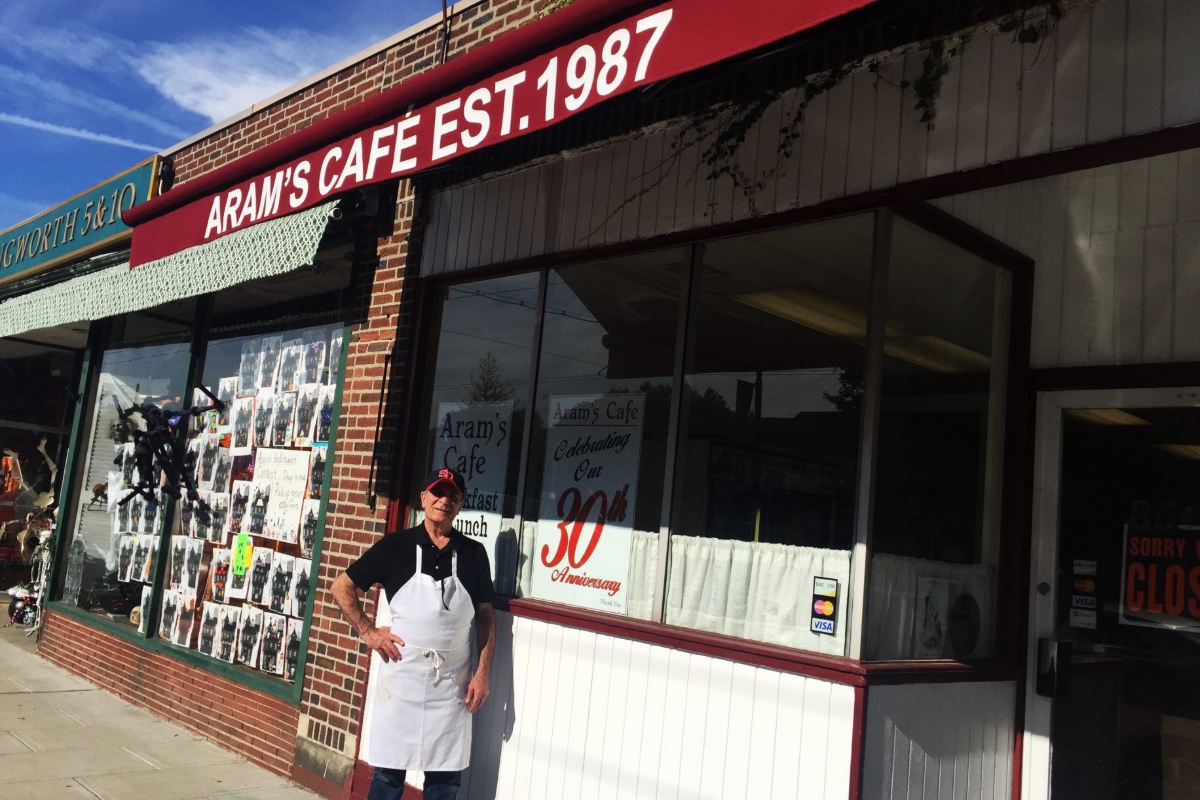
When I moved to Watertown to work at the Armenian Weekly, I quickly mapped out my breakfast loyalties. I was a faithful regular at the Deluxe Town Diner (where I would eventually propose to my wife, Araz) as well as Uncommon Grounds and the Watertown Diner. But then I noticed a small spot just over the town line on Trapelo Road in Belmont: Aram’s Café.
It wasn’t just that he opened earlier than anyone else, when the rest of the world was still groggily rubbing its eyes. It was that name. That unapologetically Armenian name painted on the sign pulled me right through the front door. I didn’t necessarily switch allegiances, but Aram’s instantly earned a permanent spot on my roster.
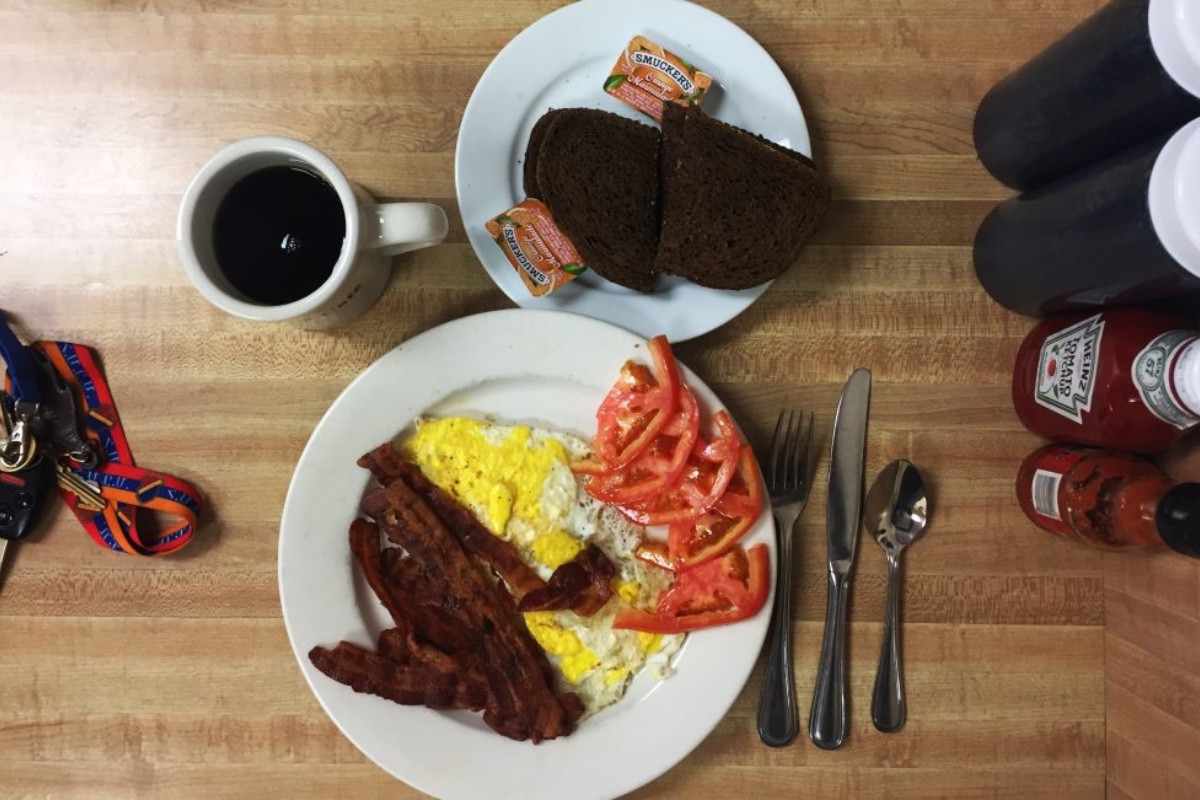
My dad has always had an innate talent for befriending people of his parents’ generation, and as the old adage goes, the apple doesn’t fall far from the tree. It didn’t take long for Aram and me to strike up a friendship across the counter. Within a few visits, he knew my exact order by heart: three eggs over hard, crispy bacon, tomato slices, rye toast (toasted dry), and piping hot black coffee that was perpetually topped off — served in an Aram’s Café mug, of course. And then there was the newspaper. Being a newspaper man (first as assistant editor, then editor of the Weekly), Aram would always present me with a copy of the morning paper when I sat down. Now, to be entirely honest, it was usually the ”wrong” Boston daily (i.e., not the one I typically read), but I never had the heart to “correct” him. The ink on the pages didn’t matter; what mattered was the unspoken, instinctual care behind the gesture. He knew who I was, he knew what I did, and he wanted to look out for me.
That was Aram. He looked out for every one of his customers.
When I started bringing Araz to the café back when we were dating, Aram immediately took up the role of the encouraging elder. He’d stand behind the griddle, spatula in hand, pulling my leg and telling me in front of her not to waste time, that I’d better lock this down. Then, the moment I walked away to use the restroom, he’d lean over to Araz and tell her the exact same thing — how lucky she was, and what a good guy I was. When we finally got engaged, you would have thought he was a member of our own family by how genuinely thrilled he was.

Aram was a man defined by pride: pride in his family, pride in his work, and an unshakable pride in his heritage. The walls of his small café were lined with maps of Armenia, posters and community memorabilia. In the fall of 2017, I went with my friend Shamiram Barooshian when she profiled Aram for the Weekly — I took the photographs that accompanied her piece. Later, I took the finished center spread of the newspaper, framed it and brought it to him at the griddle. I will never forget his reaction when he unwrapped it. His eyes welled up with tears. He didn’t make a grand speech (Aram was never one for theatricality), but his emotion was palpable. He proudly hung that framed article right up on the wall alongside his maps of the homeland. It belonged there. He belonged there.
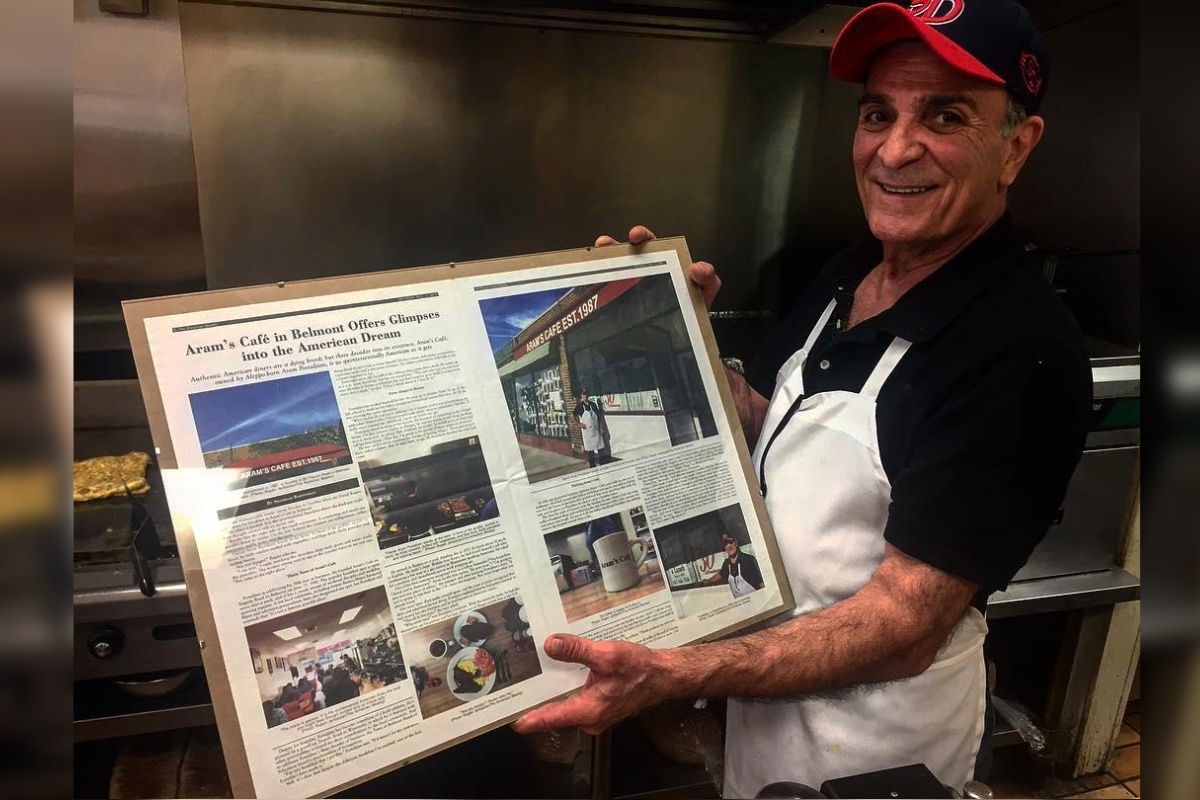
Aram was a man defined by pride: pride in his family, pride in his work, and an unshakable pride in his heritage.
Over the years, Aram’s became a go-to. I dragged out-of-town guests, friends, cousins and my parents there. I had regular breakfasts at one specific table with a former Weekly editor who taught me so much about journalism and life simply through osmosis.
Aram’s work ethic was the stuff of legend. As Shamiram so beautifully captured in her feature, he would casually mention that his workday started at 2 a.m. — a time when some people were still getting ready for bed. He did it all himself, seven days a week, and he never complained. Not once. He had a work ethic forged in the fire of a tough youth. Growing up in Aleppo, Syria, he left school at age 12 to work in his father’s tire retreading shop, running the entire operation by 16. He told Shamiram and me that day, on scorching summer nights in Aleppo, he and his family would sleep on the roof to stay cool, and Aram would point up at the airplanes flying overhead, telling his four sisters, “One day, I’m going to be on one of those planes to America.”
When he finally landed in Boston in 1977, speaking barely 10 words of English, he didn’t waste a second. Within four hours of arriving, he overheard men speaking Armenian at a Watertown gas station, asked for a job and immediately started pumping gas. “Why waste time?” was his life’s motto. In just five years, he had learned the language, built a business, married his beloved Araxi, brought his parents and four sisters over from Syria and became a U.S. citizen.
A little after moving to Armenia, I received a devastating call from my father-in-law. Seventy-five gallons of fuel were pumped down an uncapped basement pipe by a driver at the wrong address. An accidental heating oil delivery error had contaminated Aram’s Café. Just like that, 35 years of relentless hard work, sweat, early mornings and community building were erased in three minutes. Aram was 72 at the time and had just put the café on the market, hoping to finally sell his life’s work and enjoy a long-overdue retirement.
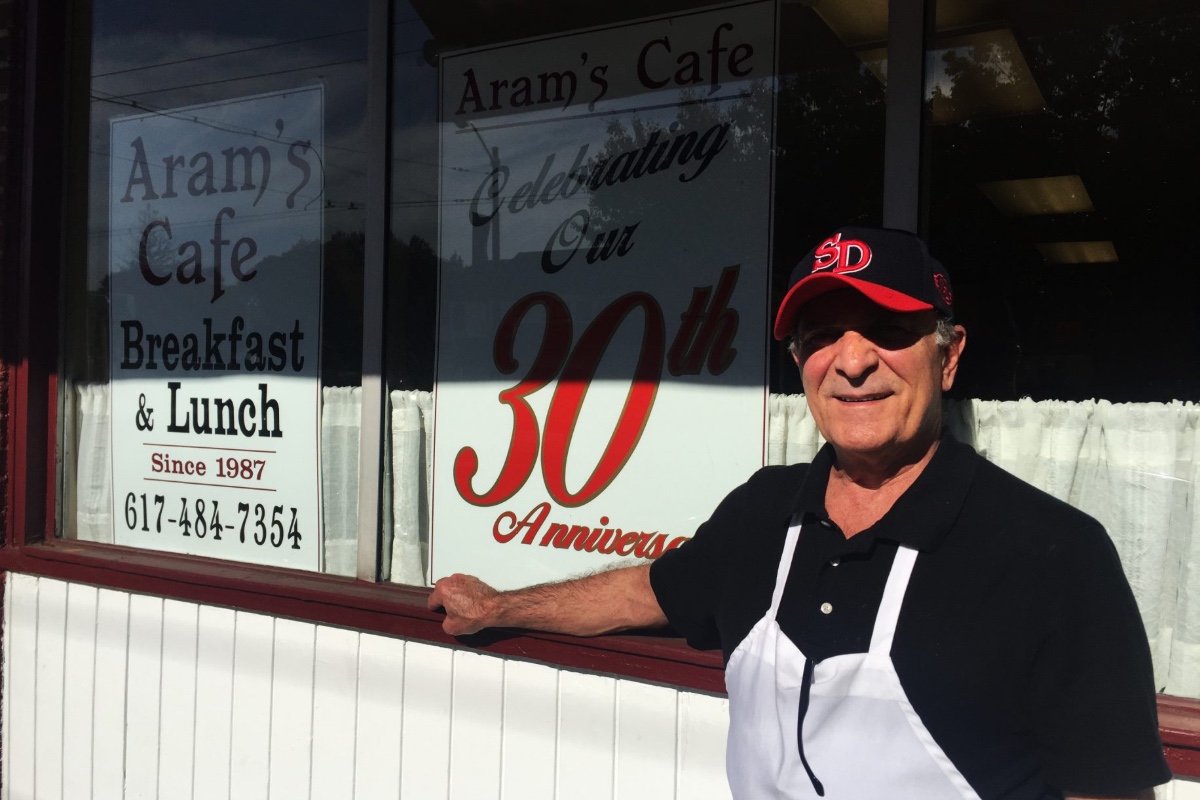
Instead, he was forced to sign off with a heavy heart and two handwritten posters taped to his storefront window. The first was a biting, sarcastic “thank you” to the oil company for destroying 3 ½ decades of hard work in three minutes. But right beside it hung a second poster — this one deeply genuine — thanking his customers for their years of unwavering support. Side by side, those two signs captured Aram completely. Even in the face of absolute heartbreak and righteous anger over how it all ended, his genuine gratitude for the community he served never wavered for a second.
Life can be agonizingly, infuriatingly unfair. Watching a man who gave so much of his soul to his community get robbed of his proper victory lap was a bitter pill to swallow from across the ocean. Then came the news of his courageous battle with Parkinson’s — that relentless, unforgiving disease. It felt cruel that a body that had moved with such purpose behind a griddle for decades was being undermined. Aram passed away peacefully at home in Florida on July 31, 2026, surrounded by his family.
On Sept. 19, family, regulars and community members will gather at the Armenian Memorial Church in Watertown for his Celebration of Life. True to Aram’s spirit, his family has asked guests to wear colorful attire rather than dark mourning clothes. It is a fitting instruction for a man whose life was defined by warmth, jokes and a refusal to let hard work dull his joy.
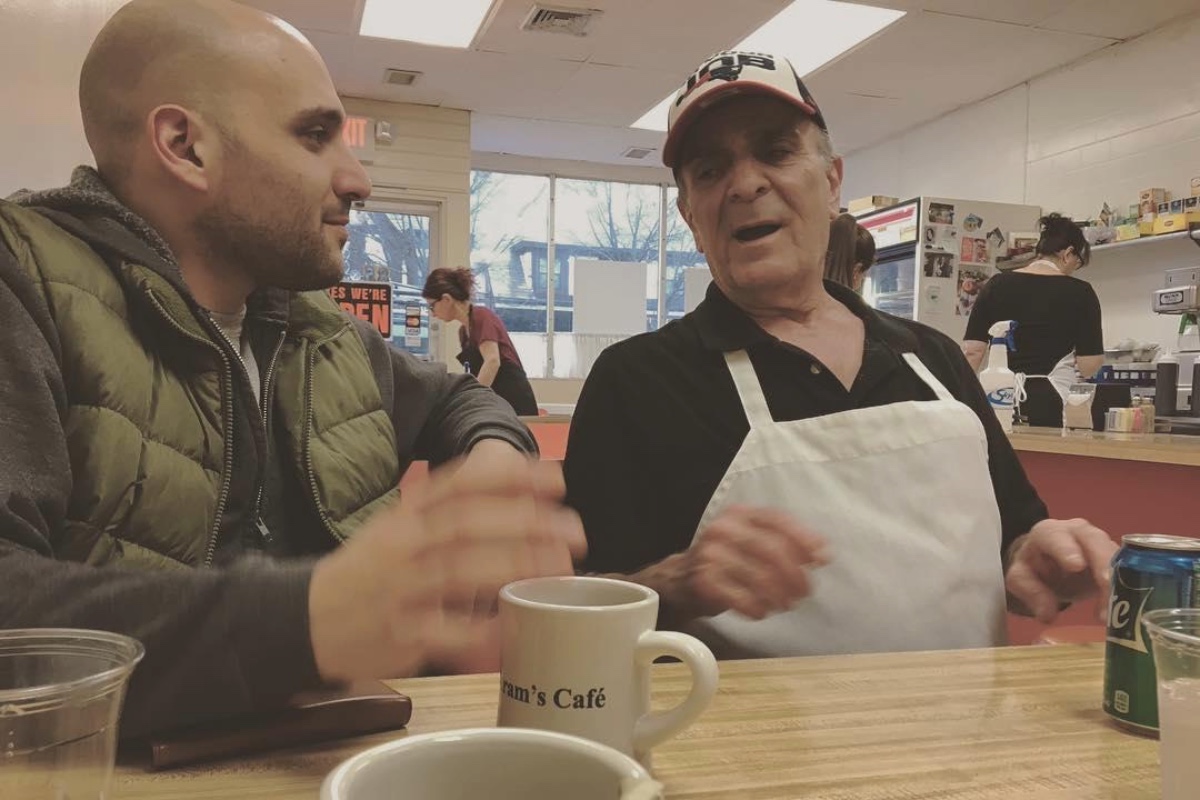
Aram touched my life far more deeply than he ever could have known. He gave me a home away from home when I was trying to find my footing in a new town. He gave me advice, a bottomless cup of coffee and a seat at a counter where everyone — no matter their background — was treated like family. He lived the quintessential Armenian American story not through grand, self-serving speeches, but through thousands of dark early mornings, a hot griddle and a heart big enough to hold an entire community.
Rest in peace, yeghpayr Aram. Your coffee pot will always be full, and the void behind that griddle will be deeply felt by us all.
***
In lieu of flowers, memorial donations may be made in Aram’s memory to the Armenian Memorial Church, 32 Bigelow Ave., Watertown, MA 02472, or VITAS Hospice Healthcare, 4980 N. Tamiami Trail, Suite 102, Naples, FL 34103, by mail, or by clicking here.


Aram’s Cafe was the first stop I would make when I landed in Boston after getting off the red-eye plane trip from Los Angeles during my twice a year visit to see my two children who were attending college there.
As Rupen so well describes, Adam would be standing by his grill making breakfast for his regular customers with a smile on his face and holding conversations with his customers.
Aran is a shining example of a wonderful man who always remembered to be kind to others and take an active interest in the life of his customers.
Adam, Rest in Peace!!
Dear Friends,
I am in shock as I read this article. Aram was a wonderful man, and enjoyed my son’s family while he attended Tufts University. When Michele and I came to visit we always headed to Aram’s. Thank you for teaching us how to be civil to one another. You will be missed my brother. Love to all your families.
Peter and Michele Mnatzakanian
New Bern, NC