


Day 1
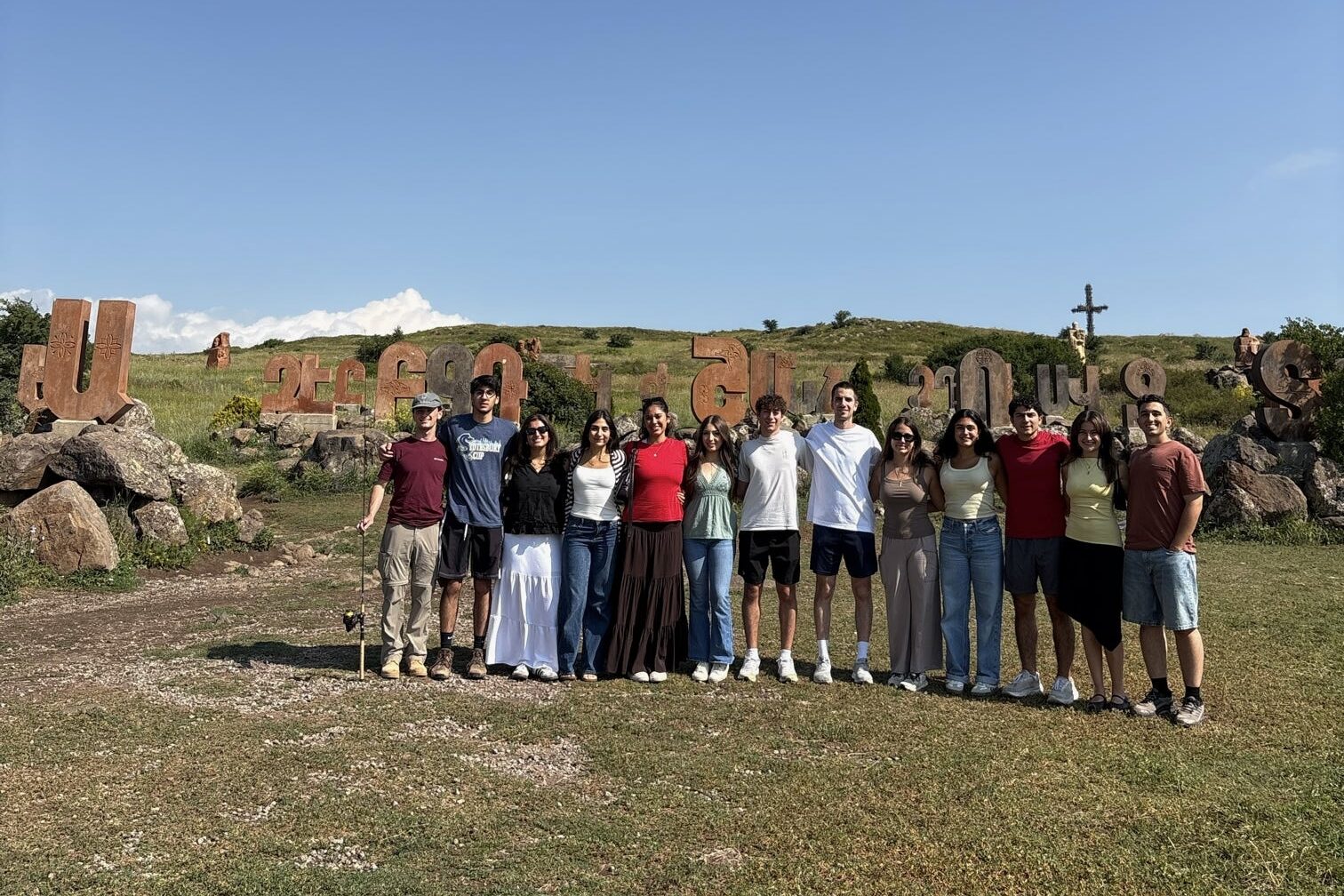
Our first overnight trip of the 2026 AYF Internship was to Syunik, the southernmost province of Armenia. We did not have many expectations for the trip beyond seeing mountains and visiting monasteries, but it turned out to be our favorite experience of the internship so far.
We woke up bright and early to get on the bus by 8 a.m., where we met our wonderful tour guide, Armen, and driver, Ashod. We drove to Khor Virap near the Turkish border, where Armen described how the border works as we viewed the majestic sight of Mount Ararat. It was amazing to see how close we are geographically to the iconic mountain, which is so intertwined with our culture and identity, but how inaccessible it is. It is a constant reminder of how much we still need to achieve as a people, and also a reminder of our ancestors looking over us. We then went to Noravank, where we climbed up above the monastery to get a better view of the huge valley between the mountains where we were standing. The feeling we got being there was unforgettable, as we watched dark clouds come over the sky and rain begin as we walked up into the hills above Noravank.
Then, we drove to Areni Cave, where we saw ancient winemaking tools and pots, and of course the place where the first leather shoe was found. We passed by so many tour groups, listening in on the amazing aspects of the site, such as likely being the first place where wine was made. Lunch was then served at Lchak Restaurant in Yeghegnadzor, where we all sat on an outside patio right on a lake and got to know our guide and driver better.
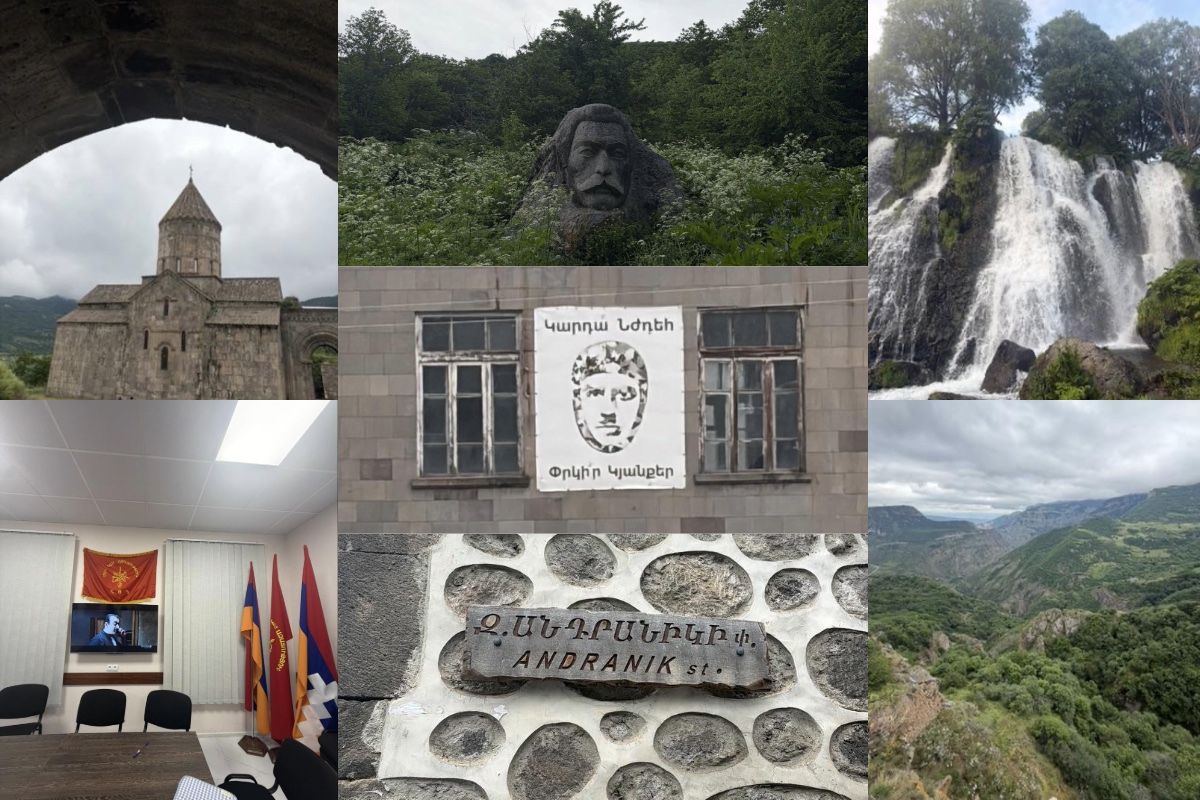
We ended the day at the iconic springs of Jermuk, where we all had to bundle up as the sun was going down and we climbed farther into the mountains. We walked along a beautiful trail, where statues of fedayis and iconic Armenian figures, from Antranik to Charles Aznavour, stood and greeted us every so often. We felt such appreciation for these monuments created in honor of Armenian figures that we had only seen in photos and AYF chapter logos. We then tried the famous Jermuk water, which vaguely tasted like blood because of the high iron content, but felt healing just like the clean and refreshing Jermuk air. We also visited the Jermuk waterfall, known as Mermaid’s Hair («Ջրահարսի մազեր») because of its rushing white water.
The highlight of the day was the sunset, a bright pinkish-orange that reminded the interns of the yerakouyn. We could not take our eyes off the sunset falling behind the mountains.

Our last stop of the night was Goris, where we met ARF Ungers and saw how the ARF and AYF are growing in the town as they consider the establishment of their own youth chapter. Seeing the organization in action in the homeland was beautiful to see, as we felt welcomed in their agoump just as we are in our hometowns.
Although we had a long day, the time with our Ungers woke us up as we went to the hotel and talked with them for hours, even being able to celebrate Maral’s birthday at midnight. Some ladies next to us gave her a whole brownie cake with candles to blow out.
Day 2
Our second day of this overnight trip began with a traditional Armenian buffet-style breakfast. Lavash, tel banir, assorted fruits, soorj and more blanketed the table. Ellie decided to go on a walk during breakfast, feeling at home as she saw streets and murals of fedayis. As tired as we were from the night before, there was a long day ahead of us, so after a grocery run, we were off on our way.
Our first stop took us about a half-hour drive east of Goris to the old village of Khndzoresk, situated along a deep gorge. Khndzoresk is well-known for its role in the 18th-century defense of Syunik against Ottomans and Safavid Persians, and located here is the resting place of Mkhitar Sparapet, the successor of military commander Davit Bek. Most of the drive was along winding paths of dirt and mud, drenched from the early morning rain.
Our tour took us to the opposite side of the gorge via a swinging metal bridge, one that rocked and waved with each little movement. Still motion-sick from the road, Alek clutched both rails of the bridge dearly and shuffled cautiously across the chasm. As terrifying as it was to look down at the drop, we all could not help but recognize and respect the beauty of the land our ancestors fought so hard over. The tomb of Mkhitar Sparapet reinforced these reflections by thinking about how he fought for this land and never parted from it after his death.
After a quick ice cream break, we headed toward our biggest and most significant sight of the day: Tatev Monastery. To cross the Vorotan Gorge, we took the 12-minute ride on the Wings of Tatev, a 3.5-mile cableway connecting the village of Halidzor to the monastery. The aerial tramway, funded by businessman, philanthropist and later state minister of the Republic of Artsakh Ruben Vardanyan, had signs calling for his release after his illegal imprisonment and 20-year sentence in Baku. One interesting piece of history that lies at Tatev Monastery is the former office of Njdeh during his time as prime minister of the Republic of Mountainous Armenia in 1921. His office was the smallest of all rooms, isolated from the main entrance and strategically placed near a quick escape route through the hill below.
Lunch on our return from the monastery near the Wings of Tatev refueled us for the rest of the trip, including Karahunj and Shaki Waterfall. The views on our return were some of the best of the internship, filled with unforgettable fields of purple flowers and rolling hills. We often played “The Sound of Music” soundtrack because of the picturesque landscape that we were surrounded by at all times. Walking through these sites and fields was the calm we needed after long weeks in Yerevan, constantly surrounded by the buzz of the big city and a full apartment.
Beyond all the history and views we saw in Syunik, we were reminded of the resilience of its people despite all the modern politics that have sought to challenge and break their resolve. Throughout the weekend, we came to realize more and more why people have so easily given up their lives for Haiastan: its beauty and strength, which have laid the foundation of Armenian identity physically, mentally and emotionally. The land and lives we have lost must only make us more determined to keep the sweet land we call home.