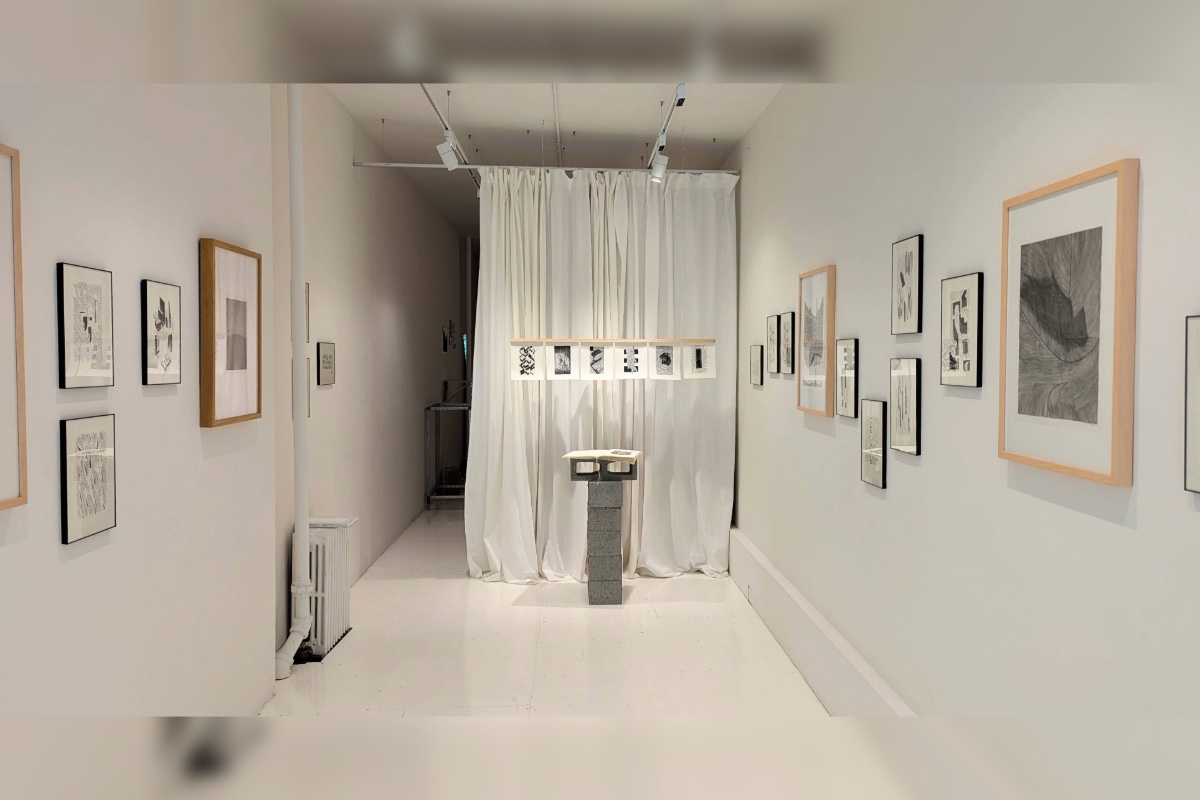
Last month, Gray Matters presented an exhibition of Anahit Hayrapetyan’s work entitled “I Remember It Differently” at Studio 9BC in New York City.
Hayrapetyan is a Brooklyn-based architect and artist. Born in Armenia, she has lived and worked around the world, including in Germany and China.
Curated by Merica May Jensen of Gray Matters, the exhibition explores “placement and displacement, biography and geography, loss and growth,” according to the exhibition text by Thomas de Monchaux.
Hayrapetyan tells The Armenian Weekly, “These drawings function as a deeply personal diary. Where some people write, I draw.”
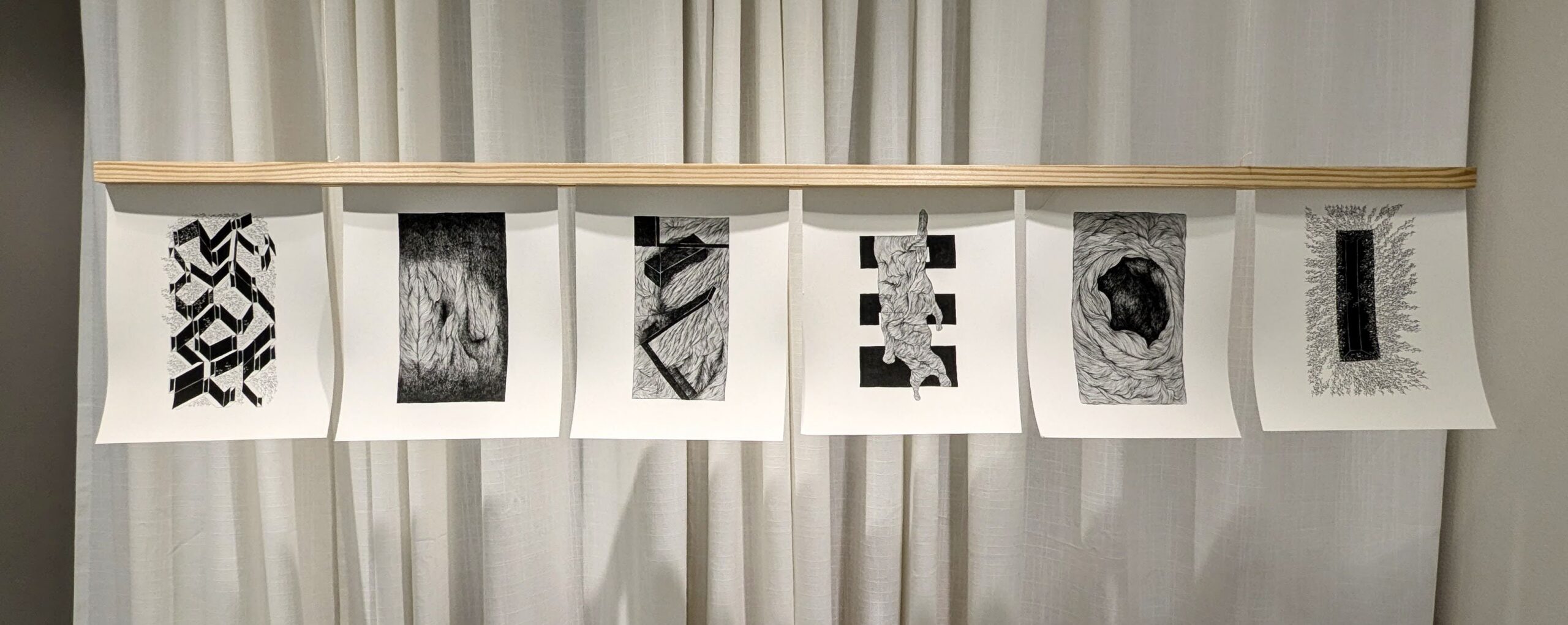
The small, bright gallery provides a crisp space to highlight the intricate details of Hayrapetyan’s art. She creates complex and interpretive work out of the simple materials of ink and paper. Her delicate linework is both precise and fluid, contrasting rigid structure with light flora and airy movement. In exploring memory, Hayrapetyan delves into the depths of time and space, and how they can be depicted physically, mentally and emotionally.
“The work represents frames of memories, events and feelings I’ve experienced over the years, as well as scenarios I’ve imagined,” Hayrapetyan says. “Memory is rarely a perfect, objective record; it naturally fragments and changes over time. Instead of trying to capture an entire environment, I isolate small fragments of a remembered space. The title is a nod to the idea that how we reconstruct a place or a feeling is entirely unique to each of us — shaped by displacement, time and imagination.”
With a background in architecture, it is no surprise that many of Hayrapetyan’s pieces depict both the natural and built environment and the relationship between them.
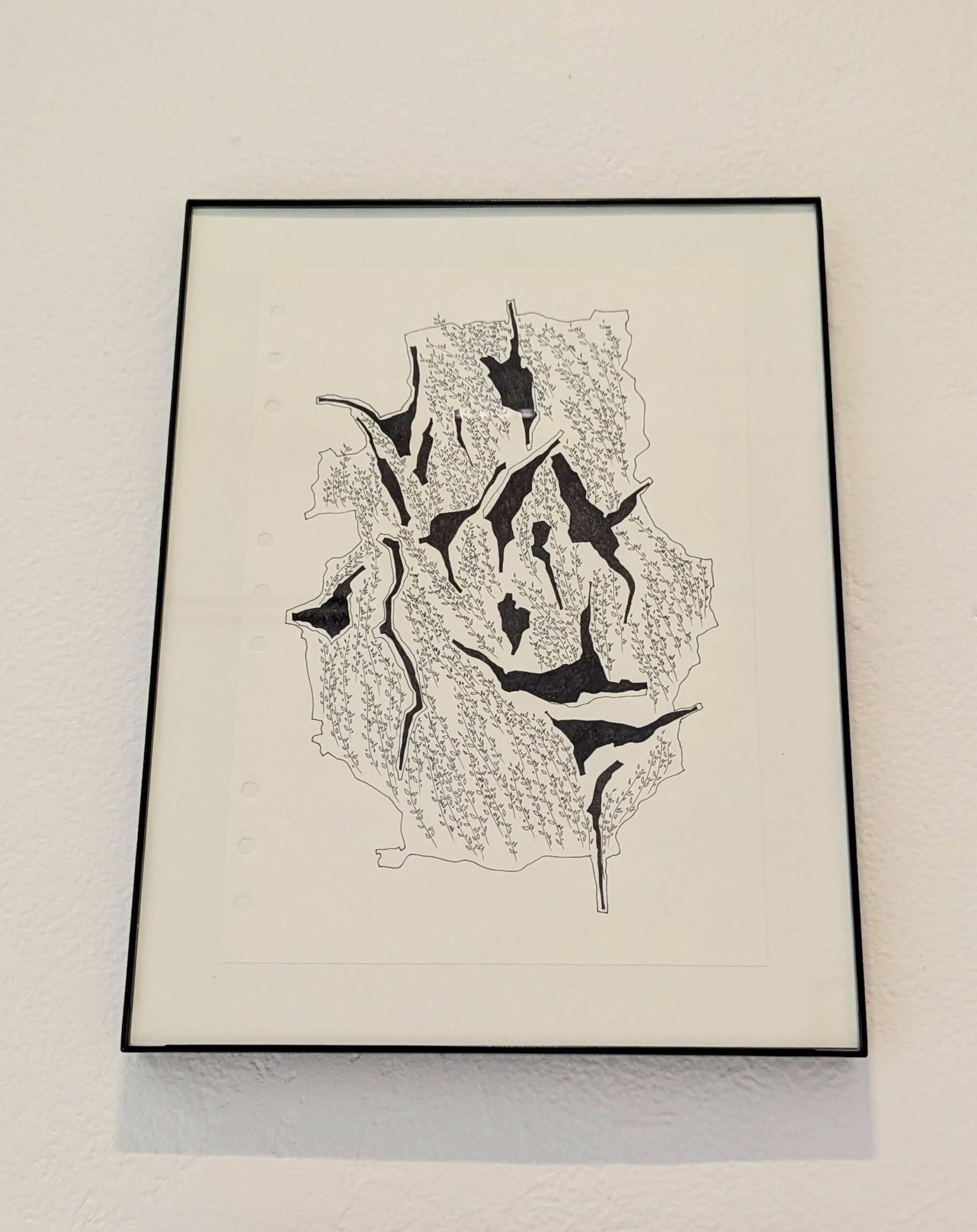
Pieces like “Border,” “Village” and “Inner Spots” have a map-like specificity and technical mastery that make the viewer wonder if they serve to record real places that Hayrapetyan once knew or if they are purely fictional.
“Where some people write, I draw.”
“It is a mix of both,” Hayrapetyan says. “Some of these places are real, some are completely imagined, and many are a blend of the two. My work is deeply nostalgic and has a strong connection to Armenia and its landscape. That connection roots back to my father, who has a profound relationship with nature. He taught me from a very young age to love our mountains and landscapes, and that early immersion shaped how I view space.
“In fact, I’ve dedicated the books presented at the exhibition to him and to this very notion. The exercise of drawing these spaces isn’t about literal documentation. Instead, it’s about how those real landscapes of my youth combine with memory and imagination over time — especially when you are far from home, rebuilding those familiar environments piece by piece.”
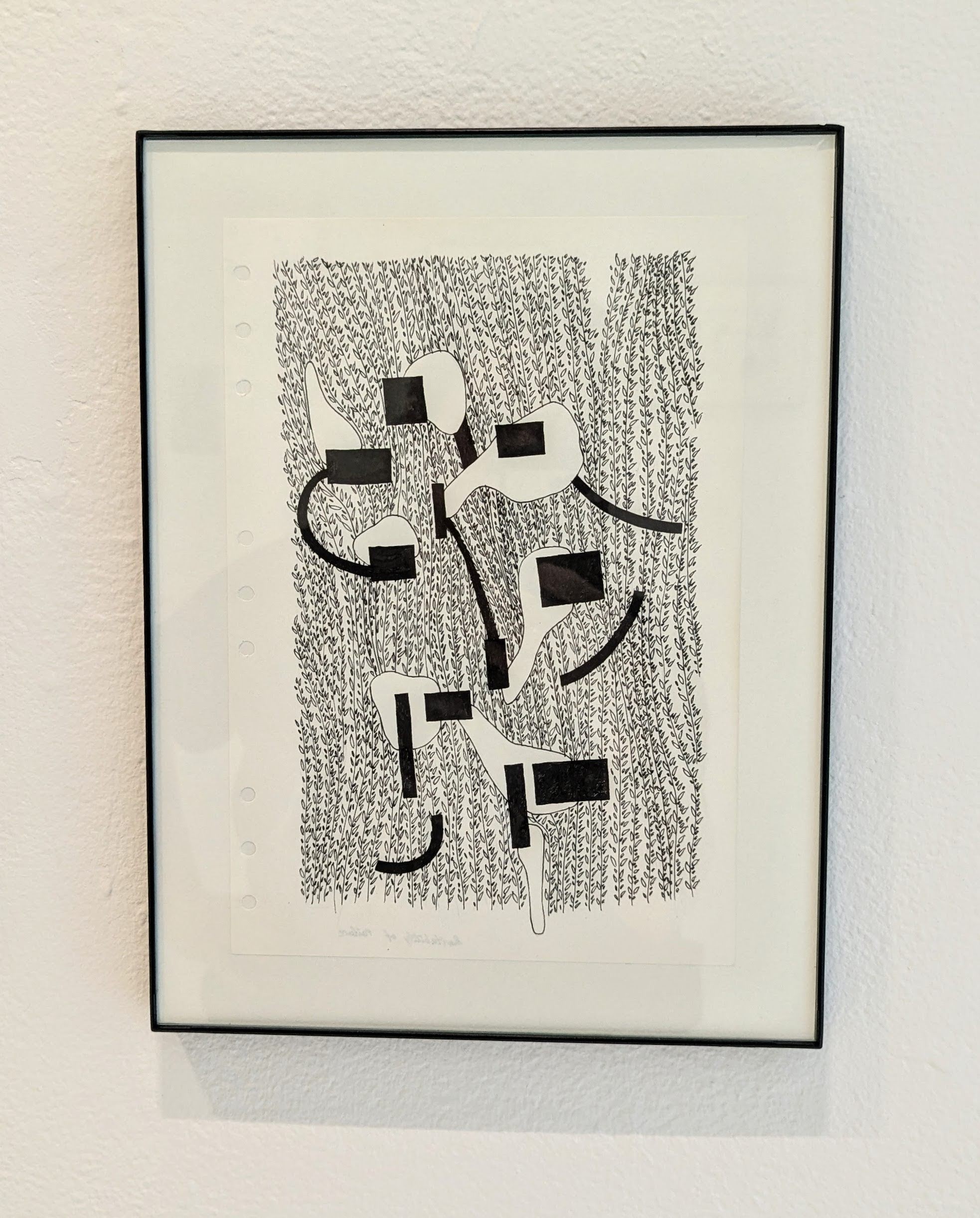
Among the pieces are a pair of drawings that instantly catch the eye. “Islands 1” and “Islands 2” depict a series of connected and disconnected structures, presumably buildings within a lush landscape. However, taken together, the separate shapes bear a striking resemblance to a figure in motion. Perhaps skipping, perhaps running, perhaps dancing, the figure seems to communicate a larger story: that a people, even when displaced and seemingly isolated, is still one unit — a diaspora that can reunify under one identity.
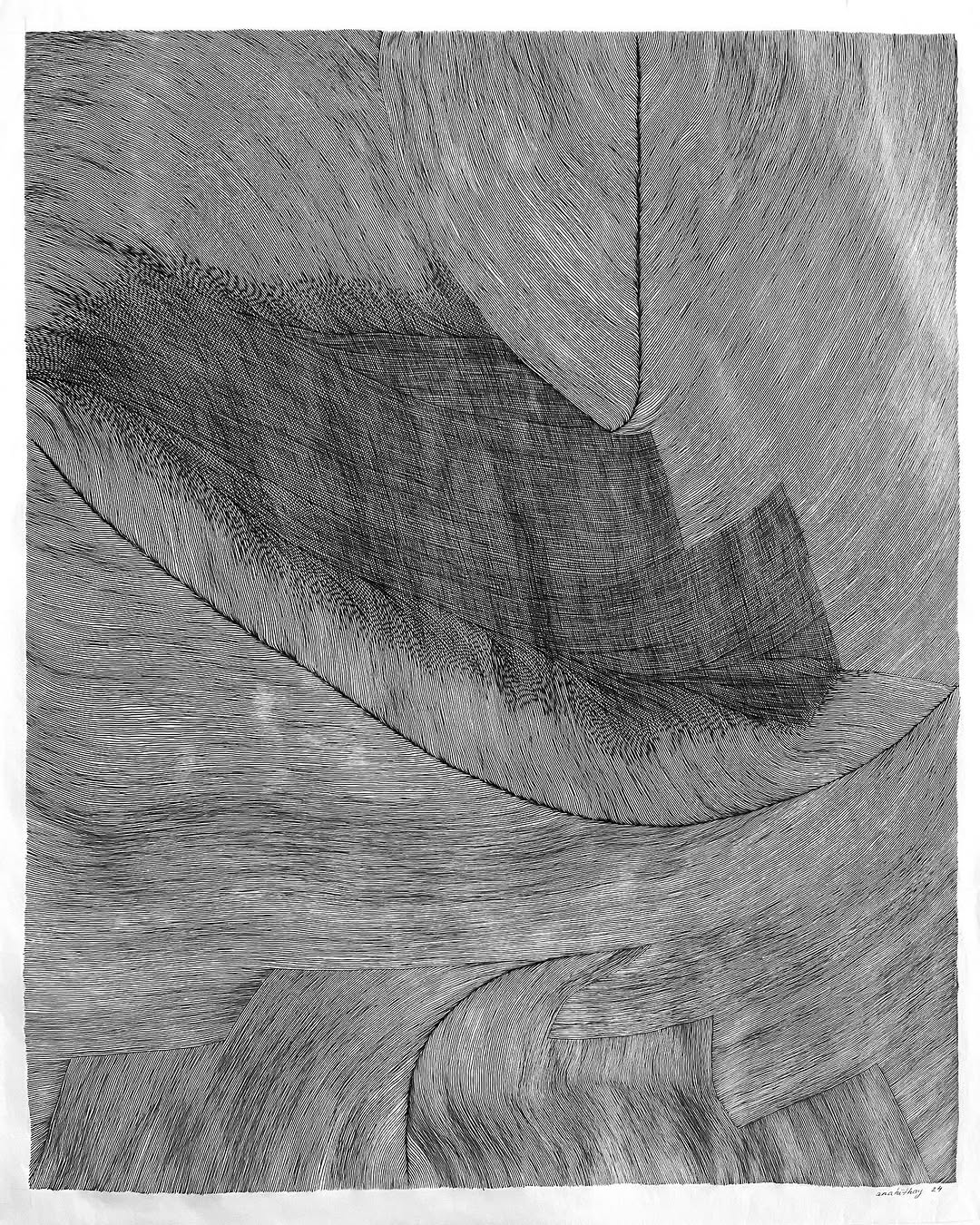
Outside of the field drawings, a standout piece of the exhibition is “Mend.” While the outer lines are smooth and flow in similar directions, the cross-hatching toward the center is a stark contrast, both in shade and pattern. Like a sewing patch, this could be one piece of fabric used to re-join others that have torn, broken, and drifted apart.
At the seams of the repair, where the pieces all come together, there is a new, distinct pattern. Like the feathers of a bird … or rather, birds of a feather. More than threads, more than materials, what has been mended could, in fact, be a relationship.
Hayrapetyan says, “It is fundamentally about healing, closing physical or emotional wounds, and finding the strength to move on. The inspiration came from a deeply personal experience of navigating recovery and growth.”
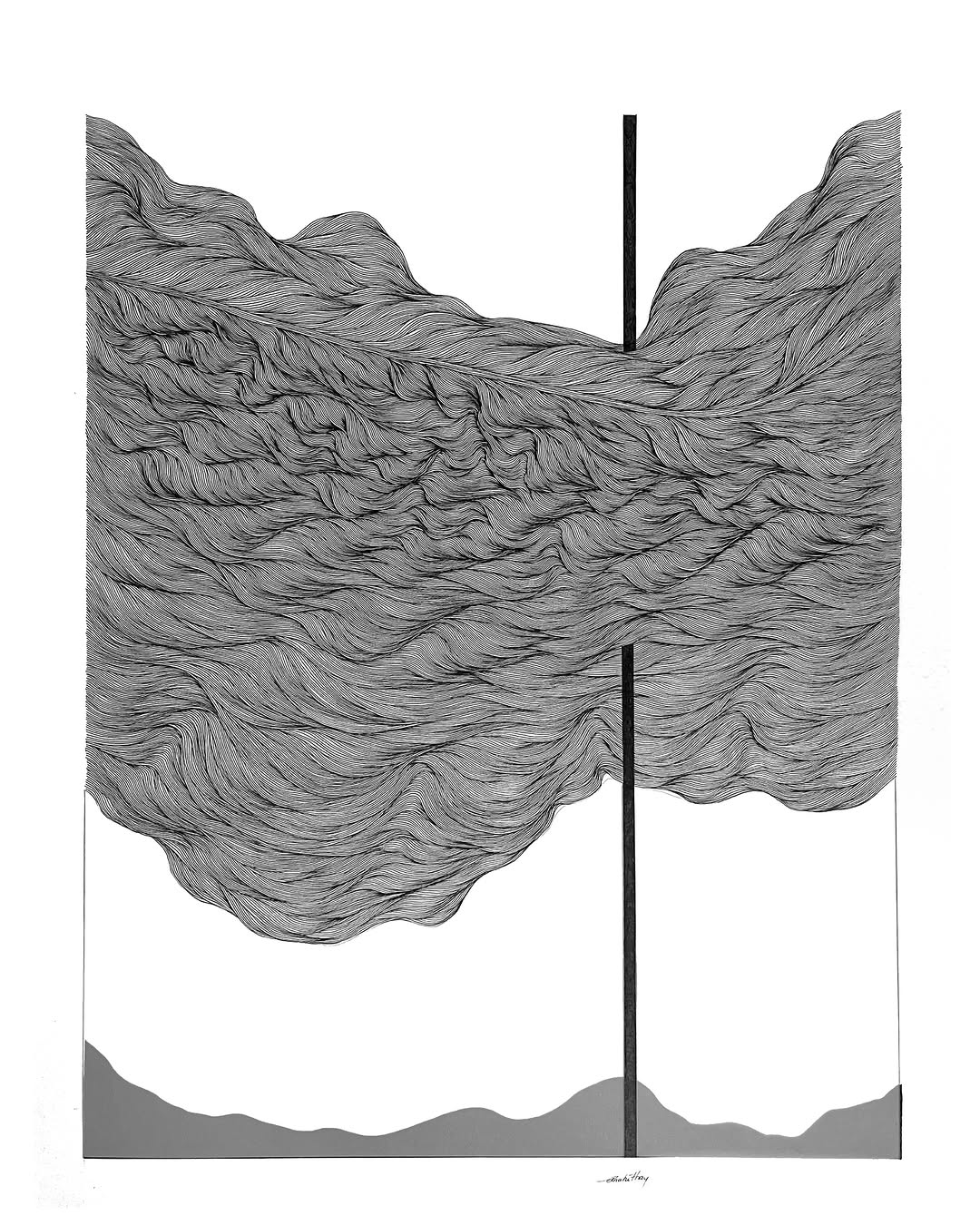
On the same gallery wall, just a few pieces over, is the very airy “Untitled.” Similar to “Mend,” it is a work that appears to contain multitudes. With a flowing motion, the waving lines could all at once be layers of fabric, gatherings of unspooled thread or strands of hair blowing in the wind, as well as rolling hills or mountains floating in a dreamlike scene. Intercepted by an immovable object — a line to cross, a pole to tether to — the waves are pierced, but their movement is uninterrupted.
“It is fundamentally about healing, closing physical or emotional wounds, and finding the strength to move on.”
“While it was exhibited as ‘Untitled,’” Hayrapetyan says, “I have come to think of it as ‘In Between,’ because it captures that exact phase during major transitions in life. The movement in the drawing represents that specific feeling of being suspended in the air, holding your breath and looking forward to the next thing. The dreamlike, shifting forms reflect that state of anticipation. In contrast, the more defined, landing objects represent the gravity of making decisions and taking your next concrete steps.”
Follow Anahit Hayrapetyan on Instagram to learn more about her work and future exhibitions.