


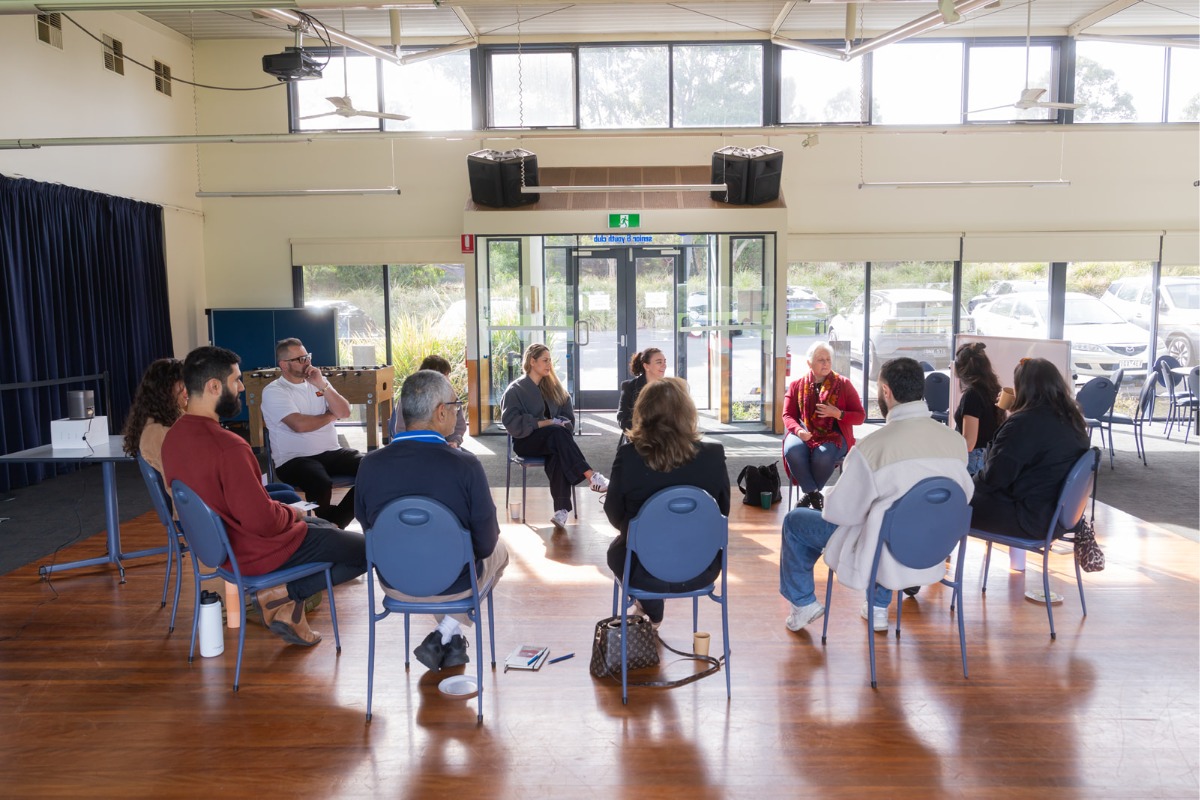
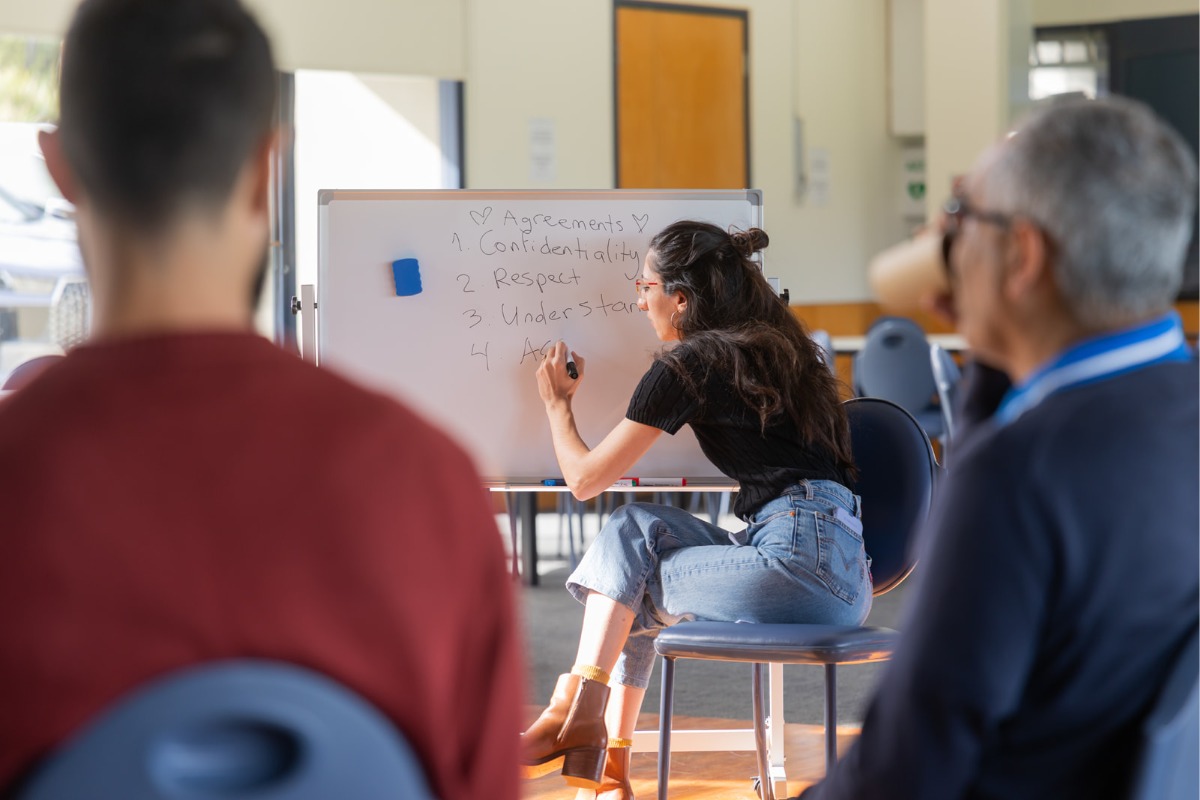
Imagine this: an intergenerational group of diasporan Armenians sits in a circle sharing stories of pride, hardship and what makes their community thrive. One remembers when the community came together to fundraise during wartime. Another asks how we can stay united in times of peace. This exact scene came to life last month in Melbourne, as part of the charity Kaitzak’s mission to build a healthy and interconnected global diaspora. Made possible thanks to the Hansen Little Public Humanities grant from the University of Melbourne, this workshop aimed to bring together community members from Melbourne’s Armenian diaspora to spark dialogue and understanding in a safe, respectful and empowering way.
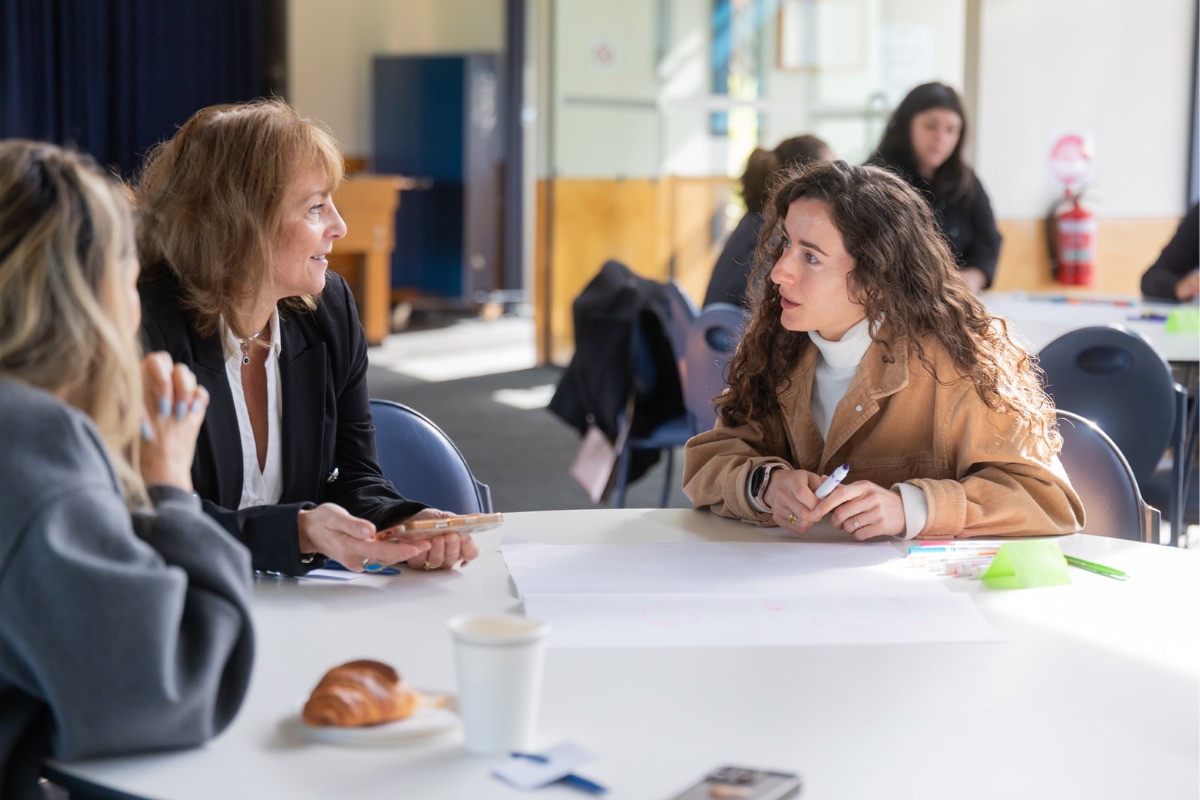
Stories are essential for Armenians: as a New Yorker, I grew up surrounded by narratives about what it means to be Armenian and to belong to my own family. After moving to work in Armenia for several years, I recognized that these stories had become embedded in how I saw myself, both as an individual and as a member of the larger whole. Later, while studying positive psychology at the University of Pennsylvania, I began researching how diasporan Armenians in the U.S. use storytelling to cultivate meaning, strengthen intergenerational bonds, and integrate collective narratives into their own lives.
After interviewing young Armenians in the United States, I discovered that the stories Armenians tell are more than a nice-to-have; they are critical to processing the past, staying connected to our shared ancestry and homeland, and creating opportunities to retell these narratives to highlight perseverance over pain. According to psychologist Dan McAdams, people who tell stories of resilience are more likely to thrive than those who focus on how things went awry.
I wanted to understand how Armenian narratives influenced the psychology of our group and whether it was possible to shift the focus toward more empowering storylines. This, of course, does not mean erasing our pain, history or heritage. Instead, it looks deeper into those events and focuses on the strengths that enabled us to start over and rebuild our communities around the world.
After founding Kaitzak with my husband André Vartan-Boghossian, we began chipping away at the following questions: What constitutes a thriving diaspora? What is currently working in our communities, and how can we amplify that? Whether through workshops, community leadership seminars or partnerships with organizations in Armenia, we return to the idea that healthy communities consist of strong governance and leadership structures, as well as relationships between people that enable collective flourishing.
In an effort to begin understanding the strengths and stories of the diaspora, Kaitzak piloted a workshop to bring together community members in Melbourne and bring these collective stories to the surface. “Workshops like these give an opportunity and a platform for our community to grow,” one participant said. The results? All 11 participants stated that they felt comfortable and safe during the workshop and had gained a deeper understanding of their community’s strengths and challenges. “There seems to be an acute need to talk about all this,” another participant shared.
Moving forward, Kaitzak plans to bring these workshops to all Armenian communities around the world, helping launch a movement to build a thriving global diaspora. Building a healthy diaspora requires the active participation of everyone. Much is already going right. What remains is bringing it to the surface and growing it for the benefit of the larger whole.