



As Armenia moves toward another electoral cycle, the issue of women’s political participation has once again returned to the center of public debate. Political parties speak of inclusivity, electoral quotas are revisited in campaign rhetoric, and public statements emphasize the importance of “equal opportunities.” Yet beneath this familiar discourse lies a more complicated reality. Despite two decades of legislative reforms and a visible increase in the number of women in public office, Armenian politics remains overwhelmingly shaped by male dominance, while women’s participation is often more symbolic than substantive.
The contradiction is striking. On paper, Armenia has made measurable progress. Women today occupy positions that were historically inaccessible to them, including roles in the judiciary, law enforcement and the executive branch. Yet the political culture itself remains deeply patriarchal — and frequently hostile toward women who attempt to enter it. Female politicians are not judged solely on ideology, competence or political strategy. Instead, they are often forced to navigate public scrutiny over their appearance, personal relationships, marital status and motherhood. The result is a system in which representation may be increasing numerically, but the underlying logic of power remains largely unchanged.
Representation may be increasing numerically, but the underlying logic of power remains largely unchanged.
Armenia’s Electoral Code requires that neither gender make up less than 30% of electoral party lists. The quota system was introduced after years of advocacy by civil society groups and international organizations, and at first glance, it appeared to be a meaningful step toward political equality.
Numerically, the policy worked. Women’s representation in parliament and local self-government bodies increased. But the expansion of numbers did not necessarily translate into expanded influence.
Human rights defender Zaruhi Hovhannisyan argues that the problem is far deeper than statistics. According to Hovhannisyan, political parties often treat women’s participation as a seasonal issue — something remembered during elections and quietly sidelined afterward.

“The issue is not simply including women on electoral lists, but what actual role they receive in political processes,” Hovhannisyan said.
In practice, men continue to dominate the most electable positions on party lists, while women are frequently placed in symbolic or noncompetitive spots designed primarily to satisfy legal requirements. The quota system, therefore, often functions as a mechanism of formal compliance rather than genuine inclusion.
Hovhannisyan also highlighted a troubling pattern within local governance structures: the recruitment of what she describes as “manageable women.” These candidates are selected not because parties seek their political leadership, but because they are perceived as easier to control or replace. In several communities, women elected to local councils have reportedly resigned their mandates shortly after elections, effectively returning decision-making authority to all-male bodies. Such practices reveal how easily the spirit of quota legislation can be bypassed in the absence of genuine political will.
The barriers women face in Armenian politics are not merely institutional. They are deeply cultural. According to legal expert Lilit Varagyan, even the most progressive legal reforms cannot fully transform political participation if social attitudes remain unchanged. “Legislative reforms are important, but changing social attitudes is a much more difficult and long-term process,” Varagyan said.
Deep-rooted stereotypes continue to frame politics as a “male space,” while women are still largely associated with domestic and caregiving roles. As a result, women who enter politics are often judged by standards entirely different from those applied to men.
Male politicians are generally criticized for their ideological positions, decisions or governance records. Women, by contrast, are frequently targeted over their appearance, family status or private lives. Public discussion quickly shifts from political performance to personal identity.
This dynamic has become even more visible in the era of social media. Female politicians regularly face sexist harassment, personal insults and misogynistic commentary online. Rumors about their relationships or appearance often circulate more widely than discussions of their policies. Hovhannisyan argues that this atmosphere creates a particularly discouraging environment for women outside Yerevan, especially in smaller communities where traditional gender expectations remain stronger. “A woman’s professional capabilities are frequently pushed into the background, while her private life becomes the headline,” Hovhannisyan said.
The hostility of Armenian political discourse has broader implications beyond individual politicians. It shapes who feels entitled — or safe enough — to enter politics in the first place. The treatment of female officials in Armenia becomes especially visible during media interactions and news conferences.
In 2015, Arpine Hovhannisyan became the first woman appointed Armenia’s justice minister, a role traditionally associated with legal and political authority rather than the “soft” social sectors historically assigned to women.
Yet shortly after her appointment, journalists focused not on her judicial agenda but on her alleged ties to then-Prime Minister Hovik Abrahamyan.
The hostility of Armenian political discourse has broader implications beyond individual politicians. It shapes who feels entitled — or safe enough — to enter politics in the first place.
Nearly a decade later, the same pattern resurfaced with the appointment of Srbuhi Galyan. Reporters again attempted to identify a “first lady factor” behind her promotion, implying that a woman’s rise to power still required an explanation beyond professional competence.
The same logic has appeared in subtler but equally revealing forms. Years ago, Arpine Hovhannisyan was publicly asked whether being described as one of the “youngest and most beautiful ministers in the world” would influence her work. In 2025, a journalist compared Srbuhi Galyan to the heroines of “Charlie’s Angels.” Galyan rejected the framing directly. “It is shameful that the emphasis is placed on an official simply because she is a woman. The focus should be on the work being done,” she said. These incidents are not isolated examples of poor journalistic judgment. They reflect a broader political culture in which female politicians are still perceived through the lens of gender before professionalism.
Under Prime Minister Nikol Pashinyan, women’s visibility in Armenian politics has undeniably increased, particularly in traditionally male-dominated sectors. Anna Vardapetyan was appointed prosecutor general, Arpine Sargsyan became minister of internal affairs, and Tsovinar Tadevosyan was appointed head of the Penitentiary Service. For some observers, these appointments represented evidence of gradual modernization and expanding opportunities for women in governance. Varagyan argues that these appointments slowly reshape public perception. “When society sees a woman effectively managing a field considered a male domain for decades, perceptions begin to shift,” Varagyan said.
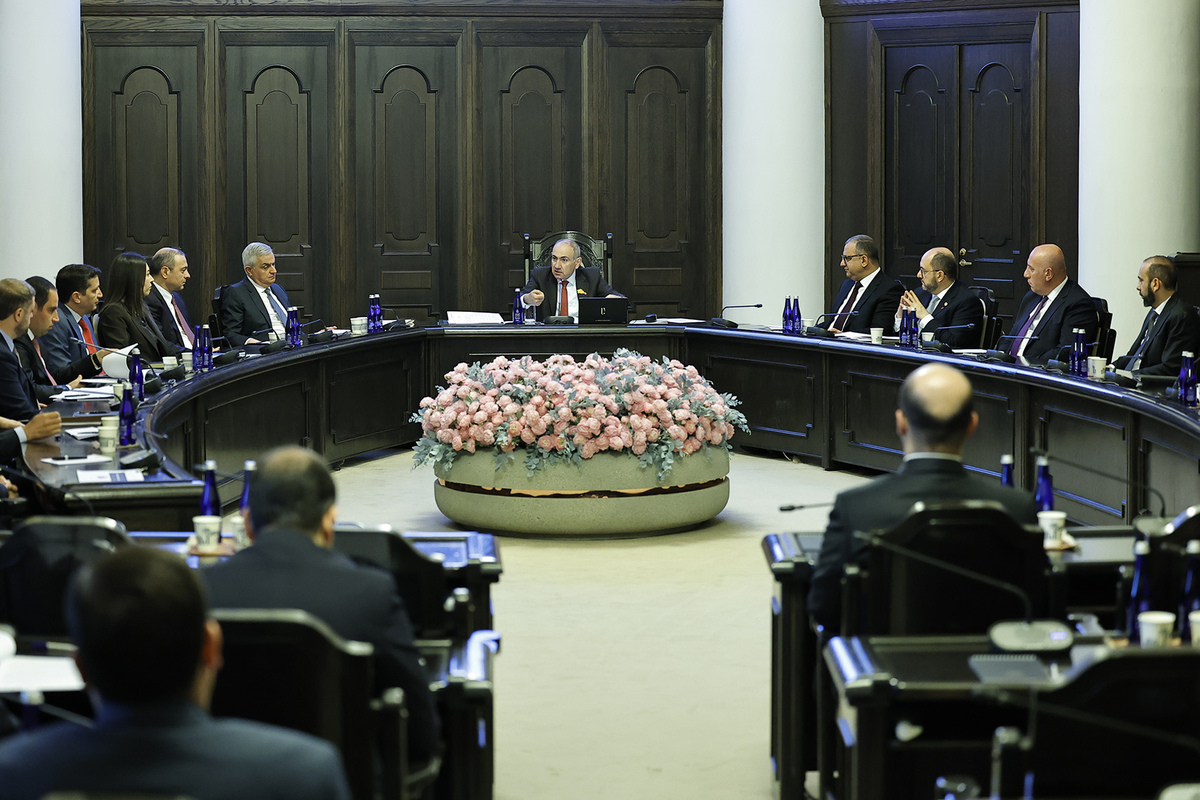
Yet symbolic breakthroughs alone do not necessarily transform political culture. Critics argue that while women may now occupy highly visible positions, they continue to operate within a system whose norms remain overwhelmingly masculine. Pashinyan himself contributed to the debate when he declared during a government session that women are becoming more competitive than men and will eventually reach top positions even without quotas. For supporters, the statement reflected recognition of women’s capabilities. For critics, however, it sounded more like political populism than a serious response to structural inequality.
The broader question remains unresolved: Can appointing several women to powerful offices fundamentally alter a political system that continues to marginalize women culturally?
For Shushan Avagyan, a candidate on the electoral list of the Bright Armenia party, women’s political participation should not be reduced to quotas alone. “If you truly have something to give to your country and your state, then you must become an active participant in politics,” Avagyan said. She said Armenia needs a political environment in which women feel secure enough to participate without fear of humiliation or personal attacks. According to her, the culture of insults and hate speech in Armenian politics often discourages women from entering public life altogether. Avagyan also highlighted another overlooked issue: Female politicians are frequently targeted not only by men but also by other women, demonstrating how deeply patriarchal attitudes are embedded in society itself. “Women should support one another, even if they belong to different political camps,” she said.
Can appointing several women to powerful offices fundamentally alter a political system that continues to marginalize women culturally?
Her argument reframes women’s participation not as a symbolic issue of representation, but as a question of democratic governance and political effectiveness. Despite visible progress, Armenia continues to operate within a political culture in which men dominate the country’s major decision-making structures. Women are still frequently viewed through the lens of social roles rather than political authority. This contradiction became especially visible after the 2020 war, when women carried immense social responsibilities — providing care, emotional support and family stability — yet remained underrepresented in strategic political decision-making.
Most political parties still lack meaningful programs aimed at developing female leadership, expanding women’s economic independence or preparing women for positions of power. Women’s issues are typically framed as matters of social support rather than political transformation. As long as women continue to be viewed primarily as recipients of protection instead of independent political actors, representation alone will remain insufficient.
Armenia now faces a fundamental choice. Women’s participation can remain limited to formal quotas and symbolic appointments, or it can evolve into genuine political inclusion capable of reshaping the culture of power itself. For now, that second path remains the more difficult one.

Excellent reporting.