


OpinionOp-Eds

The emerging Middle East-South Asia strategic alignment

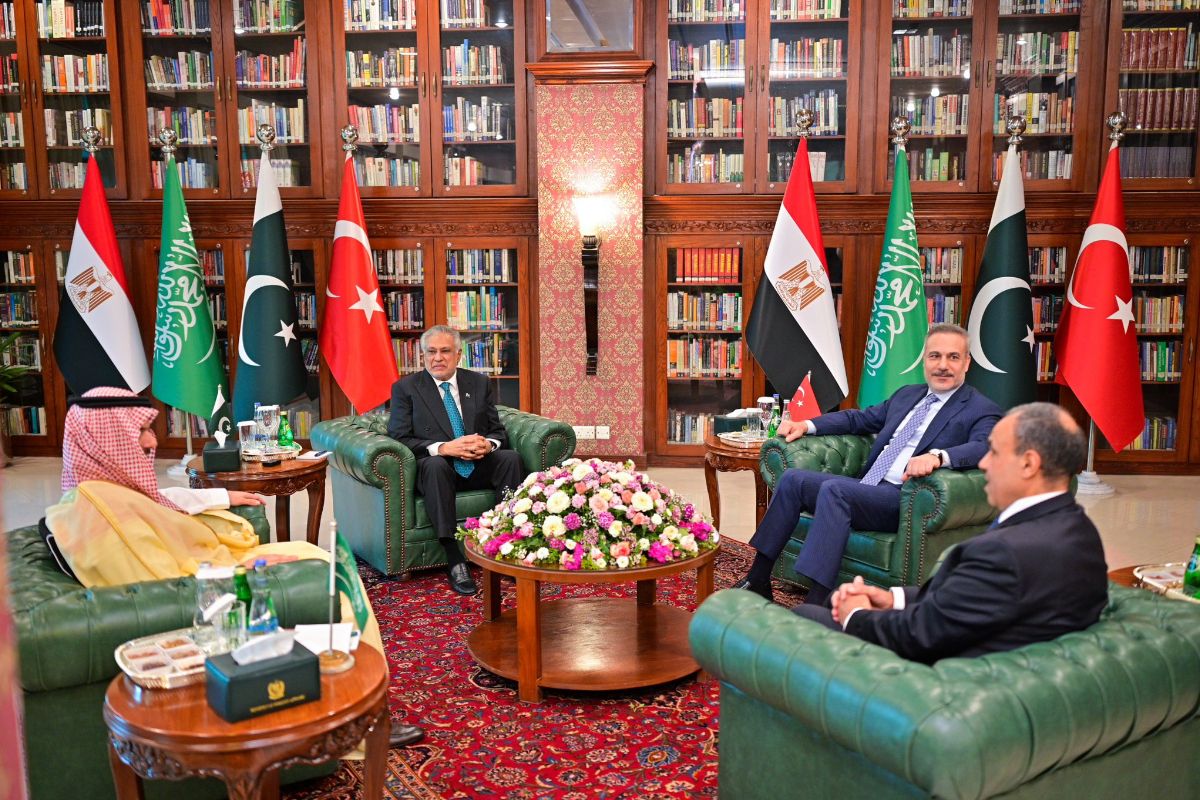
A major transformation is underway in the geopolitical configuration of the Middle East and South Asia with closer cooperation among Egypt, Turkey, Pakistan and Saudi Arabia. This emergent alignment — dubbed by some analysts a “quadrilateral alliance” or a “new regional power bloc” — is not a formal NATO-style pact but rather a convergence shaped by high-level diplomatic engagements, defense dialogues and security coordination talks in early 2026. The following analytical essay reviews the drivers, characteristics, regional relevance and broader implications of this new development that could recast power dynamics in one of the most sensitive regions in the world.

The Dawn of a New Alignment: Why Now?

Multiple regional, global and domestic factors prompted the establishment of this quadrilateral alignment. Key among them is the continued instability in the Middle East, especially in the wake of the Iran War. This has compelled other regional actors to explore options for security arrangements. Moreover, a perceived change in U.S. engagement in Middle Eastern security dynamics has provided space for regional actors to look beyond security arrangements orchestrated from Washington and build relationships among themselves.

This pivot toward self-reliance and diversified security mechanisms is central to the quartet’s emergence. Their aim is to avoid an overdependence on a security framework dominated by a single power — be it Western or otherwise — and develop multiple options to counter mutual security challenges.

Shared Interests in a Fragmented Region

All four countries want to strengthen security against the backdrop of regional turbulence. The Israel-Gaza conflict, Iran’s regional strategy and changing U.S. foreign policy in the Middle East create an immediate need to reduce tensions on land and sea, from Gaza to the Red Sea and the Arabian Gulf. Together, the quartet could better manage these escalating regional issues and project their influence where critical security questions loom.

Beyond security concerns, this partnership represents a fundamental ideological and geopolitical shift in the Islamic world. These countries see themselves as regional civilizations with vast influence and the capacity to shape the regional order without depending on either traditional power structures or Western direction. The erosion of a unipolar global order, and its gradual replacement by a multipolar one with emerging middle powers demanding their right to a strategic role, reinforce the idea that this alignment is not simply a reactive move but a strategic play to re-establish leadership, relevance and legitimacy in the broader Islamic space.

Advertisement

Also crucial is the role of economic complementarity. The four nations are situated at the confluence of global trade routes extending from the Eastern Mediterranean and the Red Sea through the Persian Gulf and to the Indian Ocean. Their synergy can foster integrated transportation corridors, energy networks and defense-industrial collaborations, strengthening economic resilience in a more polarized global economy. This could eventually transform into coordinated investment mechanisms that link Gulf capital, Turkish manufacturing, Egyptian geostrategic access and Pakistani human resources and defense expertise.

Four Pillars of Power: The Strengths and Contributions of Each State

The emergent quadrilateral is built upon the distinct but complementary strengths of its constituent members. Each country contributes unique capabilities, adding to the collective strategic depth and operational capacity of the alliance.

Pakistan’s Defense Might

Pakistan adds considerable military capability, manpower and nuclear deterrent capacity. Coupled with its long-established defense industry and experience in mediating conflicts, it provides a strong military backbone to the quartet.

Saudi Arabia’s Financial Power

Saudi Arabia’s enormous economic strength provides vast investment capital for defense industries and infrastructure. Furthermore, its global diplomatic clout could garner support from regional and global actors.

Egypt’s Strategic Importance

With the Suez Canal being the global gateway between East and West, Egypt’s geostrategic importance is unparalleled. This vital link for both military and commercial shipping is a critical strategic asset for regional security.

Turkey’s Advanced Military and NATO Experience

The quartet benefits from Turkey’s cutting-edge defense industry, strategic projections into the region, and from its decades of experience as a NATO member. The country’s advanced and sophisticated military also adds technological capabilities to the alignment.

The strategic synergy of the four countries promises to be more than the sum of their individual parts. Combining the advanced drone technology and rapidly expanding defense industries of Turkey, the massive financial reserves of Saudi Arabia with its ambitious Vision 2030 reform agenda, Egypt’s geopolitical significance and demographic weight, and the combat-tested military capabilities of Pakistan, the alliance is poised to construct a somewhat integrated regional defense framework. This could manifest as coordinated military drills, intelligence-sharing pacts, defense procurement schemes and even joint development of new military technologies.

These countries see themselves as regional civilizations with vast influence and the capacity to shape the regional order without depending on either traditional power structures or Western direction.

Beyond the military dimension, these countries will likely deepen cooperation in non-military domains like food security, cybersecurity, artificial intelligence and energy transition. In a future when competition might focus increasingly on technological and economic power rather than solely military strength, an ability to coordinate economic planning, digital infrastructure and capital investment will be as important for a country’s geostrategic importance as any military strength.

The Nature and Boundaries of the Alliance

The bloc, despite its developing influence, can only be described as a coordination mechanism of sorts; an informal rather than formal, treaty-driven alliance. Even though the foreign ministers of these four countries continue to meet to discuss broad security integration matters, no binding mutual defense treaty currently exists. Reports suggest that Turkey’s interests in an alliance may be somewhat nuanced in favor of more flexible, bilateral mechanisms. This allows greater room for maneuver in response to a developing, dynamic situation. Furthermore, these four countries, each with distinct experiences with alliances that were too inflexible for practical politics, would face complications with historical resentments between them and diverse threat perceptions. However, recurring high-level security cooperation undoubtedly signals growing strategic alignment among the four.

Evading Strategy for Security Architecture

Some scholars describe the quartet as the core upon which wider coalitions may emerge around specific issues such as Red Sea security, energy routes and post-conflict management. This hedging strategy has allowed the bloc to develop a diverse, multinational range of options, decreasing the risk of a single external partner and facilitating the creation of multi-stakeholder arrangements. The prospect of a “Muslim NATO” remains debatable, however, while the increase in joint military exercises, intelligence sharing and even collaboration for defense needs and military equipment is clear. Convergence between the four is due to a fundamental reorientation in which states no longer seek to align themselves solely with American power or other single powers but rather pursue diversified or hedging strategies in a multipolar international order. It empowers middle-tier actors, giving them a more significant voice.

Moreover, the informal nature of the bloc could also be its key advantage. Flexibility, instead of rigid Cold War-era alliances, allows states to collaborate selectively and avoid rigid, all-encompassing commitments. This is in line with the contemporary nature of international relations and the prevalence of “multi-alignment” strategies over closed geopolitical camps. It enables Turkey to maintain relations with NATO, Russia, the Gulf states and other powers simultaneously, and Saudi Arabia to sustain relations with Washington, Beijing and Moscow. This ensures a degree of diplomatic maneuvering space for the quartet amid increasingly complex, multipolar and fragmented international scenarios.

Implications for Regional Politics: Reshaping the Security Map

The emerging quadrilateral has many implications for regional politics. The development marks the beginnings of a non-Western axis in the region, comprising Muslim-majority countries, which will likely compete directly against U.S-backed countries and the China-Russia alliance. In a more competitive global market for defense technology, this also signifies a potential future decrease in Western arms sales to the quartet, especially Turkey, due to Saudi financial involvement.

Challenging Influences

This quadrilateral will likely be at odds with Iran’s interests in the region, and the alliance could influence the nature of various ongoing regional conflicts. The consolidation of power into a compact bloc of four enables its members to take collective action and demand concessions of power within the larger geopolitical spectrum. 

Small nations in the Middle East may find themselves joining the fold. As the alliance grows, its influence could attract smaller states like Jordan, Qatar, Azerbaijan and some North African states to align themselves accordingly. This will likely lead to a reshaping of existing alliances in the Middle East.

It also impacts the ideology of the region. After decades of Arab nationalism, Islamist ideologies, sectarian politics and dependence on external powers, there will be a new kind of political cooperation in the region, one centered on shared interests, economic progress and national sovereignty over ideological considerations. Despite some underlying ideological differences between the four member states, the alliance’s formation suggests a new priority is being placed on pragmatic politics and state interests over ideological divisions.

Global Impacts: A New Epoch of Geopolitical Brokerage 

The quartet’s influence will likely stretch beyond the region, extending into global trade and alliance dynamics. With a combined population of more than 500 million people and significant financial and military resources, the four states will become geopolitical brokers, forcing the United States to reconsider its present foreign policy in the region, likely strengthening existing alliances and possibly forging new ones with other regional players such as Israel. Such bloc dynamics will become part of a more multipolar system of global order.

Also, these countries could deepen their ties to other organizations like BRICS expansion initiatives, the Shanghai Cooperation Organization (SCO) and China’s Belt and Road initiative projects. The alliance is not necessarily anti-West, but the core interest appears to be diversification of partners and decreasing external dependence. This strategy is becoming more common in middle-tier countries all over the world.

Additionally, strategic geography can give these countries more bargaining power globally. Covering important maritime trade routes including the Red Sea, the Suez Canal, the Arabian Sea and the Eastern Mediterranean means these states control key passages. These could become useful in periods of global instability.

Overcoming Historical Rifts and Conflicting Objectives

Challenges to the bloc are undoubtedly immense. Historical enmities and conflicting foreign policy interests between these states persist. However, there have been recent rapprochements. The alliance is described as more of a “coalition of convenience,” with its efficiency depending on its ability to override historic grievances and align responses on diverse issues ranging from the Palestinian question to terrorism, to other regional threats. Turkey’s decision to join a Saudi-Pakistan alliance while continuing to signal flexibility toward other forms of bilateral arrangements shows that it views any alliance with a measure of reservation; and that a traditional NATO-style treaty is unlikely.

After decades of Arab nationalism, Islamist ideologies, sectarian politics and dependence on external powers, there will be a new kind of political cooperation in the region, one centered on shared interests, economic progress and national sovereignty over ideological considerations.

The alliance’s sustainability can also be seriously questioned during times of political, social and economic turbulence. As the alliance is more focused on convergent interests rather than institutional integration, geopolitical events can erode the cooperation between member states at short notice. Existing differences of opinion on dealing with Iran, Israel and superpowers like the U.S., Russia and China are potential sources of future rifts within the quadrilateral grouping.

Also, internal politics, such as the economic crisis in Pakistan, Turkey’s balancing between the West and East, internal pressure due to socioeconomic factors in Egypt and ambitious reforms in Saudi Arabia can all impact the trajectory and level of integration within this quadrilateral grouping. Therefore, the alliance should not be seen as a fixed formation, but as an evolving process influenced by various global and regional circumstances.

Conclusion: Reordering Middle Eastern and South Asian Regional Power

The emerging quadrilateral grouping of Egypt, Turkey, Pakistan and Saudi Arabia is undoubtedly one of the most significant geopolitical developments in the wider Middle East and South Asia of recent years. Though not a formal military alliance in nature and operation, it carries far-reaching strategic implications. In many ways, it is a clear manifestation of the growing salience of middle powers in an increasingly multipolar international order and a reflection of the efforts of regional states to exercise greater self-determination amid a gradual evolution in the global order.

Primarily, the alignment is a testament to the intertwining of security concerns, economic aspirations and geopolitical pragmatism, which together seek to imbue its members with greater strategic maneuvering room, improved regional leverage, and a wider array of partners in an uncertain and dynamic phase. Their military strengths, combined with vast economic resources, considerable demographic clout and strategically critical locations offer the group the prospects to shape Middle Eastern and neighboring regional politics in significant ways. 

Therefore, the alliance should not be seen as a fixed formation, but as an evolving process influenced by various global and regional circumstances.

Ultimately, the durability of this new alignment will rest on its ability to sustain cooperation while accommodating divergences and historic rivalries. The very absence of a formal treaty framework provides it flexibility but does not necessarily confer cohesion and predictability. Whether it would consolidate into a lasting regional framework or operate as an ad hoc coalition based on issue-specific calculations will hinge largely on future crises, rivalries in great power politics and the political directions of the four member states. 

In conclusion, this emerging quadrilateral is part of a broader reordering of the international system that is marked by a move away from solid bloc politics toward flexible, multi-layered partnerships — more a result of shared strategic imperatives than a confluence of ideological solidarity. It is not so much a regional reality but an example of the emerging global political reality characterized by the rise of a more fractured, multipolar and strategic form of self-determination.

Vera Yacoubian

Vera Yacoubian is a part-time instructor in Political Science and History at both the American University of Beirut and Haigazian University. She holds a Master’s degree in International Affairs from the Lebanese-American University in Beirut and is currently pursuing her PhD at Ruhr University Bochum in Germany. Yacoubian's academic journey began with a degree in Journalism from the Lebanese University. In addition to her academic roles, she serves as the Executive Director of the Armenian National Committee of the Middle East, where she plays a pivotal role in advocating for the Armenian Genocide and regional issues.

Leave a Reply

Your email address will not be published. Required fields are marked *


Back to top button