ARMENIcans: When identity becomes political responsibility

“We’re ArmeniCans now,” I told my mother when our plane finally touched down at Newark Liberty International after eight hours in the air. ArmeniCan… I was still Armenian, but now in America, carrying both identities at once. My mind raced with small, almost childish images from all the American films I used to watch: yellow school buses, hot dogs at baseball games, the simple promise of safety. But by the time I reached Customs, my “American Dream” was interrupted by a flashback of all my relatives and friends back home. What will happen to the people I left behind in Armenia?
Some back home say I took the “coward’s way out” by immigrating to the United States. I disagree. It has taught me the opposite of cowardice: resilience. But resilience takes many forms. I see it in my grandparents still sitting at the same kitchen table in Yerevan, worn smooth by decades of meals and conversation, tea glasses clinking softly as the radio murmurs in the background; in cousins walking the same narrow streets to school, past pink tuff buildings that have seen far more history than they have; and in aunts and uncles checking their phones each morning for news that might change everything by nightfall. My family is still there, spread across cities and generations, which means the so-called “Armenian Question” has never been abstract to me while I am in the States.
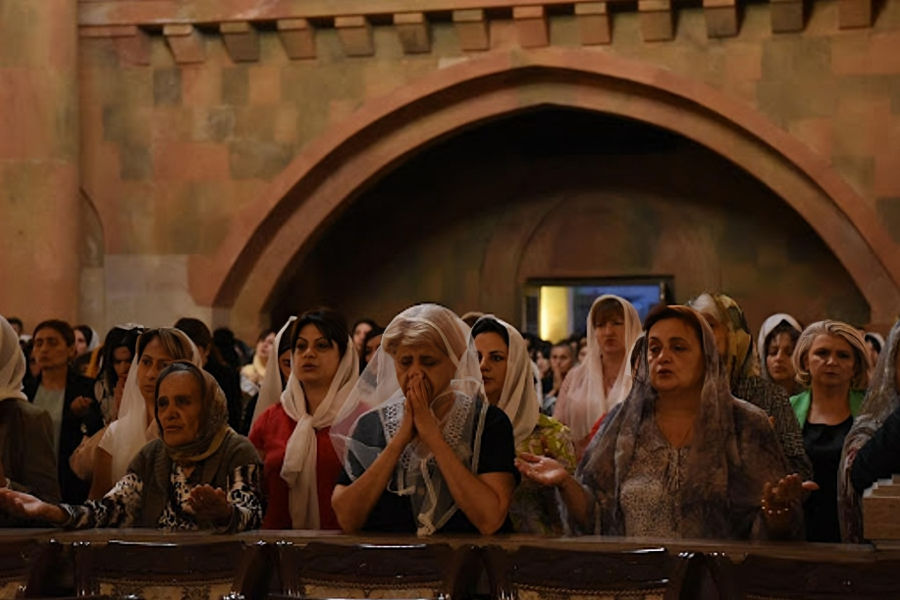
Growing up in Yerevan, I did not face the same existential threats as our brothers and sisters in Artsakh and Syunik. But that reality became impossible to ignore during the waves of displacement in 2020 and again in 2023. I watched as refugees arrived in Yerevan carrying more than bags: exhaustion etched into their faces, children clutching hands too tightly, older cars packed beyond capacity, some families arriving on foot with nowhere else to go. These were not images of distant history. They were happening on streets I knew. In moments like those, survival depends on endurance.
But endurance alone has limits. Living in the United States has taught me something different: survival can also depend on engagement. In a world where Armenia’s survival is shaped by geopolitics far beyond its borders, distance is not withdrawal — it’s leverage. Advocacy, civic engagement and diaspora lobbying are now among the strongest tools Armenians have. In a country with such strong democratic institutions, the most powerful way to protect Armenia is not through proximity, but through participation.
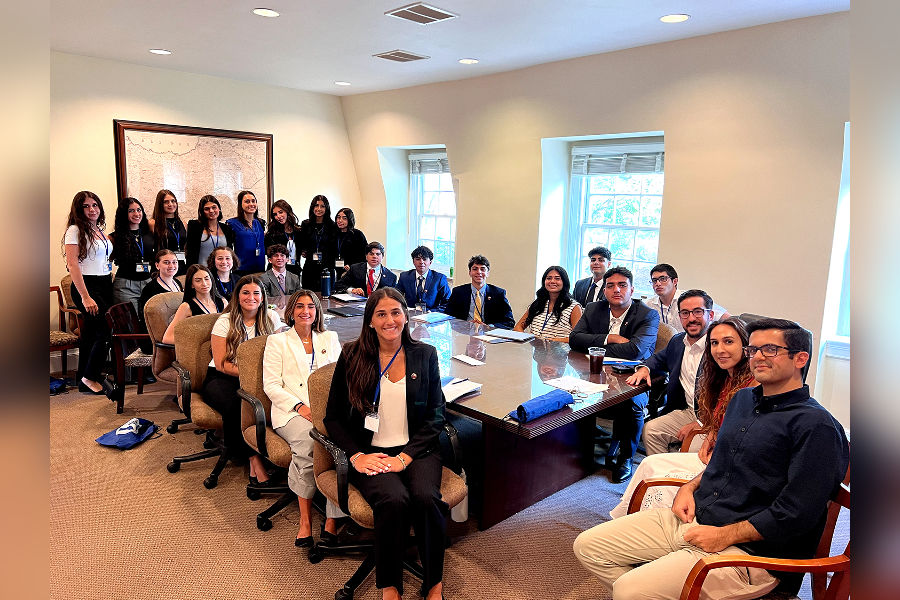
Over the past several months, I have spoken with people who have dedicated their lives to advocacy and research on U.S. foreign policy. Reflecting on those conversations, it seems there is an important factor overlooked in Yerevan: Armenian survival in the 21st century depends not only on Armenia’s strength, but on ours — the strength of the Armenian-American community. Whether I was in D.C., learning from the Armenian National Committee of America (ANCA), interviewing local community leaders or even talking with a rabbi active in Jewish humanitarian advocacy, the message was clear. The diaspora can only shape policy when we choose to show up.
What was most surprising was how consistently this message came up in conversations. Vincent Hovsepian, the president of Duke University’s Armenian Students Association, bluntly told me that Armenian issues “rarely ever make it into mainstream political discussions,” not because they aren’t urgent, but because our community is often too fragmented or hesitant to step forward.
An Armenian priest echoed a similar idea: preserving our identity is important, but it is no longer enough. “Faith and culture keep us together, but advocacy protects the people we pray for.” A Jewish rabbi, Eric Solomon, who comes from a community with a long history of effective diaspora advocacy, said that smaller communities can influence policy “when they build coalitions, stay organized and speak from a place of moral clarity.” I agree.
I met multitudes of Armenians who care deeply and advocate tirelessly, but when there are only a million of us in the United States, even strong efforts can feel like a whisper instead of a chorus. If more of us showed up, if we built more coalitions with others sharing the same grief as us, if we did that consistently and confidently, the impact would be impossible for Washington to overlook.
What do we do with this potential? What do we do, knowing that we can be great?
If there is anything I’ve learned from my research, interviews and experience, it’s that ArmeniCans already have the tools we need; we simply must use them more boldly and more often. The Jewish community learned this long ago: civic engagement in the United States is not reserved for experts or insiders. It is built on ordinary citizens who take the time to write, call, vote, show up and insist that their story matters. We can learn from the same blueprint.
Whether it’s joining organizations like ANCA, supporting student groups, attending community events or simply refusing to stay silent when Armenia is in danger, every action adds weight to our collective voice. And if enough of us speak — not just once, but consistently — the halls of Congress will have no choice but to listen.