


CultureFilm

Pixar’s “Elio” garners multiple award nominations: An interview with director Madeline Sharafian
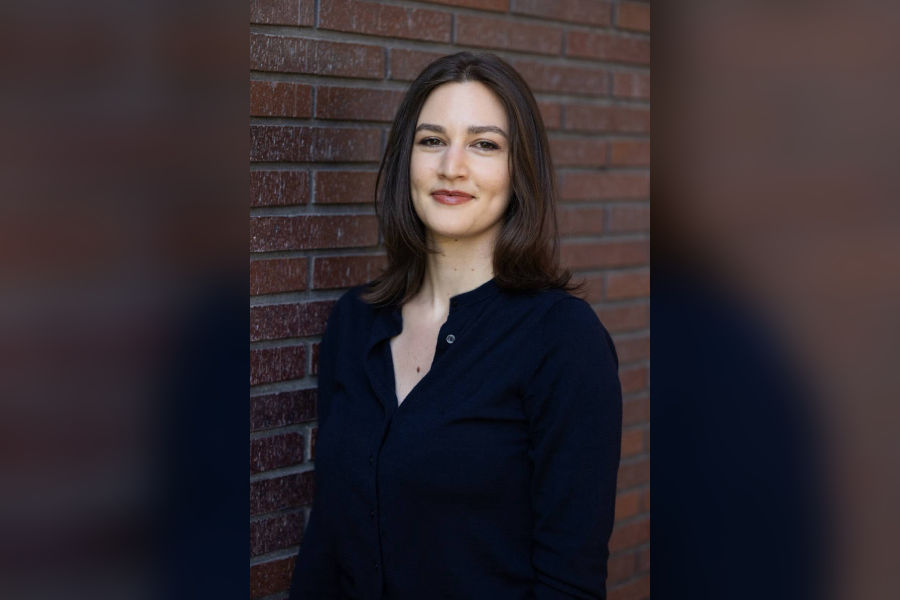
Pixar’s latest feature, the animated cosmic adventure “Elio,” has earned significant recognition, with recent nominations for the 2026 Golden Globe for Best Motion Picture – Animated and the Critics’ Choice Award for Best Animated Feature. Additional nominations are sure to follow.

“Elio” was co-directed by Armenian-American Madeline Sharafian and Domee Shi, making Sharafian the first Armenian and third woman to ever direct a feature film at Pixar. This fall, she was also honored by the Armenian Film Society during the Armenian Film Festival Gala for her “remarkable achievements in animation and her inspiring storytelling.”

Sharafian previously worked as a story artist on the Pixar features “Coco,” “Onward” and “Turning Red;” as a writer and story artist on TV shows like “We Bare Bears;” and writer, director and animator on the Pixar short film “Burrow,” which earned an Oscar nomination.

We caught up with Sharafian following the recent award nominations to talk about how an animated film comes to life, her Armenian Film Society honors and how her heritage influences her work.

This interview has been edited for length and clarity.

Rosie Nisanyan (R.N.): Besides “Elio,” what is your favorite Pixar movie?

Madeline Sharafian (M.S.): “Monsters, Inc.” was one of the movies that propelled me into animation. It came out in 2001, around the same time as “Spirited Away.” With those two movies combined, I was like, “I guess this is my life now.” Especially “Monsters, Inc.” — which I still think out of every movie, live action or otherwise, has my favorite ending. It’s one last perfect shot at the very, very end. I don’t think I’ve ever seen a better ending to a movie in my life.

R.N.: As a storyteller, what drew you to animation?

M.S.: Gosh, I think it’s all about the visuals for me. I love live action movies; I watch them all the time. But what I love about animation is that when you’re dreaming up a sequence, it really can be anything. It is your chance to visualize something that you’ve never seen visualized before. 

Live action has amazing special effects nowadays, but there’s something about a movie being animated that primes your brain to see a more surreal, more visual metaphor, and understand it. I feel Pixar movies really are the perfect example — where there’s one foot in reality and one in the fantastical. In “Coco,” for example, you’re first in this amazing town in Mexico, and then they put you into the world of the dead. There’s something so beautiful about that. 

I think the possibilities are endless and we’re seeing more animated movies get more and more artistic, taking different styles to a new level. I’m just so excited!

R.N.: You’re an artist, writer and director. How do those different skills and perspectives inform and complement each other?

M.S.: I started out as a storyboard artist, which a lot of live-action directors use, as well. When you’re storyboarding, you really are the first person who’s making the script visual, so you’re making a lot of first decisions. Sometimes you’re the first to envision a set for the very first time. I’ll use “Coco” again: I storyboarded the Frida Kahlo sequence in her rehearsal space. The set is then built based on how it’s boarded and what that scene ends up requiring, because we don’t want to build a giant set that’s expensive if we don’t have to. We have to know what shots we need and how tall the set needs to be, so storyboard artists have quite a lot of say in the final product. 

On the opposite side, when I’m working as a writer, I know I’m responsible for making sure that everything we write can be visualized, so that things are not only structurally sound but visually exciting. Sometimes, writers aren’t as used to that; they’re thinking about the words and getting the plot just right — as they should be — but because it’s animation, it’s our job to make sure that each scene is not only valuable for the plot, but also for the audience to see something unique and special. So, it all ends up tying together.

R.N.: As a storyboard artist, how many times are you reworking a scene? Or do you present multiple options from the get-go? 

M.S.: That’s a great question. When you first work on a scene, there’s a first draft and that scene either becomes a part of the movie or ends up not working at all and goes away entirely. If it ends up becoming part of the movie, you might touch it two more times after that. There’ll be large chunks of it that stay the same, but other parts get tweaked. Maybe the conversation between Miguel and Frida changes a little bit, so you tweak that a tiny bit. Or there’s a new beat where we need to have Miguel look out of the window and see Ernesto’s party in the distance, so that might change. It kind of stays in one piece and you start changing little specificities until it narrows down and becomes final. Eventually, you don’t touch it anymore. 

Madeline Sharafian with co-director Domee Shi (Photo courtesy of Pixar)

R.N.: In one scene in “Elio,” we hear “Anoush from Armenia” over the radio, helping Elio navigate. Overall, how did your experience as an Armenian influence the film?

M.S.: When Domee [Shi], my fellow director, and I were finding our way into the movie, we were trying to get into the head of this lonely boy — how he feels and why he feels lonely. There are so many Armenians in California, but I will say that I’m a NorCal Armenian, so I’m not from LA or Glendale, where there are so many Armenians everywhere. 

I recently went to Yerevan and was reading an attendance list at TUMO. Every last name was Armenian. I was like, “What’s happening?” My mind was blown. 

Knowing that I have this heritage I don’t fully understand — and that there’s a significance to it, but there aren’t really other people around me to talk to about it — there was a little bit of loneliness there and this feeling like I want something that I can’t have, or I want to be a part of this community that I’m not near.

There is a part of me that feels a bit like an outsider, and that is sort of how Elio feels. 

When I did go to Yerevan, there were moments when I was nervous and wondering, “Will they accept me? Am I enough?” Sort of like how when Elio goes to the Communiverse and all of a sudden everyone’s so happy to see him, I have felt my own moments of belonging and gratefulness since making the movie. But I think there’s always a part of me that’s been influenced by that, and I still remember those feelings pretty strongly.

R.N.: You mentioned you went to TUMO in Yerevan recently. What did you do there?

M.S.: I went to Armenia this summer for the ReAnimania Animation Film Festival. It was so cool and I met so many amazing people. TUMO asked if I could give a workshop. I was only there for a week, but I taught two three-hour classes and felt like I could do so much in that time. It was a small class, so we could get to know each other. My goal was for the students to feel like they had the tools to make short films or short stories about their own life experiences. 

And it was so exciting! After the two days, I was like, “I want to come back.” I want to check up on them. It’s an amazing school and the students are very passionate. I feel very excited about the future of animation — not that there hasn’t already been a great history of animation in Armenia — but I can really feel this exciting energy there right now, so I want to help feed it more.

R.N.: You were recently recognized by the Armenian Film Society during the Armenian Film Festival Gala. What does that honor mean to you?

M.S.: It really means so much. It actually ties into the answer to that last question of feeling very separate; I have this beautiful heritage that means a lot to me, but I don’t share it with other people around me. When my short film “Burrow” was nominated for an Oscar, the Armenian Film Society came out of nowhere. I didn’t know about them and, all of a sudden, they’re posting about me and sending me messages. This unconditional support really changed my perspective on the whole thing.

It’s funny because when I see an Armenian last name anywhere in the credits, I get so excited. But for some reason, I never thought that it would apply to me, that just by having my name out there could mean something to a lot of people.

 And so, I wanted to become more involved. 

Once “Elio” was going to come out, I needed to invite Armen and Mary [Karaoghlanian, of the Armenian Film Society] to the premiere. They were there for me at the beginning and I feel very strongly that I want to pay back their support.

It’s inspired me to try to find ways to put my heritage in the projects that I’m working on, even in a small way. 

With “Elio,” the movie was already well underway by the time I joined. Elio is Mexican-Dominican and I love that culture deeply, so I wasn’t going to just shove an Armenian in there. But when we had the chance to have the radio signals from all around the world, it was the perfect opportunity. A large part of that is because I was thinking about this community that was rooting for me and I wanted to make sure that they know I’m rooting for them, too. So, Armenian Film Society means quite a lot to me; I love them!

Movie poster for “Elio.” (Photo courtesy of Pixar)

R.N.: How has the Armenian community supported you?

M.S.: Every once in a while, I’ll get a message like, “Oh, when I saw your last name, I was so excited that an Armenian worked on this.” I’m also still active on Tumblr, where I got a DM from two Armenian girls living in Turkey. They said, “To see someone like you succeed means so much.” That meant so much to me because, I think, in Turkey, it could be especially hard for them. They felt they were still fighting an uphill battle. I can’t believe that just by doing the job I love, it’s giving these two girls the feeling that they can achieve as much as they want to and they can be the artists they want to be. That was really special. 

I still think about them and wonder how they’re doing. I hope they’re succeeding in whatever they decided to do. Every day, I’m surprised by how far the reach of Pixar is and what it can mean to people.

R.N.: Do you have any advice for aspiring Armenian writers, directors or animators?

M.S.: My very practical advice would be to build your confidence by making small projects and finishing them. When I really think about it, that is what got me where I am now. I made short films in college — and they were very short; like, one of them is just a minute and a half.

It doesn’t have to be the best thing you’ve ever made, but if you continually finish things, you’re telling yourself that you have what it takes to take on projects and see it through to the end.

You’d be surprised how much that strengthens you and what you’ll realize that you can do. Once you build up enough of those, you’re going to have a huge leg up on a lot of people, because you’re not just talking the talk; you’re showing that you can actually create something from scratch by yourself. Not everybody can do that. 

It also shows your taste, your pacing. It shows so much about you. It’s probably one of the best portfolio pieces to have. When you’re hiring, watching a really solid finished short comic or a finished short film is probably the best way of knowing what someone’s full capabilities are. 

R.N.: How can people support your work? What’s next for you?

M.S.: I can’t talk about my next project yet. But I’d say that anyone who goes to the theater to watch animated movies is helping, whether it’s Pixar or another studio. Showing up for animation means a lot. That’s all you need to do: just show up and enjoy animation because we’re making it for you!

You can stream “Elio,” “Burrow,” “Coco,” “Onward,” “Turning Red” and “We Bare Bears” on Disney+.

Rosie (Toumanian) Nisanyan

Rosie (Toumanian) Nisanyan (she/her) is a writer and artist based in Brooklyn, N.Y. She grew up in the vibrant Armenian communities of Chicago, Ill. and Orange County, Calif. before moving to New York to work in Broadway advertising. As a contributor for the Armenian Weekly, Rosie writes arts and culture reviews, interviews creatives of the Armenian Diaspora and reflects on her personal experiences as an Armenian-American. Her writing career also includes poetry, consumer trend reports and screenwriting.

2 Comments

  1. You forgot to mention Katherine Sarafian, an Armenian-American film producer. She started at Pixar Animation Studios as an artist but was shifted from the art department to marketing during the making of A Bug’s Life by Pixar. She then became a producer within Pixar.

  2. Did you forget to mention Katherine Sarafian?
    An Armenian-American film producer who started at Pixar Animation Studios as an artist but was shifted from the art department to marketing during the making of A Bug’s Life by Pixar. She then became a producer within Pixar.

Leave a Reply

Your email address will not be published. Required fields are marked *


Back to top button