Briefs

The Region in Brief

Artsakh

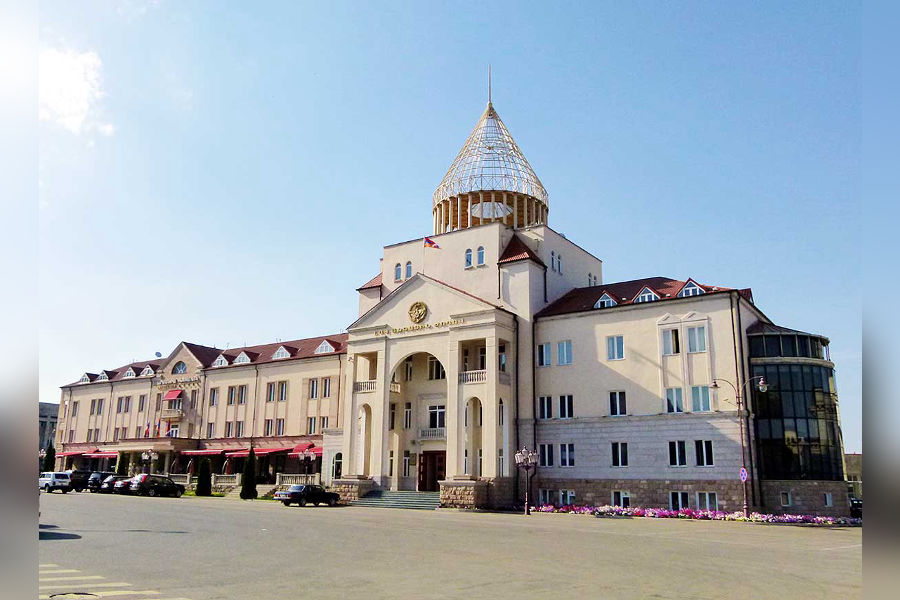
A recorded message from Ruben Vardanyan, currently detained in Baku, was shared on social media by Mane Tandilyan. In it, Vardanyan expressed gratitude to his supporters for their messages, letters and words of encouragement, saying he feels their support and draws emotional strength from it. He extended holiday greetings and spoke about the importance of inner reflection, describing personal resilience as a key source of strength.

Vardanyan emphasized the value of maintaining a positive and hopeful outlook, noting that the ability to experience joy and share it with others contributes to inner fortitude. He encouraged listeners to preserve a sense of wonder and anticipation, particularly for children, and urged them not to feel embarrassed about embracing childlike openness and imagination.

He also reflected on what he described as a broader loss of faith — both spiritual faith and confidence in oneself — observing that it is difficult to remain grounded without a clear source of support. Vardanyan expressed hope that people can find such stability in their own lives. He concluded the message by assuring that he is in good condition, offering holiday greetings and once again thanking supporters for their continued solidarity.


Related Articles

Azerbaijan

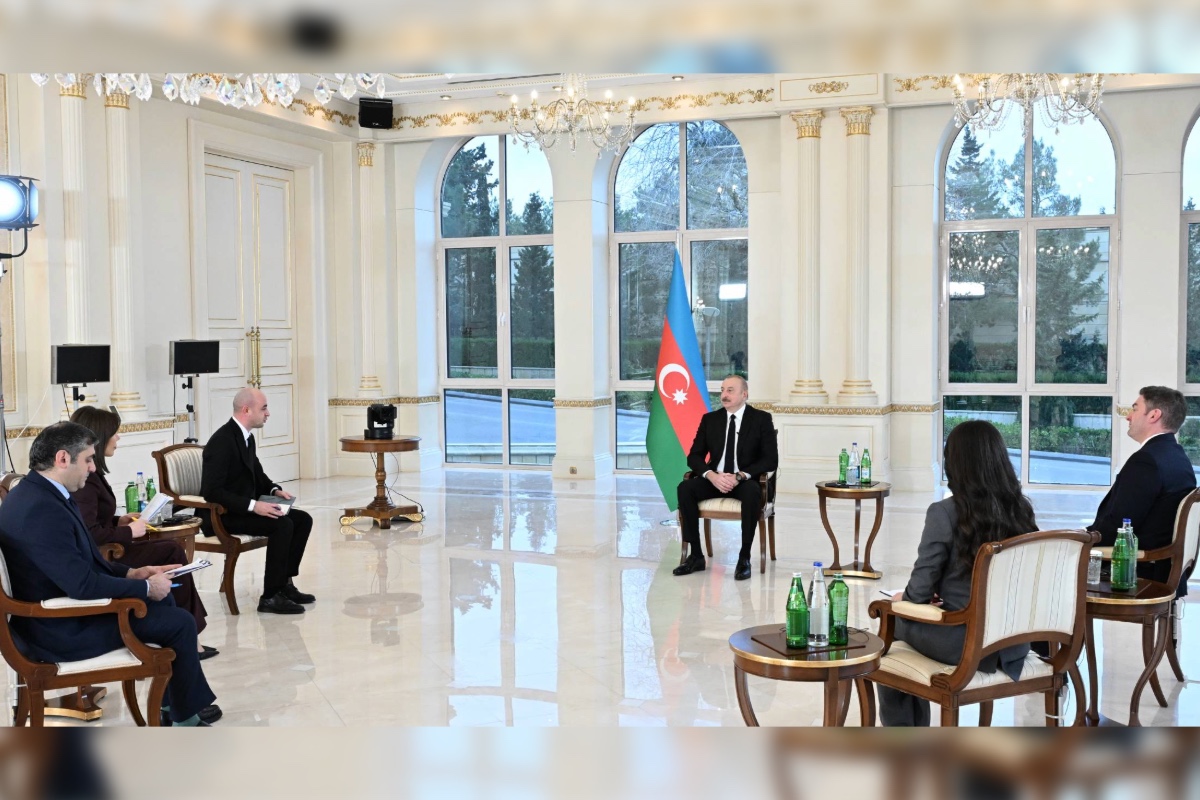
On Jan. 4, Azerbaijani President Ilham Aliyev met with a U.S. congressional delegation, which reportedly included Senator Markwayne Mullin, a Republican from Oklahoma and member of the Senate Armed Services Committee; Representative Jason Smith, a Republican from Missouri and Chair of the House Ways and Means Committee; Representative Ronny Jackson, a Republican from Texas and a member of the House Armed Services and Ways and Means Committees; and Representative Jimmy Panetta, a Democrat from California and member of the House Ways and Means Committee.

During the meeting, Aliyev stated that trade relations have already been established between Azerbaijan and Armenia. Highlighting what he described as the historical significance of these agreements, the Azerbaijani president underscored the role of U.S. President Donald Trump in the process.

At the same time, Aliyev expressed dissatisfaction with Section 907 of the 1992 U.S. Freedom Support Act, which restricts direct U.S. government assistance to Azerbaijan in connection with its actions during the First Nagorno-Karabakh War. While welcoming the suspension of Section 907 under President Trump, Aliyev voiced hope that members of the U.S. Congress would continue efforts toward its full repeal.

Iran

Iranian news agencies have rejected reports by Western media claiming that protesters had taken control of the Malekshahi district in western Iran, according to RIA Novosti.

Tasnim News Agency reported that after several tense hours and clashes with armed individuals — including the death of a security officer — the situation in Malekshahi has been brought under control, due to the presence of security forces. Tasnim said the unrest was instigated by individuals linked to separatist groups during the funeral of two people killed in earlier disturbances.

The agency added that assailants attacked banks, destroying documents and equipment, and opened fire on security forces while urging demonstrators to disperse.

Separately, Mehr News Agency reported that a peaceful gathering in Abadan, held under police supervision, lasted until around 7:00 p.m., after which participants began to disperse. A group of approximately 250–300 individuals reportedly broke away and engaged in acts of vandalism and arson in various parts of the city. Security forces subsequently restored order, and the situation in Abadan is now under control.

Meanwhile, the Iranian Human Rights Activists News Agency (HRANA), based in the United States, reported that the death toll from ongoing protests across Iran has risen to 36. According to HRANA, 34 of the victims were protesters, including four individuals under the age of 18, and two were members of the security forces. The agency added that more than 2,000 people have been arrested during protests spanning 27 provinces.

Syria

The security situation in Aleppo has sharply deteriorated amid renewed clashes between Syrian government forces and units of the Kurdish-led Syrian Democratic Forces (SDF). Heavy shelling has been reported in the predominantly Kurdish neighborhoods of Sheikh Maqsoud and Ashrafieh. 

Syrian authorities have reportedly deployed tanks and artillery to Aleppo, with government forces currently attempting to advance into the Sheikh Maqsoud district. According to the Gandzasar newspaper, authorities have announced the temporary closure of Aleppo International Airport for one day, diverting all flights to Damascus.

Former Syrian parliamentarian Maria Kaprielian told Pastinfo that tensions have been high since the previous day. She said recent negotiations between Kurdish forces and government authorities failed to yield results, after which military operations resumed.

Kaprielian noted that intense gunfire and artillery exchanges are ongoing in the city. She emphasized that the Kurdish districts directly border Armenian-populated neighborhoods, significantly affecting the Armenian community.

According to her account, the situation was relatively calm in the morning, allowing the Armenian community to attend regular church services. By midday, however, conditions worsened rapidly, leaving much of the city deserted. Local authorities later announced the closure of schools and state institutions and advised residents to avoid Kurdish neighborhoods, urging caution for those leaving their homes.

Aleppo Armenian community spokesperson Jirair Reisian said the clashes were particularly intense the previous day, prompting residents to flee their homes en masse.

“Entire neighborhoods were nearly emptied as people began leaving in large numbers,” Reisian said. He added that while the full extent of the overnight developments remains unclear, fighting continued into the morning at a lower intensity.

Residents have reportedly been instructed to evacuate areas designated as military zones to prevent civilian casualties. Reisian stressed that Armenian-populated districts, including Nor Kyugh — home to Armenian schools, churches and community institutions — are located near the affected areas.

“We are naturally remaining cautious. Thankfully, as of now, there have been no casualties or serious damage reported within the Armenian community,” he said.

Earlier reports indicated that residents of Aleppo’s northwestern neighborhoods have begun relocating to areas under government control as tensions persist.

Turkey

Turkish President Recep Tayyip Erdogan has sharply criticized opposition parties in Turkey, accusing them of opposing Ankara’s support for Azerbaijan during the 44-day conflict with Armenia.

Speaking publicly, Erdogan said the opposition consistently acts against government policy, claiming they “label as black what we call white and describe as wrong what we consider right.” He alleged that, during the early stages of the Russia–Ukraine crisis, opposition figures criticized the government while following what he described as directives from foreign decision-making centers to which they now “bow their heads.”

Erdogan also recalled that following the collapse of Syria’s former leadership, opposition figures had called for dialogue with President Bashar al-Assad. He further accused opposition forces of coordinating with the Armenian diaspora during the 44-day war in Nagorno-Karabakh, arguing that they opposed Turkey’s support for what he described as “brotherly Azerbaijan.”

The Turkish president’s remarks come amid continued political polarization in the country, with foreign policy and regional conflicts remaining key points of contention between the government and opposition parties.

Hoory Minoyan

Hoory Minoyan was an active member of the Armenian community in Los Angeles until she moved to Armenia prior to the 44-day war. She graduated with a master's in International Affairs from Boston University, where she was also the recipient of the William R. Keylor Travel Grant. The research and interviews she conducted while in Armenia later became the foundation of her Master’s thesis, “Shaping Identity Through Conflict: The Armenian Experience.” Hoory continues to follow her passion for research and writing by contributing to the Armenian Weekly.

Leave a Reply

Your email address will not be published. Required fields are marked *


Back to top button