



Faith in crisis: Why we must demand more from our Armenian Christian institutions
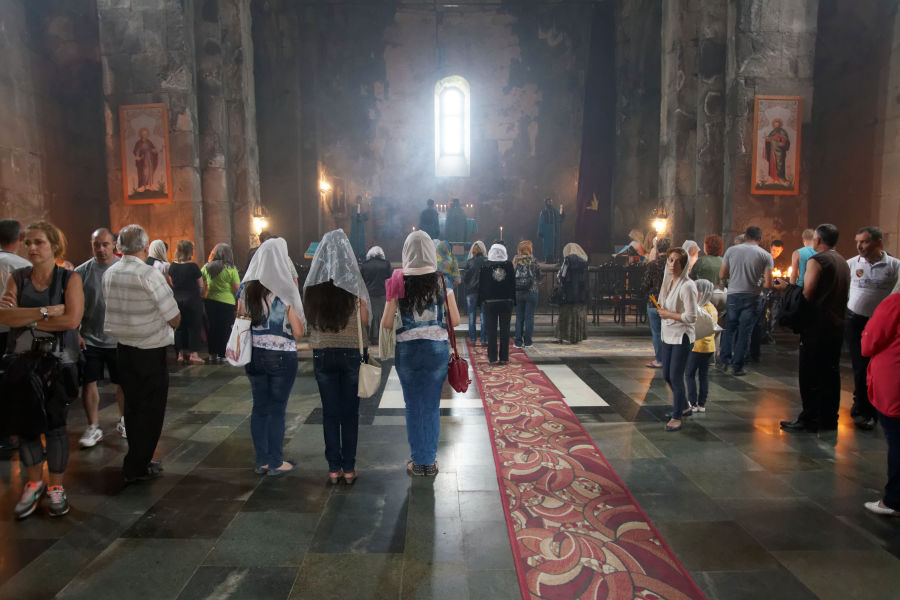
As someone who has written for decades about Armenian identity, justice and survival, I’ve rarely encountered a topic as sobering — and as urgent — as the findings in Khachkar Studios’ new systems map on the U.S. Armenian Christian ecosystem.
The report is devastating in its clarity: 0% of Armenian-American youth read the Bible daily. That’s not a typo. Zero. And only 1% of those aged 18 to 29 attend church regularly. These numbers are not speculation: they are data points drawn from well-researched, verifiable performance indicators.
Some may ask: why does this matter? My answer is simple. The Armenian Church has long been our cultural anchor, especially in the diaspora. But what happens when that anchor is no longer secured to anything?
What happens when our institutions offer tradition without transformation, ritual without retention and leadership without measurable results?
Khachkar Studios isn’t pointing fingers; they’re pointing to root causes. There is no accountability system in place. No annual performance metrics. No national strategy for training and retaining role model households. The Church’s digital tools are outdated. Bible reading apps don’t function. And perhaps most telling of all: when over 50 church leaders were informed of these failures, not a single one responded with urgency.


That’s not faith. That’s inertia.
This is not about blame. It’s about stewardship. We need to build a culture where spiritual health is measured, discussed and improved, just as we would in any high-functioning institution. The Church must embrace performance benchmarking, transparent governance and data-informed action — because souls are at stake.
I urge our clergy, our lay councils and especially our philanthropists to treat this not as a crisis of youth, but as a crisis of leadership. If we cannot engage the next generation with Scripture and purpose, we will lose them entirely — and with them, a sacred legacy.
Let this be the turning point. Let this be the year we expect more — and build more — from our Armenian Christian institutions.




I don’t think the result of survey will be much different in Europe an as such to be surprising. specially in western Europe and Nordic European countries where there is absolute freedom of religion. One can say the more civilised and industrialised a country the less room for religion to play noticeable role in given society. However in a specific situation as Armenian, one can say Armenian church institutions have ignored the ordinary citizens of Armenia and diaspors (as the leadership of Armenian churches continue to prospered in personal material capacity by miliking off, “yesterday’s” non intelectual rich Armenian) at the same time ordinary Armenian have carried on achiving their spiritual fulfillments by Do It Yourselfe methodes. Armenian church leaders don’t understand that Armenian do not need church to reach God ( provided if they are believers). May be Armenian in diaspora who are believers and are in need of church, should follow the prime mister of Armenia in modernisation of Armenian church where they live