



Isn’t it a pity?
Music stirs incredible emotions in most of us. One of its universal joys is that it can be interpreted — and therefore made relevant — to countless people. It evokes heartfelt memories and sad moments along our personal journeys.
In the 1970s, a dear friend of mine, Manoog Kaprielian, who passed away recently, created music videos for the Armenian community long before they became popular. Utilizing the pre-digital technology available at the time, he molded the “hyphen” that binds Armenians in this country into a new experience. By blending American rock or pop music with Armenian visual themes, he was able to strike deep emotional cords that united our dual identities. These creations were called “sight-sound modules,” an apt description: the “sight” consisted of the themes of the genocide, unity or freedom, while the “sound” was the music of our time, paired with poignant lyrics. Today, technology is efficient and seamless, but all brilliance begins with an idea.
This week, Armenians remember both the birth and baptism of Our Lord Jesus Christ. As American Armenians, we celebrate over two weeks, beginning with Western Christmas, New Years then Armenian Christmas. At a time when the spiritual essence of Christmas can get lost amid the commercial chaos, we are fortunate. As Armenians, we have a path for both traditions. January 6 allows us to embrace the spiritual nourishment of Our Lord’s birth and baptism. Every year, we look forward to the reoccurrence of these milestones, which energize our faith.
We live in challenging times, full of distractions from spiritual peace. It has become increasingly difficult to separate earthly struggles from joy. As I write this column, Armenians are celebrating Christmas. Social media allows us to share and witness celebrations across the diaspora and the homeland. Our global presence enables us to experience the Soorp Badarak and Blessing of the Water services in virtually every hemisphere and time zone — live streamed first from Armenia and then from our cathedrals in New York. Alleluia!
I must be honest. This year feels different.


When we attend services this year, there are too many reminders of the tragic divisions between our beloved church and beloved homeland. I hear our sweet sharagans sung across the world and think of priests in jail, renegade priests and divisive actions. We hear the name of the Catholicos during the Badarak and think of how many churches are now excluding it. Karekin II has been somewhat unpopular for his entire tenure, but how did it reach a level where his presence is denied?
I see the faces of the faithful, worried about the future of the church. I wonder what the world thinks of a country blessed with sovereignty — long denied throughout modern history — yet now choosing internal conflict between its two most important institutions.
There are times in church when spiritual solace is interrupted by healthy sounds, such as restless young children. This is a blessing, for a church without the antics of little ones is a dead church. But the conflicts we face today are self-inflicted and purely negative. We grieve them as we would the loss of a loved one.
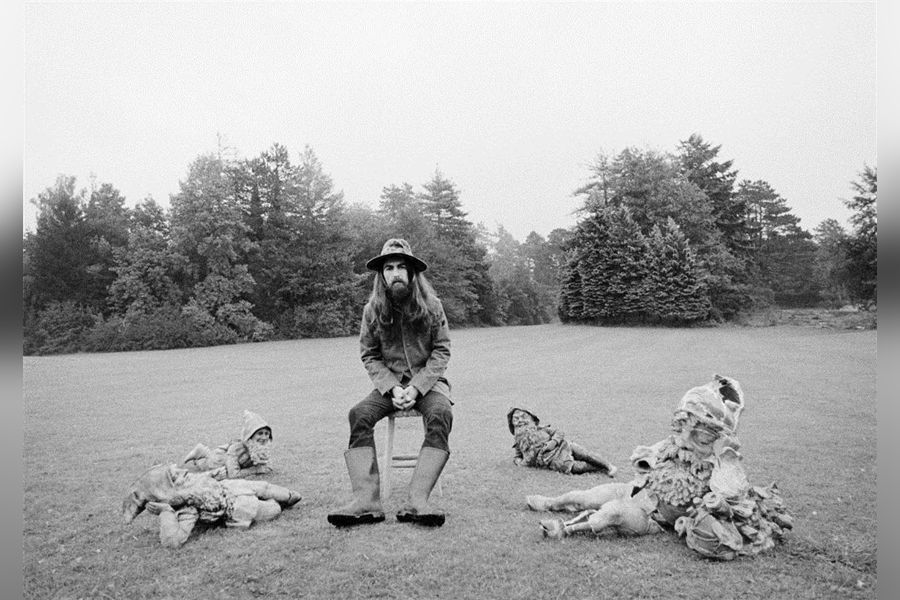
After leaving church, I thought of music. What song could lift me from this valley? It never fails — but not in the way I expected. I thought of George Harrison’s 1970 song “Isn’t It a Pity,” generally believed to reflect his thoughts on the breakup of the Beatles. The opening lines read:
Isn’t it a pity?
Now, isn’t it a shame
How we break each other’s hearts
And cause each other pain?
The song reflects Harrison’s artistic brilliance and has resonated across countless lives. Honestly, the title says it all. Many of us live far from Armenia, outside the immediate boundaries of this crisis, yet we feel its impact and our own powerlessness. A small nation under constant threat depends more on unity — or, at least, civility – than larger nations that can withstand the inefficiencies of division. Our own United States is experiencing its most divisive politics in generations, yet the stability of the country remains. It is a testament to the check and balances of our political and economic system, honed over a long learning curve of nearly 250 years.
Calling the conflict between the church and government a “pity” reflects our frustration at its persistence and lack of resolution, while embodying our love for both institutions. This is the most debilitating type of conflict for Armenians who embrace both patriotism and spirituality. Since the kingdom of Armenia adopted Christianity in 301, church and state have been interconnected. At times, the church even acted as a de facto civil administration, such as under the millet system during nearly 500 years of Ottoman Turkish rule. Asking Armenians to choose between the church and state is tragic. It creates false hope and further conflict.
While many Armenians have reacted with anger, I feel emotionally drained. How can a people with so much capability, who refuse to fade into the woodwork of history, engage in so much self-inflicted conflict? We must temper anger, because our hearts are broken. Many of us are left with the depressing thoughts of yet another preventable conflict and the hope of recovery. We must never forget the power of prayer. It is too easy to defer to emotional outbursts that add little value. We should pray for leadership, civility and reconciliation. As an Armenian Christian, I sometimes ask whether we are worthy. Of course, our Lord forgives us when we repent and seek forgiveness, but our selfish actions suggest that we must reflect on our own free will rather than blame external factors.
Despite all the palace intrigue about Russian influence in the church, Moscow has little to do with the undisciplined behavior of some clergy. Likewise, the government is making the decisions to arrest and investigate. Unfortunately for the common faithful, both sides are entrenched in very hardened positions. The government demands the resignation of the Catholicos, while the latter refuses to accept this position. In my view, the most disheartening aspect of this crisis is the division among the clergy — a fracture that threatens long-term instability, given the importance of loyalty within the hierarchical brotherhood of Holy Etchmiadzin.
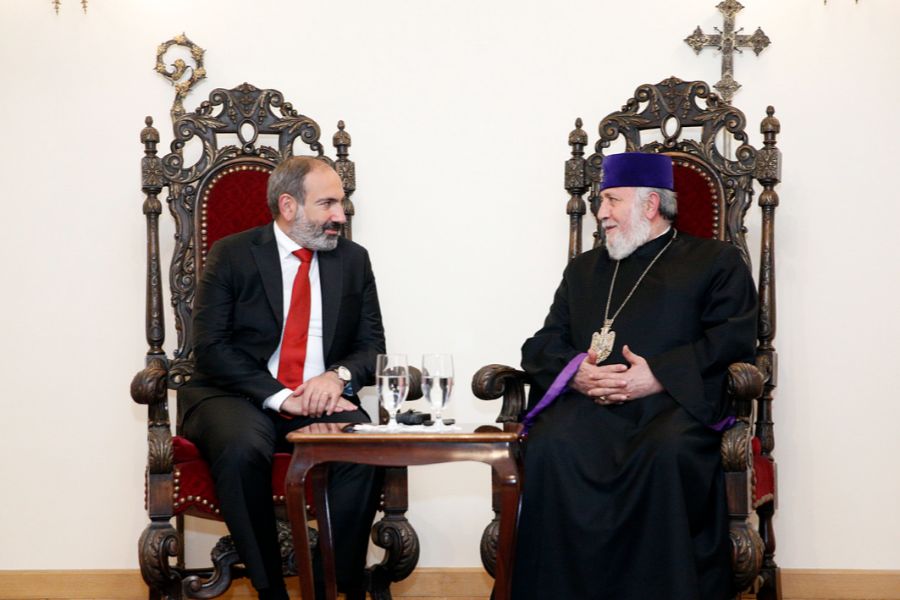
The current environment suggests a crisis of attrition. The direct and public call for Karekin II’s resignation has not worked thus far, and I am sure there is great reluctance by the prime minister to enter Holy Etchmiadzin. Attrition may take the form of continued defections among senior celibate clergy, disrupting morale and impairing decision-making bodies such as the Spiritual Council and the Synod of Bishops. The government is hoping that more defections and pressure will herald a resignation.
Church canons call for an international assembly of elected clergy and lay delegates, yet the government is suggesting an alternative process. This is why it is important to look beyond personalities. The integrity of church canons and succession procedures are frankly much more important to the church’s long-term health.
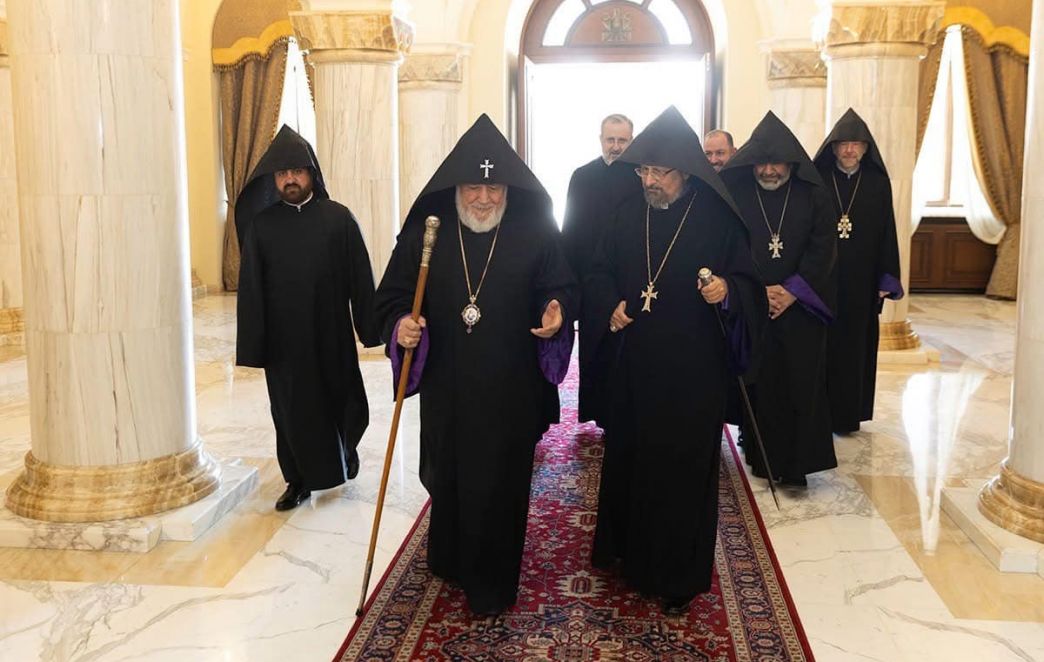
One of the more curious aspects of this bad dream has been the motivation or intent of the 10 dissident bishops who signed a public statement calling for the sitting Catholicos to vacate his seat. Such behavior is highly unusual for a church known for public discipline and loyalty. We usually reserve our negative opinions for private meetings in a more discreet environment. If these bishops oppose the Vehapar on moral and corruption grounds, why now, when these allegations are not new — only their source is?
With due respect, the public nature of their dissent probably has more to do with the emergence of substantial opposition from the government. Is it possible that these bishops broke ranks with the hope of additional influence in a successor administration? Public statements do little to calm the fears of the faithful. Are these bishops courageous truth-tellers, or are they contributing to the weakening of our beloved church? These questions can best be answered in an atmosphere of civility and Christian love.
We often justify actions based on idealistic notions to calm public concerns. The recent upheaval in Venezuela, for example, is less about restoring democracy or drug transporting and more about controlling the regional petro-economics and keeping China’s influence out of the region. Moral arguments wear thin in a cynically corrupted world.
At its core, this conflict involves a church leader misaligned the prime minister’s vision. Rumors of Russian influence within the church and overt participation in anti-government politics have soured relations between the leaders of Armenia’s two most important institutions. While the government has a duty to uphold the law equally, reactions have been understandably mixed. Some agree with the government, having long felt uneasy about Karekin Vehapar. Others support the government’s broader vision and see this as an opportunity ahead of the 2026 elections.
Of course, there are many in Armenia and the diaspora who may disagree with the church’s inaction on these issues but do not believe state intervention is warranted unless national laws have been broken. Still others understand Armenia — and their Armenian identity — primarily through the church and continue to stand by it, despite its shortcomings. For them, this is a matter of faith as much as of an institution.
What is missing in this labyrinth is the will to resolve the conflict without inflicting permanent damage. Armenia and its global nation are constantly recovering from calamities not of their making. Perhaps we should try and prevent the ones within our control.
Isn’t it a pity?
Now, isn’t it a shame…


Well written Stepan.
I am under the impression that there’s a typo in the last sentence of the last paragraph, and that it should read:
“Armenia and its global nation are constantly recovering from calamities not of their making. Perhaps we should try and prevent the ones WITHIN our control.”, Right?