


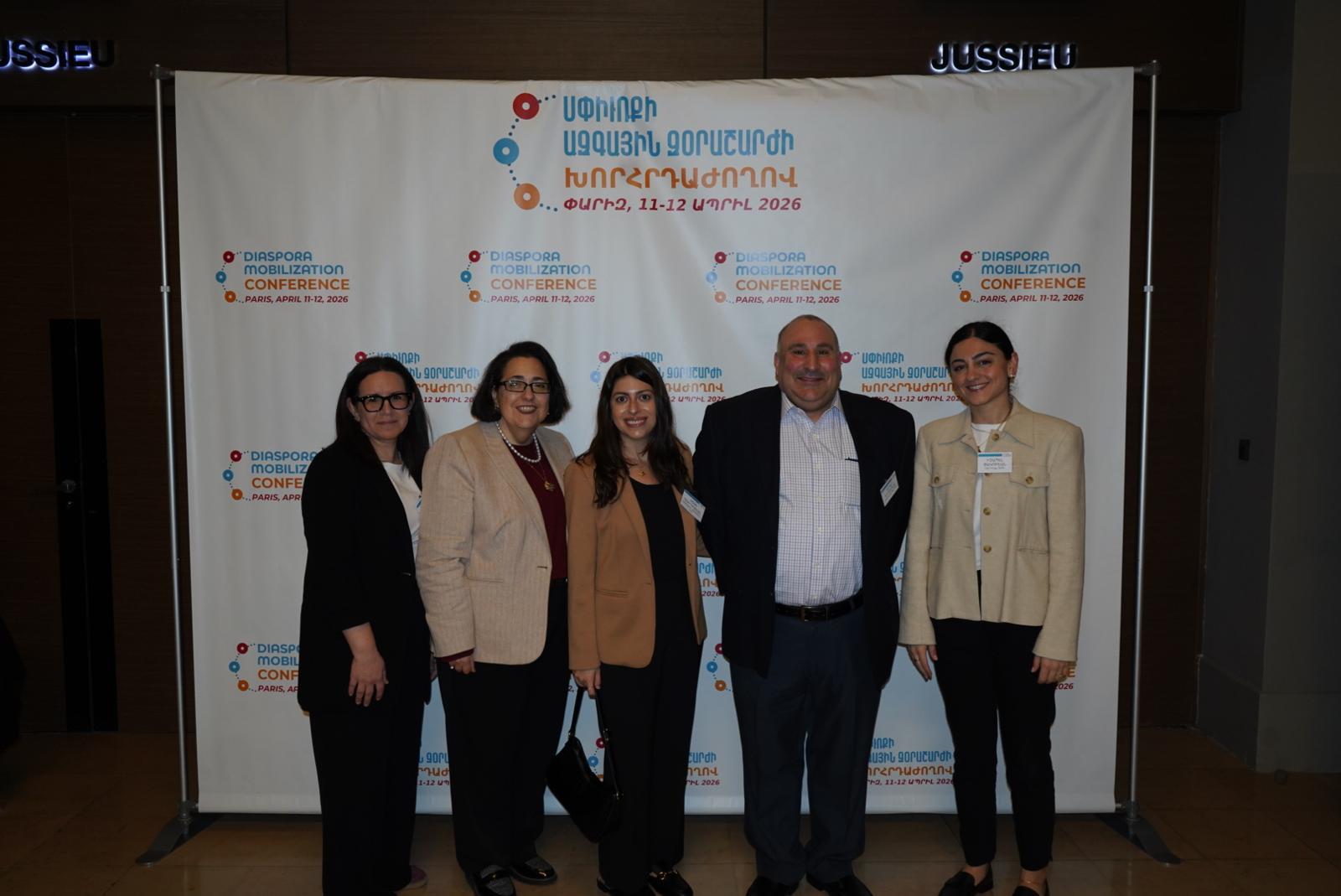
On April 11, the Diaspora Mobilization Conference opened in Paris. The conference addressed national challenges facing the Armenian diaspora and homeland in recent years and explored ways to overcome them. The conference brought together more than 150 representatives from 25 countries, including community leaders, organizers, institutional representatives, political figures, scientists, specialists, professionals, business leaders and youth.
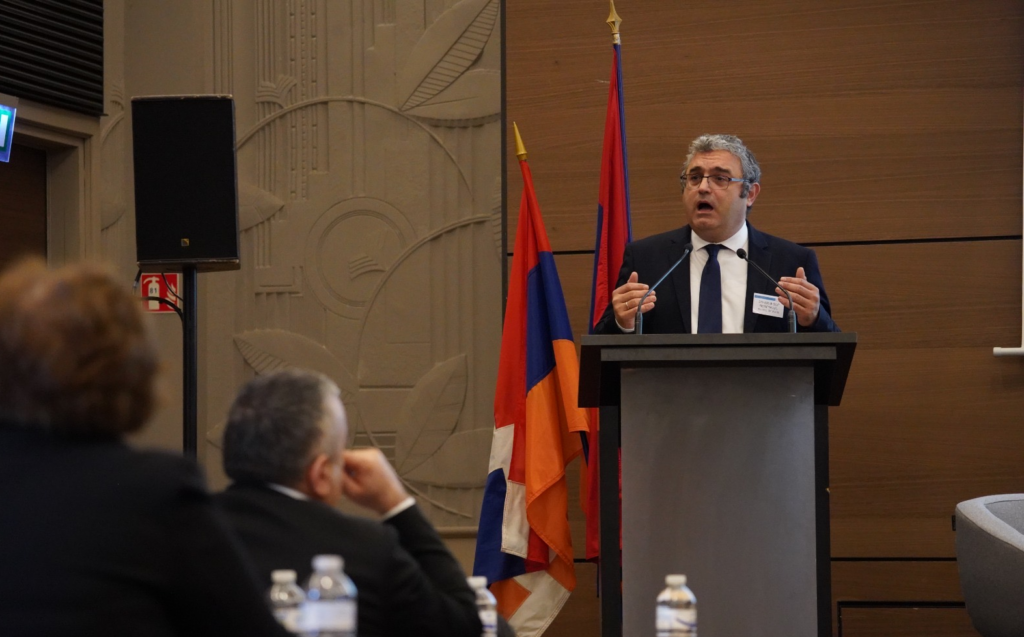
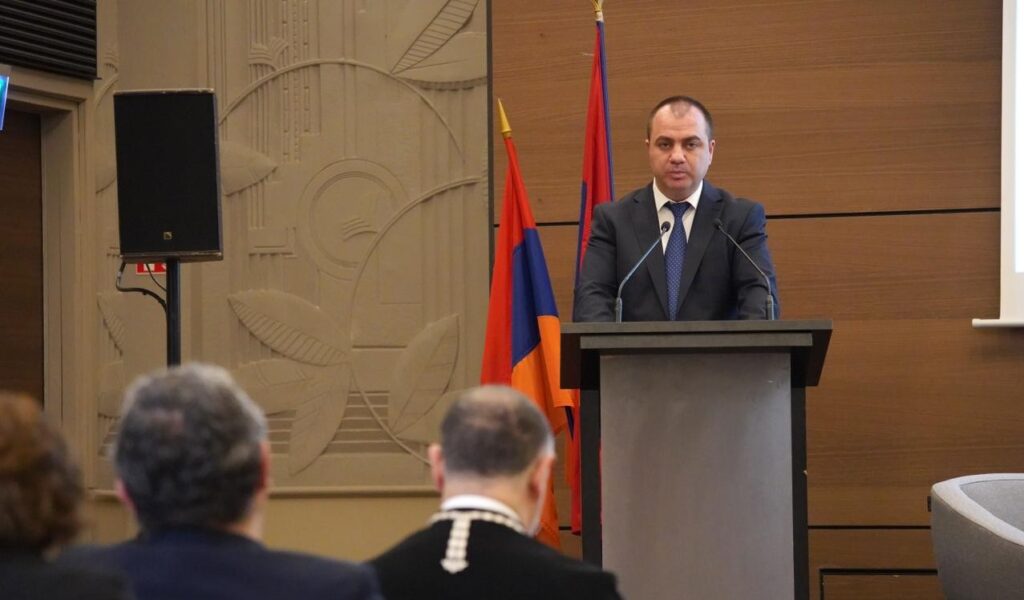
The opening speech was delivered by ARF Bureau member Hovsep Der Kevorkian, who said, “We stand at the most fateful juncture in our history, where the state foundations of Armenianhood are being shaken and national identity is being subjected to deliberate and systematic attacks by the authorities of Armenia.”
Der Kevorkian added, “For the diaspora, any attempt to diminish the Armenian Genocide constitutes a red line,” emphasizing that “we must act not only against the dangers but also in pursuit of pan-Armenian goals.”
Speeches by Catholicos of All Armenians Karekin II and Catholicos of the Great House of Cilicia Aram I were also presented.
Catholicos of All Armenians Karekin II said, “Today, our people face both external and internal challenges. Deep concern is caused by divisions within our national life, the sowing of hatred, the targeting of national institutions and the strained state of Armenia-diaspora relations. The mission of the Church and all Armenian organizations is the same: to unite national potential, make the homeland secure and safe for all Armenians, strengthen Armenia-diaspora cooperation and preserve our national identity.”

Catholicos of the Great House of Cilicia Aram I said, “We are living in anxious times. Armenia, the diaspora and our people as a whole are confronting crises and challenges. We consider this initiative — dedicated to realistic and comprehensive discussions of these challenges — to be both timely and imperative.”
Catholicos Aram I outlined the following points:
- The harmonization of diasporas formed in the post-Genocide and post-independence periods is an urgent priority.
- The lifespan of a self-centered and self-serving diaspora will not be long.
- Pan-national, state and pan-diasporan agendas must neither be conflated nor set in opposition to one another.
- Despite internal disagreements within diaspora structures over Armenia’s policies, a unified pan-diasporan agenda remains necessary; temporary obstacles should be overcome. Productive efforts in this direction have already been undertaken in recent years in Antelias.
- The diaspora must have both a voice and a role in pan-national issues.
- In light of new geopolitical developments, it is necessary to reassess strategic and tactical approaches — including those related to Artsakh — within the broader framework of national claims.
Speaker of the National Assembly of Artsakh and acting President Ashod Tanielyan said, “The chapter of Artsakh is not closed. These are not merely words; this is an irreversible commitment. The trinity — Artsakh, Armenia, diaspora — has never been and cannot be a mere slogan.”
Tanielyan added, “No Armenian has the right to remain silent when our homeland and our historical heritage — the first school founded by Mesrop Mashtots in Amaras, Kantsasar, Shushi, Dadivank and other sacred sites — are occupied.”
Speaking on behalf of the Artsakh authorities, he outlined the following expectations:
- Keep the Artsakh issue on the international agenda as a matter of the Armenian nation’s right to a homeland.
- Raise the issue of Armenian prisoners of war held captive in Azerbaijan.
- Support the state institutions of Artsakh by recognizing and respecting their legitimacy as bodies elected by the people of Artsakh.
ARF Bureau representative Armen Rustamian said the policies implemented by the authorities in Yerevan have been harmful rather than beneficial to Armenia-diaspora relations, causing deliberate damage. He added that the Ministry of Diaspora was dissolved and replaced by the Office of the High Commissioner for Diaspora Affairs, effectively shifting its mission from fostering Armenia-diaspora relations to defending the interests of the current authorities and serving as their primary propaganda instrument.
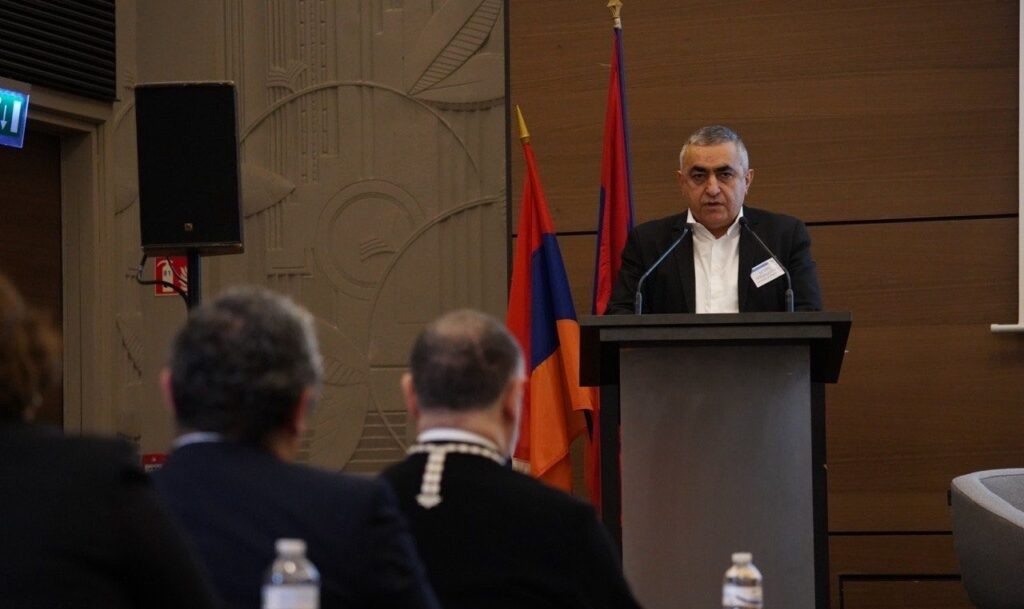
Rustamian said, “Homeland-diaspora relations are, first and foremost, about connecting Armenians with one another. National identity is not solely about place of birth. An Armenian may live in the United States or the Russian Federation, speak English or Russian, yet still identify with their Armenian essence. National identity is an individual’s belonging to a specific nation with which they identify through language, homeland, culture, traditions, history and a shared system of values.”
Rustamian outlined five models of homeland-diaspora cooperation, placing particular emphasis on:
- Repatriation (as in the case of Israel)
- Economic integration (China, India)
- Cultural and identity issues (Israel, Ireland)
- Political integration (France, Turkey)
- Hybrid models, where all directions are emphasized
He said, “In Armenia’s case, all of these directions should be prioritized. Moreover, today it is important to emphasize not only repatriation but, at a deeper level, ‘re-Armenianization.’” “One nation, one homeland, one purpose,” Rustamian concluded.
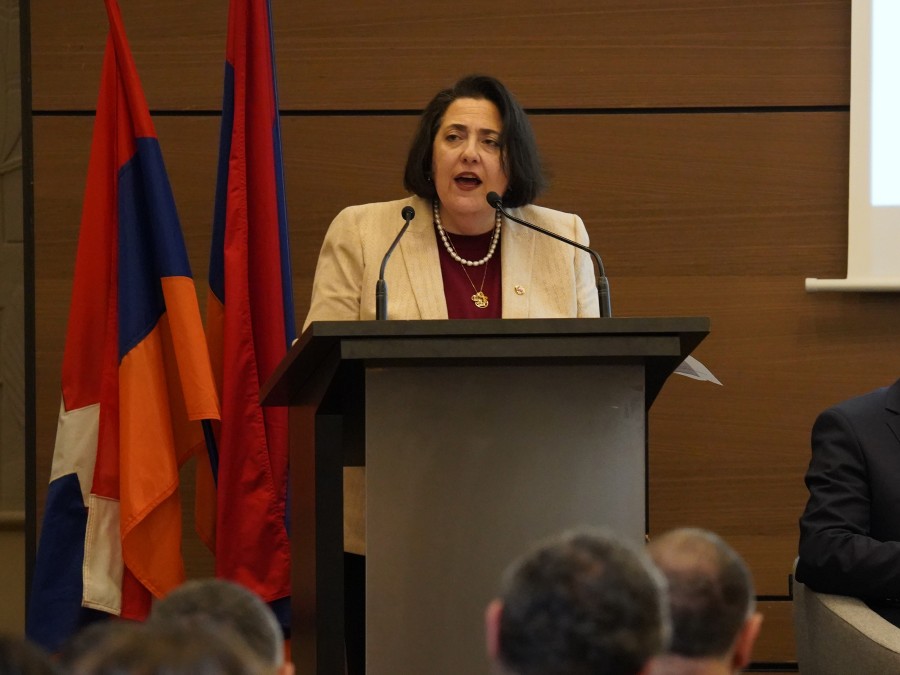
Elizabeth Chouldjian, communications director of the Armenian National Committee of America, described the diaspora as a geopolitical force and the nation’s “second army.” She rejected the “Real Armenia” approach as “managed decline.”
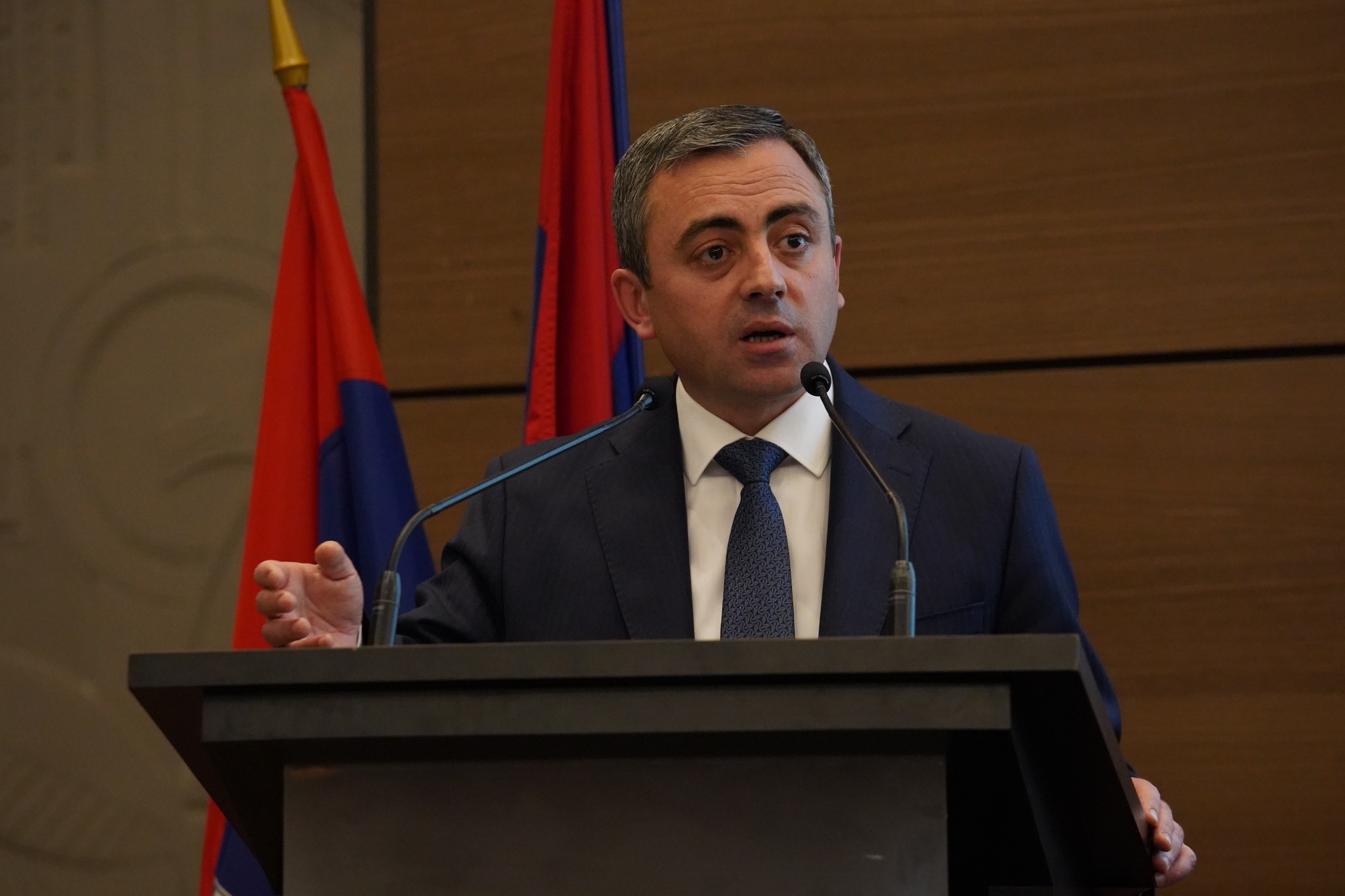
ARF Armenia Supreme Body Chairman Ishkhan Saghatelyan said, “In light of the existential challenges facing our country, the strategic role of the diaspora becomes indispensable. In the coming days, discussions will center on new horizons in Armenia-diaspora relations and overcoming the current crisis, as well as the role of national institutions and the Armenian Apostolic Church in addressing the challenges threatening Armenian identity and the formation of a pan-Armenian unified agenda.”
Welcoming remarks were also delivered by Ardy Kassakhian, Armenian American politician and former mayor of Glendale, California; Vice President of the Union of Armenians of Russia delivered the remarks of Ara Abrahamian, businessman, public figure and president of the Union of Armenians of Russia; and Ara Toranian, co-chair of the Coordinating Council of Armenian Organizations of France (CCAF) and editor-in-chief of Nouvelle d’Arménie.
The conference program unfolded as follows:
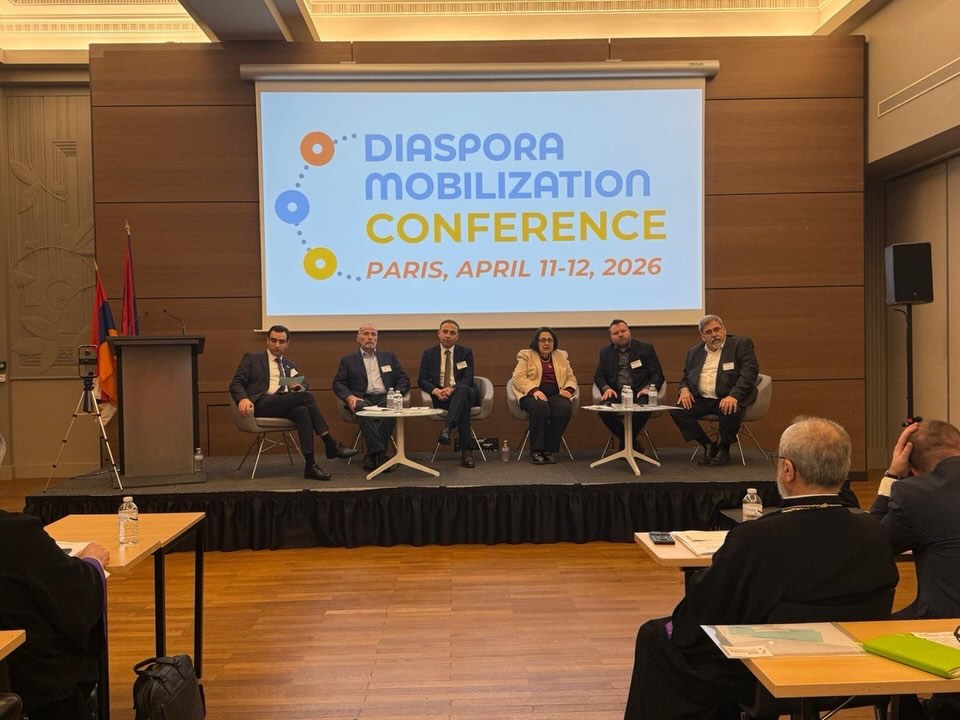
1. The strategic role of the diaspora in solving national issues: What is the diaspora’s political agenda?
- Vahan Zanoyan — writer, columnist, economist and national security adviser, Armenia/United States
- Gegham Stepanyan — human rights defender of the Republic of Artsakh
- Elizabeth Chouldjian — communications director of the Armenian National Committee of America
- Jonathan Spangenberg — chairman of the Central Council of Armenians in Germany
- Giro Manoyan — head of the Armenian Cause Central Office of the ARF Bureau
Moderator: Dr. Gevorg Ghoukassian — coordinator of special programs at the Armenian Cause Central Office of the ARF, Yerevan
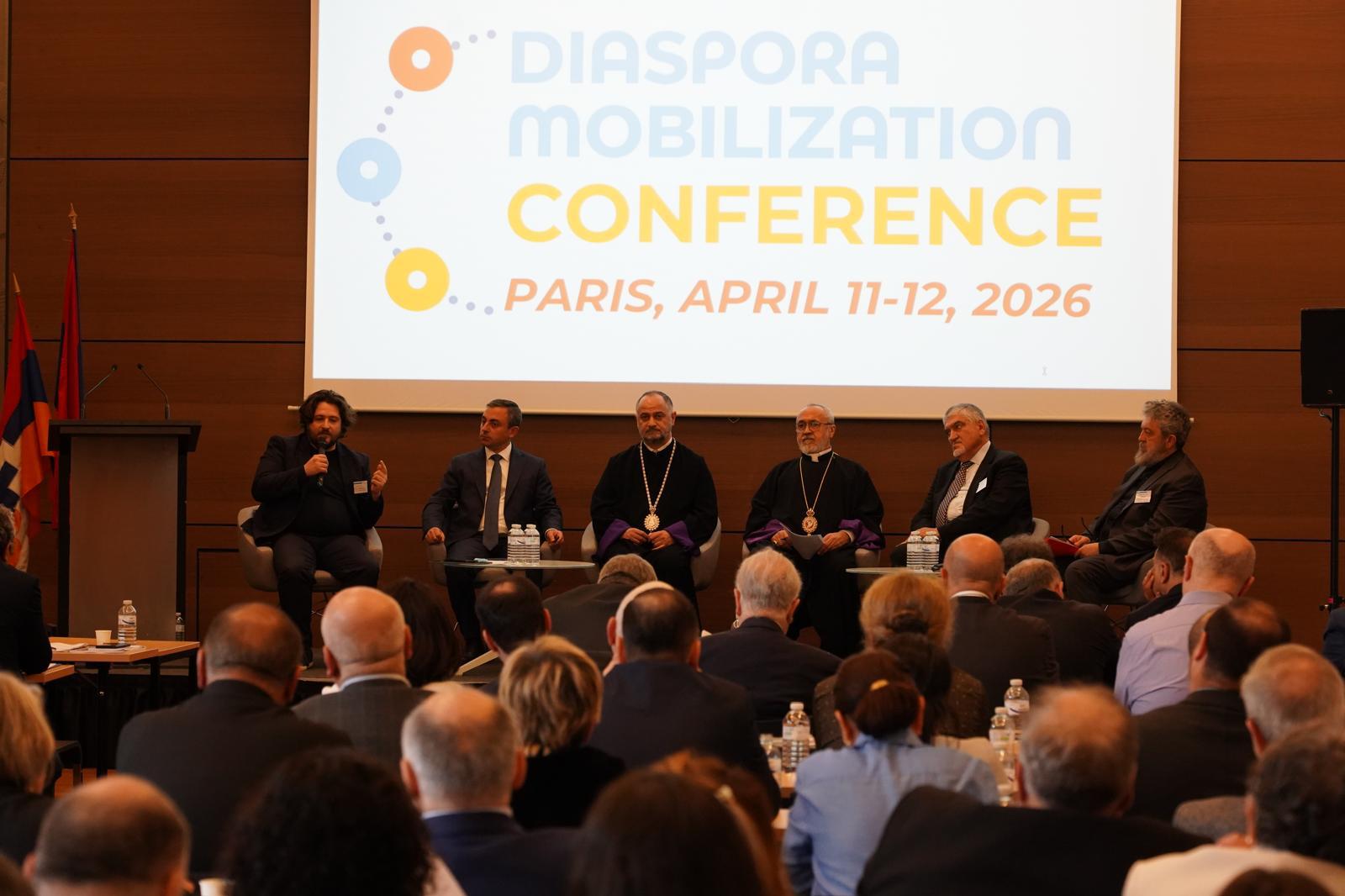
2. The importance of national values and the Armenian Church in preserving Armenian identity in the diaspora: Challenges of the new situation
- Ishkhan Saghatelyan — chairman of the ARF Supreme Body of Armenia and lawmaker from the Armenia Alliance in the National Assembly of Armenia
- Bishop Grigor Khachatryan — primate of the Diocese of France of the Armenian Apostolic Church
- Archbishop Shahe Panossian — prelate of the Armenian Diocese of Lebanon of the Catholicosate of the Great House of Cilicia
- Dr. Sarkis Mesropian — national, church and public figure
- Fr. Garnik Koyunyan — pastor of St. James Church, Montreal, Canada
Moderator: Narek Hanneyan — Armenian language coordinator at the Hamazkayin Marseille Jemaran, France
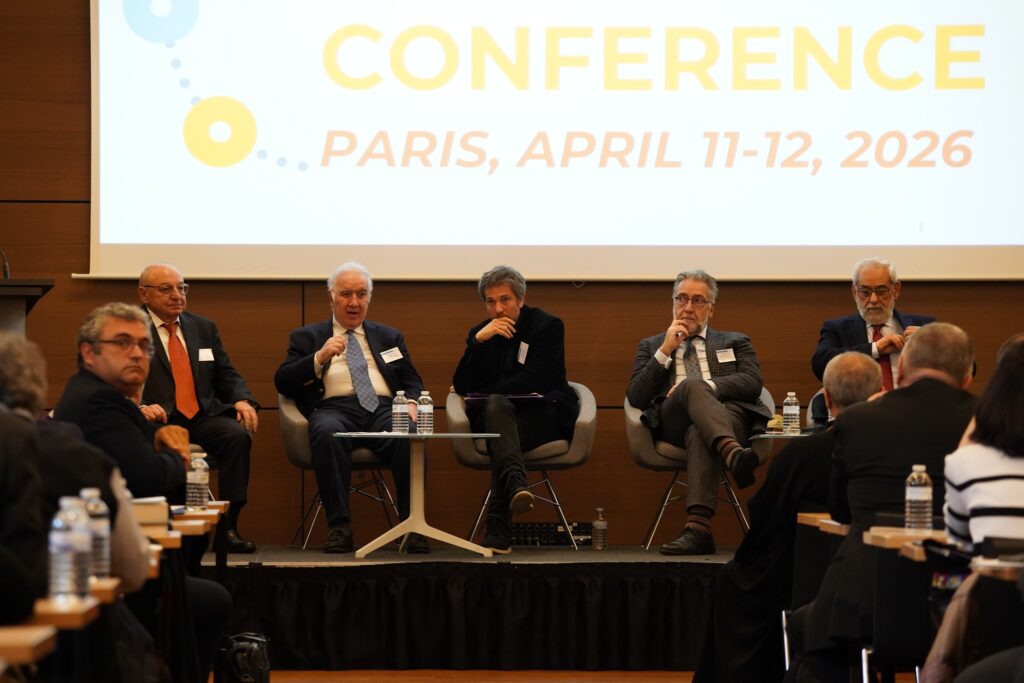
3. The fundamental issues and horizons of Armenia-diaspora relations
- Vazgen Manukyan — former prime minister of the Republic of Armenia
- Harut Sassounian — publisher and editor of The California Courier, former vice president of the Lincy Foundation and president of the Armenia-Artsakh Fund, political analyst, United States
- Sarkis Shahinian — president of Armenian associations of Switzerland and honorary president of the Switzerland-Armenia Association
- Tigran Yegavian — journalist and political analyst, France
- Hagop Pakradouni — member of the ARF Bureau and representative of the Armenian parliamentary bloc of Lebanon
Moderator: Dr. Gevorg Ghoukassian — coordinator of special programs at the Armenian Cause Central Office of the ARF, Yerevan
Following the third roundtable, participants visited the monument to Komitas Vardapet dedicated to the Armenian Genocide, where remarks were delivered by Bishop Grigor Khachatryan, primate of the Diocese of France of the Armenian Apostolic Church, and Murad Papazian, co-chair of the Coordinating Council of Armenian Organizations of France (CCAF) and member of the ARF Bureau.
On the second day, the fourth roundtable was held:
4. Diaspora mobilization and revitalization for pan-Armenian goals
- Dr. Raffi Galfayan — specialist in international law, secretary-general of the IODA initiative and former secretary of the International Federation for Human Rights (FIDH), France
- Garnik Kerkonian — lawyer and member of the committee for the protection of the fundamental rights of the people of Artsakh, United States
- Kaspar Garabedian — president of the European Armenian Federation for Justice and Democracy and founding member of the “Europeans for Artsakh” initiative, Belgium
- Prof. Hagop Gulludjian — chair of the Khachigian Chair of Armenian Language and Culture at UCLA
Moderator: Dr. Mkhitar Mouradian — public figure, businessman and bioanalyst, United States

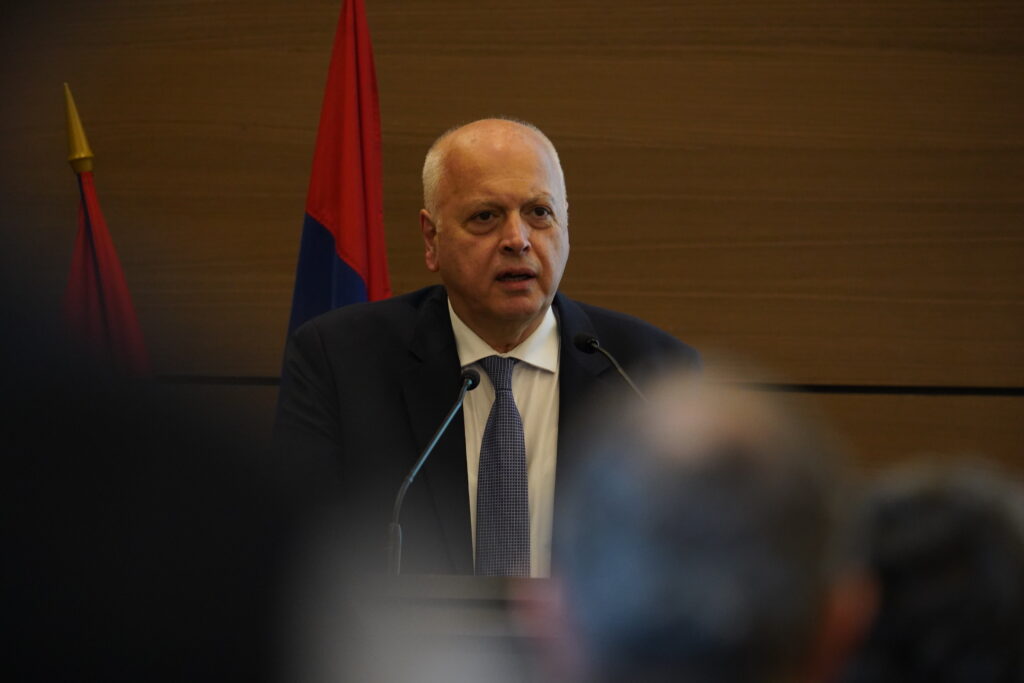
In his closing remarks, ARF Bureau member Daron Der Khachadourian said, “The diaspora has never been merely a structure offering emotional support. It has been an expression of national will, a guarantee of survival, and a pillar of statehood. At the same time, we emphasize that the issue of Artsakh is not closed.”
The conference closed with the national anthem of the Republic of Armenia, “Mer Hayrenik.”