



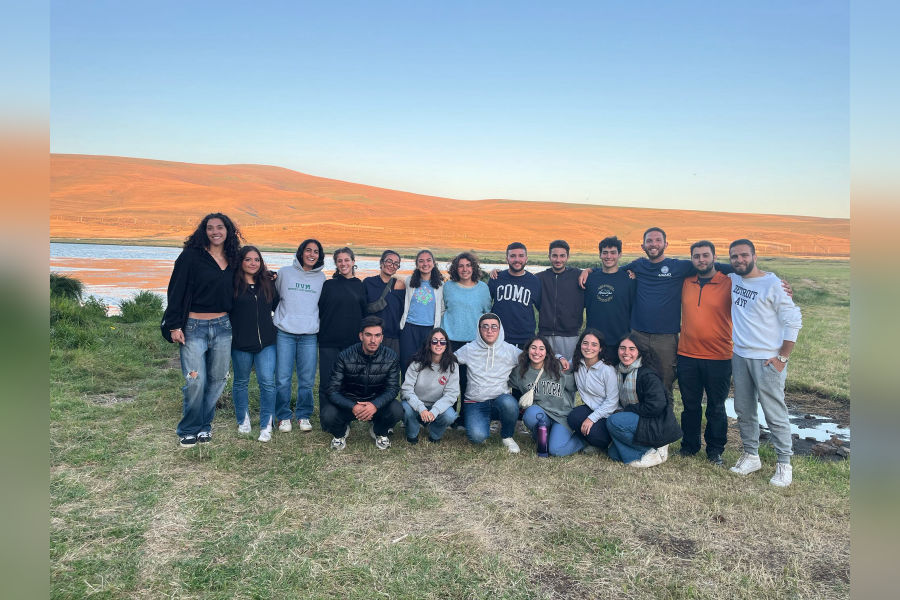
There are roads measured not by kilometers, but by the pulse of the heart. Such are the roads leading to our historic homeland and the journey to Javakhk.
The summer of 2025 marked one of the most significant turning points in my life. I, a young person displaced from the heroic land of Artsakh, my heart still bearing the fresh wounds of loss and longing, was given the opportunity to participate in the Camp Javakhk program. This camp was more than a summer break; it was a pilgrimage to our historic land, to our very roots. For years, Camp Javakhk has been a life-giving spring where Armenian youth from all corners gather with a single purpose: to serve the homeland, to know one another and to strengthen the bond that makes us one nation.
When I lost my birthplace, I began to search for Artsakh — as an idea, as an eternal covenant. And now, for the first time, I set foot on a land that was historically Armenia, yet geographically severed from it. It was a confrontation between the pain of my past and the unyielding resolve of Javakhk’s Armenians. It was a journey toward a place that had preserved what we had lost in Artsakh: an Armenian identity firmly rooted in the soil. Camp Javakhk became a new path for me: to a land that speaks Armenian, to a people who live with the Armenian soul, to children in whose gaze I saw the lost courtyard of my own childhood.
As an ARF Artsakh Youth Organization member, the aftermath of the 44-Day War intensified my conviction that our generation’s chief responsibility lies in working with children, especially in their Armenian upbringing. Amid the ashes of war in Artsakh, we organized dozens of camps to heal the children’s souls and to give them hope while raising them in the Armenian spirit.
With Artsakh no longer physically present, I considered it my duty to continue that work — and the best place for it was Javakhk. The realization that this land, much like Artsakh, was under siege, where people suffered constant deprivations yet stubbornly clung to the soil, only strengthened my resolve.

When I learned that young people from Brazil, the U.S, France and Australia would also participate, my heart swelled with excitement. We, Armenian youth living across the globe, united by the same ideal, were to meet in Javakhk, an inseparable part of our homeland. In this piece, I will convey the feelings and impressions I experienced in the Armenian-populated communities of Javakhk, where I rediscovered the strength I thought had been extinguished with the loss of Artsakh.
From the streets of Tbilisi to the heart of Artsakh: Shushi
On the day of departure, young participants from different continents — speaking many languages yet sharing Armenian cadence — stood out for their patriotism. In their eyes, I saw the same spark that burned in my heart. We were all children of the homeland, united around a single vision: a free, independent and united Armenia.
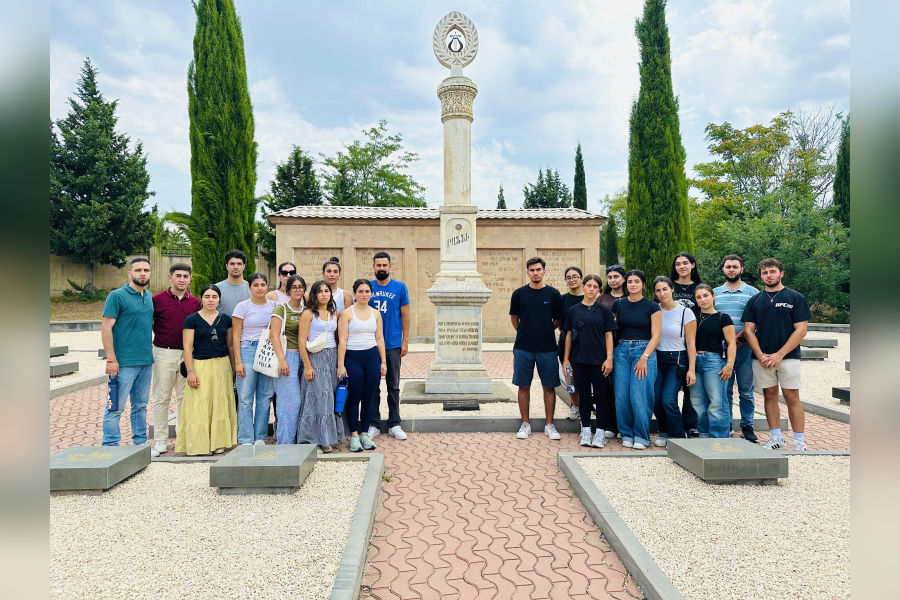
My two-week visit to Georgia began in Tbilisi, where we spent two days exploring the city’s Armenian cultural footprint. We visited the Khojivank pantheon, where only fragments remain, yet the memory of thousands of Armenians endures, including famed cultural and political figures.

I stood before the grave of Raffi, the giant of our literature and national consciousness. His words flashed in my mind: “We cannot undo the past, let us speak upon the present…” His message was clear: transform the pain of the past into a weapon of the present, to forge our wounds into strength. Standing there, I understood that our visit to Javakhk was not about mourning the past, but about shaping the future.
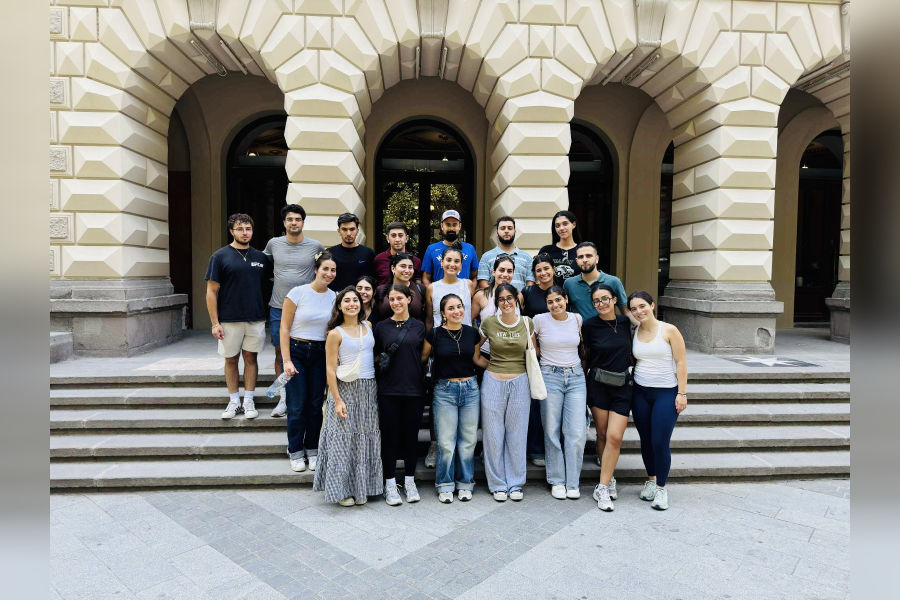
We wandered through the streets of Tbilisi’s old Armenian quarter, where the symbols of Armenian culture were engraved on walls, in the railings of the balconies, on the wood of old doors. I saw a hidden inscription about the Armenian Genocide and felt the unbroken connection that exists between the pages of our history. The city’s architecture, wooden balconies and narrow streets reminded me of our lost Shushi.

We visited the city’s Armenian churches: St. Gevorg, Nor Ejmiatsin and St. Norashen (the latter is non-functioning). Here, in a foreign city, I realized that our churches are not just places of worship but islands of the homeland scattered across the world. And as long as they stand, our faith is invincible.
On Shota Rustaveli Avenue, in front of Tbilisi’s National Youth Palace — formerly the building of the Transcaucasian Seim — we reflected on the 107-year-old decision where the Armenian National Council declared the independence of the Republic of Armenia.

My feelings were indescribable; I was standing before the building where, after six centuries, the Armenian dream of statehood was re-established.
From Tbilisi, we headed to Akhalkalak, where local friends, led by Ungerouhi Karine, were waiting for us. The first pleasant surprise was that everyone knew a young person from Artsakh was participating in the camp. This was immensely moving for me as my presence here had value; Artsakh still lived in people’s memory, interest and love. This realization placed both a sweet burden and a great honor on my shoulders. We moved toward Akhaltskha, while the other group remained in Akhalkalak to continue their mission.
I looked out the window — the landscape reminded me of my native Artsakh villages, yet was different. Fields stretched to the horizon and small villages scattered upon them. It reminded me of Artsakh’s villages clinging to our mountain slopes. I reflected on the parallel fates of Javakhk and Artsakh.
In Akhaltskha, Armenian and Georgian cultures have interwoven over centuries, creating a unique mosaic. Despite difficulties, the Armenian community has managed to preserve its national identity, language and faith.
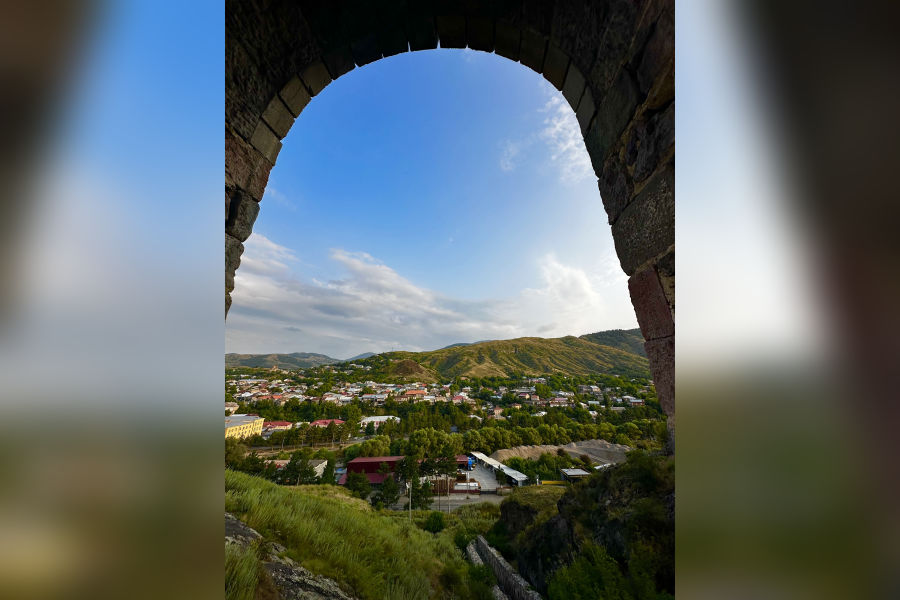
We were warmly greeted by Ungerouhi Nano, whose decades-long dedication has brought camp to life. In her eyes was the conviction that all this had value, that these children deserved the best. Seeing her care and determination brought me back to Raffi’s words.
The enthusiasm of the local Armenian children left a lasting impression. Their mischievous energy, fiery eyes and love of play were a trial for the khmbapets, especially those participating for the first time. The inner fire burning in those children was a sincere expression of the will to live and remain Armenian. The boys were wild, running, sometimes disobedient, but always smiling.
The girls were modest and humble, but with profound glances. They were not afraid to ask questions, sing, dance or argue.
The camp routine as a mission
Daily routines began with a flag ceremony. Children sang Mer Hayrenik (Our Homeland) with such conviction — their small hands placed over their hearts — that even the most weary khmbapet could not help but be moved.
The children engaged in subtle ‘battles’ over whose turn it was to hold the Armenian flag that day, as if that moment itself was the most sublime connection to the homeland. In those small hands, I saw the strength of tomorrow’s Armenia and, in their eyes, the peaceful reflection of the flag: faith and boundless dedication.
I took on the role of khmbapet for the middle group. Our mischievous members never missed an opportunity to be naughty, often earning their share of punishments.
I was genuinely interested in hearing them tell stories about their families, routines and schools. Their conversations were a chaotic competition, where the victory was not about superiority but a sense of belonging. They competed over who could tell more stories and who had more tangible proof of their connection to the camp, measured by the number of camp t-shirts proudly collected over the years.
Our camp days began with exercise, followed by lectures, songs, dances and games.

We taught the children about the rivers, lakes and mountains of the Armenian Highland. We spoke of Ararat as a sanctity, of Sevan as the mirror of the Armenian soul. We recounted Armenian myths — from the birth of Vahagn to the purity of Anahit — but also about the real heroes whose names are inscribed in our modern history, from the freedom fighters of the ‘90s to the boys who perished in 2023.

And those very stories came to life in our songs. The children learned the songs of the Lisbon 5, the Soldier’s Mother, Armenian fedayi and Sose Mayrig.
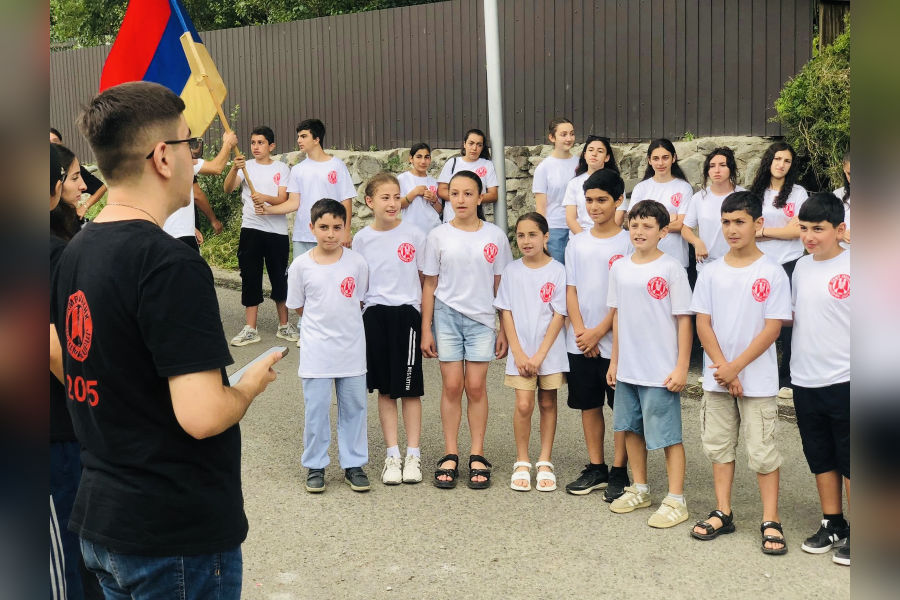
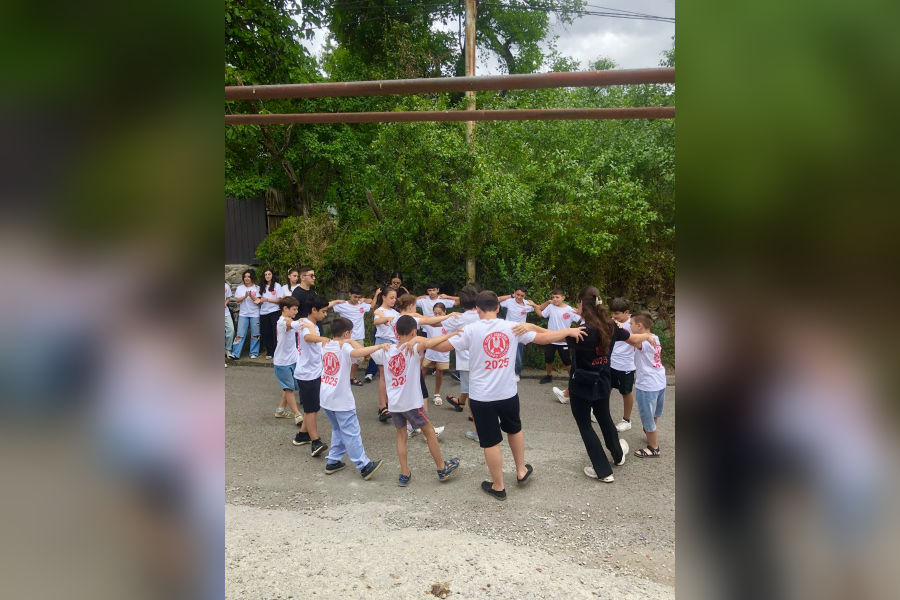
They learned to dance Karno Kochari, Papouri, Khamkhama, Etchmiadzin and other national dances and songs.
It was unexpectedly moving how informed these children were about Artsakh. When they learned I was from there, their eyes sparkled. They asked questions: “Have you been to Shushi?” “Was Hadrut beautiful?” “How do you speak?” They asked to learn words in the Artsakh dialect, to repeat and memorize them, while others proudly shared that their parents had been to Artsakh or that their grandfather had participated in the war. In those moments, I felt that Artsakh still lives — in these children’s curiosity, in their memory, in their language.

As I watched their boundless curiosity, a new hope stirred within me. Optimism replaced despair. I realized that Artsakh is not lost, as long as these children ask questions and strive to understand, remember and preserve.

At that moment, Camp Javakhk became more than a camp — it became a mission. Every young person who comes brings with them a light, a story, a faith. And that light is passed on to the children, turning them into thinkers, storytellers and bearers of tradition.
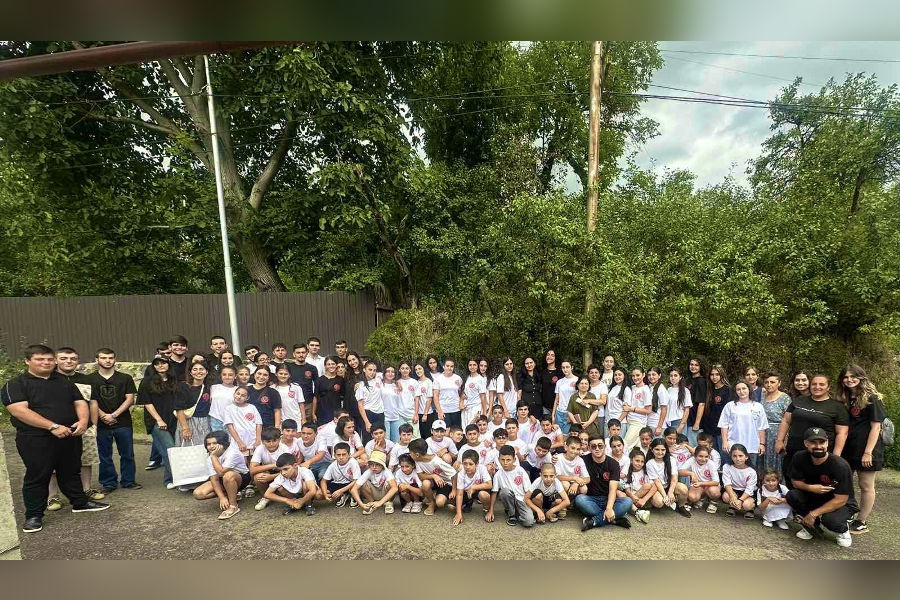
Thanks to this camp, the children of Javakhk are growing into young people who understand the importance of language, faith and (home)land. Being Armenian is not just a name — it is a responsibility. They begin to see that their small community is a symbol of an entire homeland. And we, as Armenian youth, are here to solidify that awareness, to pass it on and to awaken in them what has kept our people for millennia: our history, our language, our land.

One of the most beautiful aspects of Camp Javakhk was the support from young people who had participated for years — as children and teenagers — and returned as mature adults, bringing experience, love and dedication. They had become an inseparable part of camp, shaping it organizationally and ideologically.

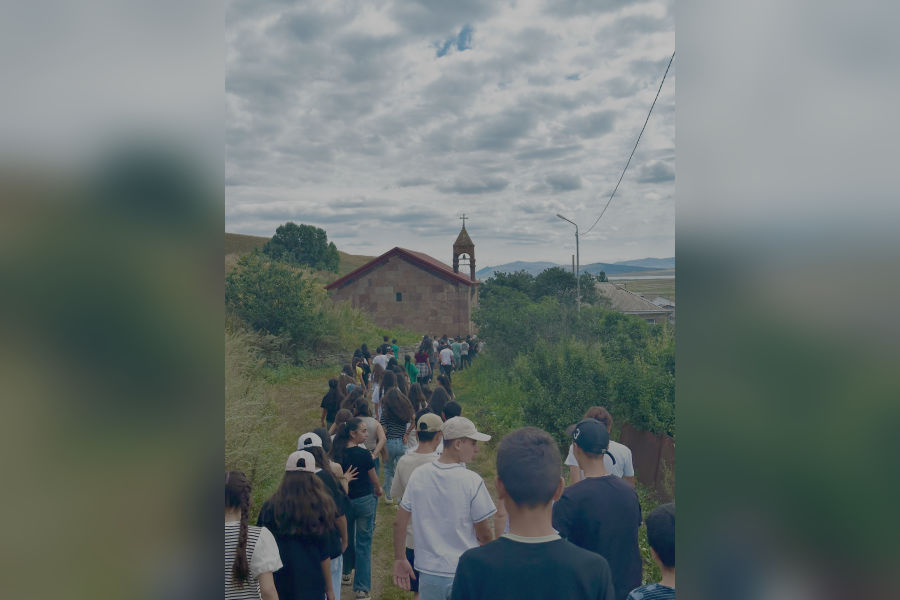
As the day’s lively bustle faded and the sun set behind Javakhk’s mighty mountains, the most sacred moment began. The evenings belonged not to us, but to our collective soul, centered around a blazing bonfire led by the local youth. Our pilgrimage, however, went beyond the campgrounds. One day, accompanied by local friends, we set off for the medieval monastery of Sapara, a place where nature and human faith came together in harmony.

I bid farewell to Akhaltskha with great enthusiasm and resolve to return.

I did not get a chance to say goodbye to my friends — Alex, Vardan, Karo, Arman, Christine, Artyom, Gor, Bagrat, Ani and the others — but I took them with me. Their names now live within me as proof that our history is not finished and that our best songs are still to come. I left, but a part of my soul remained with them, reflected in those fiery blue-green eyes that mirrored our shared eternity.
Daragyugh: The sweet scent of the homeland
After a week in Akhaltskha, our pilgrimage continued to Daragyugh in the Tsalka region — a community that became a balm for my soul. This village was more than a point on the map; it stood as a living testament to Armenian resilience.

Surrounded by foreign-speaking communities, Daragyugh was like an island, holding firmly to Armenian identity amid constant challenges.
We were hosted in the home of Mrs. Maro, a warm and caring woman whose doors were open not only to us but to our history. When neighbors learned that a young person from Artsakh had arrived with the group, they immediately gathered to ask about Artsakh — our homes, our fields, the days of the blockade and the road of the exodus. In their eyes, I saw pain, compassion and heartfelt concern. It was profoundly meaningful to witness in Javakhk that our people were not indifferent to the pain of another part of the homeland. It was a reminder that we are still a nation: unified, sensitive, alive.
The days in Daragyugh were among the happiest. Unlike urban Akhaltskha with its fortress and streets, Daragyugh was entirely rural, reminiscent of my native village. The village’s colors captivated me. I felt as if I had returned to my childhood — the picturesque nature, the sound of cattle bells returning home from the fields, storks nesting on the pillars. Everything exuded the serenity I had longed for.

Every day, I woke before the sun. The village stirred not to an alarm clock, but to the breath of nature. Summer mornings in Daragyugh were clean and cool, as if the mountains exhaled their cold air onto the valley that had slept through the night. Stepping out onto the balcony of Mrs. Maro’s house, I felt the air as a balm for my wounded soul, cleansing not only my lungs but also my thoughts, washing away the sad memories of the previous night.
But the greatest miracle awaited beyond the windows of my room. They were not merely glass panes, but living paintings that changed with every morning, capturing the most beautiful moments of village life.

First came the distant tolling of cattle bells— a melody that reminded me of the carefree years of my childhood. Men with scythes on their shoulders passed beneath my window, their faces bearing the peaceful dignity of people who live in conversation with the earth. From the chimneys rose the first gray smoke of the hearth, carrying the sweet scent of freshly baked bread.
I would sit on the windowsill for hours, drinking in this harmony. The scene felt so familiar, so mine, that for a moment I forgot where I was. I returned, if only briefly, to my lost village. Those mornings became a small paradise, a place where my soul could come home for a few hours before the joyful noise of the camp drew me back to reality.
Gradually, fragrances wafted from the kitchen that a city dweller could only dream of. Mrs. Alisa, Mrs. Maro’s caring daughter-in-law, prepared not just a simple breakfast but the very taste of the village — the bounty of the earth.
There was fresh, pure honey, its taste carrying the scent of field flowers. There was hand-churned butter, melting on warm bread and filling the air with sweetness. And, of course, her golden, honey-glazed cake baked in the oven. These foods did not simply taste sublime; they carried an entire world: the warmth of caring hands, the purity of nature and the feeling of home I had missed so dearly.

Compared to Akhaltskha, more children here came from neighboring communities to participate in the camp — to sing, learn and play. The village women were fully involved in organizing the program, standing out for their diligence, hospitality and care. Even the cakes they baked were not only delicious but infused with love.
From the warmth of the house, we stepped into the lively street to fulfill our daily mission at the camp.
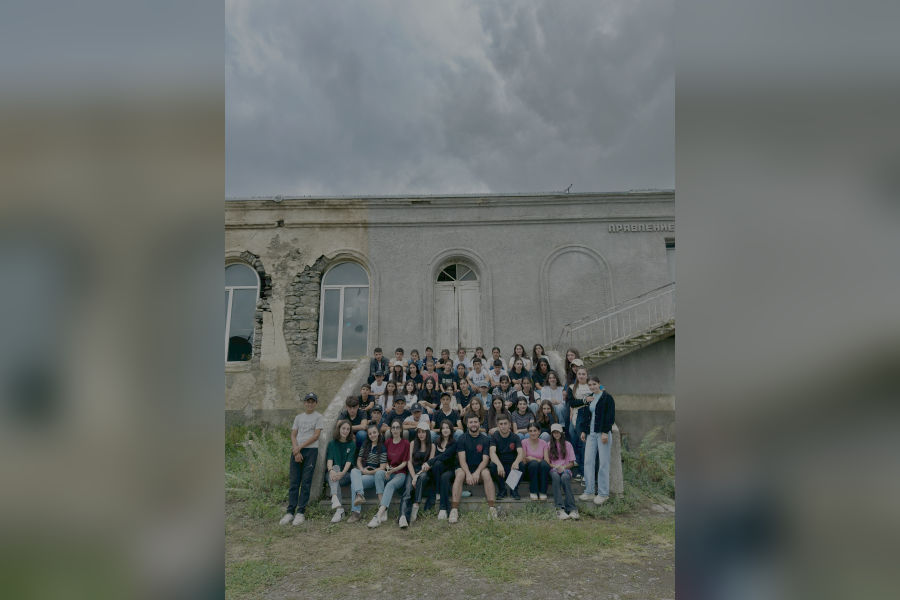
Our routine was packed: lessons, games, singing and dancing. The children arrived eagerly, often before the scheduled start, ready to listen, learn and ask questions. We taught them about Armenian history, geography and culture. Most importantly, we spoke about the homeland — not just as a place, but as a feeling and a responsibility.
My group in Daragyugh was the senior group. The children were mature and informed, carrying a deep sense of national identity. They knew Armenian songs and dances, recognized the heroes and spoke proudly about their village’s past. Working with them was both easy and inspiring. They didn’t wait for lessons; they wanted to share, discuss and delve deeper.
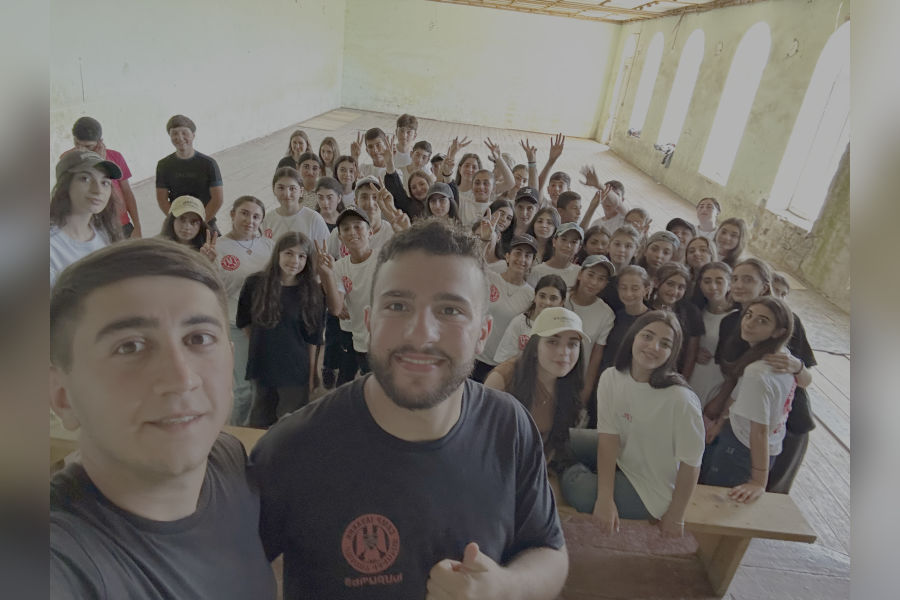
The villagers often approached us to express their gratitude. “The camp has brought the elements of national dance to our village,” they would say. Their words proved that years of work here had borne fruit. Camp Javakhk had become a platform not only for education but for cultural revival.
Some of the lectures were held in the village church courtyard, a place rich with symbolism. Beneath the stone walls and beside the khachkars (cross-stones), we spoke about the homeland, language and faith.
At the end of the last lecture, the youth unexpectedly asked me to share stories about the Artsakh blockade. I told them about the emptied houses of our village, the closed roads, the children born in darkness and the path of the exodus. They listened in silence, their eyes reflecting both pain and pride. I realized that these children were not just hearing the stories — they were living them. Artsakh belonged to them, even if they had never been there.

The older group showed me that Camp Javakhk is shaping a generation — conscientious, sensitive and prepared. They already embodied the values for which we strive.

But our days were not only filled with lessons and meaning. The knowledge gained within the old church walls had to come alive, becoming a movement, a call for freedom. The village stadium, not far from the camp, became the platform for that call.
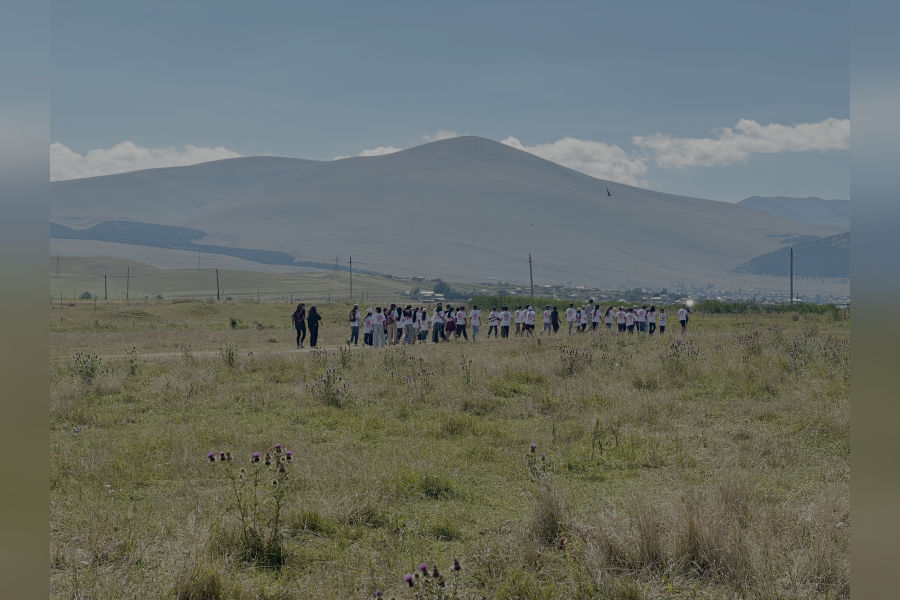
For the children, this was the most anticipated moment of the day. Under the open sky, beneath the proud gaze of the Javakhk mountains, we unleashed all our energy.
Everything learned, felt and experienced during the week came to a beautiful conclusion on the day of the final celebration. In the courtyard of the camp’s half-ruined building, the children performed before their parents and fellow villagers. Through song and dance, they revealed parts of their soul.
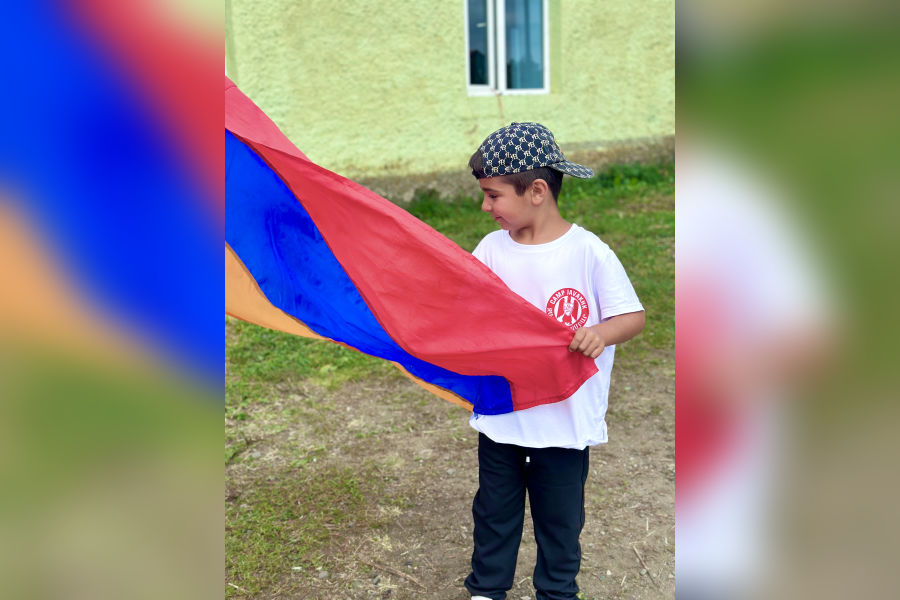
They performed the calls we had learned and sang our heroic songs, their voices resonating not with childish innocence but a deep awareness of their history. And they danced — from the smallest to the tallest. Their Kochari was not just a movement of the feet; it was a sacred ritual that drew strength from the earth and gave strength back to it.
That day, looking at those young giants, I understood that we have lost nothing as long as we can raise such a generation. Alongside the pain of Artsakh, a new, warm feeling took root in my heart: pride — pride for Javakhk, pride for these children and pride in the idea capable of gathering Armenians from the four corners of the world into a ruined building and sparking a resurgence.
The evenings in Daragyugh felt like a magical, luminous fairytale that began when the official part of the camp ended. As the last rays of sunlight gilded the mountain peaks, we would climb nearby hills to be closer to the cosmos.

There, in the quiet and at that altitude, the infinite velvet of the starry sky opened before our eyes. The stars were so clear and close, it felt as if you could reach out and touch the Milky Way. In those moments, we forgot the worries of the world and became a small, happy part of the universe.
During the day, from those same hills, we followed the pulse of village life. The wheat fields rippled like a golden sea under the wind, and the muffled, steady hum of the combines carried the promise of bread.
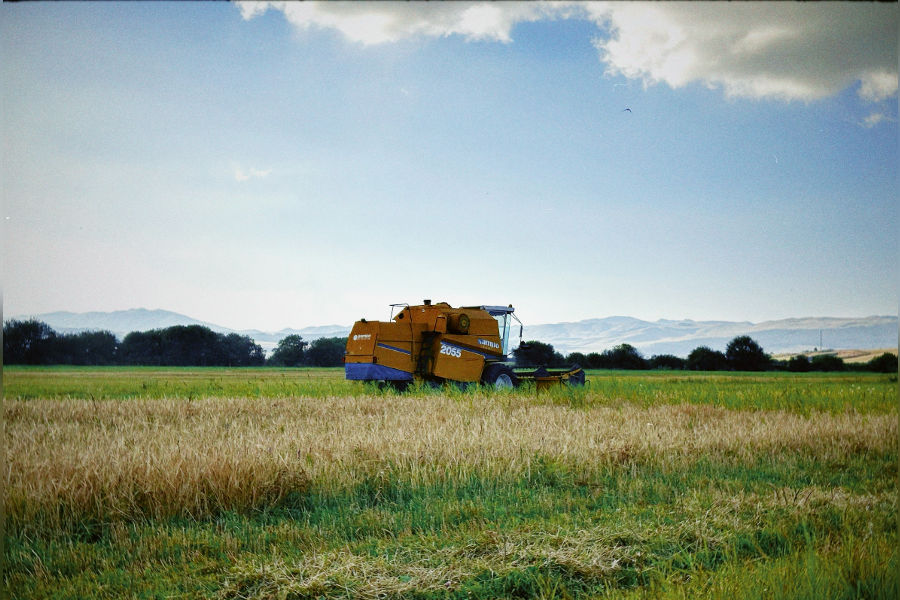
We watched villagers irrigate the vast potato fields, sending life-giving water into the soil.

As we descended the hills, running through the fields and feeling the warmth rising from the earth, the village’s hospitable heart awaited us. The sweet scent of gata baking in the tonirs (clay ovens) invited us into their courtyards. That gata was not food, but the warmth of maternal hands, kneaded with love. And, of course, the highlight of our evenings was milking the cows, where we clumsily tried to imitate the village women’s practiced mastery.
On the last morning, as we climbed into the car, the campers and our ognakans gathered to send us off. I left Daragyugh with a sweet ache in my heart, leaving a part of me in those endless fields, but taking with me the light of the children — a light that I knew would stay with me in the days ahead.

In the span of two weeks, Javakhk became not merely a refuge for the wounds of my past, but a vision of the resurgence of my nation’s future.
I had arrived as a young person bearing the scars of Artsakh, searching for the breath of a lost identity. I left having found the living guarantee of an entire nation’s immortality.

Our mission here is far from finished; it has only gained new momentum. As long as Armenian is spoken in the soil of Javakhk, as long as these children sing Mer Hayrenik with their hands on their hearts and as long as Armenian youth come from the four corners of the world to unite around a single idea, the dream of our free, independent and united Armenia will remain invincible.
We will return, for Javakhk awaits not mere guests, but the faithful return of its children.

Javakhk is now the only historical Armenian land outside the Republic of Armenia, which is still inhabited by Armenians. That is why, the Armenians of Javakhk are not technically part of the Armenian Diaspora, unlike the rest of Georgia. Except for Javakhk, there are no Armenian communities for hundreds of kilometers around Armenia. I hope that Javakhk doesn’t suffer the fate of Western Armenia, Nakhichevan and Artsakh.
Armenia had to give up Javakhk in order to get Lori.
A brutal choice but Armenia was simply not powerful enough to hold both and so chose Lori ovet Javakhk.