



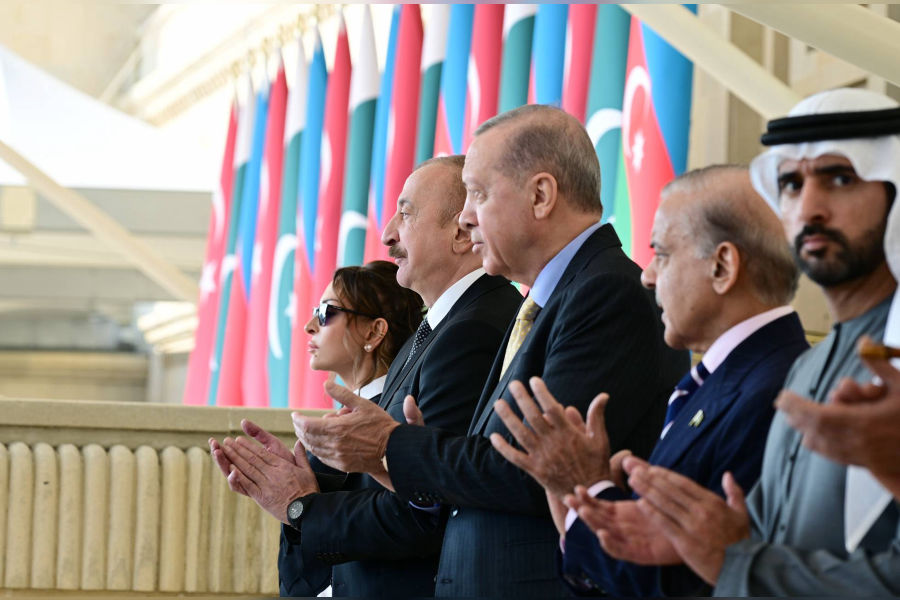
YEREVAN — While Armenian Prime Minister Nikol Pashinyan and his government continue to insist that “peace has come,” Baku’s actions on the ground and rhetoric in public suggest a starkly different reality — one of expanding territorial claims and intensifying threats to Armenia’s sovereignty.
Pashinyan has repeatedly emphasized that any potential exchange of territories, including the Armenian enclave of Artsvashen, “cannot take place without the consent of Armenian citizens.” He insists that border and territorial issues should be resolved exclusively through demarcation and delimitation in accordance with the 1991 Alma-Ata Declaration.
Yet, critics warn that Pashinyan’s careful diplomatic tone masks a dangerous willingness to concede under the guise of negotiation. Former Human Rights Defender Arman Tatoyan cautioned that any so-called “return” of Armenian territories could leave thousands homeless, as had occurred in Artsakh after the 2020 war. “This so-called ‘return’ of enclaves will encircle Armenia, destroy its borders and create irreversible security problems,” he said, highlighting the potential obstruction of vital interstate routes linking Ararat, Vayk, Jermuk, Goris and Kapan.
Opposition MP Garnik Danielyan echoed these concerns, noting that Azerbaijan had already advanced into areas such as Voskepar-Kirants and Berkaber, ceded Armenian access to promised hectares and currently occupied roughly 400 square kilometers of Armenian territory.
Even as Pashinyan pledges transparency — promising to publish negotiation documents with Azerbaijan by year’s end, following the expected dissolution of the OSCE Minsk Group — Danielyan suggests the move is politically calculated, designed to preempt accountability. At the same time, Baku presses new conditions for a formal “peace treaty,” including corridors and enclave exchanges that could undermine Armenia’s sovereignty.

From the Azerbaijani side, officials have shown no sign of compromise. Baku’s Foreign Ministry spokesman Aykhan Hajizadeh celebrated the so-called “return” of Armenian villages in the Gazakh region, framing it as a “major diplomatic victory.” He reaffirmed Azerbaijan’s principled stance on creating the so-called “Zangezur” Corridor, presenting it as a transit project “not directed against Armenia’s sovereignty” but essential for connecting mainland Azerbaijan with Nakhichevan.
Baku’s campaign of historical revisionism has intensified. State-backed organizations and NGOs have increasingly promoted the concept of “Western Azerbaijan,” a euphemism for sovereign Armenian territories. During a recent conference in Baku titled “Return to Western Azerbaijan,” officials openly discussed facilitating the “peaceful return” of Azerbaijanis to these areas. Since 2022, the number of state-funded projects promoting this narrative has more than doubled, with Azerbaijani NGOs pledging to internationalize the effort through conferences and publications abroad.
Analysts warn that this orchestrated propaganda is not simply rhetorical. Iran specialist Vardan Voskanyan described Baku’s strategy as a deliberate mobilization of state institutions and pseudo-academic bodies to legitimize claims over Armenian sovereign territory, framing it as part of a broader expansionist doctrine.
For Armenia, these developments are not abstract. Clear demonstrations of military and political power punctuate them. On November 8, Azerbaijan celebrated the anniversary of the 2020 trilateral agreement with Russia and Armenia — the date when Shushi and Karvachar were formally ceded by Pashinyan’s regime to Baku — through a heavily staged “victory” day parade. Addressing troops and spectators, President Ilham Aliyev delivered rhetoric that combined triumphalism with direct threats toward Armenia:
“Armenians said they would drink tea in Baku. Now, they are drinking tea in a detention center,” he declared, referring to captured Armenian officials and military leaders. “Before the last war in Artsakh, in Armenia, they said their tanks would be on the streets of Baku, and they themselves would be drinking tea in Baku. In fact, their wishes came true; we fulfilled them. Armenian tanks are today displayed in the Military Trophy Park, and Armenian criminals are drinking Azerbaijani tea in the detention center in Baku.”
Former Armenian President Serzh Sargsyan has suggested that some of the detentions highlighted by Aliyev were facilitated by Armenian authorities. In a seven-hour interview on the podcast Imnemnimi, Sargsyan said:
“Azerbaijanis had a list of people they planned to detain, and the Armenian authorities had a hand in this list.”
Sargsyan emphasized the difficult choices faced by Artsakh leaders, who could either leave the region early — avoiding detention but exposing themselves to criticism — or stay with the local population until the end, many of whom were ultimately captured by Azerbaijani forces.
The parade also displayed captured Armenian military hardware and unveiled the Ice Breaker missile — a long-range, air-launched weapon from Israeli defense company Rafael, capable of striking both ground and maritime targets with precision up to 300 kilometers. Analysts say the missile enhances Baku’s ability to project power in the Caspian Sea and to deter both Russian and Iranian forces.
Journalist Tatevik Ayrapetyan observed that for over a decade, Aliyev has consistently articulated his ambitions openly, declaring his intent to reclaim Armenian territories through both military and political means. The loss of Artsakh should have served as a warning: diplomatic warnings must be acted upon preemptively, before rhetoric turns into territorial reality.
The November 8 parade, Aliyev’s rhetoric and the introduction of advanced missile technology underscore the broader Azerbaijani strategy: a calculated combination of military intimidation, political messaging and historical revisionism designed to consolidate power over occupied territories and legitimize future expansion. For Armenia, it highlights the widening gap between Pashinyan’s narrative of peace and the unfolding reality on the ground.


Wolves cannot be appeased.
Vultures cannot be trusted.
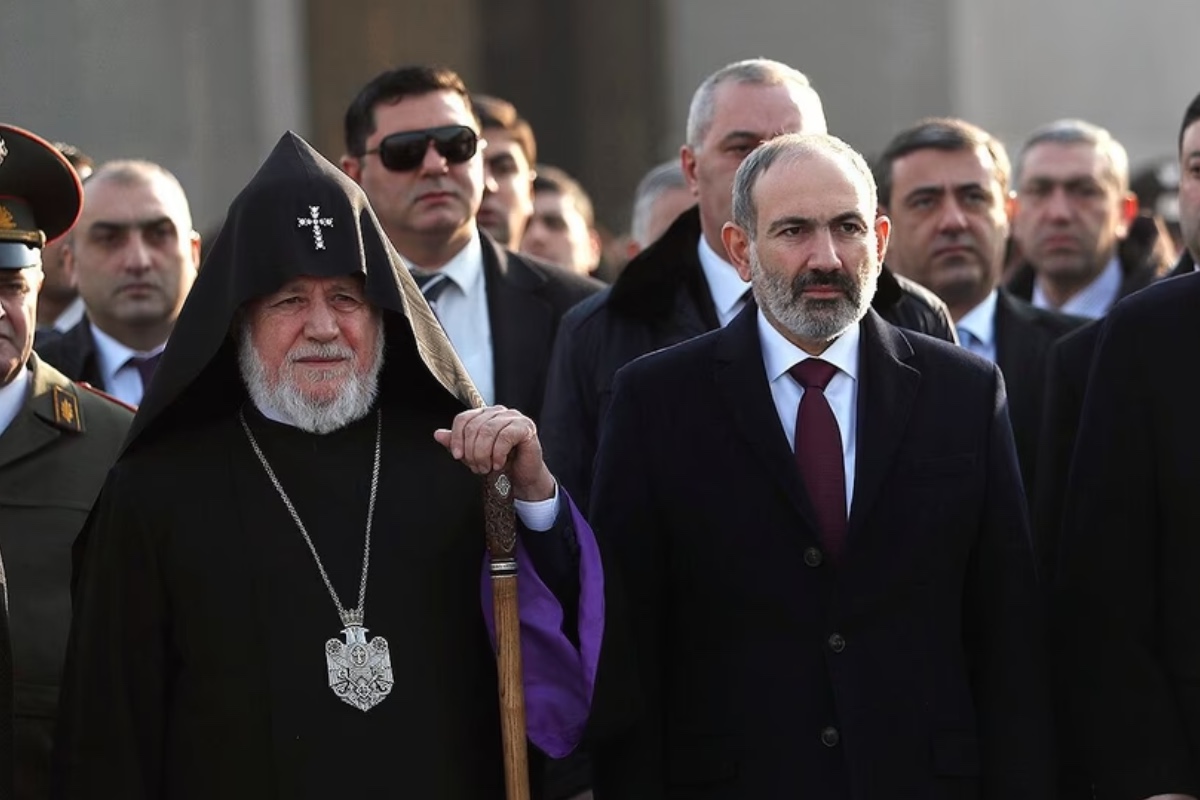
Instead of a hero like Tehlirian, we have a coward like Pashinyan.
When, oh when, oh when, will every Armenian recognise that Turks only respect strength?
We had military superiority in the 1990s, we need firstly to stabilise and grow the economy and then, and only then, face down the wolves and vultures that are the Turks.
+💯
Absolutely.
Unfortunately, the biggest enemies of a nation, also come from within. This complacency in Armenia resulted in stagnancy and eventually turned into self-sabotage.
Inevitably, this totally avoidable misfortune came to the fore, when Armenia was (and is still) being led by an incompetent, cowardly and treacherous leader, what turned out to be the country’s most vulnerable situation, when it was attacked by Azerbaijan in 2020, which sensed this and crucially learned from its defeat and mistakes in 1994 with its big brother Turkey’s help.
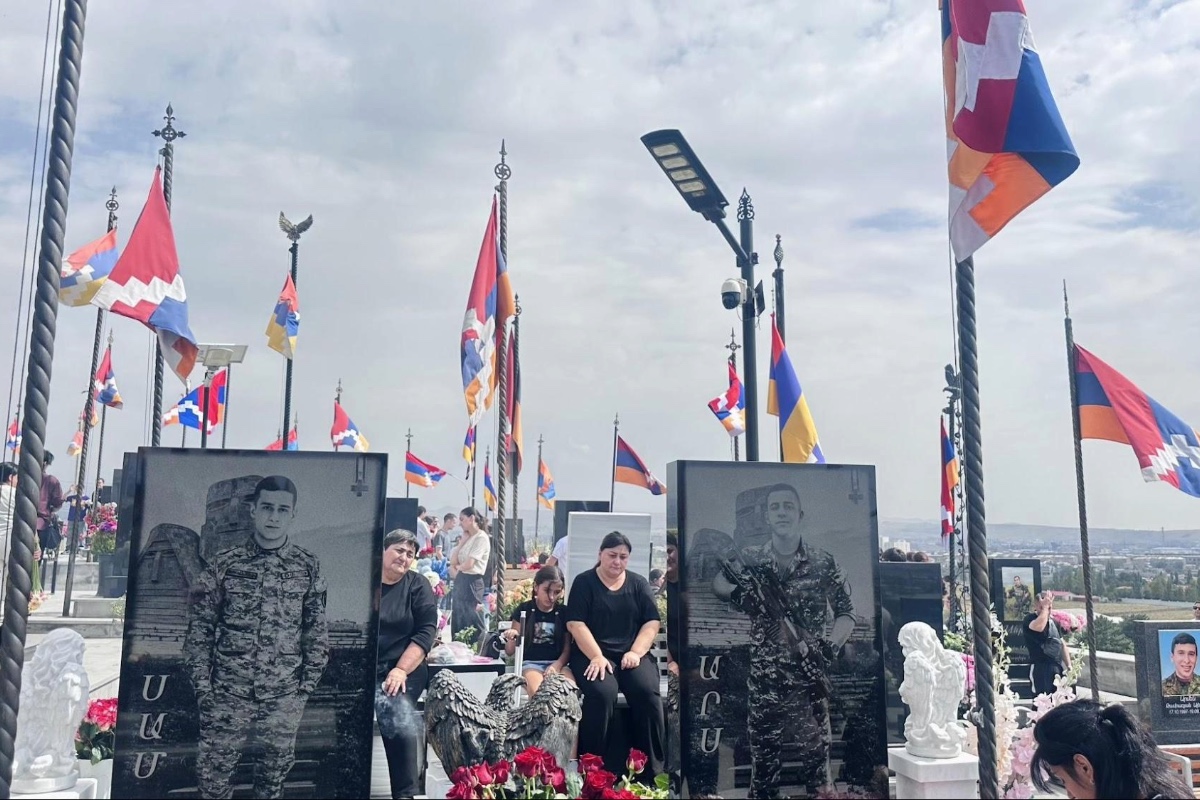
Future generations of Armenians will curse and current generations of Armenians already curse these traitors for sabotaging Armenia from within and for the totally avoidable loss of Artsakh.
The underlying tragedy was how Armenia squandered it’s advantageous position from 1994 revealing itself with the defeat in 2020 and ongoing failures since. Azerbaijan wouldn’t get much international official open support to steal lands beyond the 1975 demarcation but that’s cold comfort.
Pashinian and his gang are just ruthless opportunists, their sole aim is keeping their grip on the country by all means: dividing and disrupting the Armenian community, reviving the Bolshevik rhetoric against its opponents, simulating soviet fascist procedures persecuting any nationalist entity and thwarting national historic narratives. Playing the peace seekers at any cost, in order to gain world support. They are definitely manipulated and supported by outside dark forces, and constitute an imminent danger to Armenia.
They even avoid to pronounce the world Artsakh in their rhetoric, besides the immoral Pashinian’s statemen that the loss of Artsakh was a bonus to Armenua, ignoring the rights of the Armenians who have been subjected to a systematic ethnic cleansing from their millenary territories under Azerbaijani control, starting with Nakhitchevan, to the Sumgait and Baku pogroms, to the ethnic cleansing of Kedashen, Arzvashen (an Armenian enclave in Azerbaijan?), Kantsag (Canja), Shahoumian region and ending up at Artsakh ethnic cleansing, associated with blatant cultural heritage genocide, still going on, within these historic regions. Instead of countering the Azerbaijani claims with a comprehensive documentation of above facts, supported by concrete references on these issues, they are not ashamed to just lament like impotent imbeciles. And most flagrant of all ignoring national territories still occupied by Azerbaijani forces, which is blatant treason.
What occurred in 2020 was neither Azerbaijan’s doing nor Azerbaijan’s victory. I have always said and maintained this was NOT an Armenian-Azerbaijani war like the previous wars between the two, such as those in 2016 and 1994. In 1994. Azerbaijan suffered a devastating defeat with utmost humiliation and in 2016 4-day war, Azerbaijan failed to even put a dent on the Armenians despite their decade-long full militarization, with an annual military budget more than Armenia’s annual state budget, and claims they can do in 24 hours to reverse the situation what they could not do diplomatically for a quarter century.
The 2020 military conflict, the invasion of Armenian liberated territories, was terrorist Turkey’s proxy war on the Armenians on behalf of militarily incompetent Azerbaijan using both Turkish and Azerbaijani armed forces including NATO supplied Turkish weapons. What happened in 2020 could not have happened without terrorist Turkey’s direct military involvement. Dysfunctional Pashinyan’s incompetence and lack of patriotism played a major role in what took place. His lack of leadership helped expedite the outcome of this joint Turkish-Azerbaijani invasion. I’m convinced the outcome of this military conflict would have been far different if Pashinyan was not in power and it would either have come to an abrupt end, like in 2016, or would have dragged on for years because all the former battle-hardened Armenian military leaders Pashinyan’s had either expelled or forced into retirement had the blue print on how to defend Artsakh and how to defeat Azerbaijan.
The morally bankrupt and hypocritical Israel had a major hand in this too. While never missing the opportunity to preach to the world about and against genocide, they facilitated and provided our enemy very sophisticated state-of-the-art weaponry to make sure we end up on the losing side of this conflict in return for acquiring Azerbaijan’s consent to set up military bases in reoccupied Armenian territories in preparation for attacks on Iran and Iranian nuclear facilities. I don’t understand why we are so quiet about the complicity in all of this and don’t call them out and expose their participation in the ethic-cleansing of Artsakh.
Two important statements that confirm what I believe!
1. Terrorist Turkey’s president Erdogan’s warning to Israel:
“We can enter Gaza just like we entered Libya and Karabakh”.
2. Terrorist Azerbaijan’s foreign minister Bayramov’s latest statement on 2020 invasion:
Türkiyənin F-16-ları və diplomatik mövqeyi düşməni çəkindirdi.
Translation: Turkey’s F-16s and diplomatic stance deterred the enemy.
There is ample evidence that if Pashinyan had not given up during the Second Artsakh War, the war would have bogged down Azerbaijani forces and they would not have been able to conquer most of Artsakh and the Shahumyan and Kashatagh provinces hardly at all, whose mountain terrain is much more challenging and its climate much harsher than central and southern Artsakh. Had Pashinyan not capitulated and agreed to the handing of these vital geostrategic areas around central Artsakh to Azerbaijan without firing a single shot, Armenian forces would have been able to hold off Azerbaijani forces there, due to its very advantageous fortress-like positions and could have regrouped for future offensives to retake the low lying areas of Artsakh. Once Pashinyan agreed to hand the bulk of Artsakh to Azerbaijan, all the geostrategic advantages vanished overnight and the rest of Artsakh became easy picking for Azerbaijan. Even during the early stages of the war, Azerbaijani forces didn’t make headway for the first seven days, despite their technological and numerical advantage and they advanced very slowly for the rest of the war. During that infamous day when Pashinyan capitulated, the large majority of Artsakh was still under Armenian control. There were enough opportunities even when the war started, to prevent Azerbaijan from taking Artsakh. It was a stab in the back by Pashinyan why Artsakh was lost, not just due to military stagnation, incompetence and complacency.
I think we are saying the same thing in different ways. If Pashinyan was a competent leader and had not gotten rid of many of the very experienced military officers, with many hard-fought victories under their belts, who served during the former regimes, they would have held their ground and known what to do and would have made all the calculations that you mentioned and would not have given up, even if they were told to do so, and would have continued the war dragging it into the late foggy Autumn months and into the harsh winter months which would have slowed down the enemy advance, as well as have adverse effects on their UAVs, giving our forces a room to breath, to reassess the situation, regroup and conduct a counter offensive on the enemy forces.
The enemy forces, according to their own post-war reports, were already very near to running out of weapons and munitions at a time when Pashinyan practically capitulated and betrayed our fighters. Pashinyan’s lack of competency coupled with Turkey’s direct military involvement using NATO supplied F16 fighter jets left behind on Azerbaijani soil after their joint military exercises right next door in Nakhichevan and hidden in Azerbaijani towns, such as those in Gandzak (Genje) which Artsakh forces hit with Iskender missiles, gave the enemy an opportunity of a lifetime to do what was done!
There’s the rabbit hole of conjectures and counterfactuals going on as is rife in wars especially from the losers perspective. It’s worth noting that Armenia had no international support for its control of soviet N-K and certainly not for the parts of Azerbaijan outside it. Countries win or lose due to support Rhodesia which was as successful in battle never had meaningful international support and this ultimately condemned them. The same principle applied to Arktash. There was mismanagement and probably some sabotage. Nevertheless this doesn’t alter the fact that Azerbaijan had gained strategic advantage internationally and the tactical advantage militarily. The self comforting belief in stab in back myths as indulged by Germany post 1918 and would lead to worser defeat again in 1945. It’s worth bearing in mind Armenia despite it’s own hardships in the first conflict was aided by the revolving door leadership in Azerbaijan , a military mutiny and it’s limited ability to raise capital and generally being less well trained as a legacy from the Soviet invasion of Afghanistan where Armenians generally had better training than Azeris. By 2020 these were no longer valid. Perhaps gaze at other conflicts not to do with Armenia hence can be more objective and the rise and fall in fourtunes and it should become more apparent that relying on past performance is a grave error.
As for Israel it was Pashinyan government which put an end to the anomaly of Armenia despite all of its neighbours recognising Palestine, and Armenia own poor relationship with Israel of not recognising it. Whilst a limited gesture it showed that Armenia was finally able to take a stance annoying to Israel. This rather debunks the notion of Pashinyan being pro Israel.
Again regarding Israel sympathy over the holocaust legacy has run quite thin passing of time it’s own hegemony and destruction of Gaza demographic changes in Europe, namely acceleration of immigration from Africa and Asia ironically often supported by Israelis has drastically reduced sympathy for Israel compared to even ten years ago.
As for comments about Azerbaijan slow rate of advance in 2020 for the most part Armenian advances in the first conflict were very slow and the current conflict in Ukraine and Gaza has featured slow rate of advance and masses of destruction.
Militarily the disintegration of a Turkish C 130 aircraft returning from Azerbaijan over Georgia is interesting as to what caused such a catasophic failure of the plane.
We are seeing history repeat itself. Just like the Ottoman Turks and then Turkey under Ataturk, during the genocides of 1894-1896 and 1915-1923, they confiscated the assets from the Armenians and used that wealth to subsidize the ‘modernization’ of their failing country. Playing the long game – as the Azerbaijan oil reserves have maybe a 25 year life span, they will confiscate the assets and the intellectual property of the more educated Armenians (in math and science).
History has shown one cannot negotiate with dictators like Aliyev and Erdogan if they believe they have a superior military advantage. No other country will come to the aid of Armenia. The only strategy for Armenia is to negotiate through the ‘barrel of a gun’ – namely possess weapons of mass destruction, what ever that may be, that are poised to take out Azerbaijan, and possibly Turkey, when they invade Armenia.
The Turkish Republic has already confiscated the assets and the intellectual properties of wealthy and educated Armenians. It has squeezed every penny and knowhow from Armenians, that hardly nothing is left to squeeze out from them. I bet the kleptomaniac billionaire dictator Erdogan is richer than all the 35,000 Armenians combined who still remain in Turkey (almost all of whom live in Istanbul), who have deliberately been impoverished by the Turkish Republic through systematic discrimination and through the expropriation of their physical properties and the stealing of their intellectual properties without compensation, let alone any acknowledgement.