




YEREVAN—On September 1, 2025, the Organization for Security and Co-operation in Europe (OSCE) Permanent Council officially announced the termination of the OSCE Minsk Process and its related structures, following a joint request by Armenia and Azerbaijan. According to a statement released by Azerbaijan’s Ministry of Foreign Affairs, the decision was based on a letter co-signed by the foreign ministers of both countries and submitted to the OSCE Chair-in-Office after a trilateral meeting held in Washington on August 8, 2025, with the participation of the President of the United States, the President of Azerbaijan and the Prime Minister of Armenia.
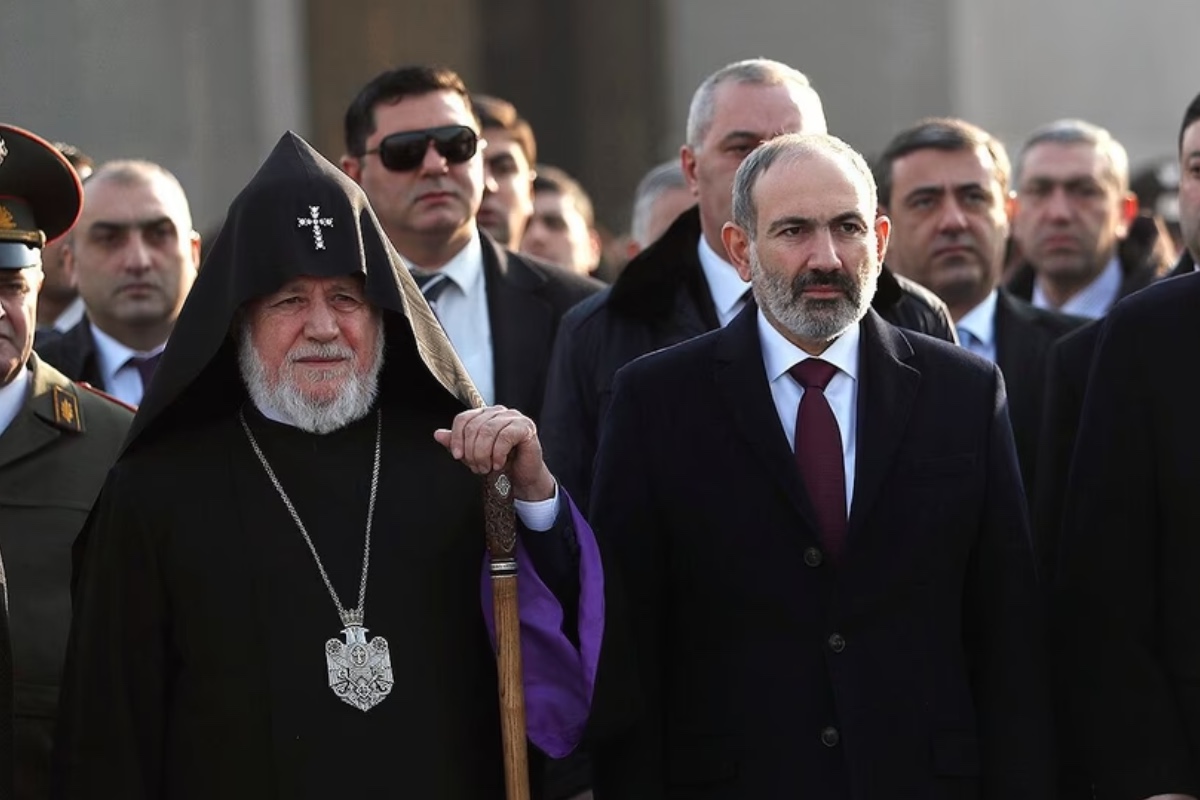
The move marks the fulfillment of a long-standing Azerbaijani demand to dismantle the Minsk Group framework—an outcome that Baku has consistently pursued in the context of the so-called “peace process.” Critics have pointed out that Armenia, under Prime Minister Nikol Pashinyan, has once again conceded to a key Azerbaijani condition without securing any tangible guarantees or concessions in return, raising concerns about the imbalance and unilateral nature of the current diplomatic trajectory.
As a result of the decision, all institutional activities under the Minsk Process—namely, the mandate of the Personal Representative of the OSCE Chairperson-in-Office on the conflict, the Minsk Conference framework and the High-Level Planning Group—ceased as of September 1. The OSCE Secretariat has been tasked with completing all organizational and technical procedures related to the closure of these bodies no later than December 1, 2025. Furthermore, the decision nullifies all previously adopted OSCE documents concerning the Armenian-Azerbaijani conflict, effectively erasing the institutional legacy of the Minsk Group from the organization’s legal and diplomatic record.
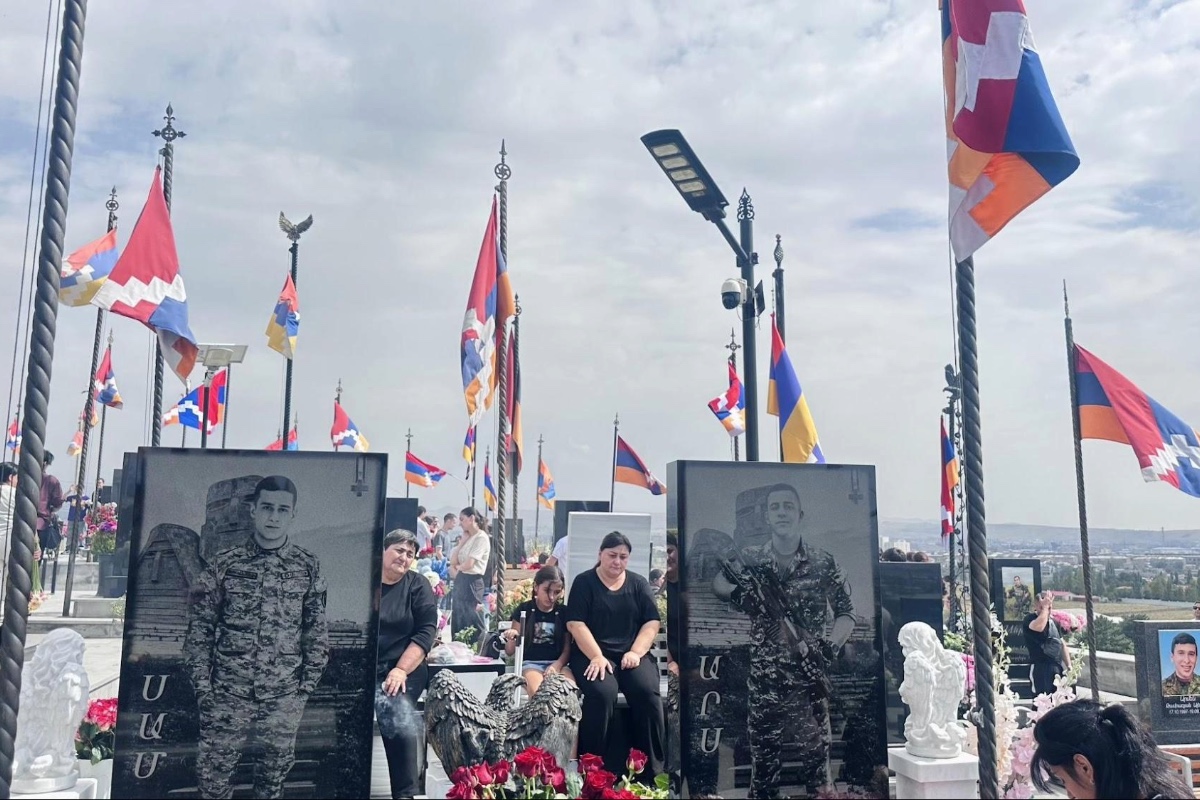
This move marks the formal end of the only internationally mandated negotiation platform that had, for over three decades, sought a peaceful resolution to the Nagorno-Karabakh conflict. Despite criticisms of ineffectiveness, the OSCE Minsk Group played a key role in shaping a framework that balanced Azerbaijan’s territorial claims with the rights and security of the Armenian population of Nagorno-Karabakh (Artsakh). Its dissolution raises serious concerns about the future of these rights, particularly for the tens of thousands of Armenians forcibly displaced following the 2020 war and the 2023 offensive in Nagorno-Karabakh.
Established in 1992 and co-chaired by France, Russia and the United States, the Minsk Group promoted dialogue and diplomacy over armed conflict. While it never issued legally binding decisions, it consistently supported principles recognizing Armenian concerns. Its most comprehensive proposal, the Madrid Principles—introduced in 2007 and updated in 2009—outlined a staged settlement: return of territories to Azerbaijan in exchange for interim status for Nagorno-Karabakh, security guarantees and a final-status determination through a legally binding process, such as a referendum. These principles also guaranteed the establishment of the Lachin Corridor to ensure uninterrupted access between Armenia and Nagorno-Karabakh, and upheld the right of return for all displaced persons, including Armenians who had fled areas like Shushi and Hadrut.

Importantly, the Minsk Group recognized that any lasting solution would require the direct participation of Nagorno-Karabakh Armenians in final status discussions—an acknowledgment of their agency that Azerbaijan repeatedly rejected. The group also championed the principle of non-use of force, aligning with Armenia’s diplomatic approach and standing in stark contrast to Azerbaijan’s reliance on military action in recent years.
Even after the 2020 war, the Minsk Group co-chairs issued statements advocating for humanitarian access, the return of prisoners of war and the protection of Armenian cultural and religious heritage sites in territories that came under Azerbaijani control. These positions reflected a continued concern for the human rights and cultural survival of the Armenian population in the region.
The dissolution of the Minsk Process leaves a significant vacuum. Without it, there is no recognized international mechanism affirming the right to self-determination for the Armenians of Artsakh, no institutional voice representing their interests in peace negotiations and no multilateral forum to monitor humanitarian concerns or political developments in the region. Future talks between Armenia and Azerbaijan are now expected to occur on a bilateral basis, with a significant power imbalance and without the representation of displaced Armenians.
Moreover, by annulling all prior OSCE documents related to the conflict, the recent decision effectively discards decades of diplomatic work that had built a nuanced, if fragile, path toward compromise and coexistence. It also eliminates the only platform in which major global powers—Russia, the U.S. and France—had jointly engaged to resolve a complex regional issue. In the current fragmented geopolitical environment, no alternative framework of equal legitimacy or balance exists.
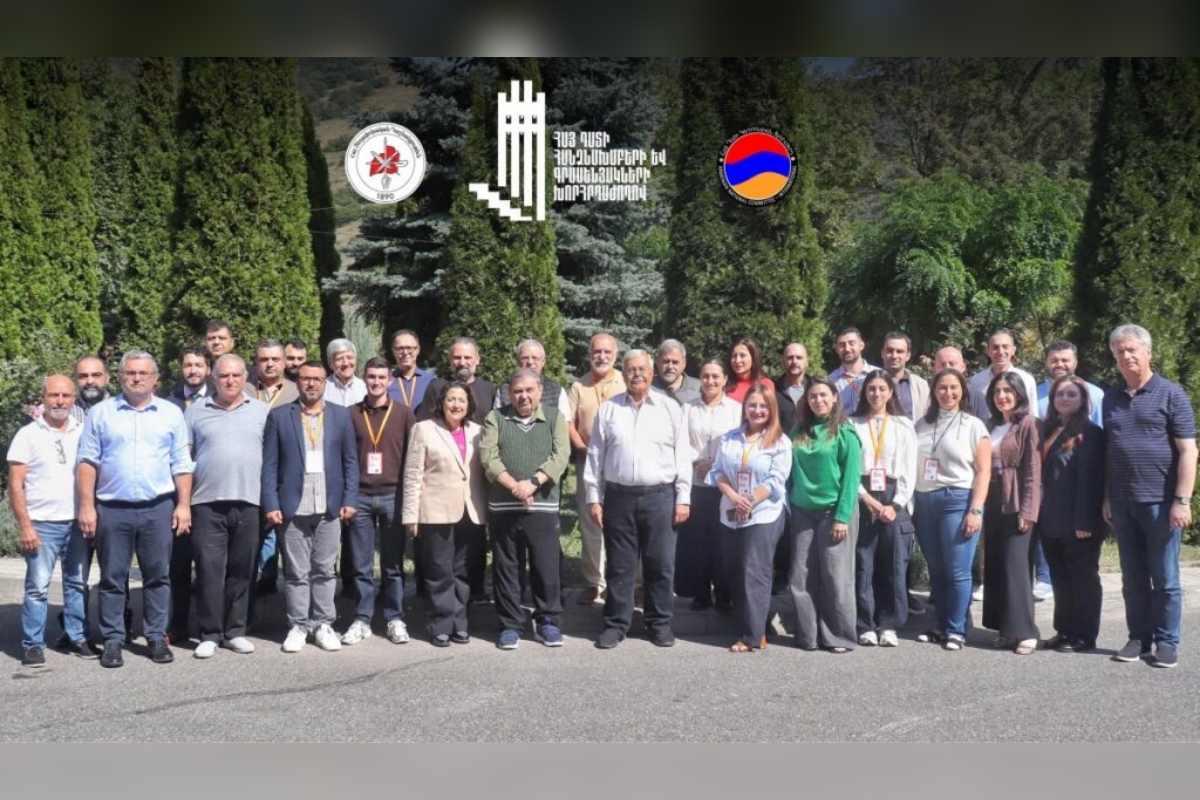
The Armenian Revolutionary Federation (ARF) Central Hay Dat Council has strongly criticized the OSCE’s September 1 decision to dissolve the Minsk Group and its related structures, describing it as a move that legitimizes the use of force in conflict resolution and abandons the rights of the displaced Armenians of Artsakh.
The Council asserts that the appeal was not voluntary but rather imposed by Azerbaijan as a precondition for signing the so-called “peace treaty,” which, though finalized in March and published on August 11, has yet to be signed due to Baku’s escalating demands—including forced amendment to Armenia’s constitution.
“Armenia agreed to this joint appeal under the threat and use of force, which renders it invalid under international law,” the statement said, warning that the Armenian government’s continued concessions “do not serve the national interest and gravely undermine the right to self-determination of the people of Artsakh.”
The Council stressed that the OSCE’s decision comes in the wake of Azerbaijan’s 2023 military assault and blockade, which led to the mass displacement of over 120,000 Armenians from Artsakh. “By accepting this appeal, the OSCE legitimizes the use of force as a means of conflict resolution,” it stated. “These actions—ethnic cleansing carried out through siege and attacks on civilians—are widely recognized as crimes under international law.”
The underlying issue for which the Minsk Group was created in 1992—the rights and security of the Armenians of Nagorno-Karabakh—remains unresolved, the statement noted. “Disengagement now would be a grave mistake. Lasting peace requires international law, justice and diplomacy—not coercion.”
Referencing the November 17, 2023, ruling of the International Court of Justice, the Council reiterated the urgency of ensuring “the safe and dignified return” of the displaced population, the release of Armenian prisoners held in Azerbaijan and the protection of Armenian cultural heritage.
“Though the Minsk Group no longer operates, the principles it embodied—genuine multilateralism and international mediation—are irreplaceable,” the statement emphasized. Rejecting these principles sends “a dangerous message: that force, not law, resolves disputes.”
Quoting the August 8 Washington Declaration’s goal to “close the chapter of enmity,” the Council stressed, “This cannot be achieved through coerced silence. It requires truth, justice and reconciliation. Victims must be heard, suffering acknowledged and justice ensured.”
The statement concluded with a call to the OSCE and the broader international community to remain engaged and take tangible action in defense of the rights of displaced Armenians, the release of detainees and the preservation of cultural heritage. “Only consistent, principled involvement can ensure dignity and lasting peace in the South Caucasus.”
The ARF Hay Dat offices in Washington, Brussels, Moscow and Paris have also jointly condemned the dissolution of the OSCE Minsk Group, warning that the decision, made under pressure and in the context of threats against Armenia, risks legitimizing violence as a tool for resolving conflicts and ethnic cleansing. They warned that international failure to uphold these principles effectively “rewards” Azerbaijan’s ethnic cleansing of Artsakh’s Armenian population and undermines the very legal and diplomatic norms the OSCE once represented.
The ARF’s Washington office described the dissolution not as a step toward peace, but as an “Azerbaijani-imposed condition designed to advance an unequal agreement obtained through pressure and the use of force.” The decision, it stated, sets a dangerous precedent: “It rewards genocide, the illegal detention and torture of Armenian prisoners of war and the occupation of sovereign Armenian territory, while eroding the foundational principles of international law and diplomacy.”
The Brussels office called on OSCE member states to remain committed to diplomacy and justice. It highlighted the concrete steps already taken by European institutions, including the European Parliament and governments like Belgium and Switzerland, in support of the return of displaced Armenians under international protection, the release of hostages and the withdrawal of Azerbaijani forces. These remain unresolved and must be central to any legitimate peace process.
Emphasizing France’s role as a former Minsk Group co-chair, the Paris office stressed the country’s special responsibility to uphold the international legal standards it has long supported. “France must take concrete action to defend the rights of displaced Armenians, ensure the release of detainees and protect Armenian cultural heritage,” the statement read.
The Moscow office warned that without an effective international mediation mechanism and robust security guarantees, no sustainable resolution to the Artsakh conflict is possible. It urged the establishment of a new international platform—potentially modeled on a Swiss-led initiative—to address the consequences of the conflict, secure the rights of displaced Armenians, release all detainees, preserve cultural heritage and uphold the right of self-determination for the people of Artsakh.
In a powerful letter addressed to the OSCE participating states, the forcibly displaced Armenian population of Nagorno-Karabakh (Artsakh) has made a direct and urgent appeal, warning that the recent dissolution of the OSCE Minsk Group—carried out without their involvement—threatens to permanently silence their voice and further entrench injustice.
The letter, signed by Ashot Danielyan, President of the National Assembly of Artsakh, was sent on behalf of the 150,000 Armenians ethnically cleansed from their ancestral homeland in the wake of Azerbaijan’s 2023 military assault.
“Dismantling the Minsk Group without consulting the people it was meant to represent ignores our voice and rejects our role in determining our future,” the letter states. “This was not a voluntary or accidental displacement—it was the result of siege, starvation and armed aggression.”
The Minsk Group, established by the OSCE in 1992, was the only internationally recognized platform for negotiating a peaceful settlement to the Nagorno-Karabakh conflict. According to the signatories, its dissolution without firm guarantees for return undermines international law and emboldens ethnic cleansing as a method of conflict resolution. “We urge OSCE member states to exercise their authority, including the right to veto, to prevent the group’s dissolution until clear guarantees are secured for our safe and dignified return.”
Citing key international legal instruments—such as the Universal Declaration of Human Rights and the International Covenant on Civil and Political Rights—the displaced community emphasized that the right of return is not only moral but legally binding. They also referenced the November 17, 2023, ruling by the International Court of Justice, which affirmed this right.
In addition to return, the letter outlined three core demands:
- Restoration of negotiations with legitimate Artsakh representatives;
- Inclusion of displaced voices in any future settlement;
- International guarantees for safety, dignity and rights.
“The conflict is not resolved while an entire people remains uprooted and rightless,” Danielyan stated. “Removing the last trace of international engagement without a credible and inclusive alternative will only deepen the injustice and make real peace more elusive.”
In its closing, the letter issued a stark warning to the OSCE: “Any decision that legitimizes the ethnic cleansing in Artsakh and declares the conflict resolved will leave a permanent and bloody stain on the OSCE’s history and principles.”
Yet amid the trauma and exile, the displaced population reiterated its commitment to a peaceful, negotiated solution: “We remain ready to work constructively with the OSCE and its members to secure a just and lasting peace—one that guarantees our right to return and protects our identity, culture and dignity.” And with that, they leave the international community with a final, haunting reminder: “Our future and our survival depend on the actions you take today.”


Artsakh became the sacrificial lamb thrown to the Azeri wolf, also due to Pashinyan’s betrayal of Artsakh and due to his delusional belief that the irredentist, insatiable and predatory Azerbaijan can somehow be appeased and become satisfied, and a real and lasting peace be established with that aggressive dictatorship under these conditions!
On top of the trauma of losing their homeland, homes, family members and friends, the dispossessed and homeless Artsakhis are treated like unwanted illegal immigrants and denied Armenian citizenship by Pashinyan.
Let no one deceive themselves with this so-called “peace treaty”. It is a modern-day Munich Agreement. Those who are interested in history, know how that turned out. Azerbaijan could very well violate this treaty, claiming “violations”, in order to grab Syunik, despite this treaty being so advantageous for that country. No “peace” has been established, despite the hype, and nothing has been resolved. The danger to Armenia and the Armenian people from both Azerbaijan and Turkey continues unabated.
Steve M. your comment that “homeless Artsakhis are treated like unwanted illegal immigrants and denied Armenian citizenship by Pashinyan.” is uncalled for, not to say inflammatory. It is unlikely that you do not surmise that the status of Artsakh Armenians in Armenia is a not a matter of their wanting to become citizens of Armenia, although over 16,000 have per Armen Ghazaryan, the Deputy Minister of Interior as reported by Armen press. A good number of Artsakh Armenians have left Armenia and others look forward for moving away and prefer to retain their refugee status.
Those who those advocate the return of the Artsakh Armenians to their homeland, should realize being a citizen of Armenia is a legal impediment to their return. Let us be reminded that Palestinians living in Arab countries are not given the country’s citizenship.
@Vahe Apelian
You know damn well why your “hero”, the coward and traitor Pashinyan, is preventing the integration of the Armenian refugees from Artsakh in Armenia and denies them Armenian citizenship. There are in total 150,000 Artsakhis who deserve and are entitled to Armenian citizenship.
Armenian citizenship means additional votes, votes that would definitely vote your Pashinyan out of office for betraying and sacrificing Artsakh, if he were to allow free and fair elections, which he has no chance of winning fairly and squarely. And you know it.
Pashinyan has washed his hands off Artsakh, which has gone the way of Nakhichevan, which used to be 99% Armenian and had a very rich tangible and intagible Armenian heritage, just like Artsakh, which is undergoing a cultural Armenian Genocide after Azerbaijan grabbed it, just like it did in Nakhichevan. Do any Armenians live in Nakhichevan? No. The same calamity has happened to Artsakh under Pashinyan’s misrule.
And you know very well, that Artsakhis cannot and must not be allowed to languish like unwanted Palestinian refugees for decades in limbo, being fed false hopes of a return to their destroyed homeland, as an excuse to deny them Armenian citizenship. Unlike the Palestinians, at least Armenians have an independent state of their own, where every Armenian, whether a refugee from Artsakh or a returnee from the diaspora, should be welcome!
The Armenian government’s policy as declared by the PM Nikol Pashinyan in the National Assembly, is for Artsakh Armenians to settle in Armenia, and that the issue of Nagorno-Karabakh Oblast – self declared as Artsakh in 2018 – is closed for Armenia.
Another victory for the Turks.
Armenia needs to be eternally vigilant.
I wish when the ARF had redesigned its website that they had added “Like” and “Dislike” buttons under each comment.
I would have liked Steve’s and other Armenian Patriots’ comments!
And conversely disliked the comments by the Turks and the Turk lovers.
I wholeheartedly agree with you.
Further marginalization of Armenian voices in future negotiations
The osce was a talking shop. There was no settlement. International protocols are wedded to existing boundaries and thus it could never allow Arktash to become part of Armenia. Possibly could have established a formal autonomy from Azerbaijan but would be part of it in law. Also in 1994 the relationship between partners USA and France and Russia was optimistic in the post cold war honeymoon. Needless to say USA and France relationship with Russia has descended into proxy war in Ukraine, thus there’s no way the three countries would have formed the group today.
What seems to be completely lost on many is that Azerbaijan is demanding Azeris and their descendants who left Armenian SSR when conflict between the two peoples erupted in 1988 be allowed to return to Armenia aswell. It has made it clear that any return to Arktash is conditional aswell. Also the fact that using Arktash would be forbidden and Armenian language erased Alyiev cult established Azeri language everywhere. It might be the same place geographically but it’s soul will not be. Also with Azerbaijan for the foreseeable future is the hegemon and like Germany with Czechslovakia in 1938 would undoubtedly claim it’s kith and kin in Armenia would need protection and with the backing of Azerbaijan such persons would likely engage in confrontations knowing they would have it’s backing.
If Azerbaijan was to seize Syunik for example it would have no international recognition of its possession like Armenia had over parts of Azerbaijan 1994 – 2020
Wishing for peace and prosperity in the region. Maybe with Russia gone, that might come true. They never provided any protection anyways. Russia’s version of NATO is not worth anything.
Of course, you’d like that, wouldn’t you, Turk?
Without Russia, Armenia will be left naked in front of the Turks.
Never, ever going to happen.
Kilic and Rubinian met again last week to discuss the border opening. Yet, the border remains closed as before. Is that not strange? They keep talking about ‘corridors’ and ‘communications’ but the border remains sealed. Is someone afraid of opening it by chance?
@reader
Turkey and Azerbaijan (the latter which has indefinitely closed all its land and sea borders to all passenger traffic since 2020, first due to the COVID-19 pandemic, now citing the “threat of terrorism” as an excuse) are not at all interested in opening their borders with Armenia, nor want to allow Armenia to benefit from cross-border trade and for it to become a transport corridor (despite the rhetoric).
The two Turkic countries certainly want a transport corridor, but which would be at the expense of Armenia’s territorial integrity, since Azerbaijan wants to annex Syunik, and connect Azerbaijan with its Nakhichevan exclave and thus with Turkey, which borders it.
This land corridor in Syunik, is a century-old irredentist pan-Turkic dream of Turkey and Azerbaijan. The “Trump Corridor” is a watered-down version of this irredentist pan-Turkic plan, but still a reward for Turkey and Azerbaijan nevertheless, and to the detriment of Armenia.
Even if Turkey and Azerbaijan were to open their borders to Armenia, Armenia would still be at a disadvantage, because of its small economy and it could be exposed to direct economic exploitation by this Turkic duo. Even with closed borders, Armenia is flooded with Turkish goods and to a lesser extent even with Azerbaijani goods, whose earnings are reaped by Turkish, Azerbaijani and Georgian middlemen across the Georgian border.
No you can’t have both sealed borders and open communications at the same time. This is an absurdity.
@reader
It is indeed absurd. Turkey and Azerbaijan are just stalling Armenia with empty talk. They have been employing this tactic for many years. What they are both parroting, are just lies, not even empty promises. The fool Pashinyan is falling for it every time, and he aquiesces to their neverending demands, without asking and receiving anything in return for Armenia.