




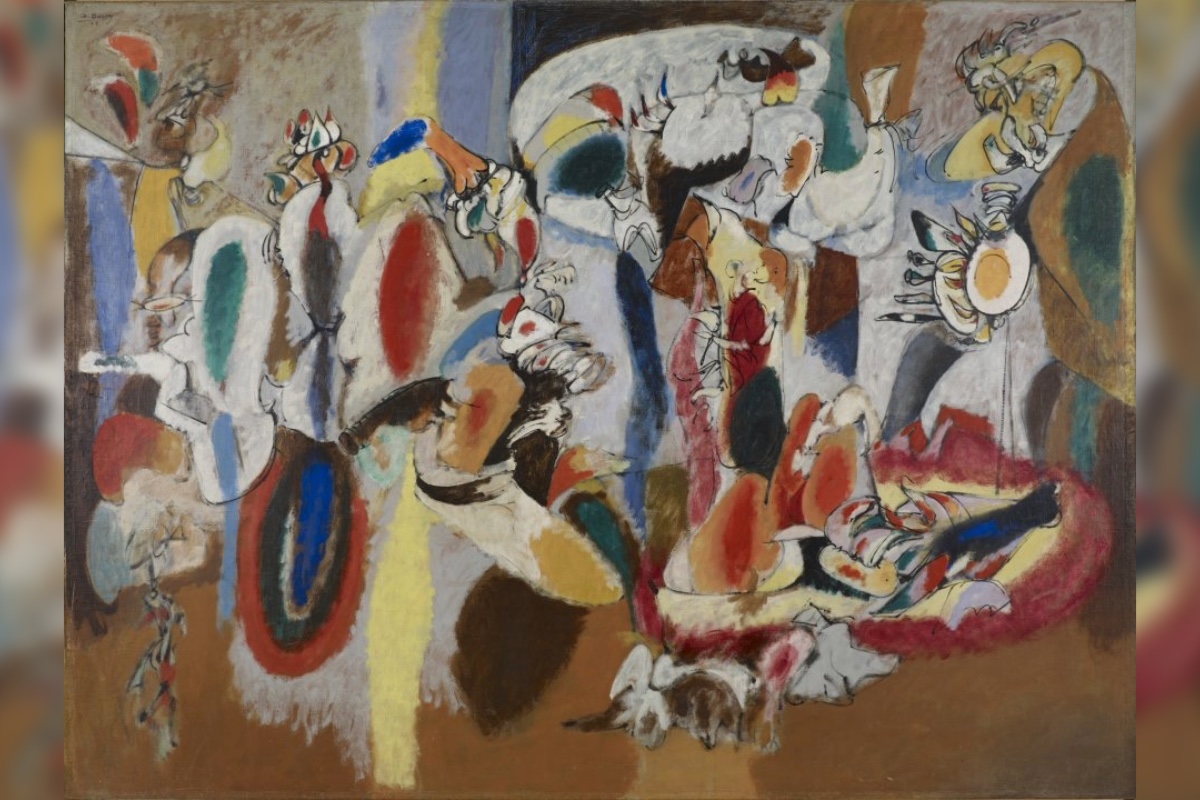
Dedicated to the 250th anniversary of America’s founding, this is the first in a series titled “Armenian Arts in America,” exploring the history and impact Armenians have had on the arts in the United States. Whether born in the U.S. or immigrants, Armenians have made an indelible mark on the arts in America.
When it comes to the visual arts — painting, sculpture, photography and more — Armenian artists have often taken an experimental approach to their work. Rather than following classical techniques, each artist has developed their own style to reflect their environment, critique societal norms or pay homage to their heritage.
 Arshile Gorky
Perhaps no one has had a greater impact on the art world than Arshile Gorky. Born Vostanig Adoian around 1904, Gorky fled the Armenian Genocide and arrived in New England in 1920, later settling in New York. He changed his name to Arshile Gorky in an effort to build a new life for himself in America.
Gorky is considered the last great Surrealist painter and one of the first Abstract Expressionists. His experimental work greatly influenced Willem de Kooning and other Abstract Expressionists. His bold use of color and avant-garde style sought to integrate his past and present lives: the serenity of his childhood gardens, the pain of the Genocide and the dynamism of the nature that surrounded him in the U.S.
 Larry Gagosian
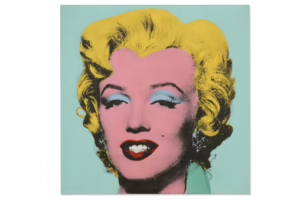
Over the years, Gorky’s work has been showcased by art dealer Larry Gagosian in several exhibitions around the world. California-born Gagosian opened his first gallery in 1978, and today, Gagosian Gallery has 18 locations globally. Gagosian has become a major influence in the art world, exhibiting the works of Roy Lichtenstein, Andy Warhol, Jeff Koons and other world-renowned artists, and breaking records at public art auctions.

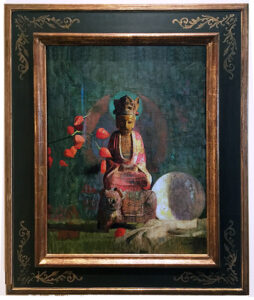 Hovsep Pushman
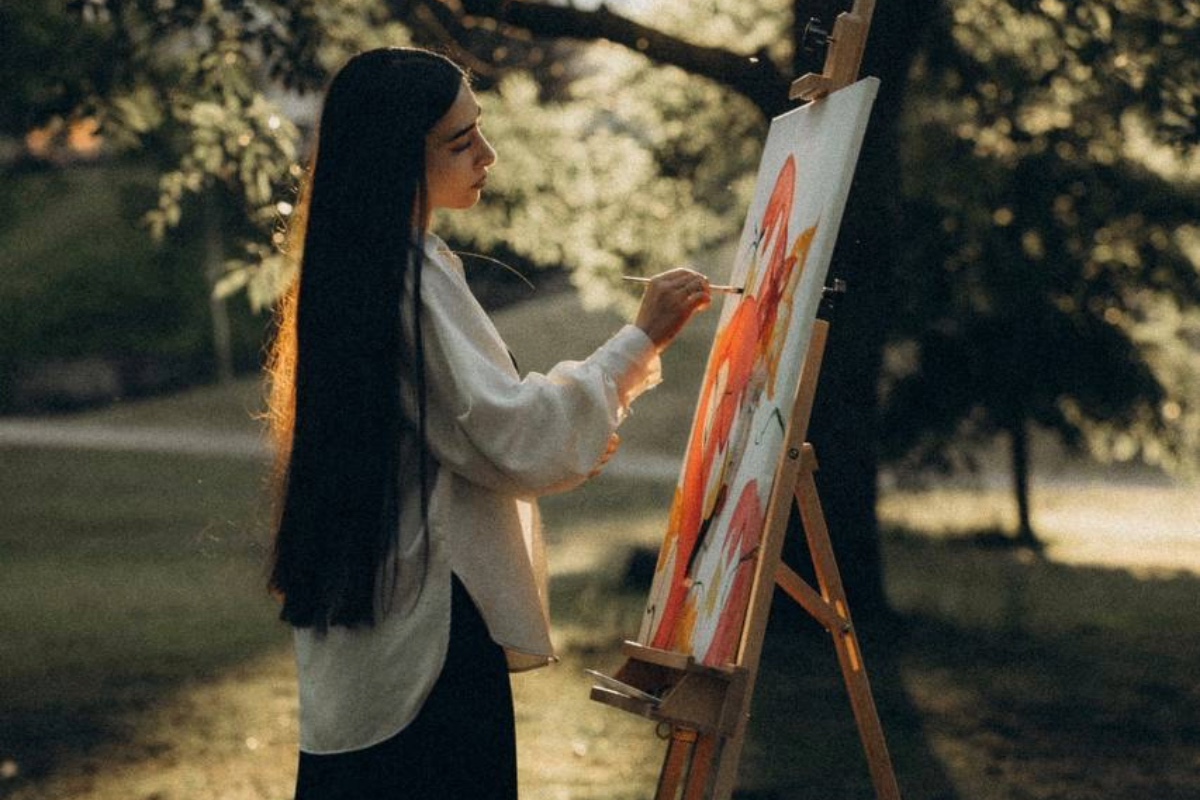
Arriving in America just before Gorky, in 1896, was Hovsep Pushman. Pushman lived in Chicago before settling in New York City in the 1920s and opening his studio in Carnegie Hall.
Pushman was known for his still lifes and study of Chinese culture, which became a fixture of the Grand Central Art Galleries, through his annual exhibitions there. Pushman’s legacy also includes a legal ruling against him, which was later overturned by the Copyright Act of 1976, allowing artists to retain the copyright to their work even after a sale.
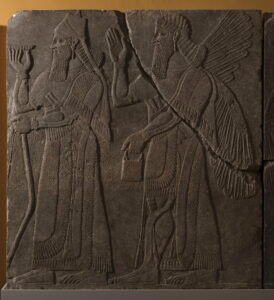
Hagop Kevorkian
Around the same time, archaeologist and collector Hagop Kevorkian settled in New York City. Kevorkian focused on Middle Eastern and Islamic art, mainly leading excavations in Iran. His work brought new attention to Near Eastern and Islamic artifacts in America.
Kevorkian’s impact cannot be denied, as his contributions resulted in the creation of the Kevorkian Gallery at the Brooklyn Museum, which displays Assyrian reliefs he donated; the Kevorkian Chair of Iranian Studies at Columbia University; and the Hagop Kevorkian Center for Near Eastern Studies at New York University.
Varujan Boghosian

Likely the most prominent American-born Armenian artist of the time was Varujan Boghosian. Born in Connecticut in 1926, Boghosian was a sculptor and assemblage artist. He created mixed-media pieces largely from found objects, giving new meaning to the phrase “one man’s trash is another man’s treasure.”
He found inspiration in a number of other art forms, including literature, music and ballet. Of special interest to him was Greek mythology, evidenced by his use of swans and snakes, which were typical symbols of classical myths.
These pioneers paved the way for contemporary Armenian artists in America, who have been more likely to incorporate Armenian themes, images and symbols into their work.
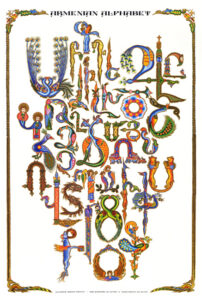 Seeroon Yeretzian
Born in Beirut, Seeroon Yeretzian moved to California in 1976. She is a sculptor and painter, perhaps best known for her illuminated alphabets and peacocks. Inspired by ancient Armenian illuminated manuscripts and their “bird script,” or trchnagir, Yeretzian has developed a unique style and is breathing new life into the artform. Her work is iconic and readily recognizable, as her posters have graced the walls of many Armenian homes and schools.
Arpi Krikorian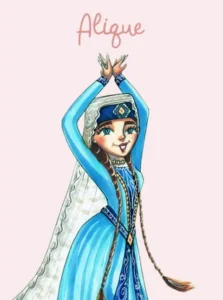
Similarly, in addition to her original paintings, California-based artist Arpi Krikorian has created her own artistic style based on Armenian culture. Krikorian has reimagined traditional Armenian costumes through a series of contemporary illustrated characters, complete with names and backgrounds. A testament to their embodiment of Armenian culture, her home decor products featuring the characters were included in the gift shop at the Metropolitan Museum of Art during the “Armenia!” exhibition in 2018.
When asked about the Armenian artists who came before her, Krikorian said, “Honestly, I wasn’t familiar with any Armenian artists when I decided to pursue art in my teens. That was one of the reasons I decided to do it, to represent and fill the gap. As an Armenian in the diaspora, I feel like all the arts in the past century have been neglected, not supported nor highlighted as they should have been, and in return we have a lot of work to do to inspire the next generation. Inspiration starts with bringing attention to its importance, artists having platforms to share their creations and, most importantly, the community supporting the individual artists.”
 Tigran Tsitoghdzyan
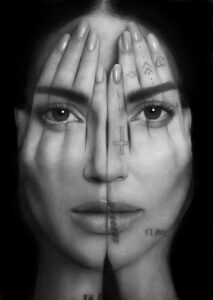
Meanwhile, painter Tigran Tsitoghdzyan has taken a different approach to his art. Born in Yerevan and based in New York City since 2009, Tsitoghdzyan has taken the art world by storm with his large-format, photorealistic portraits that explore society’s relationship with privacy and transparency. He also applies classical composition and style to contemporary subjects, commenting on the way that humans have — and haven’t — changed over time.
Armenian Museum of America
The preservation and promotion of Armenian art and culture in the U.S. have often become the responsibility of cultural institutions and charitable organizations.
One such institution is the Armenian Museum of America in Watertown, Massachusetts. What began as a small collection in a church building in Belmont, Massachusetts, in 1971, the museum has since hosted temporary exhibitions on prominent Armenian artists, past and present, such as Gorky, Boghosian and Tsitoghdzyan.
The museum’s ongoing exhibitions include collections on photographer Yousuf Karsh and collector Joan Agajanian Quinn.
Yousuf Karsh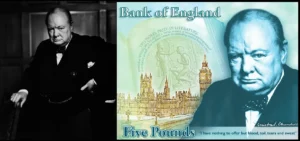
Karsh was a Genocide survivor and received Canadian citizenship in 1947 while also spending time living and working in Boston and New York City. He became a renowned large-format portrait photographer following the release of his portrait of Winston Churchill in 1941, which is currently used on the British 5-pound note.
 Joan Agajanian Quinn
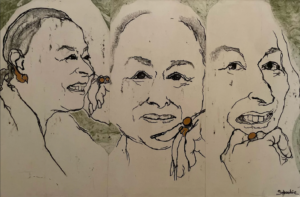
Agajanian Quinn, a native of California and lifelong supporter of the arts, not only amassed a large collection of art in her years as a journalist and editor of “Interview,” the magazine founded by Andy Warhol, but also became a source of inspiration and muse for a number of artists, such as Jean-Michel Basquiat. Included in this exhibition are many versions of her portrait — captured in ink, acrylic, oil, charcoal, photography and more — by artists Srboohie Abajian, Sophia Gasparian, Chris Hartunian and Aram Saroyan.
Armenian American Museum and Cultural Center of California
 On the other side of the country is the Armenian American Museum and Cultural Center of California. Under construction in Glendale, California, the museum aims to document and celebrate the history and contributions of the Armenian American community.
Regarding its mission, Communications Director Arsine Torosyan said, “Rooted in generations who preserved identity through expression and advanced it through innovation, the Armenian American Museum reflects not only the legacy of artists, but the full spectrum of contributions that have shaped the Armenian American experience. It stands to honor those who came before while creating a space where culture, creativity and achievement can continue to evolve, challenge, and claim their place within the broader American story.”
With the support of the American art world, Armenian cultural institutions and the Armenian community at large, the next generation of Armenian artists in America has a solid foundation on which to continue building.

More articles like these please! It’s refreshing and necessary to read about the arts on a regular basis.
A few other highly prominent American born Armenian artists include John Altoon & Charles Garabedian. A native to Los Angeles since 1980 is the most prominent Armenian American sculptor Emil Kazaz.