


Software developer builds apps for language learning and budgeting

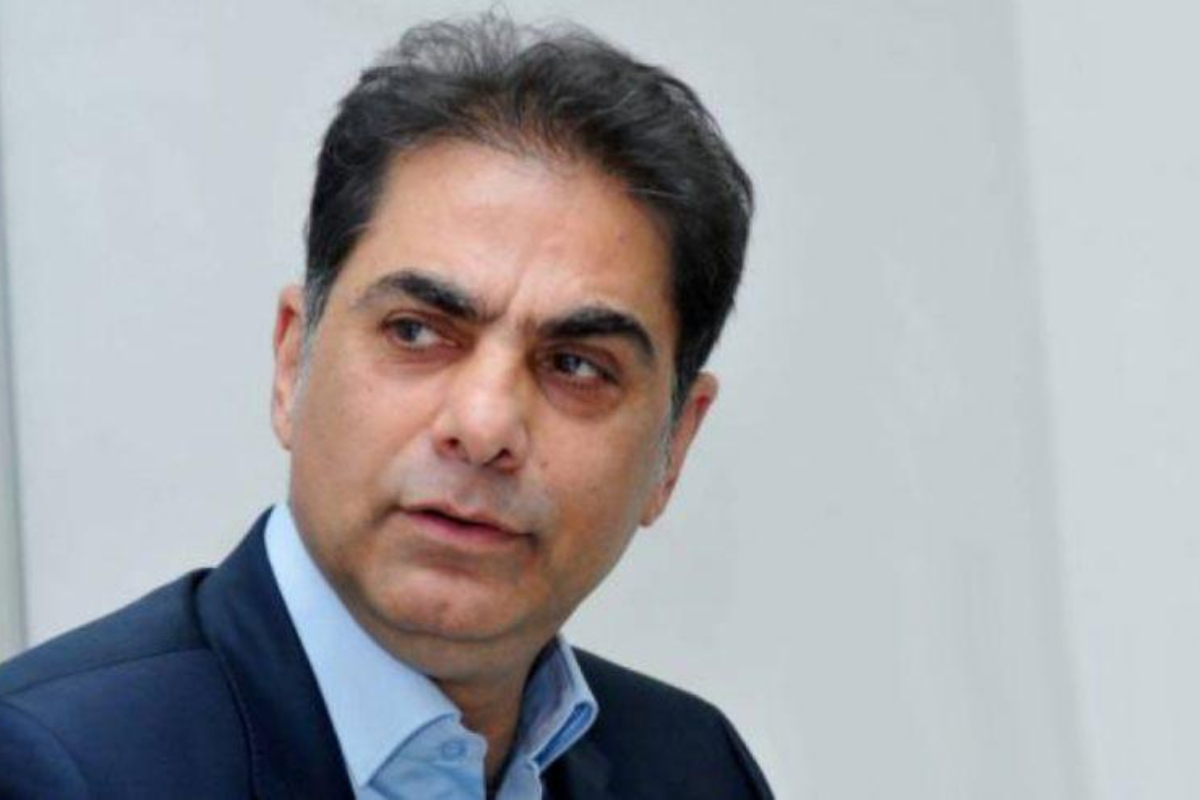
Software developer, product manager and marketer Suren Ghazaryan was born in Yerevan and raised in Moscow. He visited Armenia primarily during the summers. His mother is a doctor and his father a businessman. His family’s roots trace back to the village of Kchoghot in the Martakert region of Artsakh. He says his grandmother spoke a regional dialect at home, which is why he understands the Artsakh dialect today.
“I don’t speak it very well, but I understand the dialect,” he said. “I remember when I was little, there was a word ‘changyal,’ and once I used it, no one understood me — I meant ‘fork,’ but I didn’t know it was a dialect word.”
After the war, Ghazaryan said visits to Artsakh became emotionally difficult, particularly due to the presence of Azerbaijani soldiers at the border. After that period, he decided to relocate to Armenia.
His first initiative in Armenia came from a simple daily problem: he couldn’t read bus destination signs quickly enough, which caused him to miss stops. That experience led him to create AriBoon, an app designed to help users learn Armenian.

“The app became very popular,” he said. “I solved a problem for many people right away, even though I initially thought it was just my own issue. Now, about 5,000 people use it every month.”


When asked how someone not fully fluent in Armenian could build a language-learning app, Ghazaryan said linguists develop the content while he contributes as a user and tester, ensuring the product is practical and effective. The app uses an associative learning method, which is suitable for those who dislike repetitive memorization.
He later launched Lezoos, a startup offering language learning tools for other languages, including Georgian, Korean and Chinese. He said the teaching methods are tailored to each language’s structure, and the project is still in development.
To better manage his personal finances, Ghazaryan created VeoWallet, a financial tracking app that helps users monitor income and expenses, plan budgets and analyze financial habits. One feature calculates the value of a user’s time.
“For example, I calculate all my income, and the system shows that one hour of my time is worth, say, 3,000 drams,” he said. I can take public transport for 150 drams and spend an hour commuting without working, or I can take a taxi for 1,000 drams and work during that time. In my case, the taxi is more efficient because I’m earning during that hour.”
Beyond technology, motorcycles have played an important role in Ghazaryan’s life. He recalls a childhood photo taken in Jrvezh at about age 5, sitting on a motorcycle. At 14, he received his first motorcycle as a birthday gift.
“For me, all cars are the same, but every motorcycle is different,” he said.
After moving to Yerevan, he said he found no strong motorcycle community, so he created the MotoYerevan chat group, which has grown to a community of about 400 members. He also launched the MotoHelp website, which provides services and practical information related to motorcycles.
He said motorcycles in Armenia are better suited for travel and exploration than daily commuting. He has ridden to Gegharot, Gutanasar, Kari Lake, Lake Sevan and Dilijan.
However, he has not ridden in the past year and a half following several accidents and the death of a friend. He said motorcycles are among the most dangerous forms of transportation and does not recommend riding in Yerevan until road safety improves.
Ghazaryan now owns an apartment in Yerevan and said he feels at home, though he noted that the cost of living can sometimes be higher than that of certain European cities.
He also said that encouraging diaspora Armenians to return would require simplifying bureaucratic processes. He spoke about legal “gray areas” in the system, including cases where people born in Armenia struggle to obtain passports or must go to court to prove they did not evade military service unless paying significant sums to resolve the issue. He said such barriers often discourage returning migration.