




Building a democracy includes separation of church and state
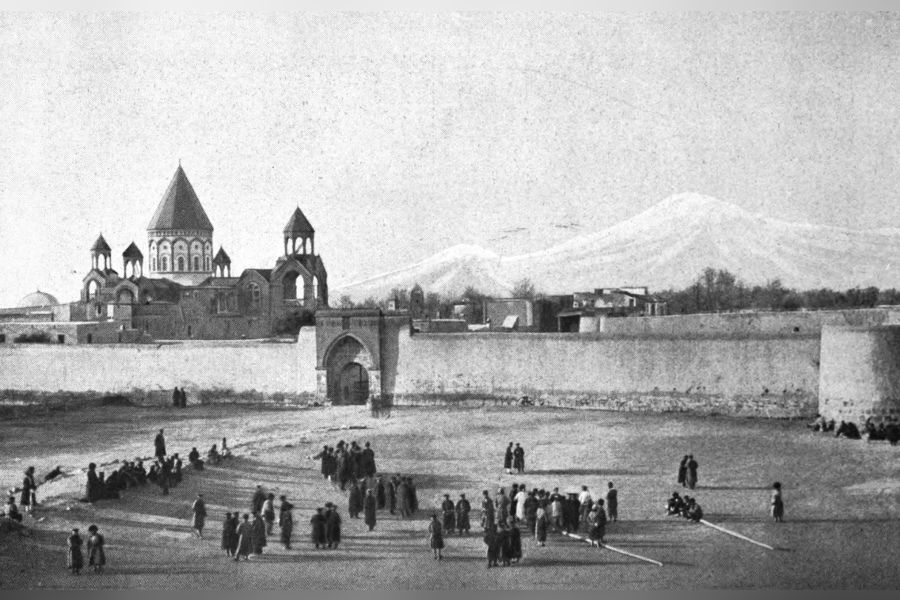
In my previous column, I focused on the expectations of the diaspora ahead of Armenia’s parliamentary elections in June 2026.
There are two sides to the narrative. First, those of us in the diaspora should recognize the limits of our role compared to citizens of the Republic. Our mission should be to support Armenia’s interests through collaboration with the government within our own communities. Second, a prosperous democracy requires institutions that uphold its values.
Democracy rests on many pillars: a free economy, an independent judiciary, free and fair elections that represent the will of the people and the core freedoms of speech, assembly and belief.
The Constitution of Armenia — like constitutions in most democratic nations — defines these rights and values. Consider the United States: a nation born in the 18th century with only a fraction of its current population, yet its constitution has been amended 27 times. It has withstood the test of time, incredible societal changes and wars.
One essential democratic principle is the separation of church and state — a safeguard designed to ensure religious freedom for all. In the U.S., a settler-colonial society primarily dominated by Christian denominations has evolved into a pluralistic country that protects Hindus, Buddhists, Muslims and those who reject religion entirely. What began as a mechanism for tolerance within Christianity has expanded into universal protection.
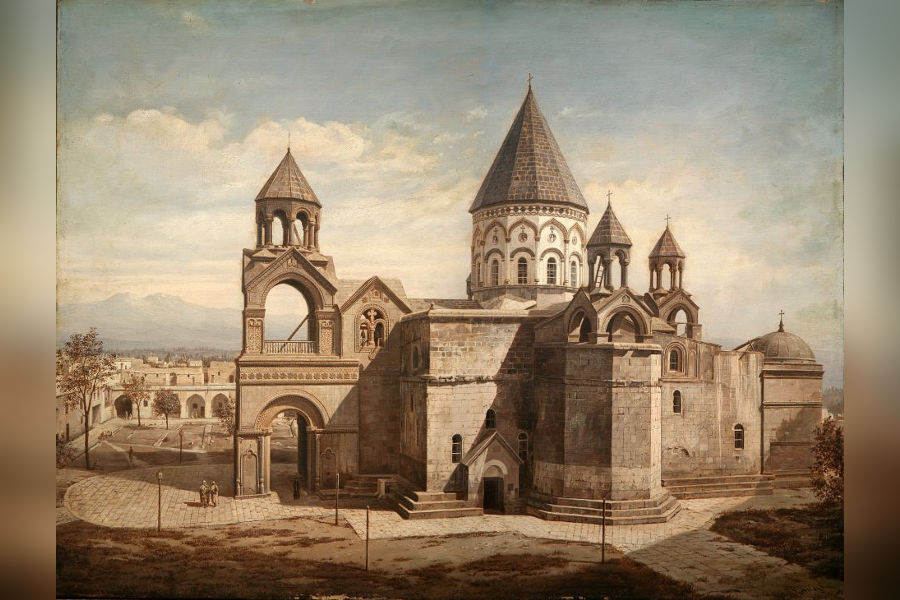

Armenia is unique in that the Armenian Apostolic Church is woven into the fabric of the nation’s long history, in a largely homogenous society. Nevertheless, church and state should operate within the framework of the Constitution but without interference.
This past weekend, I attended a community gathering with Armenian clergy from the Eastern Region. I have great respect for our priests and wanted to greet many of them as friends and as an adherent to our church. It is quite common for us to engage in discussions on the homeland, which are usually filled with optimism and hope. This evening was different.
In nearly all the encounters, there seemed to be a common theme: profound sadness over the conflict between the church and the government in Armenia, leading to the arrest/detention and jailing of several priests. The concern and despair were evident in their eyes. Normally, gregarious men of the cloth were deeply impacted when commenting on these current events.
The conflict is rooted in an acrimonious relationship between Prime Minister Pashinyan and the Catholicos of All Armenians Karekin II. The government has been investigating charges of corruption, which have escalated while the church has become outspoken in its opposition to the government in its policies as well as practices against church leaders.
Karekin II is no stranger to controversy. There have been rumors of corruption and leadership styles that have operated outside of formal proceedings of the church for years. While the church has been remiss in addressing these issues, the government should be limited to enforcing the law of its citizens. The desire of the prime minister to force a replacement of Karekin II and the arrest of bishops and other priests has shocked most Armenians in the diaspora as crossing a line between church and state.
The struggle escalated last year when the primate of the Tavush province, Archbishop Bagrat Galstanyan, began a protest movement over the government’s decision to return four villages — won in the first Artsakh War — to Azerbaijan. The demonstrations began as a peaceful expression of disagreement with government policy but soon grew into a political movement called “Tavush for the Homeland,” culminating in marches in Yerevan demanding the prime minister’s resignation. Bagrat Srpazan’s provincial rallies quickly transformed into a political campaign, with him positioned as a candidate for prime minister.
Let’s be honest. Srpazan Hayr’s activity — marked by unfulfilled predictions and suggestions of Holy Etchmiadzin’s endorsement — was ill-advised. In my opinion, the transition from local protests to a political movement was inappropriate and gave the government an opening for investigation. A sitting primate has no business leading a political cause calling for the ouster of an elected prime minister.
In a democracy, citizens have elections to express their views and legal channels to influence policy. The primate crossed a line and this was unfortunate. Bagrat Srpazan became perceived as a surrogate proxy for the Catholicos in opposing government policies — an example of a legitimate civic concern being overtaken by political ambition. It was yet another example of disorganized opposition in Armenia’s political system.
That said, the subsequent investigations, arrests, pre-trial detentions and jailing of priests have cast a dark cloud over Armenia. Three primates are currently being held, with one already sentenced. The drama and optics of clergy in handcuffs have caused havoc and deep sadness in our nation. Outsiders with nefarious intentions — such as recent statements from Azerbaijani clerics — will undoubtedly attempt to distort reality. We should ask why Armenia’s political and spiritual leaders cannot resolve these issues without public chaos.
The church and the government are the two most important institutions in Armenia. Our nation depends on its mutual respect and unity to survive. While a high-ranking cleric leading a political campaign was indeed inappropriate, the government’s move to force the ouster of the sitting Catholicos — and its articulation of a process for his replacement — also crosses the boundary that should exist between church and state. It disrupts a core pillar of democracy.
We should also take into account the unique role of the church in Armenian life. There is no doubt that Karekin Vehapar has his detractors, particularly among the laity; however, it is the business of the church and its internal processes to address matters of church leadership. The church remains one of the few institutions in our nation that people will defend — even if they have private opinions about its leaders. It is our connection to our history and a primary vehicle for our path to salvation with Our Lord. It encompasses matters of our personal eternity that go far beyond the scope of any political conflicts on earth — battles few are willing to wage and even fewer can win.
My suggestion to Armenia’s Prime Minister is to step back from open confrontation with the church. It is too damaging to our nation and could impact the electoral results in June. And yes, this column has long argued that the diaspora should not interfere in Armenia’s politics. Why is this different? Because, quite simply, the church belongs to all of us.
With many priests from Armenia serving in our diocese, the issue has become very personal. The hurt and fear I saw last week are real. The strength and independence of the Holy Church concern all of us as its faithful. Let us pray for wisdom, peace and reconciliation. At the same time, the church must exercise greater discipline in avoiding political activism. There is a thin line between expressing opinions and engaging in partisan campaigns — and it must be avoided.
This past week, Catholicos Aram I of Cilicia faced criticism from the audience of Shahan Srpazan from Antelias, including Prime Minister Pashinyan, amid the ongoing crisis. Srpazan Hayr, who conducts scholarly work at the Matenadaran in Armenia, met with the Prime Minister to present a book on the 30th anniversary of the consecration of Aram I as Catholicos of Cilicia.
I read two media accounts about his visit. A government statement noted cordial discussions and the presentation of the gift. A release from the Holy See echoed that sentiment and added that Shahan Srpazan expressed Vehapar Aram’s concern regarding the investigations and arrests of clergy. His use of an emissary to deliver a message while respecting the government was quite appropriate. In sensitive matters such as this, subtle diplomacy is essential.
These are trying times for our Republic and its democracy. I continue to stand by the premise that criticism should always be accompanied by pragmatic solutions.
Calling for the ouster of a sitting prime minister who holds a parliamentary majority is not a productive use of resources. Those who oppose his policies should pursue lawful opposition — not fragmented efforts powered by emotional rhetoric. Unifying around clear, substantive alternatives is the only responsible path forward to give the people real choices.
During the 2021 elections, voters chose between Pashinyan’s present and the legacy of the past political parties. Today, the opposition should represent an alternative to the present. Campaigns should center on issues and choices, not personalities. The church’s strength lies with the people; if it has erred through corruption or aloofness, then reform should come from within, grounded in love and salvation. This is not a time for Karekin II to remain cloistered in Holy Etchmiadzin. He should be among the people, offering comfort and spiritual leadership.
Most of us are not privy to the internal dynamics driving these conflicts. We can only witness the carnage, but we retain an innate sense of right and wrong. This is a time to pray for our Holy Church, for peace and for our homeland.

Stepan’s writings are characterized by his prudent and mindful choice of words, structuring of his sentences and his paragraphs to share his coherent thoughts, such as in this article. But I still will characterize it as daring, because I expect him to encounter run of the mill rebuttals.
It seems if clerics try to control the government the government has to try and control the church to keep it’s clergy curbed to ecclesiastical and spiritual matters
Well-meaning, kindly words. Only one side of this conflict is using guns, jailing people both clergy and ordinary citizens, walking away from soldiers and citizens in captivity in Azeri jails.
There can be differences between people, but this is our human church against perhaps incompetent, possibly evil people.