




Diaspora expectations and Armenia’s 2026 election
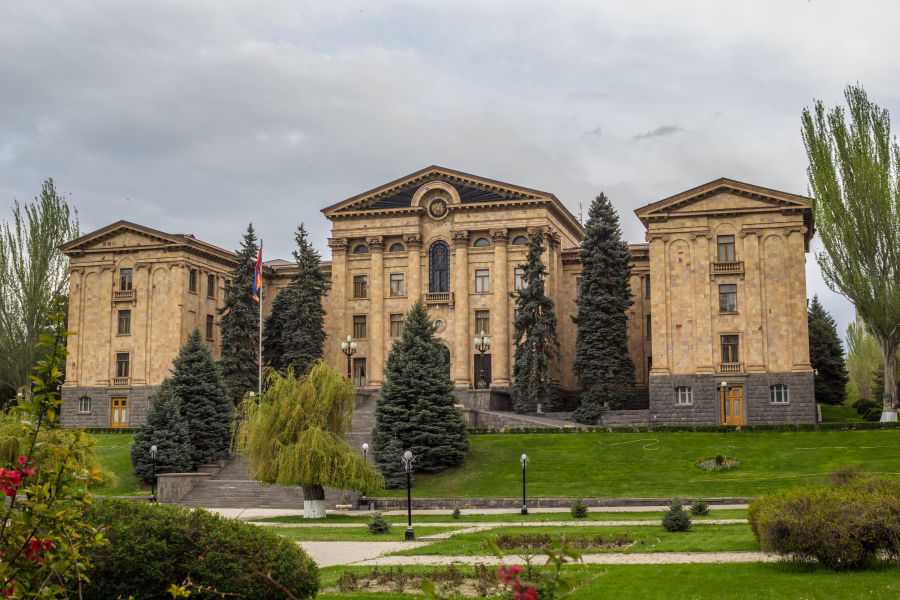
In roughly eight months, Armenia will hold its 2026 parliamentary election. The process of winning and allocating seats in the National Assembly can be complicated, but in the parliamentary system of governance, the party that wins the majority of seats will directly, or through an alliance with other parties, nominate the individual to serve as prime minister.
This was essentially the process in the 2021 snap parliamentary elections, when the Civil Contract party earned the right to nominate him as prime minister, which the Parliament (National Assembly) formalized at the election of the prime minister after the nomination.
I believe that diasporan Armenians need to invest in learning about the framework and nuances of Armenia’s democracy. An informed opinion based on working knowledge should drive our compassion for the homeland. The current political environment is evolving and requires all of us to form responsible opinions. It seems that the diaspora exists in a dichotomy of opposing the current government but remaining firmly in support of Armenia’s “interests.”
To casual observers, this may seem confusing to comprehend, since Armenia’s “interests” are usually defined by the elected government, but there is disagreement as other views are advocated. This is quite common in true democracies where free expression is a hallmark of a nation. It is unique, however, in the sense that the vast majority of the Armenians from the diaspora are not citizens of the Armenian Republic, but are deeply connected emotionally and financially.
There are limitations to what diasporan Armenians should expect in terms of influence on Armenia’s direction. This is a somewhat controversial notion, since we constantly refer to Armenia as “our homeland” and are emotionally vested in its future. Where does the line of expectations begin and end? Do we view this as an entitlement for our investments or is it an expectation because of our common heritage?

When thousands of Armenians from the diaspora immerse themselves in the nation-building process in Armenia, it can be challenging to draw lines of constraint. Most Armenians in Armenia are deeply appreciative of the impact of the diaspora in the last 34 years, particularly when the quality of life investments in education, social programs and economics are significantly improved. Most Armenians in the diaspora fly “under the radar” in Armenia’s politics and perceptions of meddling. It is simply an act of love.
The political processes of foreign policy are the most challenging in our internal relationships. What we view as advocacy work for Armenia’s interest here, in the United States, is foreign policy work for the Republic. The hostages in Baku, the plight of Artsakhtsis and their exile from Artsakh, aid packages from other countries and alliances are sensitive topics connected to a nation’s sovereignty.
The impact of the diaspora, both in political advocacy and quality of life endeavors, has been impressive, but we should always be mindful of the perception of “remote control” influence. In a functioning democracy, the final authority is with the citizens of the nation. This places a defined limitation on what we can do from the diaspora.
With these internal dynamics, what expectations should those of us in the diaspora have for Armenia in the important 2026 party elections? Most of our opinions are centered around the current government and the prime minister, but this election has other fundamental issues to address.
In my view, our most important expectation is that the outcome will support the continued growth of Armenia’s democratic institutions and market economy. One of the weaknesses of Armenia’s political democracy has been the inability to create a functioning opposition political force, creating positive legislative dynamics. The current legislative assembly contains a total of 107 seats. The ruling Civil Contract party of Prime Minister Pashinyan holds a majority with 71 seats, thus ensuring a legislative lock. The Armenia Alliance, led by former President Kocharyan, holds 29 seats, while the I Have Honor Alliance of former President Sargsyan and Artur Vanetsyan won seven seats. An additional four seats are reserved for ethnic minorities such as Kurds, Yazidis, Russians and Assyrians.
Armenia would advance its political process with a stable opposition that the majority or ruling plurality would have to negotiate with for legislative activity. In the current alignment, legislation is passed with either token opposition or abstentions. The dilution of opposition forces remains an open issue.
As we approach the 2026 elections, the majority of the geopolitical dynamics have shifted. These dynamics are driving most of the issues surrounding the election. While the diaspora is focused on what is considered foreign policy matters (except the current conflict with the church), many Armenian citizens have lived with security issues and are just trying to live a reasonable life. This is not unlike Western democracies, where internal economics can dominate voter perception.
Since the last election in 2021, Artsakh has been occupied, over 120,000 Armenians were forcibly displaced and Baku has illegally held former political and military leaders hostage under deplorable criminal conditions. In addition, Armenia has moved decidedly towards the West, agreeing to integration measures with the European Union and military purchases from France. The strategic partnership with the United States is growing with the recent agreement, termed the Washington Accords.
The move away from Russian dependency has been gradual and cautious. Armenia remains heavily reliant on a wounded Russia for energy and an export market. Relations with the NATO “equivalent,” the CSTO, have been frozen but not fully severed. Reducing dependence on Russia needed a willing partner for Armenia’s security. In the short term, the United States has emerged as such a partner — favoring economic investment over a direct military presence. The infrastructure investment and security arrangements of the evolving TRIPP economic route, which traverses Armenia from Nakhichevan to Azerbaijan, will be a development worthy of close monitoring.
Unlike our American democracy with two major parties, Armenia’s parliamentary system consists of multiple parties. At one point, a few years ago, there were over 25 parties registered in the homeland. The parliamentary system usually has many parties that seek seats in the parliament and then negotiate alliances to form a majority for a government. It is not unusual for a party to win a plurality and build alliances with other seat winners to build a majority. It is a very different process from our binary red-blue process here, in the United States.
In the current parliament in Armenia, only three political alliances hold seats in the Assembly. Most of the registered parties did not win seats or may not have fully participated in the last election. The early indications are that at least seven political forces, including the incumbent party, Civil Contract, are preparing for the elections. The list includes legacy leaders such as former Presidents Ter Petrosyan, Kocharyan and possibly Sargsyan. Gagik Tsarukyan will once again engage, along with newcomers such as currently detained businessman Samvel Karapetyan and former Human Rights Defender Armen Tatoyan. Former Yerevan Mayor Hayk Marutyan will also participate in a new political party.
The elections in a parliamentary system look similar to our primary process in the U.S., in terms of the number of political parties. What the Armenian people need is a competitive election so that the voices of democracy are heard. It would seem that a consolidation of political forces would best serve that goal.
With the improved visibility of Armenia on the world stage comes the risk of foreign influence on a small nation. Azerbaijan, as a vile dictatorship with no democratic foundation, worries little about foreign influence in its elections, since there are no free elections. Protecting the sovereignty of Armenia includes keeping foreign manipulation to a minimum.
With alliances, such as the emergence of Armenia’s Western journey, there will be quiet advocacy, but interference is an entirely different reality. Russia has lost much of its hegemony in the South Caucasus with the Ukraine war and is looking for ways to recover its lost influence. In one sense, Armenia has become a proxy for the West in the larger battle for influence in the region. Naturally, candidates will be viewed through the lens of pro-Western or pro-Russian. While Armenia works to reduce dependency, the base in Gyumri is ever-present. As politicians, they will straddle the line publicly, but private communication and policy decisions will decide the outcome.
As Armenians in the diaspora, we should commit ourselves to becoming informed individuals on the regional and domestic dynamics. By focusing on the issues and less on the personalities, we can best support democracy in our homeland. This election is very important because Armenia’s positioning has been altered. Doors have been opened and deterrents have been defined. These are the issues the Armenian people must decide on — the military, security, economic growth and regional positioning in a changing world.
Strengthening democratic institutions in Armenia will enable the stability and prosperity of the country. As children of the global Armenian nation, we should be focused on strengthening the foundation of democracy.

This will be the most fateful election of Armenia since independence, and will be a choice between democracy or a full-blown Pashinyan dictatorship. Since dictators like Pashinyan don’t leave power willingly, democratically and peacefully, and in all certainty will try to cling to it at all costs, mayhem is lying ahead.
For seven decades, a faction of the Diaspora stood against Soviet Armenian governance because it was not democratic. While the other faction, accepted the Soviet Armenian governance for security considerations. But neither of them knew and cared to know who the prime minister of Soviet Armenia was, or who the Armenia politburo chief was.
Stepan, yes, you are right that the most important thing is the continued growth of Armenia’s democratic institutions and market economy. After all, and “Simply put, if the democratic institutions of Armenia are not supported in this transition, then what is the point of sovereignty?” Your quote, I have quoted several times.
@Stepan Piligian
You’re not really naive enough to think that the US will ever send the Seventh Cavalry to rescue Armenia from the Turks?
The American part of your identity needs to acknowledge the truth that 99.99% of Americans can’t find Armenia on a map.
Armenia’s “dependency” on Russia?
Well, apart from the fact that Armenia cannot survive without cheap Russian energy, there is a little matter of Geography.
What do you think will happen to Armenia if it has to pay market prices for energy?
As for the Americans, all they ever care about is their air base in Incirlik. They will sacrifice Armenia to the Turks rather than lose Incirlik.
As for Geography, Armenia is not in the heart of Europe. It is in the extreme South-East of Europe with barbaric Asiatic Turks on both of its Eastern and Western borders. Armenian Americans cannot change Geography.
As for Armenian Americans, you need to acknowledge Geography and become the greatest Russophile force in America.
Geography Whig and the 99.99%
Looking at maps i see how Armenia doesn’t adjoin Russia and how that country adjoins Ukraine which it’s currently occupying and attacking which is unquestionably more important to Russia than Armenia even on a good day.
The 99.99% figure with making such statements perhaps a survey across the USA excluding persons of Armenian ancestry should be done to find out how true this is . Besides few Americans had much doing with Kuwait and Kosovo but they would become a centre of attention for the USA. Cheap Russian energy; between US led sanctions (Trump is not a Kremlin agent btw) and Ukrainian with NATO support attacks on Russia oil and gas infrastructure Russia ability to supply Armenia with hydrocarbons at any price is coming under strain. USA cares far more for Israel than incirlik airbase although Armenia isn’t that important to the USA. It’s always been questionable if Armenia, like Georgia and Azerbaijan is part of Europe given the traditional boundaries are the Caucasus mountains and the Bosporus straight. Vouching for Russia in the USA currently would attract suspicion given the near collapse in the relationship and proxy war over Ukraine.