



On a Sunday after the Divine Liturgy, we gathered for a meal as usual — me, a younger friend from Armenia and an older friend from Western Armenia. We already knew each other well; we all sang on the altar.
During our conversation, the older friend noticed my limited Armenian and asked, quite naturally, why I didn’t speak the language. In Armenian, I managed to say, “I am learning,” but he seemed unsatisfied. After all, how could an Armenian not speak Armenian?
I asked my younger friend to translate that I had been assimilated — that I was not raised as an Armenian. The older man’s eyes grew misty, and he embraced me.
He told us that around 20 people had recently discovered their Armenian roots and were baptized in that very church. One of them was Yaşar Kurt, a Turkish singer who learned he was Armenian at the age of 40. For years, he had sensed he was different, but his parents had hidden the family’s past.
Yaşar came to Yerevan for the first time to give a concert. “There was a very warm atmosphere in Armenia,” he recalled. “One day, while walking through the streets, I bought a CD — it was music by the great Armenian composer Komitas. When I looked at the cover, I saw that Komitas looked a lot like me. I was surprised.

If I am Turkish, why do I look so much like an Armenian? And why do I cry when I listen to Armenian music?”
When he returned to Istanbul, he asked his father to tell him the truth. It was more tragic than he had imagined. His ancestors had lived in the Armenian village of Andzar (Անծառ) near Van. During the 1895 massacres, the entire family was killed. Only a nine-year-old boy named Ismail survived and fled toward the Black Sea, where kind people took him in. That boy was Kurt’s great-great-grandfather.
By uncovering this hidden past, Kurt finally understood the source of his lifelong restlessness. Starting a new life at 40 was not easy, yet he began learning Armenian and reading about Armenia’s history. He was baptized in the Armenian Church in Cologne, taking the name Arshak Kurt.
“By openly declaring that I am Armenian, I made many enemies,” he reflected. “Even people I once called friends turned their backs on me. Some even said, ‘If you’re Armenian, then go to Armenia.’”
“I owe a lot to Komitas,” Kurt said. “If it weren’t for him, I might never have discovered that I was Armenian. Thanks to Komitas, I found myself, gained harmony and rediscovered my faith.”
Kurt’s story is just one example. Armenians have been assimilated into many identities — some hiding behind Alevite or Kurdish identities. A key study on this subject is Kazım Gündoğan’s book “Alevitized Armenians” (“Aleviles(tiril)mis Ermeniler”), which the Working Group on Recognition-Against Genocide, for International Understanding (AGA) — a German-based initiative aimed at studying and preventing genocide — recently translated into German with Tessa Hofmann. The book focuses on assimilated Armenians in the Dersim region. One of its most moving interviews recounts a deathbed confession:
“My sister Leyla Yıldız is the eldest daughter of the family, the firstborn child. My uncle, Izzet Kayan, was over 80 years old when he died, and he was older than my father. When he fell ill and sensed that his end was near, he called my sister and said, ‘I could never tell my own children. You are the only one I trust; you remind me so much of our grandmother. I want to give you your grandmother’s picture. They forced us to become Muslims, but I can’t tell my children that now. They forced us to pray and sent us to the mosque. May Allah forgive me, I never told my children that we are Armenians; I didn’t teach them and always kept it a secret. My children wouldn’t accept it now anyway.’
Leyla Yıldız, the woman in this story, was among the few fortunate enough to learn the truth. Many others were not.
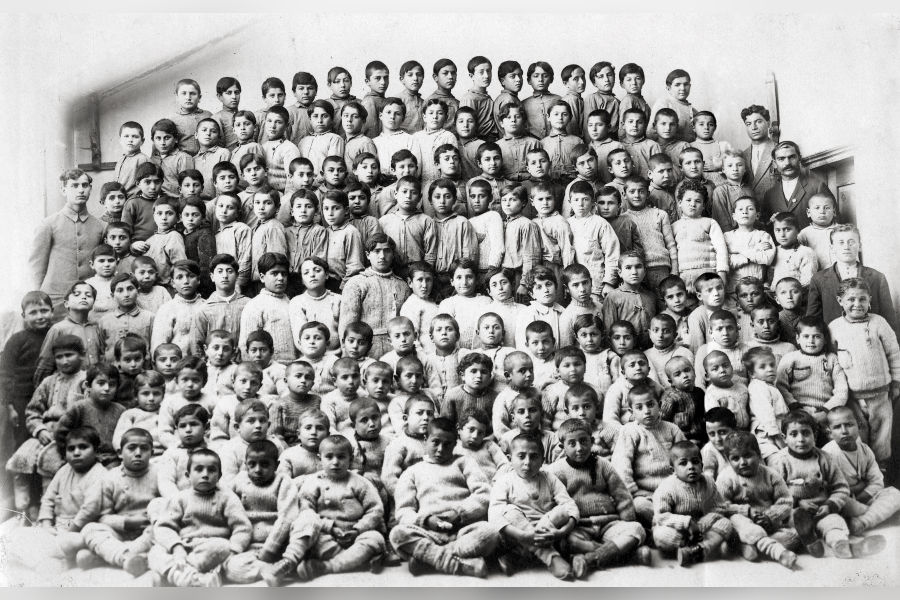
These stories are not rare. One aspect of the Armenian Genocide was the forced assimilation of children. Thousands were placed in orphanages or distributed among Muslim families to be “educated” in Turkish culture. Young girls were often coerced into marrying Muslim men. This was state policy — a systematic effort to collect Armenian children and raise them according to “Turkish-Islamic” values.
Historian Taner Akçam’s “Forced Islamization of Armenians: Silence, Denial and Assimilation” includes telegrams issued by the Ottoman state detailing this campaign.
A telegram from the Ottoman Ministry of Education, No. 54/150, ordered: “[…] It has been decided that Armenian children under the age of 10 will be collected for orphanages to be raised in Turkish-Islamic manners. Therefore, report how many such children are in your region and if there is an available building for this purpose.”
Another telegram, No. 54/41, reveals that the Armenian Genocide was meticulously planned. The policy extended beyond mass deportations to include deliberate measures to assimilate Armenian children whose families were to be killed by the state. The telegram discussed the fate of “children who might lose their families” and the steps to address their situation, including placing them with Muslim families and providing financial support to those households.
A third telegram, No. 63/142, sent to Enver Pasha, outlined the planned destruction of Armenian families:
- Women who are now without husbands or parents should be distributed to different locations.
- Young women and widows should be married off.
- Children under the age of 12 should be placed in orphanages.
Similarly, Talaat Pasha, in a telegram, No. 59/150, dated December 30, 1915, ordered that orphaned children be placed in orphanages in villages “without non-Muslims” to raise them with Islamic values, while women should be married to Muslims.
Within days, the number of children in an orphanage in Deir ez-Zor reached 1,700. Very young children were given to Muslim families, while older ones remained in institutions where Turkish-Islamic teachings were strictly enforced. Authorities requested that very young children be given to Muslim families and inquired about measures to teach “Turkish-Islamic” values. The ministry was insistent on placing children and women in small villages rather than large cities.
The state also encouraged Muslim families to adopt Armenian children as a means of assimilation. Families who adopted Armenian children or men who married Armenian women were entitled to inherit their wealth. This led to a rush to adopt children from wealthy families or marry women whose husbands had been exiled or executed. In some cases, individuals forcibly married Armenian women to seize their properties.
A report from the German consulate in Aleppo, dated August 29, 1916, chillingly details the fate of children based on their age:
“As we have learned, the following principles will be implemented:
Boys older than 13 will be sent away, and the girls will be forced to marry to a Muslim. Children aged 10 to 13, still in shock from what has happened, will be separated from the younger ones and will learn a profession. Children younger than 10 will be raised in special orphanages. In other words, boys older than 13 will be executed, and girls will be placed in a harem and younger children will be subjected to forced Islamization.”
The German consul was not exaggerating, according to the memories of Hampartzoum Mardiros Chitjian, a survivor of these orphanages:
“The first thing they did was change our Armenian names to Turkish names. My name became Rüştü. The very next day, it was forbidden for us to speak Armenian, and we completely forgot how to speak it. Then an imam arrived, and we were forced to perform Muslim prayers. One morning, the gendarmes came and began to divide the children according to their physical appearance. It soon became apparent that they were separating the children to kill those who were too old to be assimilated or Turkified.”
The Ottoman Empire also had a long history of child recruitment. Through the devşirme system, non-Turkish children were taken, Turkified, converted to Islam and trained for military service. The Janissary Corps was the most notable example — loyal soldiers who had once been taken from Christian families.
One of the most prominent cases of an assimilated Armenian child is Sabiha Gökçen, long celebrated as a national symbol in Turkey. Gökçen was the world’s first female combat pilot, logging over 8,000 flight hours, including 32 combat missions, among them, during the Dersim (Դերսիմ) massacre.
According to the official Turkish narrative, Gökçen was born in Bursa in 1913. Her father was the Provincial Chief Clerk Mustafa İzzet Bey, and her mother was Hayriye Hanım. Having lost both her parents at a young age and raised by her older brother, Gökçen was adopted by President Mustafa Kemal Atatürk during his visit to Bursa from September 22 to October 8, 1925.
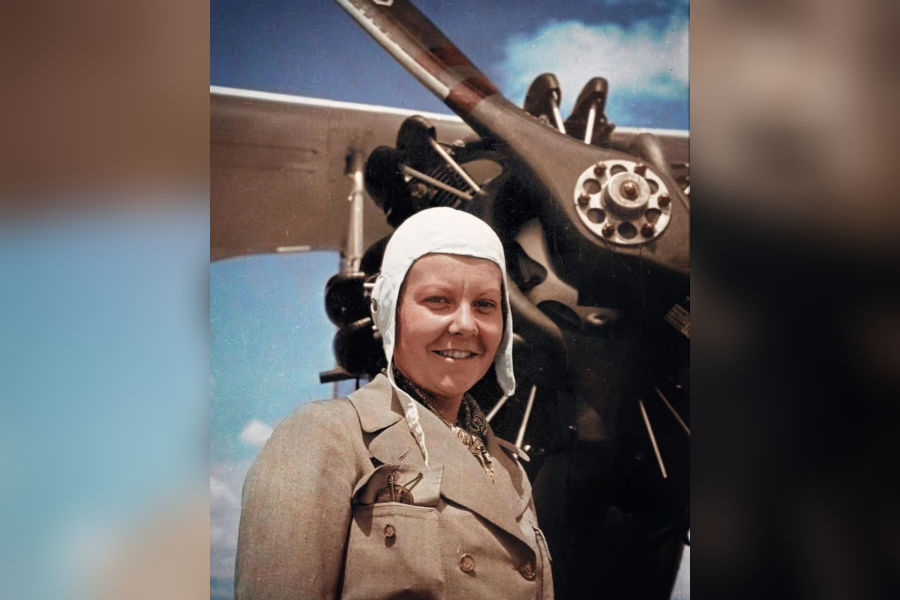
However, Hrant Dink’s article “The Secret of Sabiha Hatun” told a different story. The piece, based on an interview with Hrispime Sebilciyan, a former Armenian resident of Antep who claimed Gökçen was her aunt, challenged the official narrative entirely:
“Sabiha Gökçen is my aunt. We are originally from Antep. Our roots are from the Sebilciyan family. The mother of the family was Maryam Sebilciyan, and the father was Nerses Sebilciyan. Nerses was killed during the events of 1915. Maryam and Nerses had seven children, two of them daughters. One of the daughters, Diruhi, was my mother, and the other was Hatun. That Hatun is none other than Sabiha Gökçen, which means she is my aunt…
My mother and she were in the orphanage in (Urfa) Cibin. Atatürk came at that time and, since he had no children, he said: ‘I should take a walk, and upon seeing the most charming of the girls, I will take her with me and adopt her as my child.’ It was then that he saw my aunt, and since she was a sweet little girl, he pointed with his finger and said, ‘I want this girl,’…. He pulled my aunt by the arm and embraced her; she didn’t want to go, but they forcibly pulled her away from my mother’s hand. My mother says: ‘She left crying, and I cried too, and that’s how we were separated. At that time, my sister was five or six years old.
Sebilciyan explained that her aunt’s name, Hatun, was changed: “They gave her the name Sabiha Gökçen, and from then on she remained known as Sabiha Gökçen.” Her family appealed to Turkish authorities, but they never received a reply. According to Sebilciyan, the family even “placed notices several times in the newspaper ‘Hayreniki Tzayn’ from Yerevan, asking to appeal to Istanbul.” But fears persisted: “If it became known that she was an Armenian girl, it would have been dangerous, and she could have been harmed.” The family even appealed to Etchmiadzin, but to no avail — “She is no longer Hatun, but Sabiha Gökçen.”
The family migrated from Syria to Yerevan in 1946, continuing their search. Sebilciyan relayed that, “Until the moment [her mother] died, she kept saying the same: ‘Search for my sister. Sabiha is Atatürk’s daughter, and she is my own sister. At the very least, let me know where she is buried.’”
Years later, Sebilciyan would see her aunt on television: “Three months before her death, I was in Istanbul. There was a banquet, and my aunt Sabiha came to that gathering. She looked exactly like my grandmother. The resemblance was so strong — like one half of an apple to the other. Even if you look at her photograph, you can see that she looked just like my grandmother.”
Hrispime Sebilciyan’s interview sparked discussion. In response, the General Staff of the Turkish Armed Forces swiftly issued a lengthy statement (excerpted below):
“Sabiha Gökçen is an honorary figure in Turkish aviation as the first female combat pilot of the Turkish Armed Forces. She is also a valuable and rational symbol representing the place Atatürk wanted Turkish women to have within Turkish society. To open such a symbol to debate, whatever the reason, does not contribute to national unity or social peace.
The Great Atatürk defined the Turkish nation as follows: “The Turkish nation refers to the people of Turkey who established the Republic of Turkey.” As can be seen, Atatürk’s understanding of nationalism is not based on ethnic or religious foundations. Article 66 of our Constitution also expresses Turkish citizenship as follows: “Everyone who is bound to the Turkish state through the bond of citizenship is a Turk.”
While the debate over Sabiha Gökçen’s identity continued, another voice entered the discussion — this time, an eyewitness. Pars Tuğlacı, an Armenian linguist and historian who personally knew Gökçen, told the Turkish newspaper Hürriyet, “Gökçen knew she was an Armenian, but she didn’t want that to come to light because of the reactions.”
He added that he could not reveal everything he knew because he had promised Gökçen to keep specific details private. According to Tuğlacı, Gökçen’s family had to leave her behind in Bursa during the Armenian Genocide of 1915 because she was too young to survive the death marches.
He also said he had no idea who “Hafız Mustafa İzzet,” listed in official records as Gökçen’s father, actually was. He noted that Gökçen did not speak Armenian and had no memory of her parents, but later learned of her Armenian heritage when her relatives in Beirut contacted her. Gökçen even visited Beirut, according to Tuğlacı’s account.
However, challenging the Turkish state’s official narrative has always come with consequences. After revealing the truth, journalist Hrant Dink faced the full weight of those repercussions.
It began with the General Staff of the Turkish Armed Forces issuing a statement condemning his article about Sabiha Gökçen. Shortly afterward, Dink was summoned to the Istanbul Governor’s Office, where he was met not only by the governor but also by two agents from the National Intelligence Organization (MIT).
During that meeting, they implicitly threatened him, warning him to stop “provoking public sentiment.” Dink later described the encounter in his own words, published shortly before his assassination.

Hrant Dink was assassinated after two years of threats and intimidation from multiple state organs. The trial following his death revealed that the two MIT agents present during his meeting with the governor had played a role in the incident. Yet, neither was penalized. Instead, responsibility was ultimately assigned to Ogün Samast, a young man radicalized by individuals connected to state institutions, who now walks free.
While Dink’s assassination and the subsequent handling of the investigation merit detailed analysis on their own, one fact stands out: from state agencies to the Grey Wolves, from intelligence services to the judiciary, all the actors involved appeared to work toward a single, coordinated objective.
In 1920, Major General James G. Harbord — who was sent to Anatolia and the Caucasus the year prior by President Woodrow Wilson to prepare a report on the possibility of an American mandate over Armenia — wrote in his “Report of the American Military Mission to Armenia,” that “fully 50,000 orphans are today receiving government or other organized care.” A 1921 report by the Armenian Patriarchate of Istanbul stated that “there are still Armenian orphans and young girls in Moslem houses, who have not yet been liberated,” estimating their number as 63,000.
Kazim Karabekir, commander of the Eastern Front, even earned the nickname “The Father of the Orphans” for rounding up about 6,000 Armenian children in Erzurum — 2,000 girls and 4,000 boys — and placing them in an army camp. Some received military-style training; others were taught trades essential for army supplies, such as sewing and boot-making. These orphans had become completely Turkified and were named “The Healthy Children Army.” The most talented among these boys were later sent to higher military academies in Bursa and Istanbul.
The Turkish state does not tolerate the disclosure of inconvenient truths and often punishes those who challenge its official narratives. At the same time, it actively enforces assimilation policies. Turkey has long pursued such practices, and the individuals discussed here were far from the only victims. Indeed, in every life across Anatolia, there is a trace of Armenia.


Dear Levon: Your article is very insightful and informative. We like to invite you to Fordham University to speak about your article. the program is on Saturday 25 April 2026 on Genocide Awareness & Prevention.
My email is drkalayjian@meaningfulworld.com
Chilling.
Every Armenian needs to read this.
Just goes to show why the Turks can never be trusted.
No compromise! and no surrender!