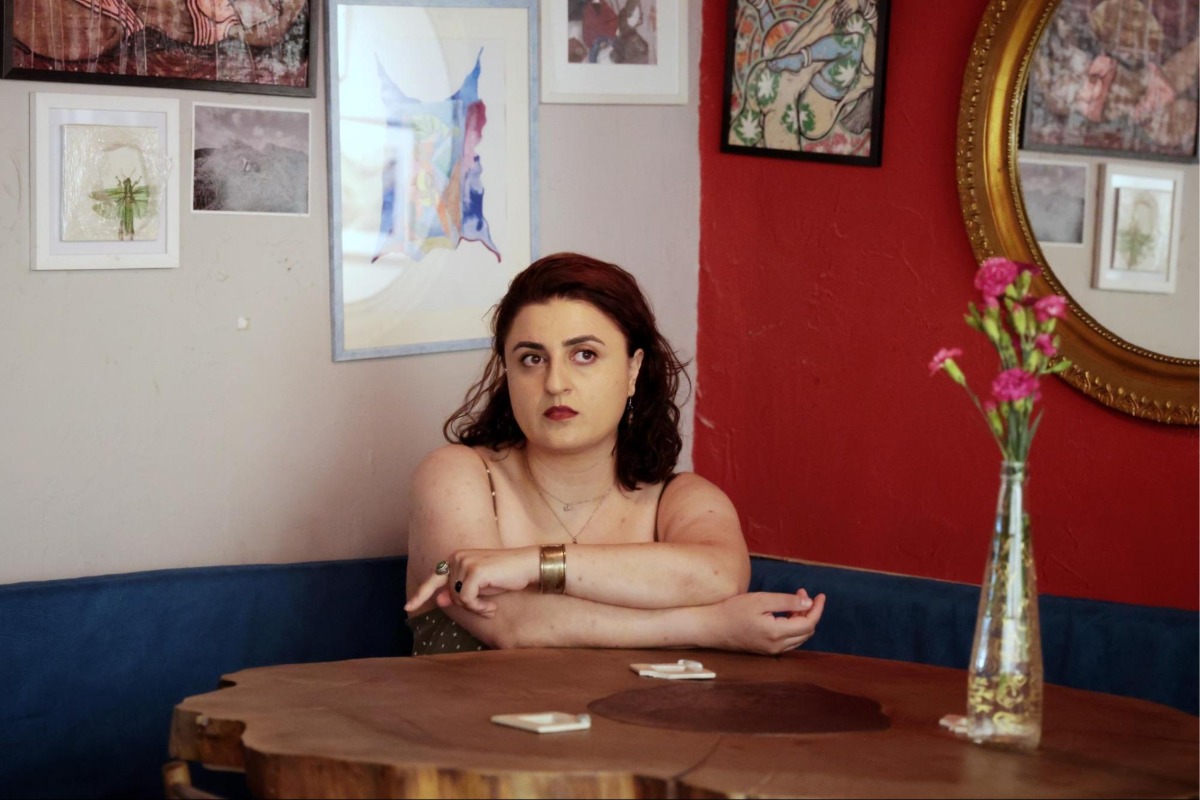



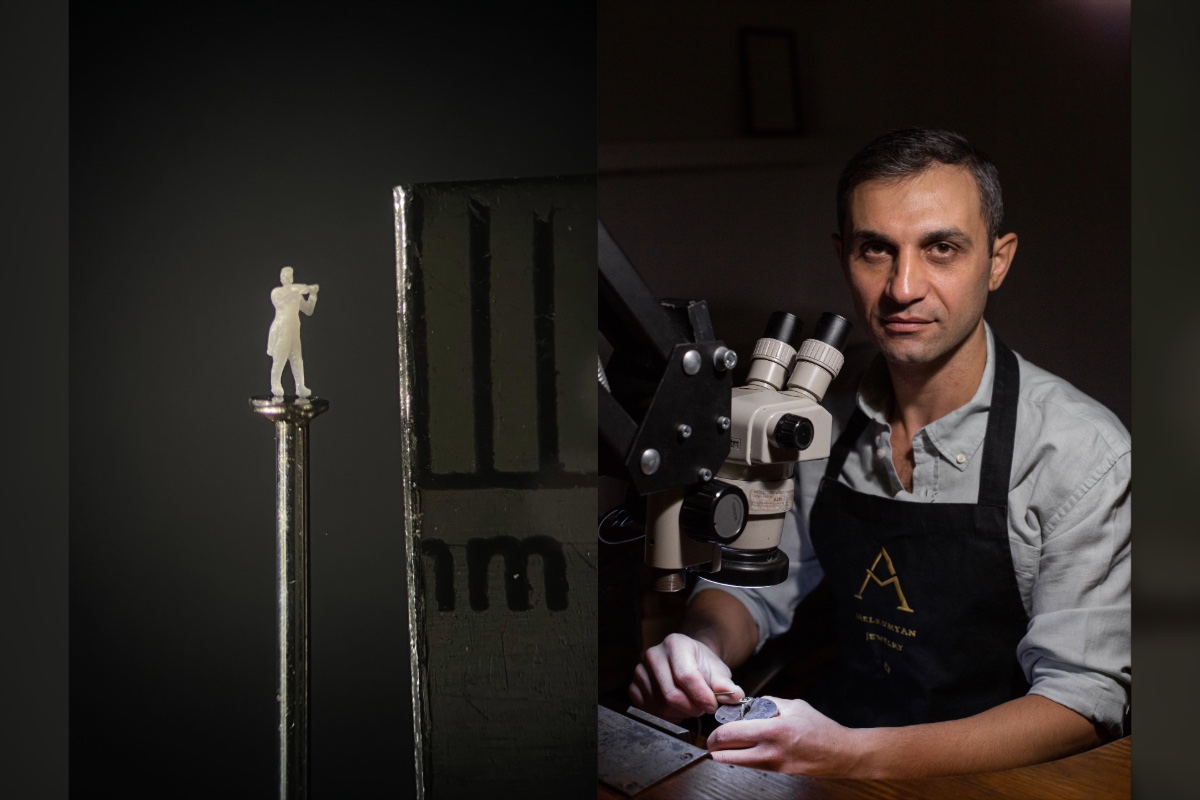
I am a jeweler and microminiaturist with more than 20 years of experience. Four years ago, I moved to Vienna and brought with me not only my tools but also a rare profession — microsculpture that can be seen only under magnification. There are no textbooks or academies for this discipline; by professional estimates, only about 10 or 11 masters at this level are currently working worldwide. For me, it is not just a craft but a way of seeing the world at a scale usually hidden from the eye.
In my Vienna studio, I create both jewelry and microminiatures, each existing as an independent work of art rather than a serial product. Working under a microscope demands absolute physical control: I hold my breath and try to move between heartbeats to eliminate even the slightest tremor of the hand.

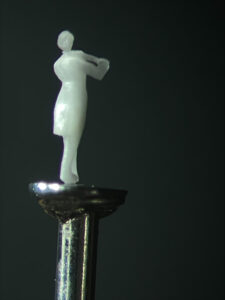
One of these works is my “Johann Strauss Monument,” inspired by the famous golden statue in Vienna’s Stadtpark. For this sculpture, I chose the most personal material I could imagine — the naturally shed baby tooth of my son. We had carefully kept it as a memory of his childhood, and at some point I realized this tiny fragment of a growing human being could become the foundation for an almost invisible monument to the city where we now live.
I worked on this piece for two years, transforming the tooth into a miniature figure of the “Waltz King.” Under a microscope, materials at such a small scale behave very differently than in everyday life: They are fragile, unpredictable and demand different pressure, tools and techniques. Any extra movement, and nothing would remain of the figure. It was important for me not only to maintain the overall composition but also to capture Strauss’ recognizable silhouette with his violin, his characteristic posture, the folds of his tailcoat and a suggestion of costume details that echo the real monument.
Using a baby tooth gave the piece a special meaning. I took a tiny part of a growing child — a symbol of fleeting time — and turned it into a lasting artistic object, as if freezing a moment of growing up in material form. The work holds both the intimate story of my family and the story of our relocation: My son’s baby tooth becomes the carrier of a Viennese image, linking past and present — Yerevan of my childhood and Vienna where he is growing up.
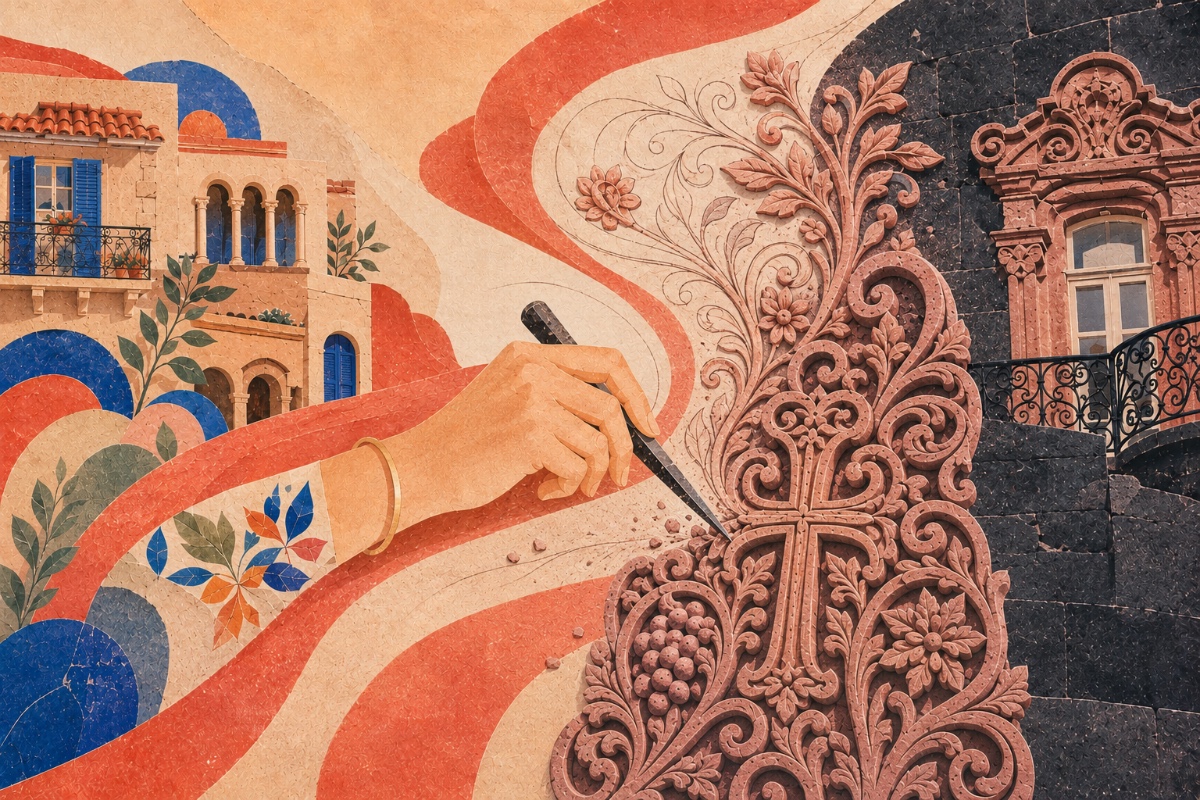
 My love for the micro-world began in Armenia when I visited a museum of microminiatures in Yerevan as a child. It was the first time I understood that art can exist at a scale the human eye can barely perceive. Later, when I became a jeweler, I returned to that feeling — that true aesthetics and art do not have to be large or loud. Today, working in Vienna, I continue this line as an Armenian craftsman who carries the tradition of precise handwork into a new context.
The “Strauss Monument” is only one of my microminiatures. On a single poppy seed, I created a platinum pistol from whose barrel a tiny flower appears instead of a bullet. On the tip of a needle, there is a gold ring set with an ordinary table salt crystal instead of a diamond. On a matchstick stands a hollow silver vase with miniature flowers assembled from household dust. In all these pieces, I am interested in the same question: how the invisible becomes visible and how familiar materials — tooth, salt, dust — turn into carriers of meaning when we look closely enough.
For me, microminiature is a reminder that depth often hides not in scale but in attention. Where most people see “nothing,” a whole world opens up under the microscope.