


Returning to Armenia to create and belong: The story of Alexander Beglaryan
People tend to repatriate when conditions are either very good or very bad. They are often prompted by political change and become more alert after war. The former creates positive expectations, while the latter presents serious challenges. Sometimes, they return because the state organizes the process. In other cases, they return in search of answers about themselves and their identity. When they return, they clearly see the difference between the homeland they imagined and reality. At that point, they either feel at home or leave again. The “Armenian Dream” series features repatriates who have chosen to build their future in Armenia.
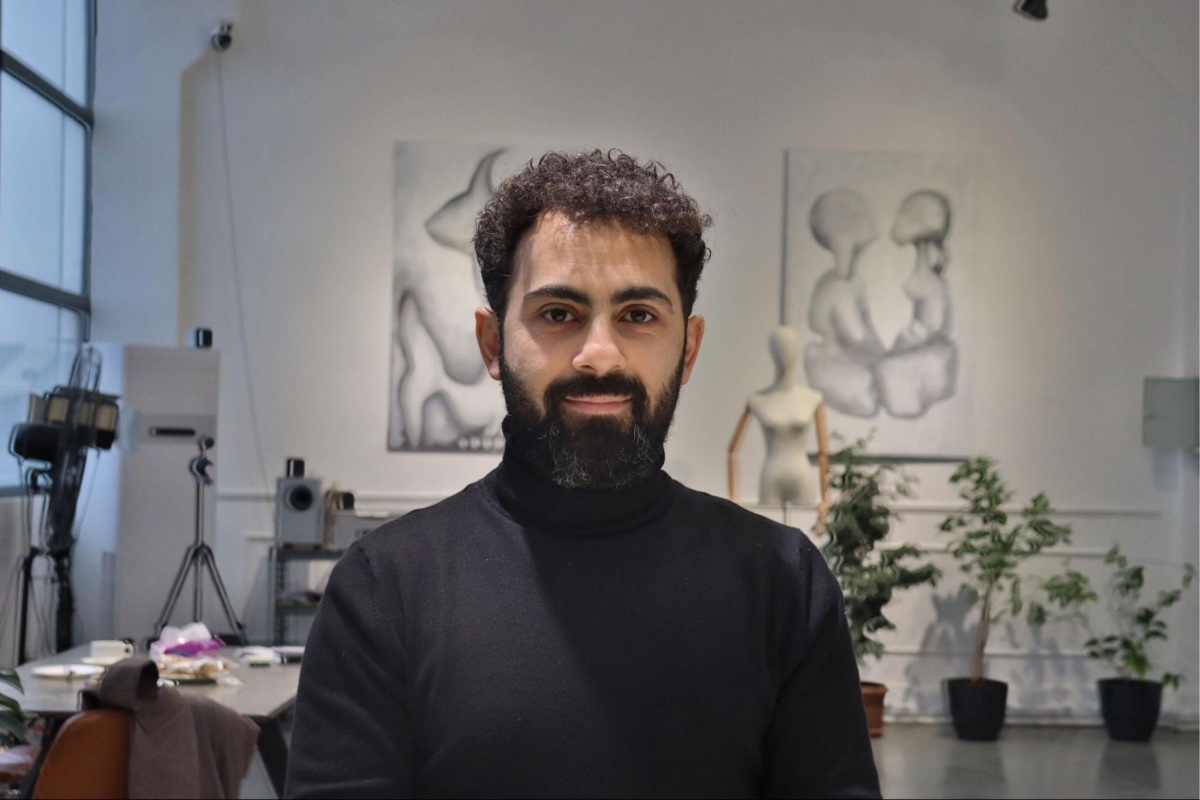
Life seemed successful: professional recognition and awards in Moscow. Alexander Beglaryan had twice become Russia’s champion, won a world silver medal and later took part in the same beauty competitions as a judge. Yet at that moment, he began to feel uneasy — something was holding him back from true happiness. At the time, he thought his relationship with God might have weakened. Eventually, the question “Who am I?” led him to Armenia, where he was able to face his fears.
“One morning, I woke up wondering what I should do. My inner voice was urging me to return to Armenia. I immediately got up, bought a ticket and, within a few days, I was here — to explore, to understand why the voice was calling me. And when I arrived, I fell in love with Armenia,” he told the Weekly.
After returning, Beglaryan realized that although he had lived in Armenia until age 20, he did not know much about the country, so he began to travel. He was born in Yerevan, served in Ijevan and, in 2008, moved to Moscow, where he lived for 15 years. In Moscow, he worked in the beauty industry, creating looks for women in competitions.
Three years ago, he returned to Armenia with his family to live permanently. At first, he admits, he viewed Armenia with a certain arrogance, thinking people here were closed off and had not seen the world. Later, however, he realized he was mistaken and had much to learn from locals. One of the first things he noticed was how children behave within families, communicating with mutual respect. People in Armenia, he said, are more caring toward each other. “Russia taught me a lot,” he said, “but in recent years I have realized that the most valuable lessons I learned have been here, in Armenia.”

“I understood that when people move, they often lose many of their values because of the pace of big cities. That’s why everyone needs to find their own path, and that path will show them where they truly belong. When people are spiritually at peace, they have nothing to complain about.”
Spiritually, he felt good here, but professionally, he had to start from scratch. First, he needed to figure out what he wanted to do, then study the market and find his place. He said the uncertainty during this search is necessary.
“Uncertainty helps us begin searching. When you are thirsty, you eventually find the solution. Of course, that solution does not satisfy you for long. The more answers you find, the more questions arise. But you simply have to accept that life is made up of uncertainty and questions,” he told the Weekly.
Deep down, he always wanted to design clothes, but he had fears and doubts about his abilities. His interest in fashion was shaped by his mother’s taste. Although they lived modestly, she always made sure they looked good. Meanwhile, his father is a painter and sculptor who mostly works with female forms. These influences surrounded him, shaping his aesthetic sense. He had always been interested in designers, especially inspired by Alexander McQueen, but never imagined becoming a fashion designer himself until the moment he first realized he was envious.
“In Moscow, I learned that two girls had created a brand and were producing clothes from their own designs. For the first time in my life, I realised I was envious. It was not malicious, but it felt unusual. I clearly recognized the feeling and spent a long time analyzing why I felt that way. And I finally understood: it was my dream, one I had always kept hidden in my heart because I believed it was unattainable.”
He says he had many fears about launching a brand, but once he began, he realised those fears existed only in his mind. Now he sees fear as a kind of seasoning that gives life its flavor. At first, there was intention without clarity. Now he can see the light.
During Yerevan Fashion Week, the editor-in-chief of Vogue Italy visited Armenia and wanted to explore local brands. She liked A. Heritage’s designs and bought some pieces for herself, later writing that she loved the brand.
“At that time, the brand had just been created, and there were still doubts — whether it was the right decision and whether to continue. Then they sent me that message, and it was a great motivation to keep going,” he said.
The A. Heritage brand was born in Armenia after more than a year of experimentation. A key realization came from a colleague in Moscow, who pointed out that everything he needed was already there:
“He meant Armenia — its emotions, style and preferences — because the human mind is designed to search elsewhere, avoiding to see what we already have. Life has many gifts for us; all we need is to notice them. For a long time, I wondered how Armenia could present itself to the world and what talents we could offer. There is no point in focusing on mass production — we will not surprise anyone with quantity. But we can create intellectual products. We can tell the world who we are through creating,” he told the Weekly.
The A. Heritage clothing brand was founded in 2024 and is already sold in Armenia and Russia. Although attracting financial investment was difficult for a long time, Beglaryan now sees that period as essential: He realized that instead of trying to do everything at once, it is better to move forward step by step. At this stage, the focus is on improving what they can do now.
Speaking about the future of the brand, he recalled a passage from Benjamin Franklin’s autobiography:
“‘In the United States, every organization had its rules — except one. When Franklin asked why they had not written their charter, they explained that God provides coordinates for today — guidelines for how to live and move forward. These work for today, but tomorrow the world will change and offer new coordinates.’ They were afraid that if they wrote them down, they would become fixed. After that, I realized we must be very careful with our desires, because who knows what is truly prepared for us? We might wish for very limited things, while dreams have a way of coming true.”
Although organizing production in Armenia is more challenging, he decided it had to be an Armenian brand — its roots, like his own, originating from Armenia. Alexander Beglaryan travels to Moscow every two months, and within just a few days, he misses Armenia so much that returning to Russia never even crosses his mind.”
All photos courtesy of Nane Petrosyan unless otherwise noted.