



Continuous expansion of Türkiye’s military-industrial complex
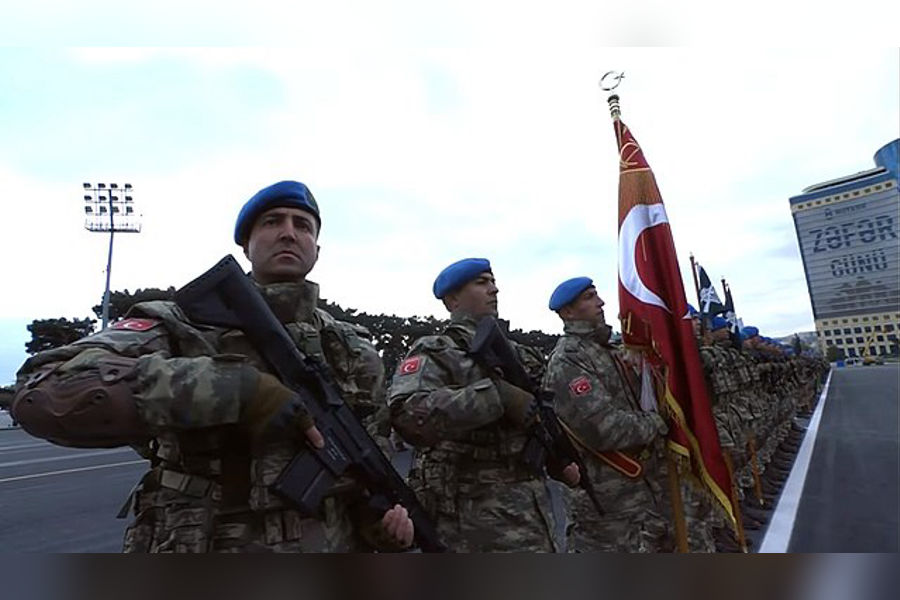
In modern political and policy debates, particularly those concerning regional and global powers, the military-industrial complex remains a consequential yet often overlooked topic. States with large arms manufacturers serve as hubs where this phenomenon expands, becoming deeply embedded within the state and its administration. Understanding the roots of the military-industrial complex is therefore essential.
Beginning in the late 19th and early 20th centuries, rapid industrialization and the evolution of modern warfare created a powerful, co-dependent relationship between states and arms manufacturers. During World War I and World War II, mass mobilization in the United States, Soviet Union, Nazi Germany and elsewhere, combined with resource shortages and disrupted industries, made states highly dependent on the arms industry. This dependence empowered defense companies to influence policy, advise on conflict resolution and secure economic gains from government institutions.
Later, during the Cold War, the United States and the Soviet Union expanded their arsenals using a combination of government, military and private industry resources. In his 1961 farewell address, U.S. President Dwight D. Eisenhower warned: “In the councils of government, we must guard against the acquisition of unwarranted influence, whether sought or unsought, by the military-industrial complex. The potential for the disastrous rise of misplaced power exists and will persist.”
Through this marvelously diplomatic declaration, President Eisenhower warned the nation and his successors about the dangers of granting absolute influence to the military-industrial complex, regardless of whether that specific lobby sought this influence or not. Eisenhower clearly perceived the latent yet visible power of this lobby, especially apparent to political insiders like the president. Eventually, this declaration popularized the term within political, societal and academic circles. Today, Merriam-Webster provides an accurate definition of this term as follows: “An informal alliance of the military and related government departments with defense industries that is held to influence government policy.”

In summary, the military-industrial complex refers to an informal network of government institutions, armed forces and private companies engaged in the research, production and supply of weapons and defense technology, often influencing national policy and security strategy. In Türkiye, growing government support for the defense sector has strengthened this network, making it increasingly semi-formal.

In September 2025, Turkish defense firms Aselsan, TAI, Roketsan, Asfat and MKE were ranked among Defense News’ Top 100 most valuable defense companies worldwide. Baykar, the manufacturer of the Bayraktar TB UAV, was not included due to its limited product portfolio. Following the announcement, Türkiye’s Defense Industries Secretary, Haluk Gorgun, stated: “Our sustainable growth strategy is not only a guarantee of today’s success but also of tomorrow’s global leadership. The Turkish defense industry will continue to rise with its strong projection, innovative vision and goal of complete independence.”
To understand Türkiye’s current military-industrial complex, it is important to look beyond the five companies previously mentioned. In the mid-to-late 1980s, following the American defense embargo and the aftermath of several military coups, the Turkish Armed Forces were weakened. In this context, the Presidency of Defense Industries (SSB) was established in 1985 and remains operational today. Between 1985 and 2015, under the direct presidential authority, SSB managed numerous defense projects involving both government and private companies. In 2015 alone, approximately 600 defense projects worth $76 billion were underway. In 1987, the Turkish Armed Forces Foundation (TAFF) was created by merging several smaller foundations to strengthen national defense and military capabilities.
Former president of SSB, Ismail Demir, stated during an interview: “Next-generation threats make it mandatory to develop next-generation solutions. When we look at these threats, we see that the active protection system is important and we are working to be a leading country in this field.”
This statement underscores the fundamental role of organizations administered, directly or indirectly, by the state through the informal network known as the military-industrial complex.
Regarding TAFF, its official motto, “direct contribution to the national defense and economy,” highlights its support for Türkiye’s defensive and economic security. Among the five companies previously mentioned, Aselsan and Roketsan are majority-owned by TAFF and rank 43rd and 71st, respectively, on Defense News’ Top 100 list. TAI (47th), Asfat (78th) and MKE (80th) are entirely state-owned.
Although not included in the Top 100 ranking, Baykar, founded in 1984 by Özdemir Bayraktar, also possesses critical influence over policy-making. While the military-industrial complex typically draws power from informal alliances between the state and private industry, Baykar’s link is reinforced by familial ties, as CEO Selçuk Bayraktar is President Erdoğan’s son-in-law. Through the booming of the military industry in Türkiye, with extensive state support and the success of the in-house Baykar-manufactured Bayraktar TB UAV, Baykar has become dominant in the UAV market. In 2024, Baykar alone exported 1.8 billion USD worth of weaponry, amounting to 90% of its total revenue. Additionally, Baykar represented 25% of the entire 7.15 billion USD of military exports achieved by Türkiye in 2024. As of February 2025, Baykar commanded 65% of the worldwide UAV export market, reaching 34 countries.
Tackling another regional power, the Israeli military-industrial complex is far more deeply integrated within the state, society and economic sectors, functioning as a permanent and institutionalized entity. In contrast, Türkiye’s military-industrial complex is still in the earlier stages of development and working toward similar levels of integration. However, Israel remains highly dependent on foreign support, particularly from the United States, whereas Türkiye demonstrates greater self-reliance and more diversified international ties. Finally, both states leverage their arms industries to exert regional and global influence, using “weapon diplomacy” and expanding exports as tools to transform military-economic capacity into geopolitical power.
In conclusion, these companies not only reflect Türkiye’s growing military capabilities but also demonstrate the influence of the military-industrial complex within state policy, at times becoming deeply integrated with the public defense sector. Under President Erdoğan, civilian authority has reached unprecedented levels since Mustafa Kemal and the curtailing of military autonomy has shifted power toward both the political sphere and the military-industrial complex.
As a result, Türkiye’s military-industrial complex has expanded significantly as a political and economic actor. Its semi-informal influence, particularly through Baykar and state-owned or state-linked companies such as Aselsan, TAI, Roketsan, Asfat and MKE, creates a hybrid structure combining formal state control with private-sector autonomy.


Why are Armenian authors using the name “Türkiye” for Turkey in Armenian Weekly articles? This name change was imposed by Turkish dictator Erdogan in 2021, who insists that the “international community” uses the Turkish name for the country in international communiqués and that the foreign media uses it too. This name change is purely an ideological propagandistic motive by Erdogan, and foreigners, and annoyingly even Armenians are using it in Armenian communiqués and in Armenian media. The ideological aspect of the usage of the Turkish name is obvious, and one can even easily guess in Turkey, who is an Erdogan supporter and who is not, because Erdogan supporters use “Türkiye” in other languages, whereas Erdogan opponents definitely do not. Armenians should also not use the Turkish name for Turkey, for this reason.
How old are you, 12?