



Between law and love: Understanding adoption in Armenia
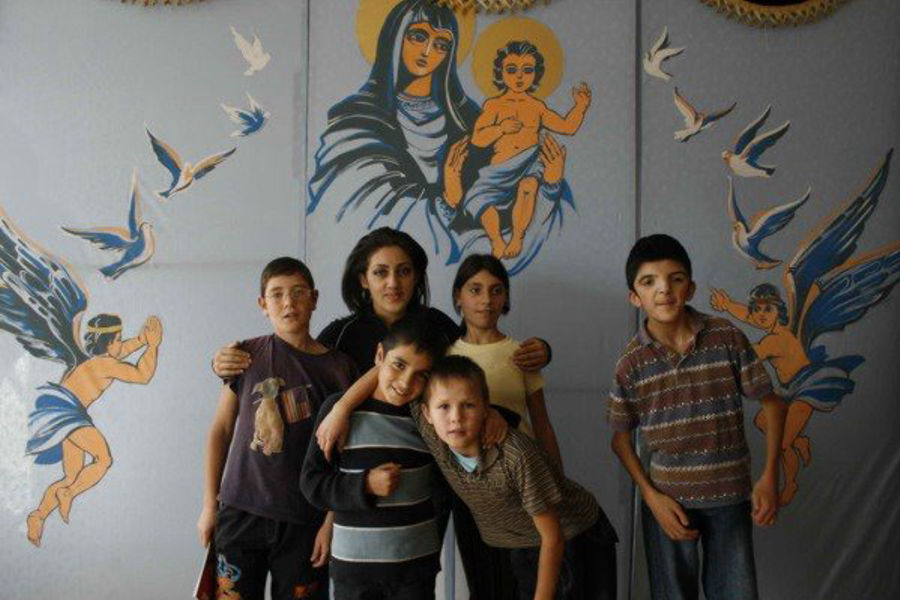
Adoption is a complex process with profound effects on both children and parents. In Armenia, it is governed by specific laws and accompanied by psychological challenges that require careful consideration and public awareness. This article aims to provide an overview of the adoption process, presenting official data, exploring the legal framework with expert commentary and addressing the psychological impact on children and families.
Ministry of Labor and Social Affairs
In response to an inquiry from the Armenian Weekly, the Ministry of Labor and Social Affairs shared the following adoption data. As of July 14, 2025, 83 citizens of the Republic of Armenia were registered as prospective adopters, compared to 17 foreign citizens, including members of the diaspora.
From 2020 to 2024, a total of 122 children were adopted in Armenia:
- 2020: 36 children
- 2021: 23 children
- 2022: 20 children
- 2023: 23 children
- 2024: 20 children
Of these, 64 were girls and 58 were boys.

Adoptions follow procedures outlined in Government Decision No. 269-N (March 18, 2010). To improve the process, the government approved a draft law amending the Family Code (Decision No. 655-A, May 29, 2025), now submitted to the National Assembly.
Children of all ages may be adopted, though most come from round-the-clock care institutions such as the Children’s Home of Yerevan.
In 2024, a total of 24 adoptions took place by region: Aragatsotn (1), Ararat (2), Armavir (0), Gegharkunik (4), Lori (2), Kotayk (3), Shirak (0), Syunik (0), Vayots Dzor (0), Tavush (0) and Yerevan (12).
13 children were adopted abroad in recent years, six of whom had disabilities. Currently, 29 adopted cases are suspended; the Ministry does not collect information on families involved in these cases.
Legal perspectives
Lawyer Lusine Ghukasyan outlined the basic requirements for adoptive parents. Armenian citizens must be at least 18 years old and at least 18 years older, but no more than 50 years older than the child, with certain exceptions. Applicants must have adequate social and living conditions, no prior deprivation of parental rights and no convictions for serious crimes against children or families. In the case of married couples, a joint application is required.
Individuals convicted of violence, sexual offenses or crimes harmful to children’s interests, as well as those legally incompetent, stripped of parental rights or suffering from drug or alcohol addiction, are ineligible to adopt.
Adoption is finalized through a court decision. For Armenian citizens, the adoptive parent, the guardianship and trusteeship body and children 14 and older must attend the hearing. For foreign citizens or Armenian citizens living abroad, participation of the government’s central body, in line with the Hague Convention on Intercountry Adoption, is mandatory. Adoption in these cases requires validation that the process serves the child’s best interests and includes information about personal contact.
“One of the most common legal problems for adopters is the inability to cancel an adoption,” Ghukasyan noted. “If the adoptive parent later wishes to withdraw, it is impossible.” An adoption can only be declared invalid by a court on application from a third party, such as a guardianship body, if the parent has a drug addiction, alcoholism or other serious issues, she explained.
After adoption, the child’s legal status changes completely. They acquire all the rights and obligations of the adoptive parents, as if they were a biological child. Ghukasyan emphasized that international agreements, including the Convention on the Rights of the Child and the Hague Convention, strictly regulate intercountry adoptions. Armenian children can only be adopted abroad if placement with Armenian citizens permanently residing in Armenia is not possible. Foreigners can access information on adoptable children only after three months, once the children are listed in a special registry.
Psychological perspectives
Adoption is not only legal but also psychological, with a deep impact on both the child and the adoptive parents. Child psychologist Lusine Mkhitaryan spoke to the Weekly about the importance of parental preparedness and post-adoption support.
She explained that adopted children often struggle with feelings of loss and sadness, which can result in trust issues, difficulties with intimacy and behavioral problems such as aggression, anxiety or isolation. This is particularly true for older children or those who have experienced neglect or abandonment.
“Parents must be prepared for long-term, patient work to build trust,” Mkhitaryan explained. Regarding communication, she advised that “talking about being adopted should be done openly from an early age. Each discussion should be accompanied by the assurance that the child is loved, safe and has a place in the family.”
Mkhitaryan stressed the importance of identity formation. Adopted children need to integrate their past and present selves to develop a stable self; denying or ignoring their past can lead to confusion and insecurity. Open and honest communication about the child’s adoption, in an age-appropriate manner, is also essential.
She recommended age-appropriate communication:
- Ages 3-5: Simple stories or pictures explaining that the child has two families: biological and adoptive.
- Ages 6-12: More detailed discussions emphasizing that adoption is the result of love and choice.
- Adolescence: At this age, questions can deepen. Open, supportive answers to questions related to identity will show unconditional support.
Therapeutic support — both individual and family counseling — can be essential. Intercountry adoptions present additional challenges, including language barriers, cultural differences and identity conflicts. Mkhitaryan advised that adoptive parents abroad should actively preserve the child’s Armenian heritage through language, traditions and holidays.
Data from the Children’s Home of Gyumri
After understanding the psychological nuances, it is also important to address the institutions where children await their adoptive parents. As an example, let us consider the Gyumri Children’s Home (GCH), which, according to information obtained from the Ministry of Health, currently cares for 124 children deprived of parental care and eligible for adoption.
The center provides psychological support, facilitates meetings with prospective parents, manages documentation and offers guidance on each child’s care, character and abilities. In the past five years, three children from the GCH were adopted by foreign citizens.
Notably, children with significant medical needs are less likely to be adopted, given the complexity of their conditions and the level of care required.
Conclusion
Adoption in Armenia remains a carefully regulated process, supported by specialists but challenged by systemic gaps. Official statistics show relatively stable adoption rates, yet the number of children awaiting families remains high, with most adoptions concentrated in Yerevan.
Legal reforms under consideration suggest progress, but the prohibition on canceling adoptions highlights ongoing difficulties. Psychologically, adoption demands deep preparation and ongoing support for both children and parents, particularly in helping children integrate their past and present identities.
Thus, improving Armenia’s adoption system requires a comprehensive approach. It is necessary not only to update legislation and simplify procedures but also to raise public awareness, expand psychological services and targeted support for families.
At its core, adoption is about offering children stability, love and a sense of belonging — commitments that extend beyond a court’s decision.



Thank you for the thorough information. It is good to know that the Armenian Government has made strides to improve the adoption process. Some of us in the US diaspora were lucky enough to adopt an Armenian child over 25 years ago. It wasn’t an easy process but it was well worth the effort!
Wow) thanks for feedback
Wow) thanks for feedback