


ReflectionsCommentary

As Arshile Gorky’s “Untitled” returns, so should we
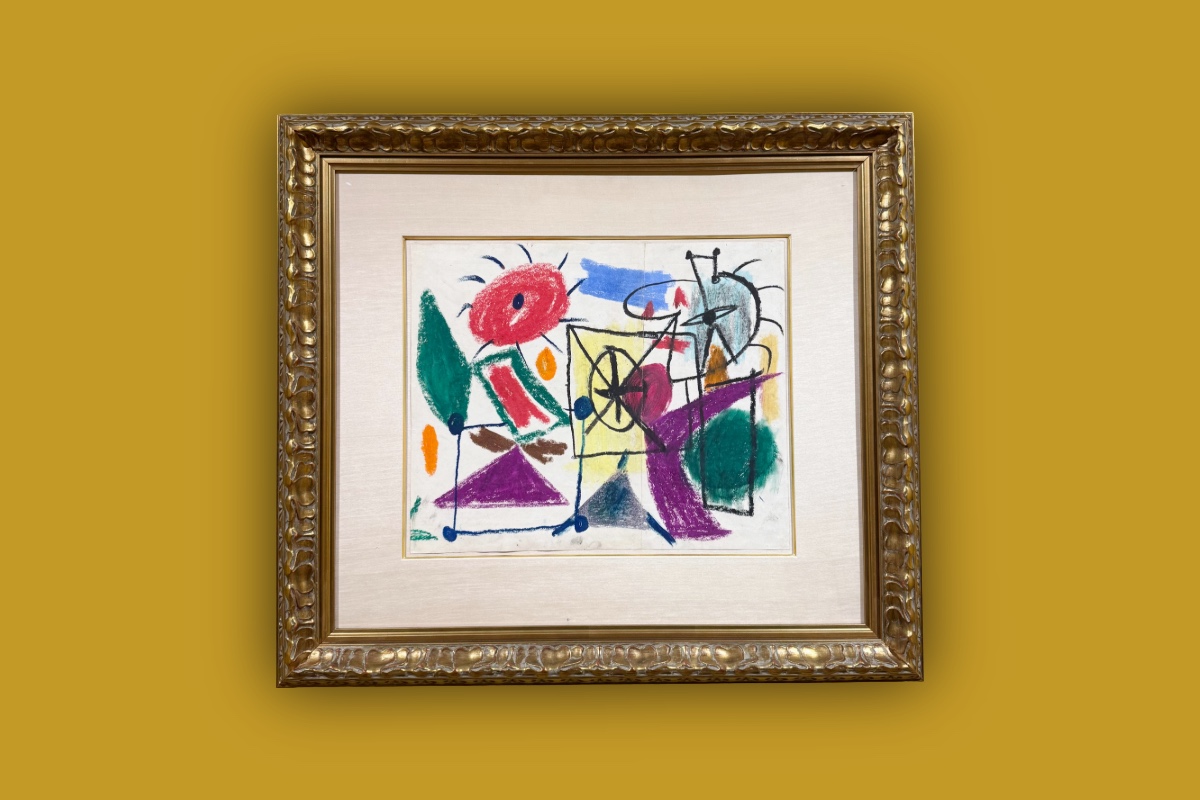
This time of year always seems to carry a familiar weight — something deeply universal for Armenians: an unspoken feeling of grief that settles in almost instinctively.

It’s a difficult emotional balance: mourning lost lives and the lands left behind, intertwined with a quiet pride in endurance. A sense of pride in still existing and still having a country to call our own — a mother tongue — and in continuing the fight to have our stories heard and our rights restored.

There’s a constant yearning to learn more — to trace my family’s history and follow every thread as far as it will go. Maybe, somewhere in those details, clarity exists. If we look closely, maybe we could understand not only what happened, but why. But can we ever truly understand — let alone accept — what happened to us?

Is there a book, a collection of letters or a documentary vast enough to make sense of it all?

It stands as one of the most tragic chapters not only in Armenian history but in modern civilization as a whole — a chain of events that left more than 1.5 million people stripped of everything: their lands, homes, communities, families and ultimately their lives. In a matter of moments, entire worlds disappeared, with no possibility of return, and that loss became permanent.

Related Articles
Advertisement

It is often the first thing we say when trying to explain who we are to those who have never heard of us. That alone speaks to a constant need to share our story. It is the reason so many Armenians found themselves scattered across other people’s lands — searching for refuge, grappling with questions of identity and trying to understand how to preserve what remains while learning to move forward.

On April 15, the National Gallery of Armenia marked a significant cultural milestone with the acquisition of “Untitled” (circa 1944), a graphic work by Armenian American painter Arshile Gorky. It now stands as the first and only abstract work by Gorky held in museum collections not only in Armenia but across the wider region.

This feels like a significant victory — a moment of reclaiming what is ours. An important piece of art is now displayed in our country, within our galleries, offering a chance to show the world who we are and what we are capable of achieving, even in the darkest times, even when we are away from home.

In that sense, it feels as though the painting has finally come home. Yet beyond its cultural significance, the acquisition also evokes a deeper emotional response. 

Despite a life shaped by loss and historical trauma, Gorky rose to become one of the pioneers of Abstract Expressionism, securing his place as a point of pride in Armenian art history. Still, his legacy is inseparable from the personal struggles he endured — and the tragic circumstances that defined his final years.

My experience at the exhibition went beyond simply seeing the painting or connecting with the artist; in it, I saw a part of myself and of many Armenians shaped by a similar path.

It is no secret that over the years, many Armenians like Gorky built communities in the diaspora that gave Armenians visibility, recognition and belonging in many corners of the world. Yet beneath that collective achievement, there has often been a quieter pursuit — not of validation, but of answers. Answers to why the world allowed such events to unfold, why they were allowed to happen to us and why, in different forms, they continue to echo through time.

But the longer I sit with these questions, the more I begin to understand: Perhaps the answers we are looking for are no longer external. Perhaps it is no longer about assigning blame or finding explanations outside ourselves. Instead, it may be about acknowledging the past as it is — mourning it fully and then moving forward with clarity, resilience and strength.

The genocide — the horrific events that unfolded during those years — left behind wounds that never truly heal: the loss of everything we once built and called our own. Yet, at a moment as critical as this, perhaps what also needs to shift is our mindset.

The pain and suffering our people endured is so immense that the only meaningful response seems to be rising from it. We demand, we march, rally and present evidence — yet little appears to change. If anything, recent developments surrounding the Genocide Memorial Museum suggest that, in some ways, we may even be moving backwards.

The question then becomes: What should we do? Continue repeating the same actions and wait to see what happens? Hope that one day the world will suddenly decide in our favor and that everything we have long demanded will simply follow?

Perhaps the more difficult realization is that what we are searching for cannot be handed to us. No one else carries our history, struggles or vision for the future in the same way. Which raises another question: Why do we keep looking outward? Ultimately, the responsibility for shaping what comes next belongs to us — both in Armenia and across the diaspora.

The issue, perhaps, is not the act of remembering the events, but the attitude we bring to it: sadness, anger, grief and loss — the full weight of emotion that accompanies exile and genocide. These feelings are not misplaced; in many ways, there aren’t enough words to capture the depth of what Armenians carry. But after all these years, what if the perspective shifted?

What if the focus expanded beyond loss? What if it also centered on survival — on those who endured, those who remain, those who continue to hold their heads high and show the world the strength, resilience and dignity of being Armenian, wherever they rebuilt their lives?

Why do we so often find ourselves united primarily in grief and moments of hardship? And why have we not created more ways to unite beyond hardship, building a deeper and more sustained sense of national identity and collective purpose?

This is not about minimizing our pain. It comes from someone who is a descendant of genocide survivors, someone whose family had to rebuild after losing a home more than once. It comes from a place of fear — fear of losing more, fear of repeating inherited patterns, fear of the fragmentation of a country and a people, and fear that everything our ancestors endured might amount to nothing.

The issue lies in how we choose to move forward. We can remain in mourning, or we can transform that burden into something collective — growth, solidarity and national progress. A willingness to finally begin a new chapter without abandoning memory. Our survival itself is a form of resistance. They did not succeed in erasing us. But they did succeed in creating distance between us.

Against all odds, one truth remains: We are still here. No matter where the roads took us, we found our way back home — to Armenia, to the land of our people and back to practicing our identity in the utmost freedom.

Although my great-great-grandparents were born in Western Armenia, present-day Turkey, relocating to Armenia in 2012 with my family felt, in many ways, like coming home. We may no longer have the lands our ancestors once lived on, but fragments of that history still remain with us. 

It exists in the way we speak, sing, dance and move through daily life. Although these expressions vary — between Western and Eastern Armenian, across dialects, in food, traditions and perspectives — they remain connected by a shared cultural root. The variations are many, but the origin is one. We are, ultimately, much more than the differences between us.

And we still have a homeland to call our own. That alone should be reason enough to remain resilient — and to move forward with the intention of building a stronger country.

I may not be in a position to propose a new system of governance, but I believe in something simpler, yet often overlooked: a shift in mindset.

Perhaps what we need is a mindset rooted in resilience — one that acknowledges the pain but refuses to be defined by it. Such a perspective could foster greater responsibility — both toward Armenia and toward one another — while shifting us away from blame and toward collective care.

This also requires a deeper sense of collectivism: a willingness to combine our strengths and cultivate an ecosystem built on cooperation instead of division. To live meaningfully is to honor those who endured immense loss — by building, growing and flourishing in ways that ensure their sacrifices were not in vain.

Above all, we need to learn to love Armenia more consciously — to recognize and value even the smallest things that make us Armenian, and to hold onto them with intention.

I don’t have all the answers, but I believe that a quiet shift in outlook might be where they begin to emerge. Only then will we start to see things more clearly — for what they truly are. We might even see ourselves for who we truly are: the great-grandchildren of survivors. 

Instead of centering our attention on the past and the divisions that fragment us, we could create more space for unity and for strengthening what we share. Our nation is among the strongest to have existed, yet somewhere along the way, we lost clarity on what truly matters.

It is not too late. We can still reclaim ourselves first, and everything else will follow.

Seeing Arshile Gorky’s work felt like a moment of clarity. It served as a reminder of our resilience, of how much we have endured to arrive where we are today and of the importance of documenting and preserving our identity. It also underscored the responsibility shared by each of us to carry the nation forward, in whatever way we can. 

On this year’s Genocide Remembrance Day, I will walk not with a sense of sadness, but with quiet pride. I will move forward with an open heart — carrying hope and a belief in a better world, much like those who came before us once did.

Hena Aposhian

Hena Aposhian is a freelance journalist who primarily focuses on Armenian arts & culture. She is a graduate of the American University of Armenia and holds a bachelor's degree in English & Communications.

One Comment

Leave a Reply

Your email address will not be published. Required fields are marked *


Back to top button