




The Region in Brief
Armenia
A deepening rift between the Armenian government and the Armenian Apostolic Church has come into sharp focus following allegations that prison authorities have effectively halted the church’s long-standing spiritual ministry in penitentiary institutions.
In a statement, the Mother See of Holy Etchmiadzin — the church’s central governing body — said the head of the penitentiary service had “de facto terminated” its pastoral presence in prisons. The statement further accused officials of bypassing ecclesiastical authority and existing legal frameworks by signing employment contracts directly with individual clergy.
Church officials characterized the move as part of a broader “targeted anti-church campaign” aimed at curbing the church’s legally guaranteed spiritual role in public life — an effort they say has also extended to the armed forces and the education sector.
Under Armenian law, the church’s access to prisons is explicitly protected. Article 10 of the law governing relations between the state and the Armenian Apostolic Church affirms its mission to provide spiritual care in places of detention. Meanwhile, Article 17 of the law on freedom of conscience designates such pastoral work in penitentiaries as an exclusive prerogative of the national church, obligating the state not to obstruct it.
The controversy has taken on a personal dimension with the case of Archbishop Bagrat Galstanyan, leader of the “Tavush for the Homeland” movement. According to his lawyer, Sergey Harutyunyan, Archbishop Galstanyan has chosen to forgo receiving Holy Communion — one of the most sacred rites of the church — in protest against the new policy.

Harutyunyan, who recently visited the archbishop at the Yerevan-Kentron Penitentiary, said the decision underscores the gravity of the situation. He argued that the restrictions not only violate legal guarantees but also offend the religious sensibilities of believers.
“This policy not only disregards the rights of the Armenian Church but also breaches the legal provision that ensures the church’s right to maintain a permanent spiritual representative in places of detention,” Harutyunyan stated.
A separate clarification issued by church representatives said the Ministry of Justice had barred clergy appointed by the Church from entering prisons, instead contracting individuals independently — an approach the church deems unlawful. The statement linked the move to earlier efforts to remove military chaplains from the armed forces, describing it as part of a systematic effort to sever institutional cooperation with the Mother See.
Meanwhile, legal proceedings against Archbishop Galstanyan continue. A court hearing scheduled for April 23 at the Shengavit residence of the Yerevan Court of General Jurisdiction will determine whether his pretrial detention measure will be altered.
Archbishop Galstanyan’s position remains firm: He will accept either full release or continued detention, rejecting alternative measures such as house arrest or electronic monitoring.
Azerbaijan
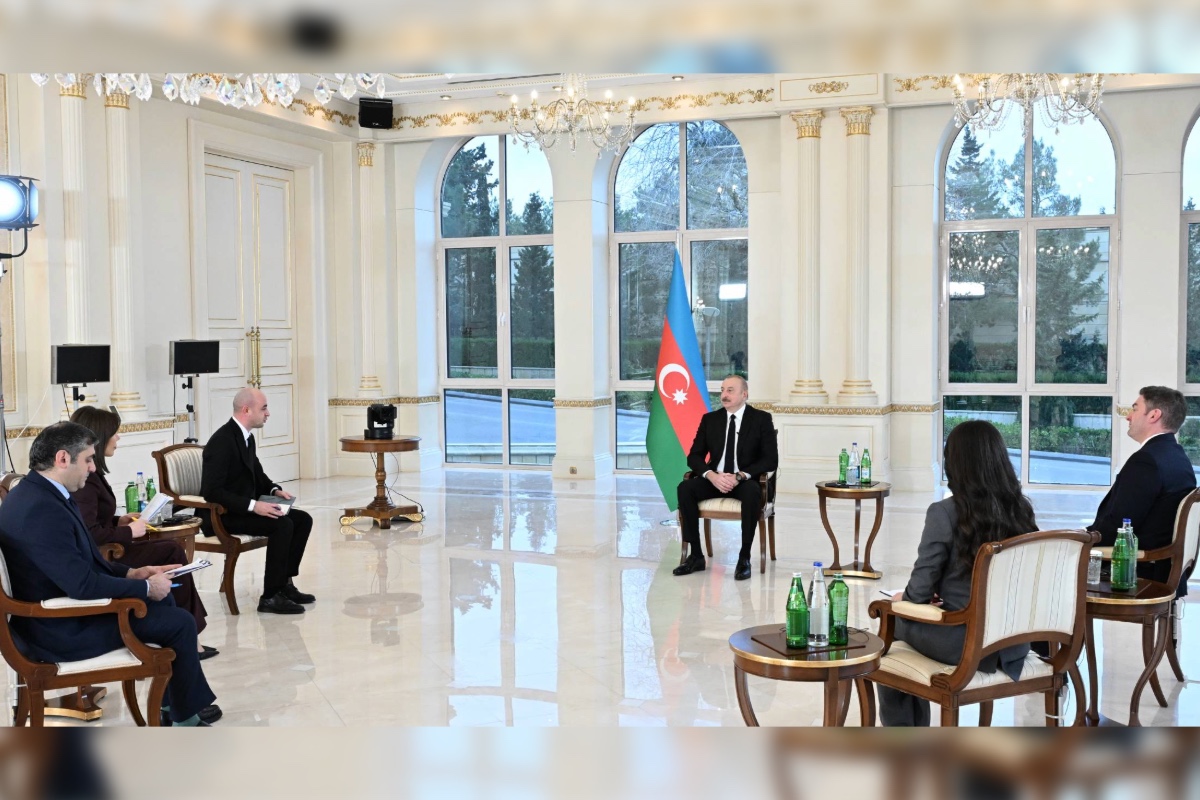
Azerbaijan has issued a formal diplomatic protest to Belgium and the Netherlands following parliamentary resolutions adopted April 16, which Baku has characterized as anti-Azerbaijani and harmful to the Armenia-Azerbaijan peace process, according to the Azerbaijani Foreign Ministry.
The resolutions in question, passed separately by the Belgian and Dutch parliaments, reportedly address the situation in the South Caucasus following the 2023 developments in Nagorno-Karabakh and include criticism of Azerbaijan’s actions. They are also understood to call for the protection of Armenia’s territorial integrity, the safeguarding of regional stability and, in some instances, urge accountability measures related to human rights violations and the treatment of ethnic Armenians, including calls for the release of detainees.
In response, Azerbaijan summoned Belgian Ambassador Julien de Frepon and Dutch Ambassador Marian de Jong to the Ministry of Foreign Affairs, where it conveyed strong objections to the documents.
During the meetings, the Azerbaijani side said the resolutions undermine its sovereignty and territorial integrity and risk disrupting ongoing normalization efforts between Baku and Yerevan. Azerbaijan also rejected allegations contained in the documents regarding violations of Armenia’s territorial integrity and claims concerning the unlawful detention of Armenian individuals.
The Foreign Ministry further described the timing of the parliamentary actions as “ironic,” noting that they coincided with a recent meeting between the speakers of the Azerbaijani and Armenian parliaments.
Iran
The Islamic Revolutionary Guard Corps, or IRGC, has announced the seizure of two vessels in the Strait of Hormuz, accusing them of “disrupting order and safety” along one of the world’s most strategically vital shipping lanes, according to Iran’s Tasnim News Agency. No further operational details have been publicly disclosed.
Diplomatic uncertainty has intensified following the expiration of the ceasefire arrangement earlier today. Donald Trump had previously announced an extension of the truce while maintaining a blockade on Iranian ports, stating that restrictions would remain in place until Tehran submits a proposal for negotiations and talks are “concluded, one way or the other.” With the ceasefire now lapsed, the status of both the blockade and any prospective diplomatic process remains unclear.
Tehran has strongly rejected Washington’s approach. Foreign Minister Abbas Araghchi condemned the port blockade as “an act of war” and a violation of the ceasefire framework, warning that Iran is prepared to respond. “Blockading Iranian ports is an act of war and thus a violation of the ceasefire.”
Prospects for negotiations remain uncertain. U.S. officials continue to call for direct talks while Tehran has signaled that meaningful dialogue cannot proceed under what it describes as coercive conditions, including economic and maritime restrictions.
Russia
Armenia’s gross domestic product, or GDP, could contract by 15.1% if the country withdraws from the Eurasian Economic Union, or EAEU), according to Alexey Shevtsov, deputy secretary of Russia’s Security Council.
Shevtsov warned that Armenia’s departure from the EAEU would trigger a substantial economic downturn, with the heaviest losses expected in key industrial sectors, including metallurgy, beverages, tobacco and food production, where output could fall by as much as one-third.
“Even under the most conservative estimates, GDP would decline by 15.1% — approximately $3.65 billion — while domestic consumption would drop by 14.1% and industrial output by 26.3%,” he said.
He added that chemical production could decrease by around 20%, while textile manufacturing may contract by 15%. Inflation is projected to rise by 14.3%, alongside a 6.4% increase in unemployment.
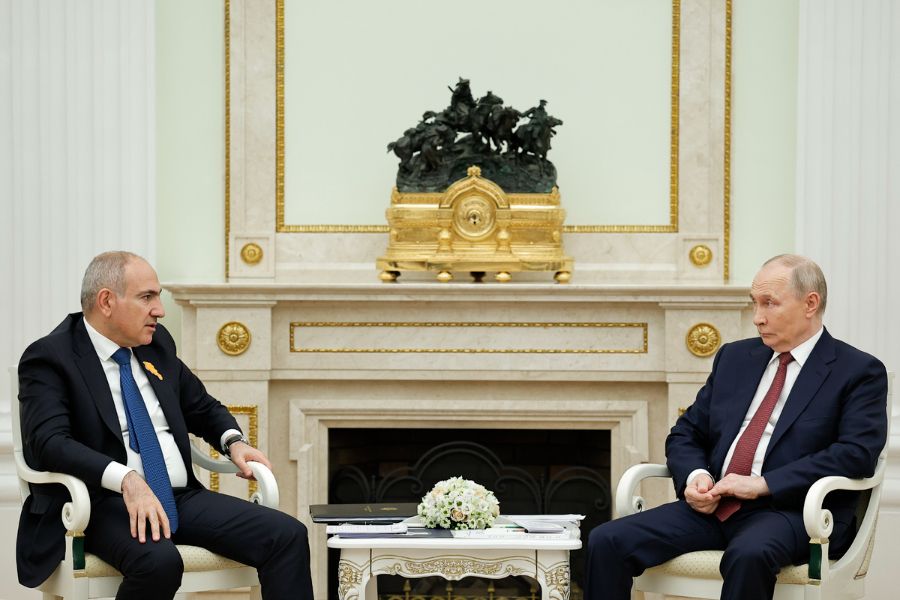
Shevtsov also recalled remarks made by Russian President Vladimir Putin during a meeting at the Kremlin with Armenian Prime Minister Nikol Pashinyan in early April. Putin emphasized that it is not feasible for a country to remain simultaneously within the EAEU customs framework and pursue integration with the European Union.
“An association agreement with the European Union, which is a prerequisite for EU membership, cannot be concluded while Armenia remains a party to the EAEU treaty. Therefore, withdrawal from the agreement would be necessary,” Shevtsov said.
According to the Russian official, Armenia’s exit from the EAEU would lead to the reinstatement of export restrictions, the elimination of unified standards for goods and services, and the return of full customs controls. Preferential conditions for Armenian migrant workers would also be revoked, and standard tariffs would apply to cargo transportation.
“In practical terms, Armenian farmers — including producers of alcoholic beverages — would be forced to seek new markets, as their goods would lose competitiveness due to the introduction of customs duties. Transportation costs would rise, and investment would decline significantly. Yerevan would also lose access to preferential energy supplies,” Shevtsov noted.
He added that Armenia’s withdrawal would have only a minimal impact on other EAEU member states, with projected losses amounting to fractions of a percent.
Turkey
The “April 24 Commemoration Platform,” which has previously organized remembrance events in Istanbul’s Taksim Square, has been denied permission by the Istanbul governor’s office to hold this year’s gathering. According to the Istanbul-based Armenian weekly Agos, authorities have also refused permission for similar events over the past four years.
In response, the platform issued a statement condemning the decision and reaffirming its commitment to commemorating the victims of the 1915 events. “Commemorating April 24 is a democratic right,” the statement said.
The group noted that from 2010 until the COVID-19 pandemic, it regularly held remembrance events in Istanbul and other cities. However, such gatherings have been prohibited since the onset of the pandemic.
The platform said it had once again submitted an application this year to organize a memorial event aimed at honoring those who lost their lives in 1915 and calling for public acknowledgment of the past. Despite these efforts, the governor’s office denied the request.
“We will not stop asserting our rights. The banning of commemoration events in public squares over the past four to five years, without any explanation, lacks justification,” the statement said.
The group emphasized that April 24 commemorations serve both as a tribute to the hundreds of thousands of victims — demonstrating that they have not been forgotten — and as a message to contemporary society.
Remembering the losses, survivors, cultural heritage and traditions associated with the events of 1915 is, according to the platform, a crucial step toward strengthening democracy, fostering coexistence and reducing violence and hate speech.
The statement concluded with a call on authorities to reconsider their position and lift the ban on the planned commemoration.

Why has Azerbaijan’s barbaric destruction of the Holy Mother of God Cathedral in Stepanakert still not made the headlines, let alone appear in Armenian Weekly? Other Armenian Diaspora media outlets have reported about this latest cultural atrocity by Azerbaijan, yet it still has not appeared in Armenian Weekly. It is deeply disappointing that this appalling news has not been prioritized and has still not been published in Armenian Weekly.